Hi, what do you want to do?






Ready
Ready
Explore the Ready website for an overview of how families and businesses can prepare for emergencies, threats, and disasters by building kits, making plans, and staying informed. Find safety information about biological threats,...
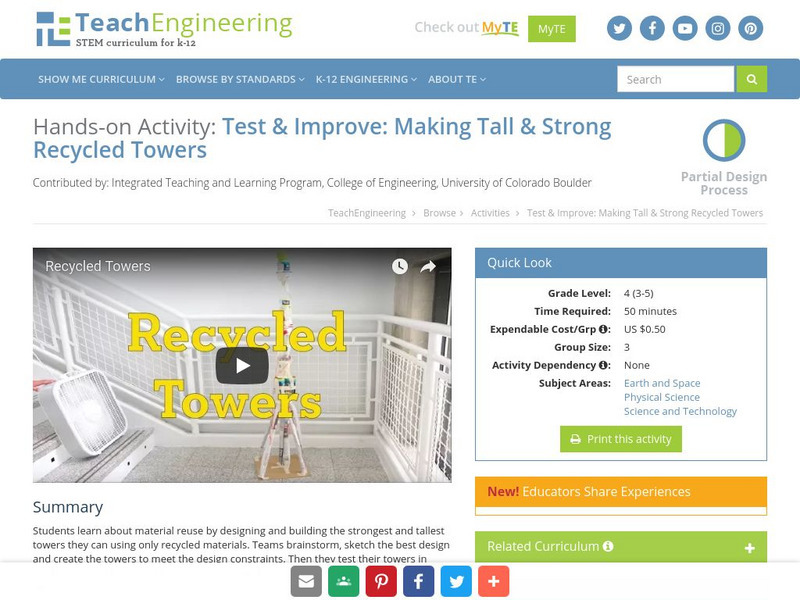
TeachEngineering
Teach Engineering: Recycled Towers
Students learn about material reuse by designing and building the strongest and tallest towers they can, using only recycled materials. They follow design constraints and build their towers to withstand earthquake and high wind simulations.

Other
Union of Concerned Scientists: Nuclear Power
General information on nuclear power and feature articles on particular issues of the day such as articles concerning the nuclear reactor crisis in Japan due to the earthquake and tsunami of March, 2011.
Yale University
Yale University: Anatomy of a Nuclear Crisis: A Chronology of Fukushima
The author provides a chronological look at the nuclear power plant crisis in Japan due to the March 2011 earthquake and tsunami. March 21, 2011
Incorporated Research Institutions for Seismology
Iris: Gps Measuring Plate Motion [Pdf]
This resource looks at how geologists are able to measure the movement of tectonic plates using satellite-based data and how they were able to surmise in the past that the plates were moving. It also discusses how to read GPS time-series...

Paul Dawkins
Paul's Online Notes: Algebra: Applications
Provides examples of applications of exponential functions involving compound interest and exponential growth and decay, and an example of an application of a logarithm involving earthquake intensity.
Indiana University
Indiana University Bloomington: Foldable Fault Blocks [Pdf]
In this lesson, students will create three-dimensional (3-D) blocks out of paper to learn about the types of faulting that occur at the Earth's surface and its interior. Students will manipulate three fault blocks to demonstrate a normal...

National Geographic
National Geographic: Forces of Nature
This educational site provides information about deadly forces of nature, such as, tornadoes, volcanoes, hurricanes, and earthquakes.
World Food Programme
World Food Programme: Who Are the Hungry?
The World Food Programme is the largest food aid organization in the world, providing food where needed to victims after earthquakes, hurricanes, floods, and other natural disasters. Learn what hunger is: the causes, the people, where...
US Geological Survey
U.s. Geological Survey: 1906 Marked the Dawn of the Scientific Revolution
This site contains information about we have learned about the San Andreas Fault since 1906.
Woods Hole Oceanographic Institution
Woods Hole Oceanographic Institution: Tsunami: An Interactive Guide
A complete, interactive learning activity covering the science of tsunamis, preparedness, research, and historical tsunamis. Excellent animations and real, historical recordings of survivors allow the learner to experience what happens...
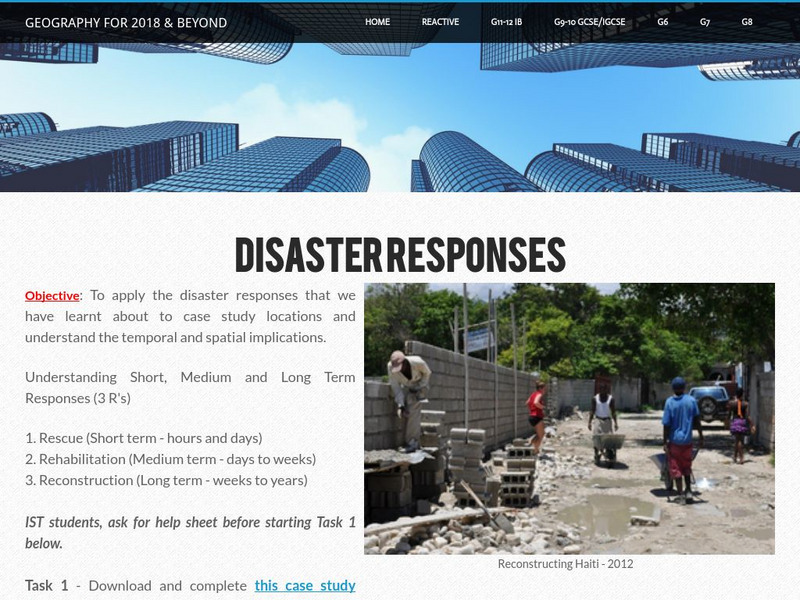
Geographypods
Geographypods: Hazards and Risk Management: Adjustments and Responses
In this learning module, students learn about disaster responses, the three types (short, medium, and long-term) and the different levels of response (local, national, and international). They examine the responses in various case...
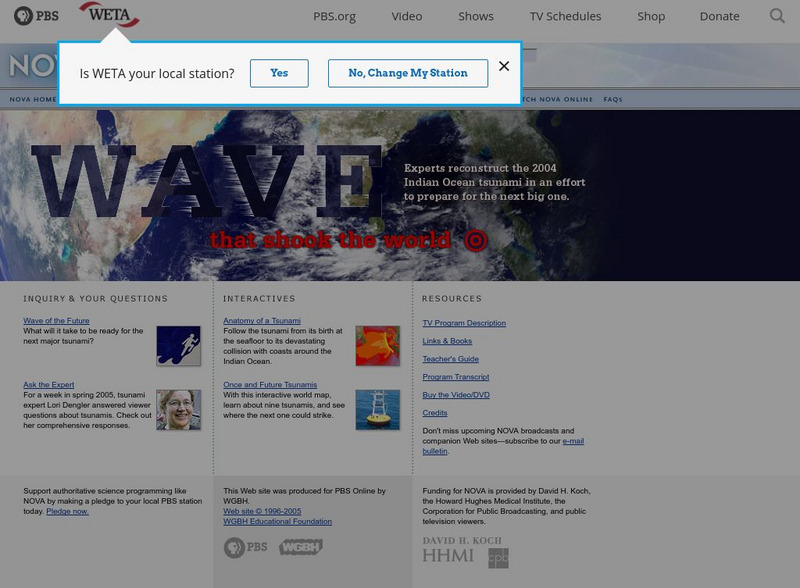
PBS
Wave That Shook the World
This resource focuses on the December 26th Indian Ocean tsunami. It explains the anatomy of the Indian Ocean tsunami, as well as what is being done to prepare for future tsunamis. In addition, it shows potential hot spots for future...

US Geological Survey
Usgs: Surviving a Tsunami
Here's a common sense site about what to do in case you are in the area of a tsunami. This site is very interesting in that it provides lots of pictures of the damage a tsunami can do. Lessons were learned after these particular tsunamis.
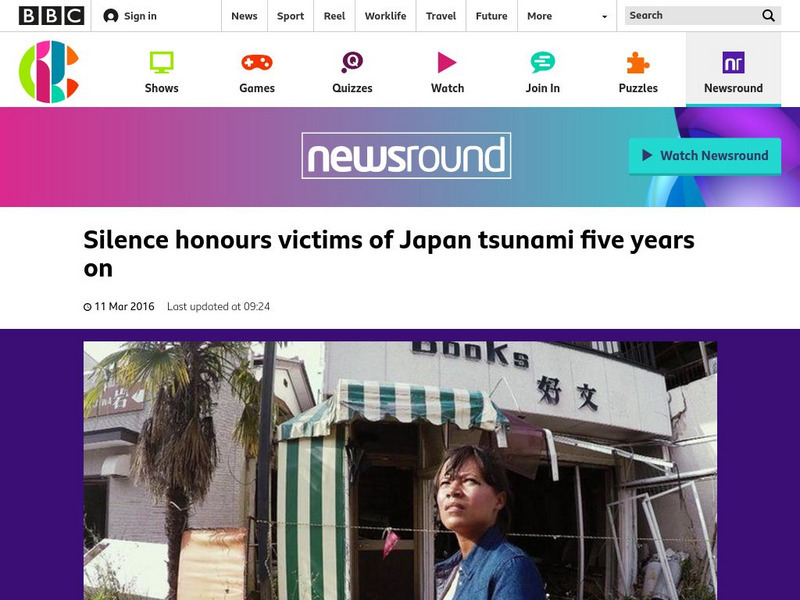
BBC
Bbc Newsround: Silence Honours Victims of Japan Tsunami
Article reports on how the 2011 Japan tsunami is being remembered five years later.
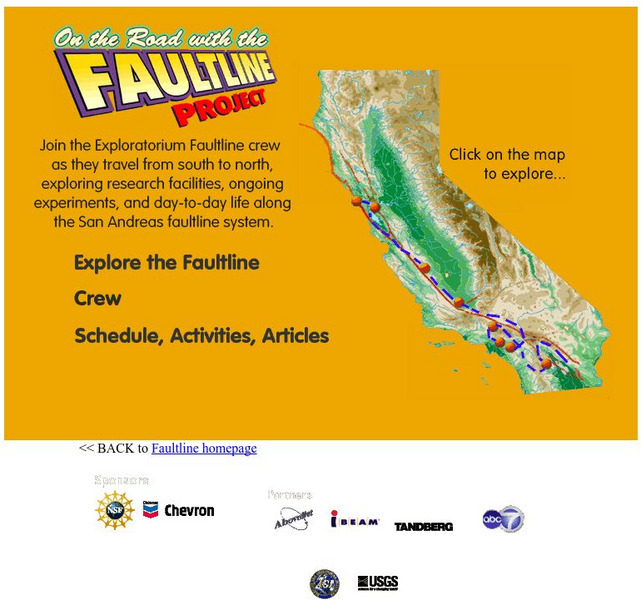
Exploratorium
Exploratorium: On the Road With the Faultline Project
This outstanding multimedia website follows the San Andreas fault system up the California coast from San Diego to just north of San Francisco on the coast.
Geographic
Mexico Geography Index
This homepage provides links to descriptions of the geography of Mexico.
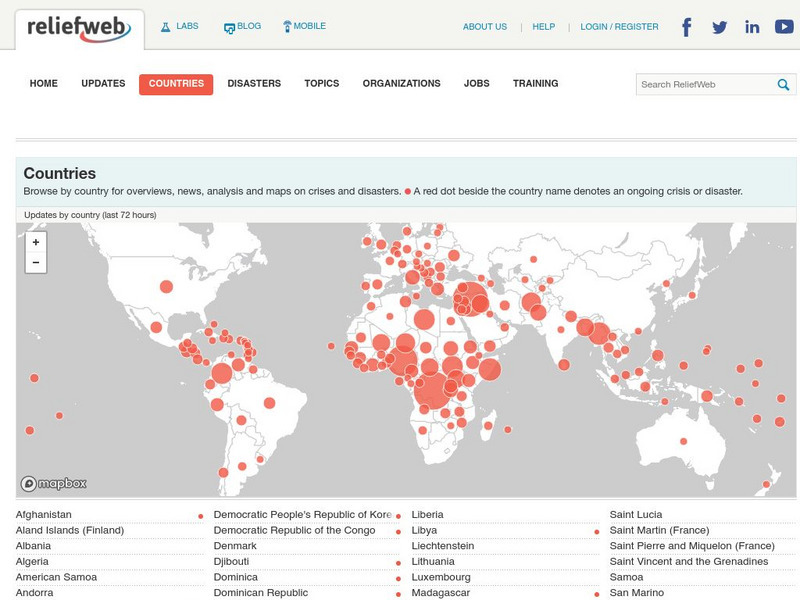
Other
Relief Web: Countries
This resource provides information on countries throughout the world, current news, and different types of maps.
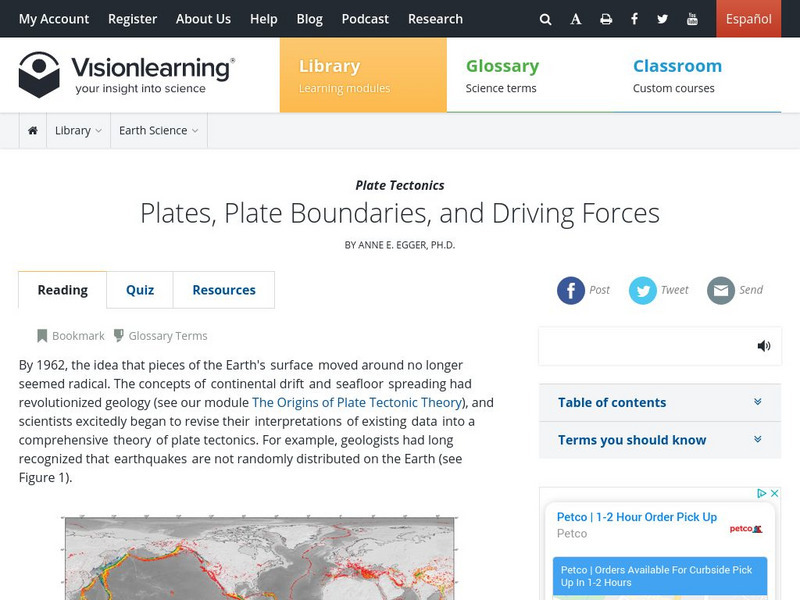
Vision Learning
Visionlearning: Earth Science: Plate Tectonics Ii: Plate Boundaries and Forces
Instructional module focusing on plate tectonics. Discussion includes plates, plate boundaries, and driving forces. Site also includes an interactive practice quiz and links relating to the topic.

University of Wisconsin
University of Wisconsin Department of Civil and Environmental Engineering
This resource provides information about engineering programs and education.
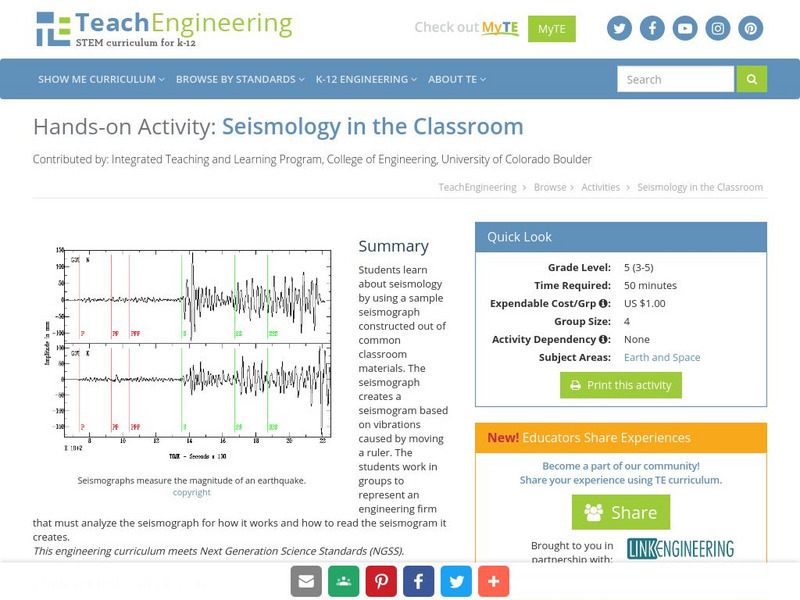
TeachEngineering
Teach Engineering: Seismology in the Classroom
Students learn about seismology by using a sample seismograph constructed out of common classroom materials. The seismograph creates a seismogram based on vibrations caused by moving a ruler. The students work in groups to represent an...
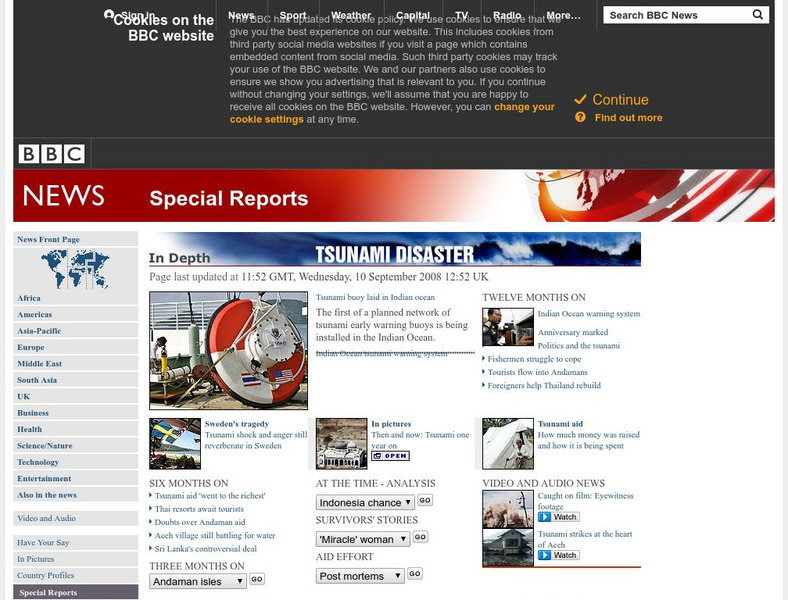
BBC
Bbc: Asia Quake Disaster
BBC's official page for the Tsunami disaster of December 2004. Key Stories, eyewitness accounts, reports from correspondents, and animations provide up to date coverage.
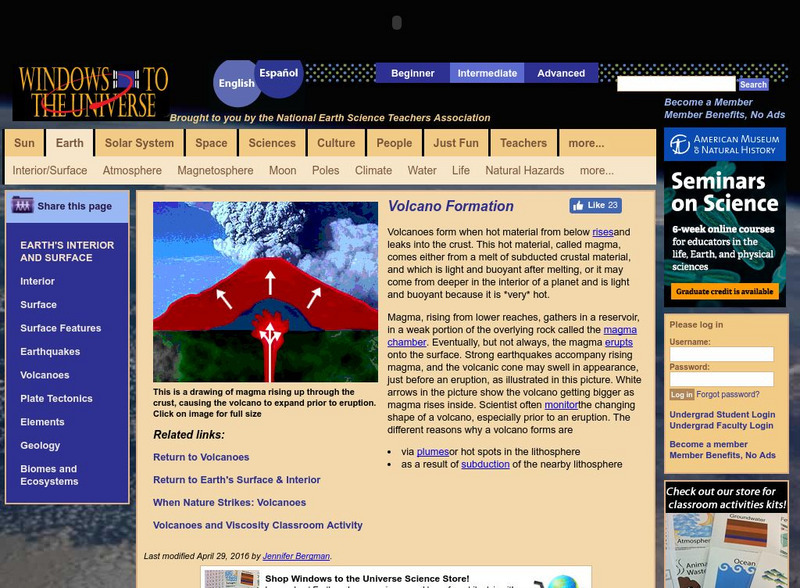
National Earth Science Teachers Association
Windows to the Universe: Volcano Formation
Explanation of the factors that result in the formation of volcanoes, some basic but helpful animations and photographs.

The Guardian
Guardian: Indian Ocean Tsunami Disaster
A Special Report from the Guardian provides the latest news and reports from the tsunami-afflicted countries. Includes animation of the tsunami.
Other popular searches
- Volcanoes and Earthquakes
- San Francisco Earthquake
- Earthquake Proof Buildings
- Indian Ocean Earthquake
- Earthquakes and Epicenter
- Web Quest Earthquakes
- Plotting Earthquakes
- Earthquake Lab
- Earthquake Vocabulary
- Volcanoes Earthquakes
- Earthquake Safety
- Earthquakes Epicenters