Hi, what do you want to do?






University of Virginia
Ancient Reconstruction of the Pompeii Forum
A scholarly investigation into the question of why the Romans did not repair the Forum in Pompeii after the earthquake of 62 C.E (17 years before the eruption of Mt Vesuvius).
CK-12 Foundation
Ck 12: Second Grade Science
[Free Registration/Login may be required to access all resource tools.] This is a science text for Grade 2. Section titles include: A World of Ice and Water, Changes, Earthquakes, The Grand Canyon, Mountains, Preventing Erosion, Tidal...

Other
E Gfi: No Toppling This Tower
Read and learn about Tokyo's 2080-foot Sky Tree, the world's largest broadcast tower built to sustain earthquakes. The information and photo are provided, but the video is no longer available.
Other
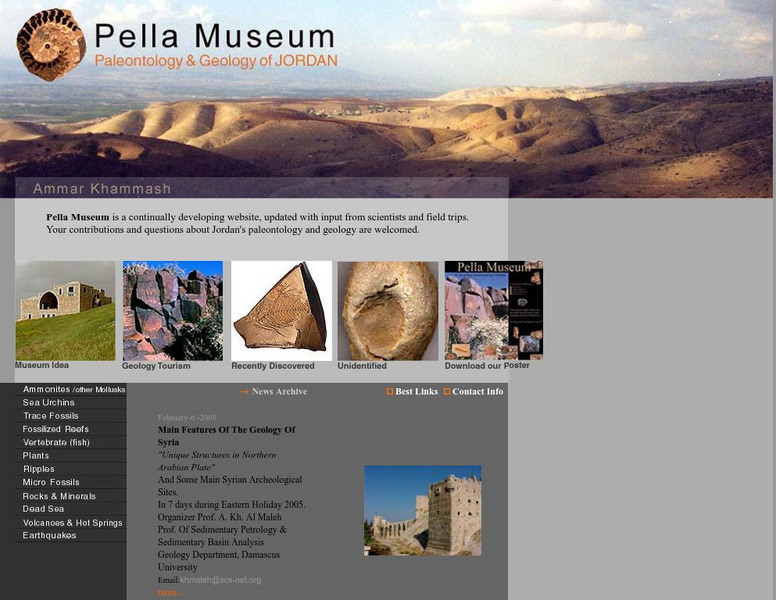
Pella Museum: Paleontology and Geology of Jordan
This English language site focuses on the paleontology, geology, and the fossilized flora, and fauna Jordan. Scientific articles are interspersed with extensive photographs and descriptions of various features.
Other
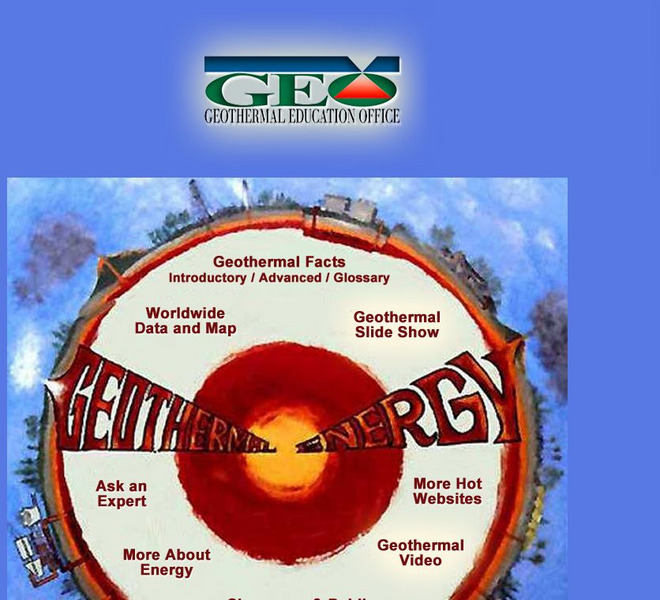
Geothermal Education Office
This resource for geothermal energy education features a slide show with instructive graphics.
The Field Museum
Field Museum: Exhibits: Nature Unleashed: Inside Natural Disasters
Discover the true powers of Mother Nature through this vivid collection of research, which delves into the causes of natural disasters and the impacts on those affected.

NOAA
Noaa: National Weather Service: Jetstream: Tsunamis
Online school for weather presents an abundance of information about tsunamis. Explore how they form, where they occur, how to prepare for one, and how to survive one. A review quiz and lesson plans are included for further enhancement...

Texas Education Agency
Texas Gateway: An Introduction to Plate Tectonics
The following learning module is an exploration of plate tectonics.
Teachnology
Teachnology: Guide to Tsunamis
For any educator preparing a teaching theme/unit on tsunamis, this is the site for you! Links to a myriad of lesson plans, worksheets, interactive sites, teacher resources, and much more are all found on this one site.

Crayola
Crayola: Birth of Islands (Lesson Plan)
This site is a lesson plan that incorporates language arts, social studies, science, and art. After studying islands, and how they're formed, students create their own models using clay. Also provides resources and adaptations. (To...

Michigan Technological University
Michigan Technological University: Up Seis: Seismology and Seismic Waves
Definitions and descriptions of a variety of seismic waves such as S, P, Love, and Rayleigh waves, as well as diagrams and speeds.
US Geological Survey
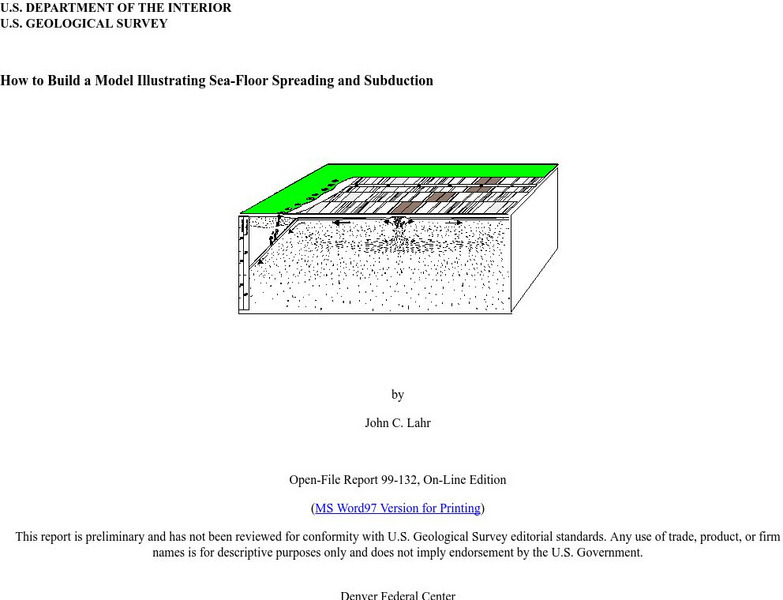
Usgs: How to Build a Model Illustrating Sea Floor Spreading
This is a comprehensive website featuring how to build a model that illustrates sea-floor spreading and subduction. It has diagrams and pictures reviewing major geological concepts.

Incorporated Research Institutions for Seismology
Iris: Exploring the Earth Using Seismology
The paths of some seismic waves and the ground motion that resulted are shown in this poster.
Georgia Department of Education
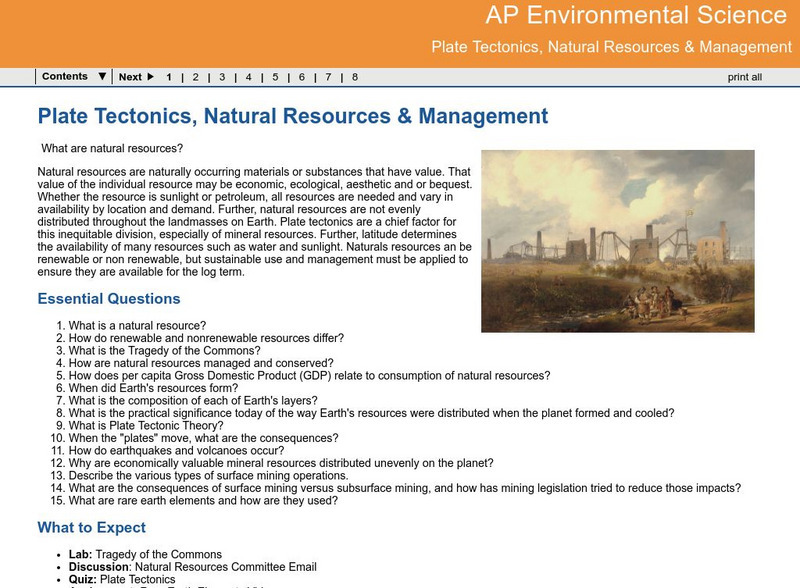
Ga Virtual Learning: Ap Environmental Science: Plate Tectonics,natural Resources
Through interactive activities and readings, students learn that natural resources can be renewable or nonrenewable, but sustainable use and management must be applied to ensure they are available for the long term.
Better Lesson
Better Lesson: Quick or Slow? I've Got to Know!
Earth changes can happen quickly or slowly. The young scholars will work in teams to stake a claim about these changes and then use texts to find evidence to prove their claims. Included in this lesson are video clips of the class, a...
PBS
Pbs Learning Media: Mechanical Waves: Interactive Lesson
Learn about mechanical waves, which transfers energy from one place to another through liquids, gases and solids, with this interactive lesson.
The Washington Post
Washington Post: Mapping America's Wicked Weather and Deadly Disasters
Features data collection for natural disasters and maps the trends giving us an idea of where disasters have a tendency to strike.
NASA
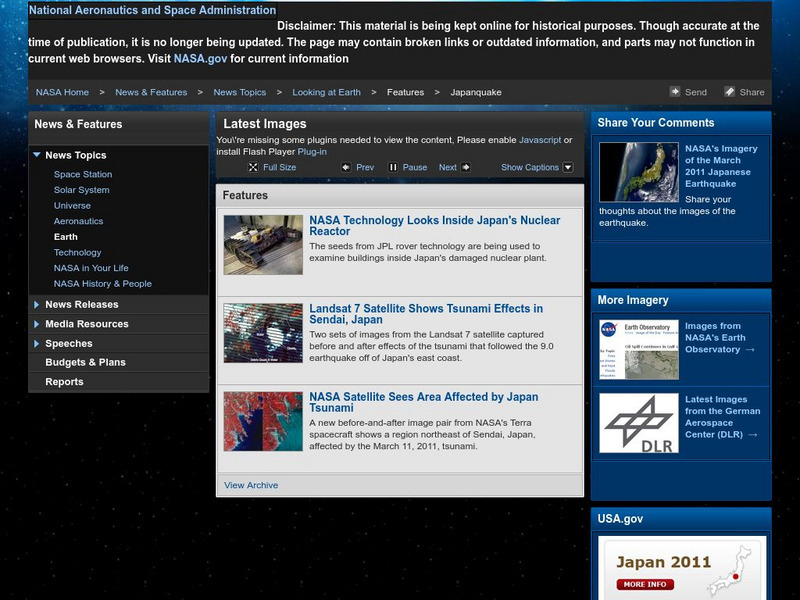
Nasa: Japan Quake
NASA provides technical calculations on the 9.0 quake and tsunami that hit Japan in March, 2011. Find satellite images, as well as narrative on the effects of the quake on Japan and the Earth itself.
Other
University of Bristol: Tacoma Narrows Bridge Disaster
The Tacoma Narrows Bridge disaster was caused by wind vibrations. Wind in a valley spanned by the Tacoma Narrows Bridge causes the bridge to vibrate so much it collapsed. Shows pictures of the bridge as it is collapsing.

PBS
Wnet: Thirteen: Savage Earth: Waves of Destruction, a Tsunami Animation
View a brief animation that explains the science behind a tsunami.
PBS
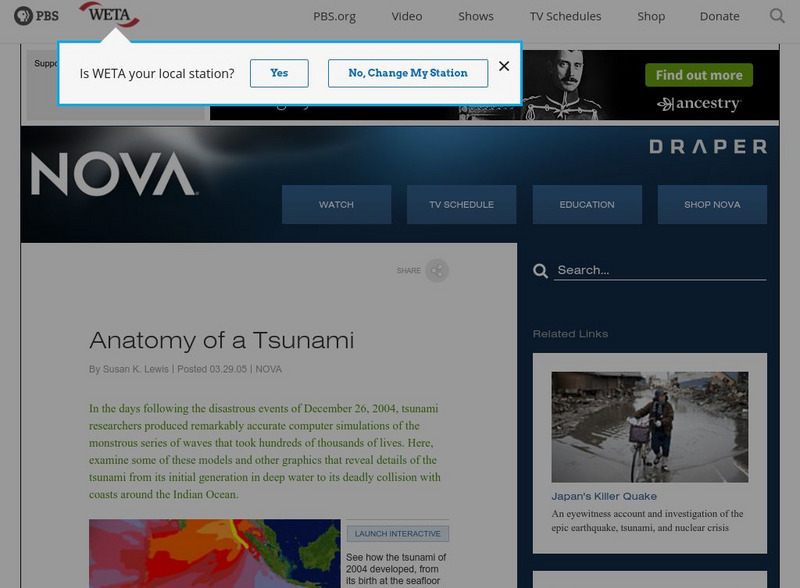
Pbs: Anatomy of a Tsunami
Scientists used maps and seismic data to produce a computer simulation that accurately shows the creation of the wave that shook the world. In this interactive, examine some of the models and images that reveal details of the tsunami...

BBC
Bbc: In Pictures: Indonesian Tsunami
From July, 2006, photographic slideshow graphically detailing the tsunami that hit the Indonesian island of Java.
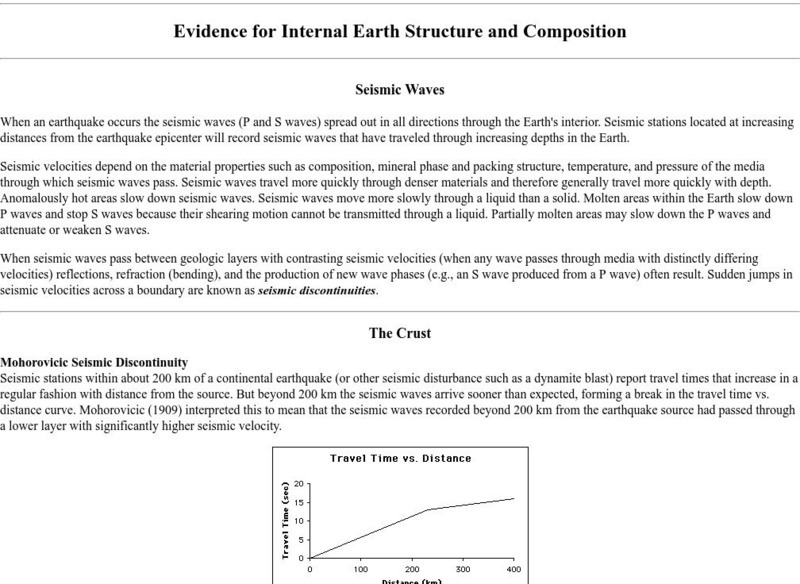
Columbia University
Columbia University: Evidence for Internal Earth Structure and Composition
College-level research information describes how the movement of Earth's interior causes seismic wave activity.
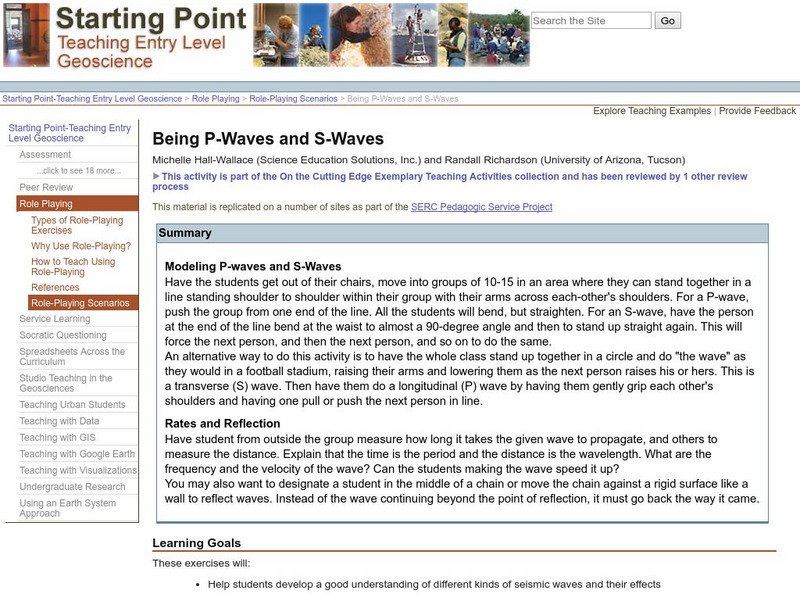
Science Education Resource Center at Carleton College
Serc: Being P Waves and S Waves
In this lesson students develop a good understanding of different kinds of seismic waves and their effects.
Other popular searches
- Volcanoes and Earthquakes
- San Francisco Earthquake
- Earthquake Proof Buildings
- Indian Ocean Earthquake
- Earthquakes and Epicenter
- Web Quest Earthquakes
- Plotting Earthquakes
- Earthquake Lab
- Earthquake Vocabulary
- Volcanoes Earthquakes
- Earthquake Safety
- Earthquakes Epicenters