Hi, what do you want to do?





NOAA
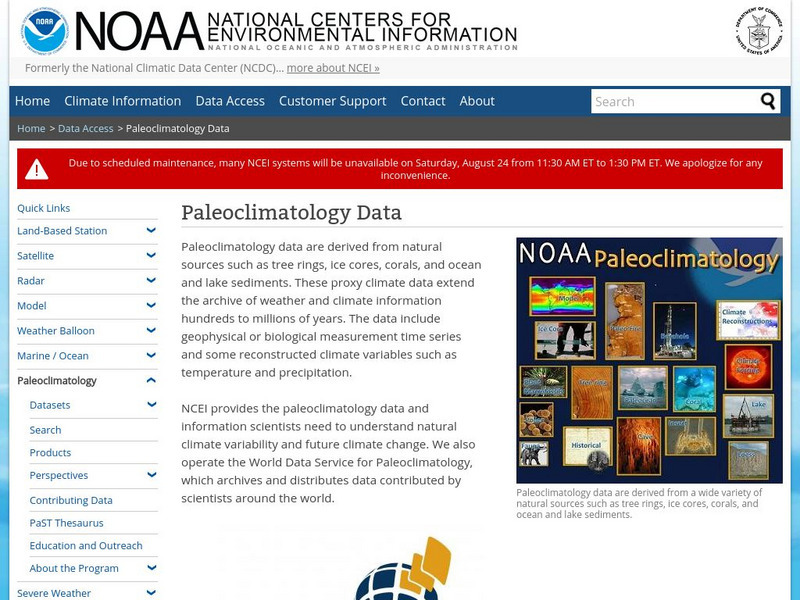
Noaa: Paleoclimatology Program: Astronomical Theory of Climate Change
Use this site to learn how the Earth's not-so-circular orbit around the sun has affected our climate over thousands of years, and continues to affect our climate now.
American Geosciences Institute
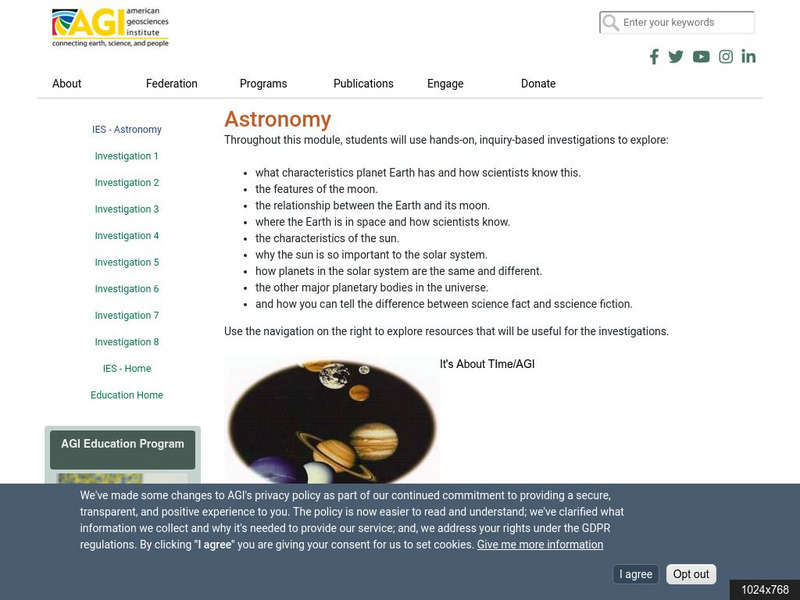
American Geosciences Institute: Astronomy
Eight hands-on lessons module in which students explore the characteristics of planet Earth, its moons, the sun, the solar system, planets, and the difference between science fact and science fiction.
NASA
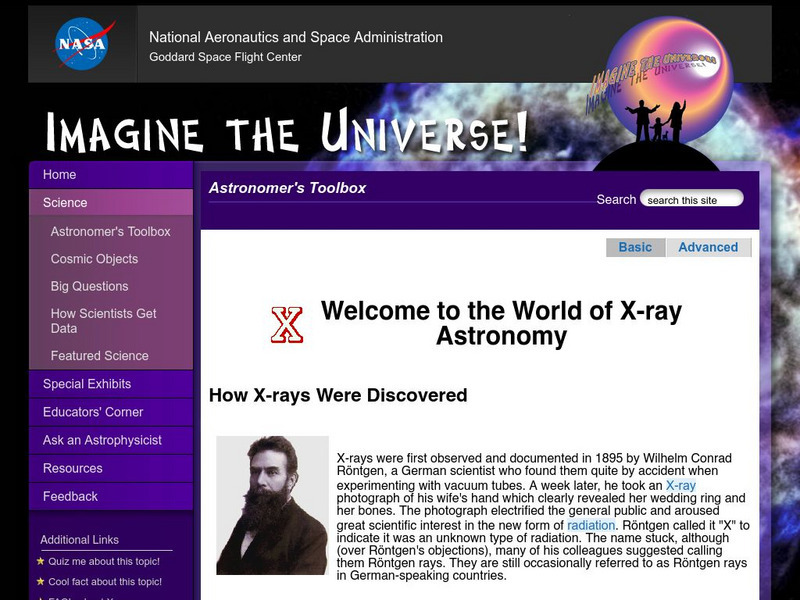
Nasa: Imagine the Universe: Welcome to the World of X Ray Astronomy
Site recounts how X-rays were discovered as well as who discovered them. Offers graphics, links to facts on this topic, a quiz, and teacher resources.
Utah Education Network
Uen: Trb 3:1: Investigation 4: Day and Night
A instructional activity for third graders in which they learn about the rotation of the Earth on its axis and how this movement creates day and night. They also examine the orbit of the moon about the Earth and the Earth's orbit around...

Curated OER
Harvard University: The Earths Orbit
Students perform many inquiry activities related to Earth's orbit. Included are recording daily temperatures, observing the sun's path over several weeks, tracking sunrise and sunset times, and angle of sunlight. Diagrams make lessons...
Curated OER
Harvard University: The Earths Orbit
Students perform many inquiry activities related to Earth's orbit. Included are recording daily temperatures, observing the sun's path over several weeks, tracking sunrise and sunset times, and angle of sunlight. Diagrams make lessons...

TeachEngineering
Teach Engineering: A Roundabout Way to Mars
Students explore orbit transfers and, specifically, Hohmann transfers. They investigate the orbits of Earth and Mars by using cardboard and string. Students learn about the planets' orbits around the sun, and about a transfer orbit from...
Oklahoma Mesonet
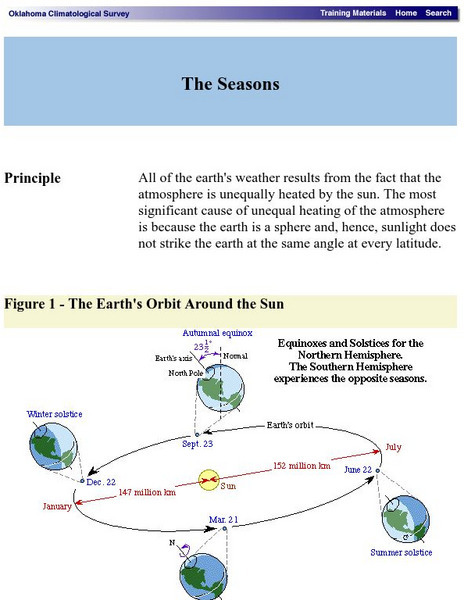
Oklahoma Climatological Survey: The Seasons
Find out what the seasons are and how they change. Through the use of excellent graphics, content explores the Earth's orbit around the sun and how sunlight reaches the earth at equinox and the winter solstice.
Rice University
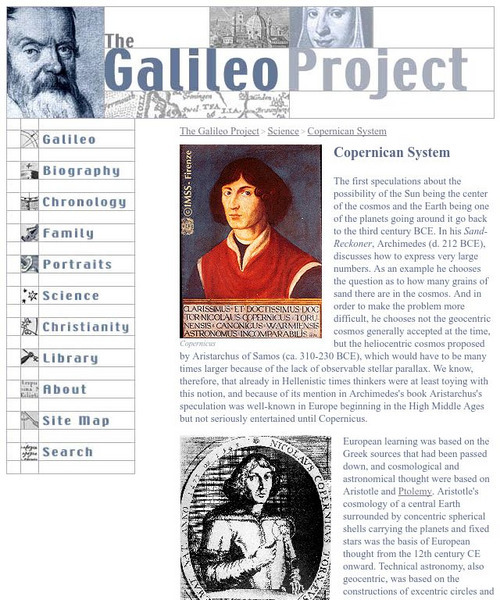
Galileo Project: The Copernican System
This site from The Galileo Project of Rice University contains information relating to Copernicus's sun-centered solar system theory. Pictures are provided throughout this article along with links to additional information.
NASA
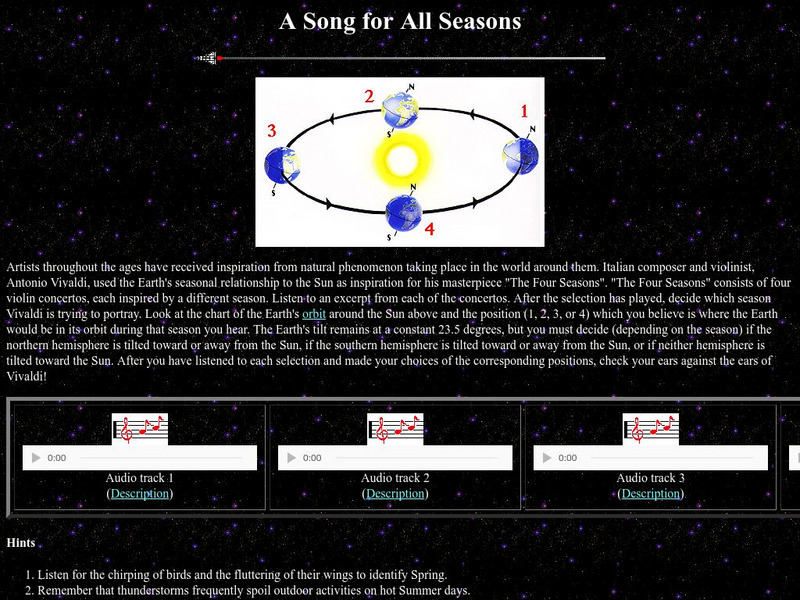
Nasa Star Child: A Song for All Seasons
After listening to excerpts from four of the violin concertos from "The Four Seasons" by Italian composer and violinist, Antonio Vivaldi, decide which excerpt was meant to go with which season, and also decide where the earth would be in...
Nine Planets
The Eight Planets: Just for Kids
Here is a clear, simple picture of the solar system. Click on the names of the planets to learn more about each. Clicking on underlined terms takes you to more and more detailed scientific information.
NASA
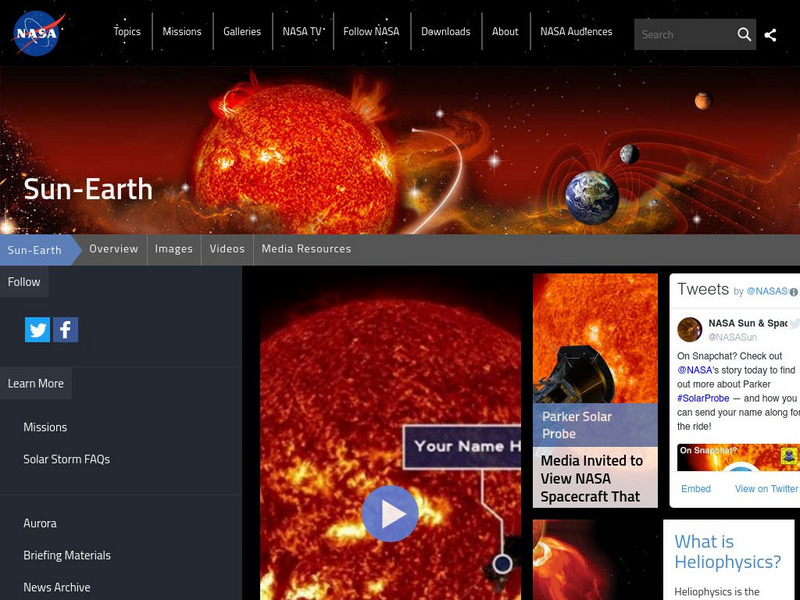
Nasa: Heliophysics: New Science of the Sun Solar System Connection
This site from NASA lists common and uncommon misconceptions about Sun-Earth Science. Site also provides links to activities and lesson plans as well as background reading.
McREL International
Mc Rel: Earth's Axis [Pdf]
A learning exercise regarding the path of the Sun around the Earth and the Earth's tilt on its axis.
Harvard University
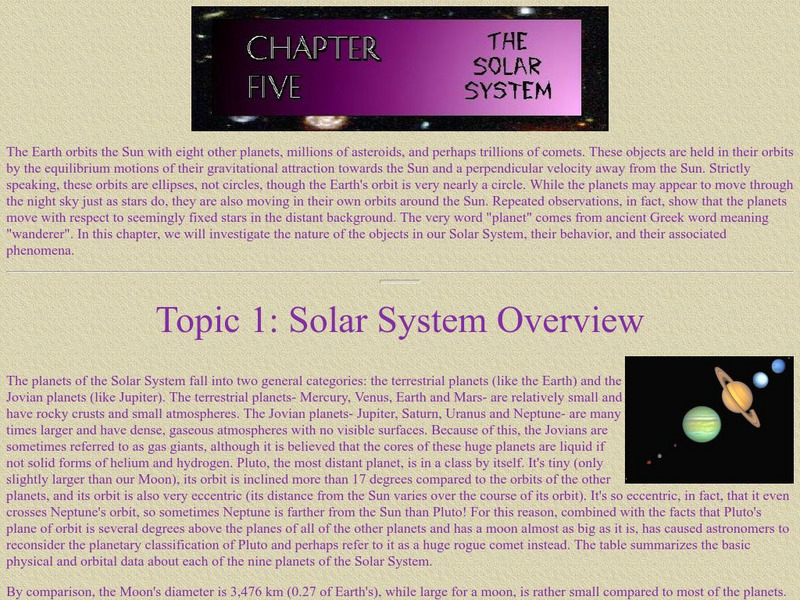
Harvard University: The Solar System
These hands-on activities are a great way for students to gain perspective on the relative sizes and distances of each planet, the relationship between the sun and Earth, and much more.
Harvard University
Harvard Smithsonian: Everyday Classroom Tools
The focus of this series of lessons is to engage students in an exploration of the world around them. The emphasis is on inquiry as students learn about the earth, sun, light, shapes and more.
PBS
Pbs Learning Media: All Planet Sizes
This illustration from the Lunar and Planetary Laboratory shows the approximate sizes of the planets relative to each other. Note that the planets are not shown at appropriate distances from the Sun.
Cornell University
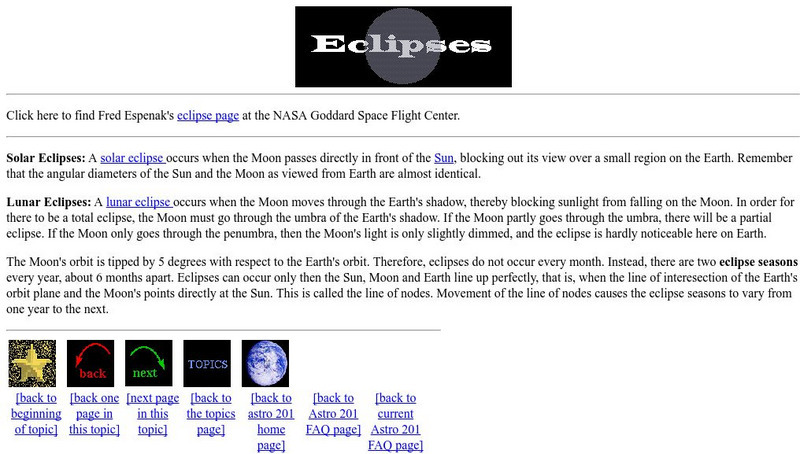
Cornell University: Astronomy: Eclipses
This site from the Astronomy Department of Cornell University provides brief introduction to both solar and lunar eclipses. Links are provided for pictures and charts of the eclipses, and this is a good site to check out on the subject.
National Earth Science Teachers Association
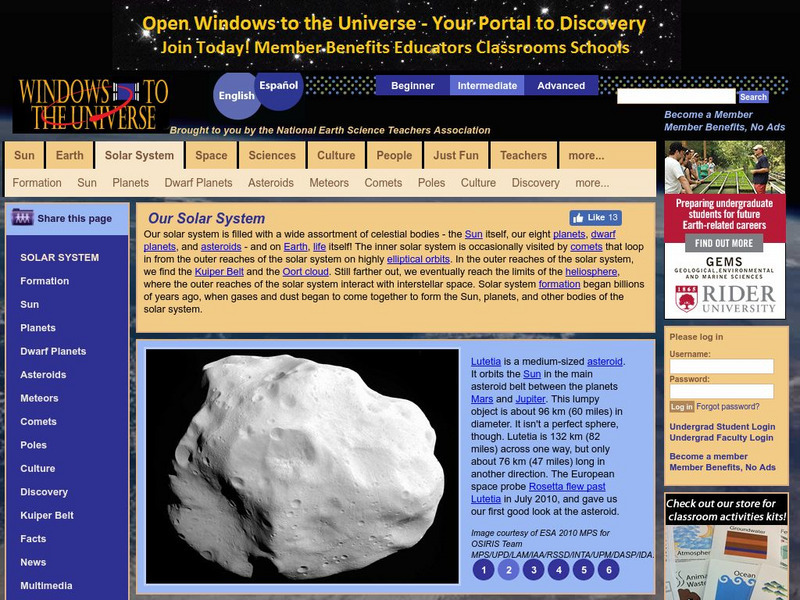
Windows to the Universe: Our Solar System
Our solar system is filled with a wide assortment of celestial bodies - the Sun itself, our eight planets, dwarf planets, and asteroids - and on Earth, life itself! The inner solar system is occasionally visited by comets that loop in...

Enchanted Learning
Enchanted Learning: Zoom Astronomy
Where is our Solar System? How far away is the sun? What makes up the sun? Find out all you want to know about our solar system. This is a comprehensive on-line site about space and astronomy. Check out all of the excitement!
TeachEngineering
Teach Engineering: Solar System!
An introduction to our solar system: the planets, our Sun and our Moon. Students begin by learning the history and engineering of space travel. They make simple rockets to acquire a basic understanding Newton's third law of motion. They...