Hi, what do you want to do?





American Museum of Natural History
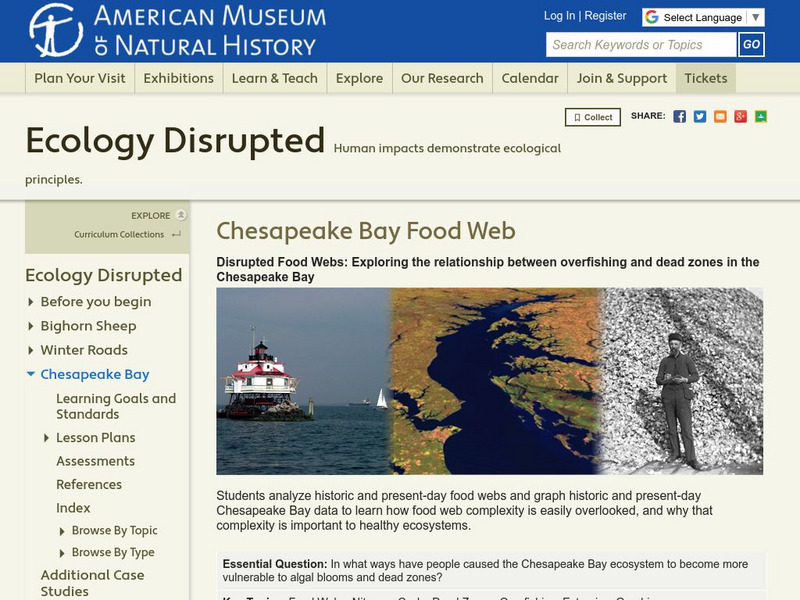
American Museum of Natural History: Ecology Disrupted: Chesapeake Bay Food Web
In this comprehensive lesson unit, students examine how overfishing has affected Chesapeake Bay's ecosystem. They will study food webs from the past and present and graph related data.

Annenberg Foundation
Annenberg Learner: The Habitable Planet: Ecology Lab
Create the parameters of your own ecosystem by choosing which producers and consumers live there. Visualize how the food web operates and species populations change. This simulator mimics the food web within a typical ecosystem and gives...

BioEd Online
Bio Ed Online: Bio Build Up
This activity allows students to make a simple model food chain and observe how toxic chemicals can become concentrated in the bodies of consumers at the top of the chain.
PBS
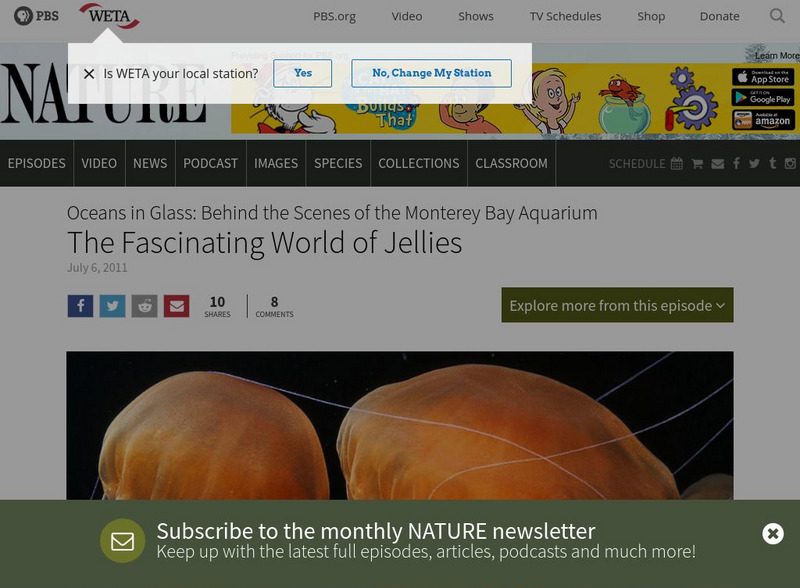
Pbs: Nature: The Fascinating World of Jellies
Learn about the mysterious jellyfish blooms that have occurred in the world's oceans. Because the resulting alteration to the marine food web has had devastating effects, researchers grow and study jellyfish at the Monterey aquarium....
Science Struck
Science Struck: Food Chain in the Tundra Region
Describes the characteristics of a tundra biome, how a tundra food chain compares to a tropical food chain, and what the different trophic levels look like.
BiologyWise
Biology Wise: Understanding the Process of Biological Magnification
Biological magnification is the term used to described the increasing accumulation of substances in organisms as one looks at higher trophic levels in a food chain. When that substance is a toxin, such as a heavy metal or a pesticide,...