Hi, what do you want to do?





CK-12 Foundation
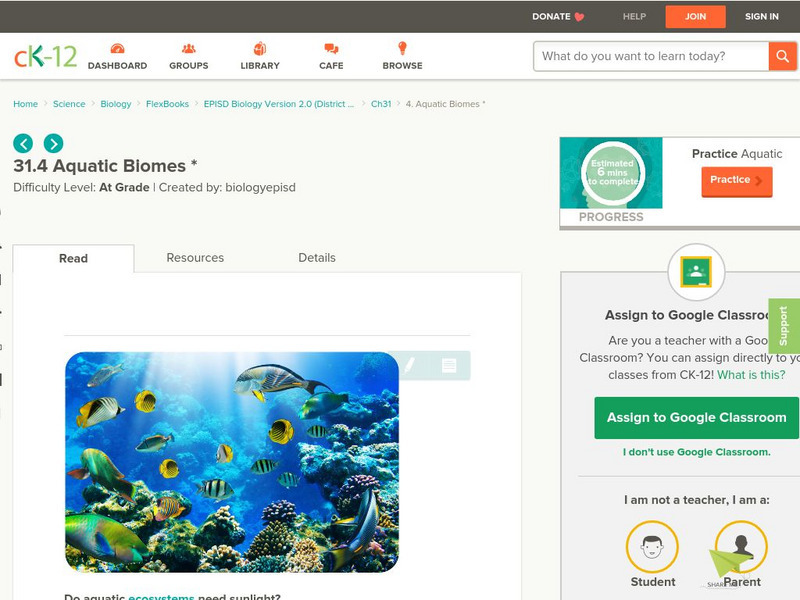
Ck 12: Episd: Aquatic Biomes
[Free Registration/Login may be required to access all resource tools.] Students will recognize aquatic biomes and understand the adaptations necessary to survive in one.
Other
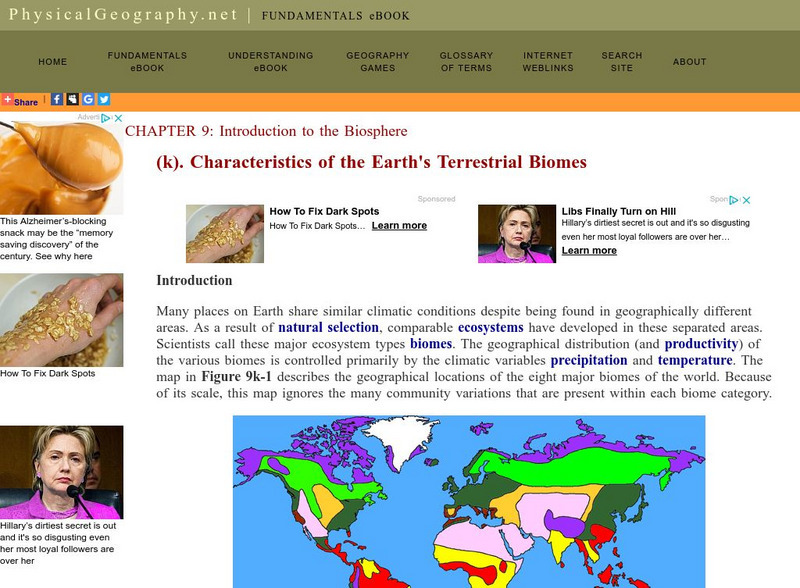
Introduction to the Biosphere: Characteristics of the Earth's Terrestrial Biomes
From Chapter 9 of a textbook on physical geography that covers the biosphere. Important vocabulary is highlighted and linked to a glossary. It explains the characteristics of a biome, and describes the features of the eight different...
American Institute of Biological Sciences
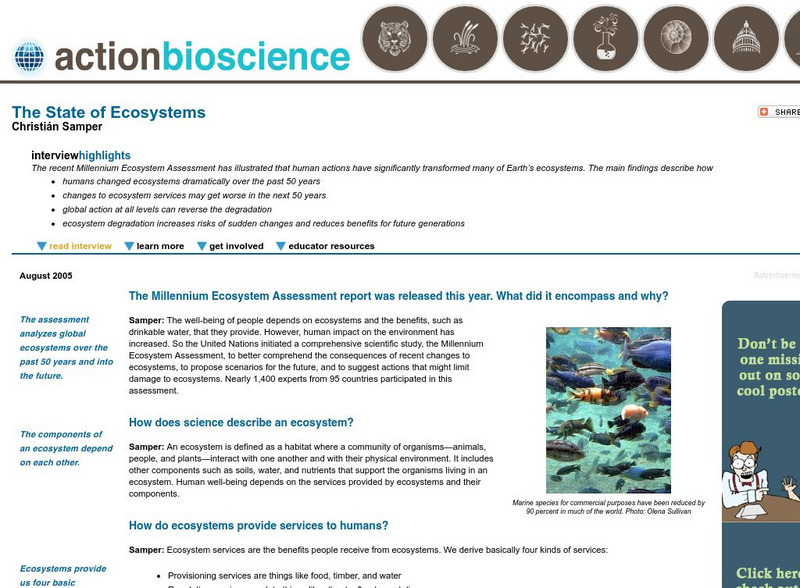
Action Bioscience: The State of Ecosystems
Christian Samper details The Millennium Ecosystem Assessment, a report highlighting the detrimental impact of human life on the ecosystems of Earth over the past fifty years. Ecosystems have been deteriorating from a variety of waste and...
Georgia Department of Education
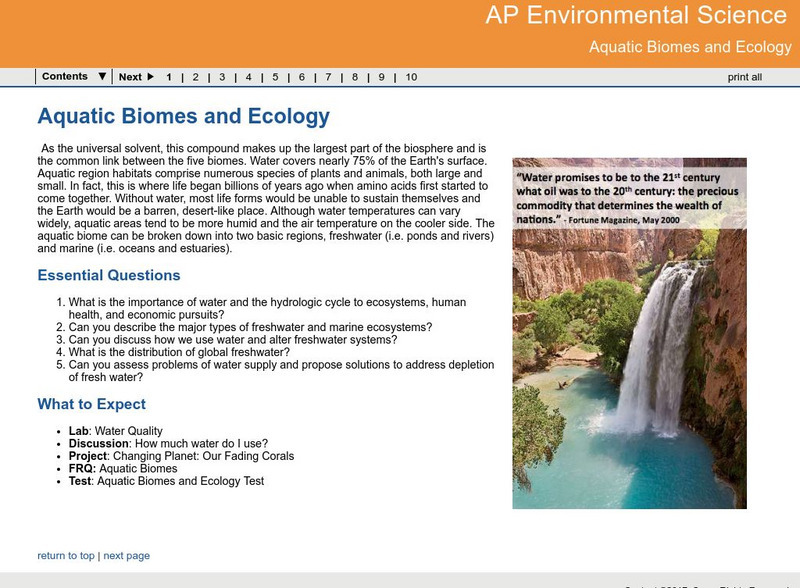
Ga Virtual Learning: Ap Environmental Science: Aquatic Biomes and Ecology
Students explore Earth's most important natural resource, water, and learn about how the planet's aquatic biomes thrive and support life.
American Institute of Biological Sciences
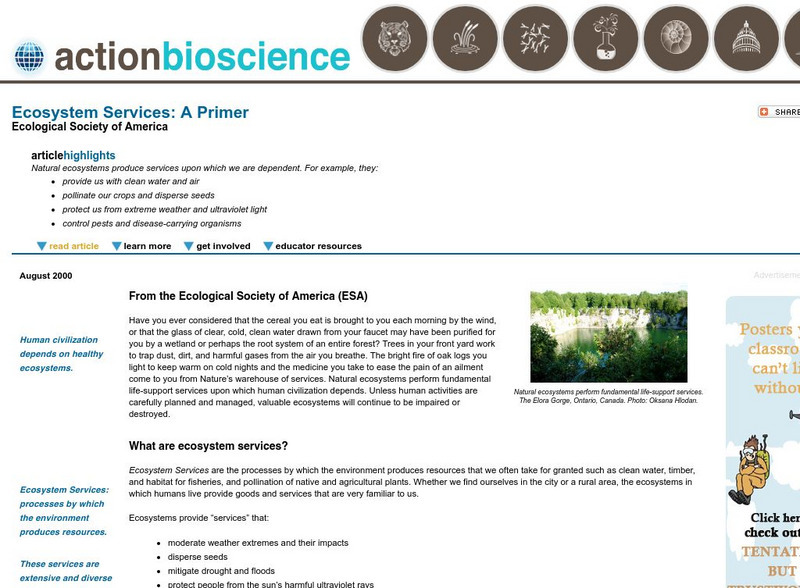
Action Bioscience: Ecosystem Services: A Primer
It is humans' responsibility to take care of the Earth's many ecosystems. Many of the daily things we take for granted - e.g., clean water and air, pest control, and protection from severe weather - are results of healthy ecosystems....
PBS
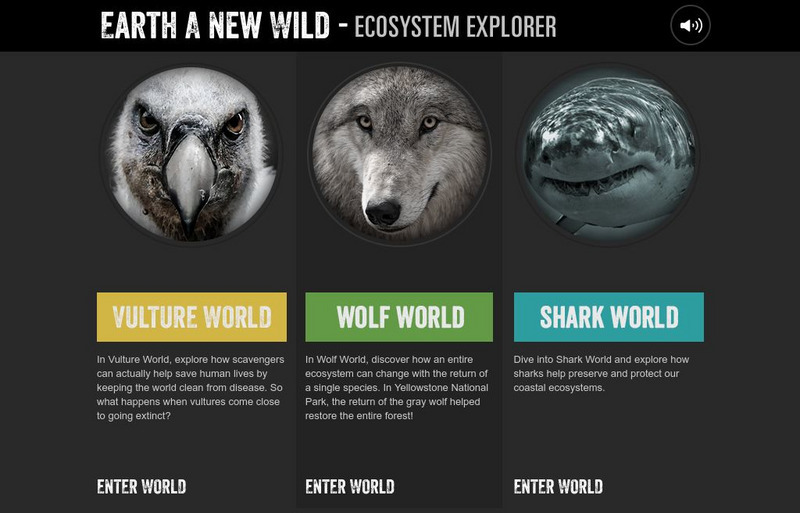
Pbs Learning Media: Earth a New Wild: Ecosystem Explorer
Three choices of virtual worlds to enter: a vulture, a wolf or a shark world. Once inside these worlds view videos, play games, and discover the ecosystems of these wild animals.
Other
Ecological Society of America: Communicating Ecosystem Services
A large collection of resources to aid professionals, community members, and educators in communicating the role and importance of ecosystem services. Issues addressed include pollination, marine nurseries, and water purification....

Science Education Resource Center at Carleton College
Serc: Our Big Backyard: How Does Our Local Ecosystem Change During the Year?
Get students observing the environment around their school with this activity. In this lab experiment, students keep a journal containing written observations and digital pictures of how local flora and fauna change during the school year.

Utah Education Network
Uen: Mini Ecosystems
Third graders will make small-scale environments and will describe interactions between living and nonliving things in their environments.
Center for Educational Technologies
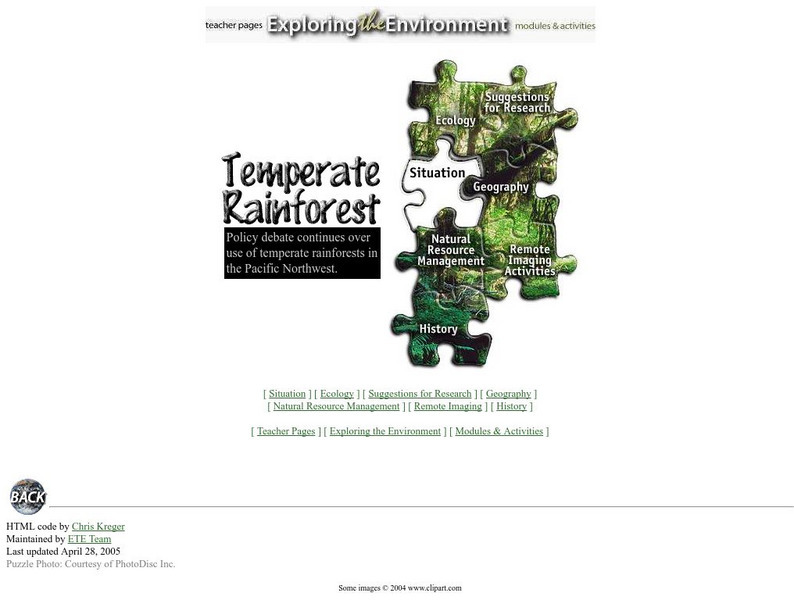
Nasa Classroom of the Future: Temperate Rainforest: Ecology and Land Use
Use these resources to study the ecology of the rainforest of the Pacific Northwest and issues surrounding its preservation.
Other
Ohio Department of Education: The Long and Short Story of Ecological Succession
An ecology simulation where each student plays a role of an organism in an forest ecosystem. Students earn and keep track of their own survival points to determine which type of organism is most successful at survival during different...
CK-12 Foundation
Ck 12: Episd: Habitat and Niche
[Free Registration/Login may be required to access all resource tools.] Students will identify and present the differences between a habitat and a niche.
PBS
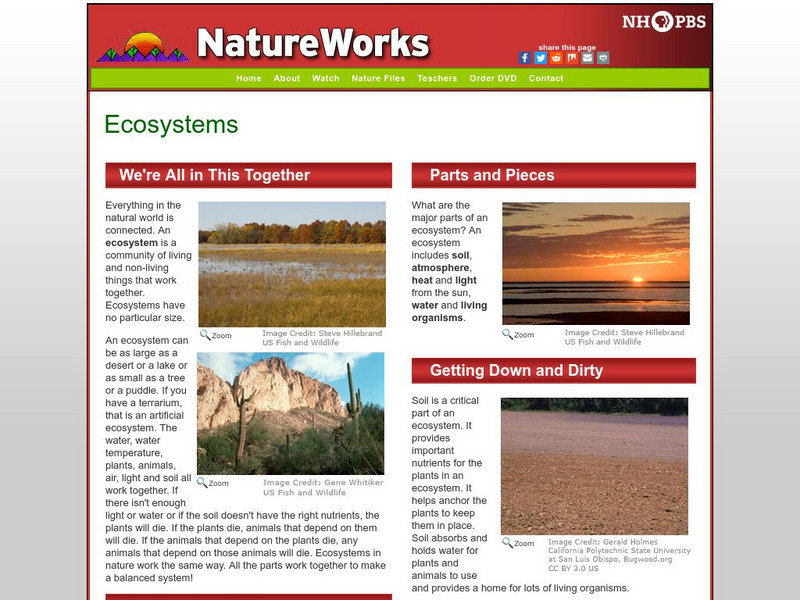
Nh Pbs: Nature Works: Ecosystems
How would you define an ecosystem? Check out this educational resource to learn more about the living and nonliving parts of different ecosystems.
Other
Biology at Shaw High School: What Do Living Things Need to Survive?
Discusses the interrelatedness of all living things and of ecosystems and biomes, and what organisms need to survive and to maximize the carrying capacity of an ecosystem. This explanation is followed by a series of activities including...

The Environmental Literacy Council
Environmental Literacy Council: Ecosystems
Article explaining ecosystems and why we use them to organize our ideas about the natural world. Links to additional resources, maps, and activities.
Utah Education Network
Uen: Animals in the Ecosystems
Write about animal contributions to their environment.
CK-12 Foundation
Ck 12: Life Science: Aquatic Biomes
[Free Registration/Login may be required to access all resource tools.] Aquatic biomes can be generally classified based on the amount of salt in the water. Freshwater biomes have less than 1% salt and are typical of ponds and lakes,...
National Earth Science Teachers Association
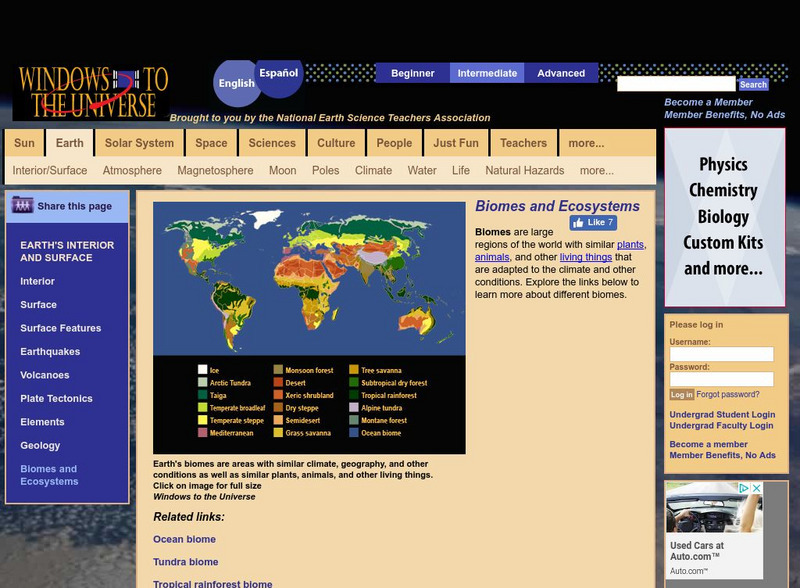
Windows to the Universe: Biomes and Ecosystems
Are you looking for a good starting place on where to research biomes? This site would be a great place to start as it contains lots of information about all the different biomes on Earth.
CK-12 Foundation
Ck 12: Life Science: 12.12 Biome
Learn how the biomes of the world are determined by their climate and ecosystem.

Untamed Science
Untamed Science: Biology: World Biomes: Lakes and Ponds Biome
Learn about the biotic and abiotic factors of lakes and ponds as well as learning how lakes form through reading and video clips.
Sophia Learning
Sophia: Terrestrial Biomes
A short introduction to the terrestrial biomes around the globe.
Government of Canada
Government of Canada: Environment: Ecosystem Initiatives
This resource provides information on ecosystem initiatives and the programs in Canada that are working to preserve area ecosystems.
CK-12 Foundation
Ck 12: Life Science: 12.14 Aquatic Biomes
Understand the living and nonliving aspects of aquatic ecosystems.

Open Curriculum
Open Curriculum: Terrestrial Biomes
Students learn how terrestrial biomes are classified and distributed around the globe.