Hi, what do you want to do?






National Geographic
National Geographic: Engineering Solutions to Freshwater Problems
Explore how water-based problems in freshwater outlets can be resolved or slowed down with engineering solutions.
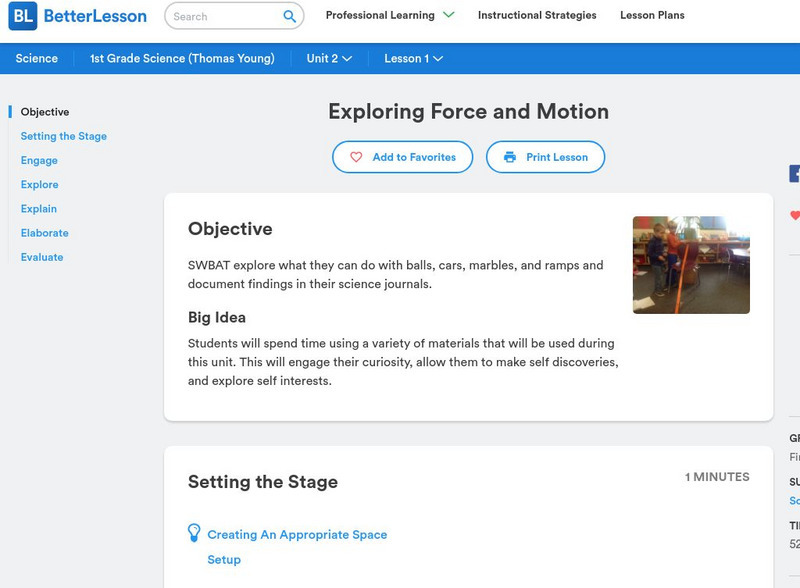
Better Lesson
Better Lesson: Exploring Force and Motion
Students will explore what they can do with balls, cars, marbles, and ramps and document findings in their science journals. This will engage their curiosity, allow them to make self-discoveries, and explore self-interests.
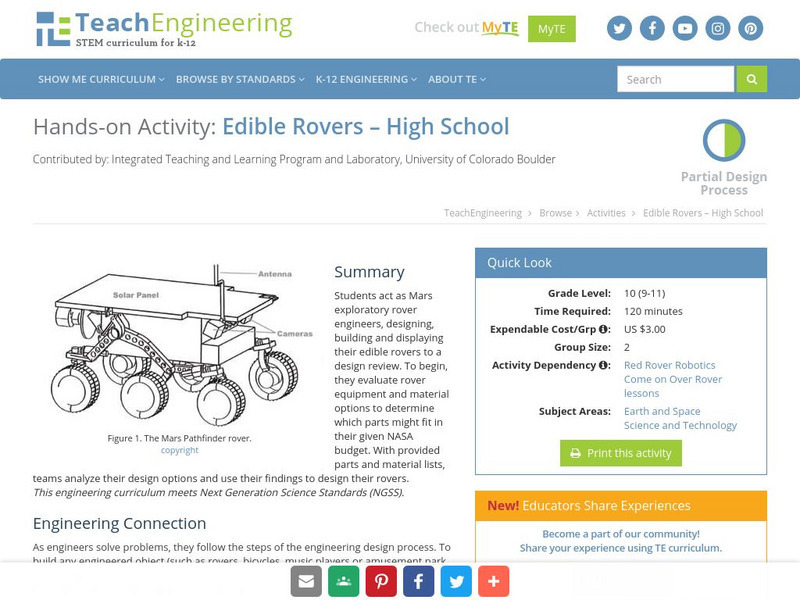
TeachEngineering
Teach Engineering: Edible Rovers High School
Students act as Mars exploratory rover engineers, designing, building and displaying their edible rovers to a design review. To begin, they evaluate rover equipment and material options to determine which parts might fit in their given...
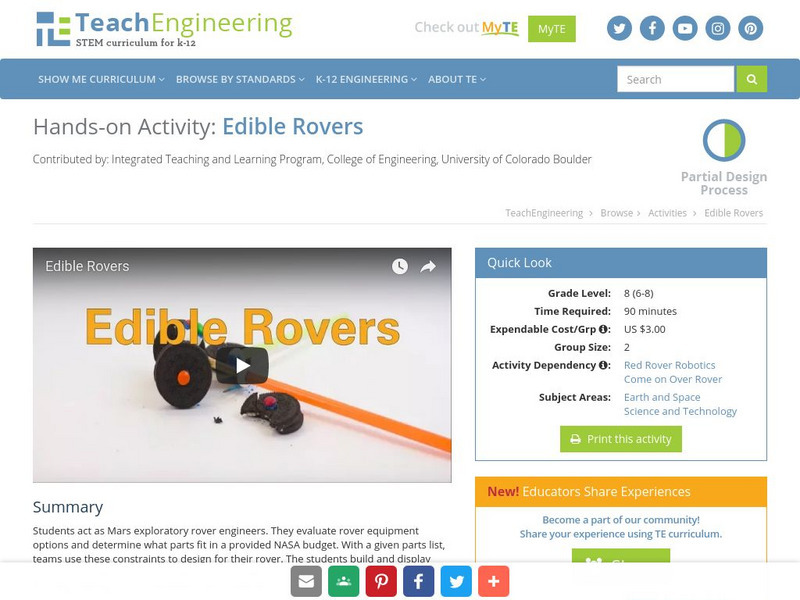
TeachEngineering
Teach Engineering: Edible Rovers
Students act as Mars exploratory rover engineers. They evaluate rover equipment options and determine what parts fit in a provided NASA budget. With a given parts list, teams use these constraints to design for their rover. The students...
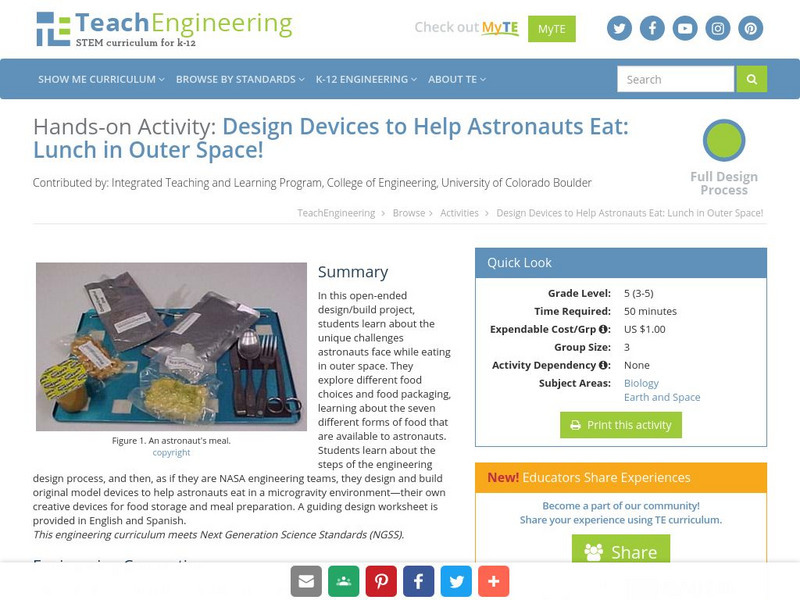
TeachEngineering
Teach Engineering: Lunch in Outer Space!
Students learn about the unique challenges astronauts face while eating in outer space. They explore different food choices and food packaging. Students learn about the engineering design process, and then, as NASA engineering teams,...
TeachEngineering
Teach Engineering: Battling for Oxygen
Using gumdrops and toothpicks, students conduct a large-group, interactive ozone depletion model. Students explore the dynamic and competing upper atmospheric roles of the protective ozone layer, the sun's UV radiation and harmful...
TeachEngineering
Teach Engineering: Are We Alone?
The year is 2032 and your class has successfully achieved a manned mission to Mars! After several explorations of the Red Planet, one question is still being debated: "Is there life on Mars?" The class is challenged with the task of...
TeachEngineering
Teach Engineering: Team Up!
Students explore the physical and psychological effect of stress and tension on human beings. They develop their observing, thinking, writing and teamwork skills by working on a group art project and reporting about it. They learn about...
TeachEngineering
Teach Engineering: Be "Cool" With Popsicle Engineering
Beginning kindergarteners are introduced to science and engineering concepts through questions such as "What is a Scientist?" and "What is an Engineer?", and go on to compare and contrast the two. They are introduced to five steps of the...

Google Cultural Institute
Google Cultural Institute: Women in Science, Technology, Engineering, and Math
Explore the historic reasons women are underrepresented in science, technology, engineering, and mathematics today.
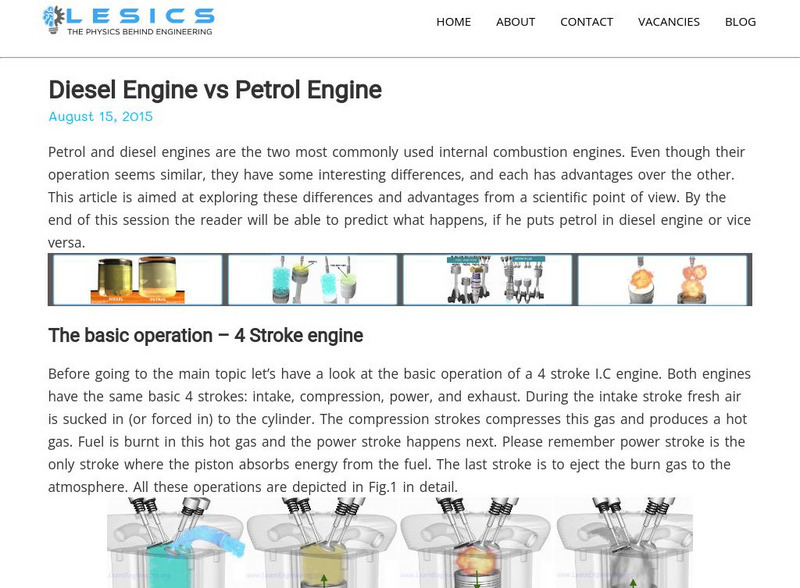
Learn Engineering
Learn Engineering: Diesel Engine vs. Petrol Engine
This video and article explore the differences and the similarities between petrol and diesel engines. The article discusses all topics found in the video. [4:06]
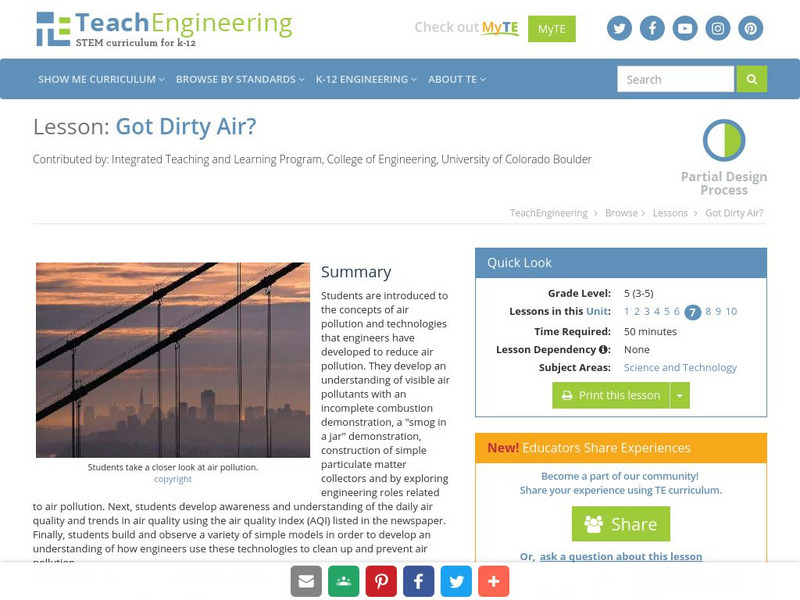
TeachEngineering
Teach Engineering: Got Dirty Air?
This instructional activity introduces students to the concepts of air pollution and technologies that have been developed by engineers to reduce air pollution. Students develop an understanding of visible air pollutants with an...
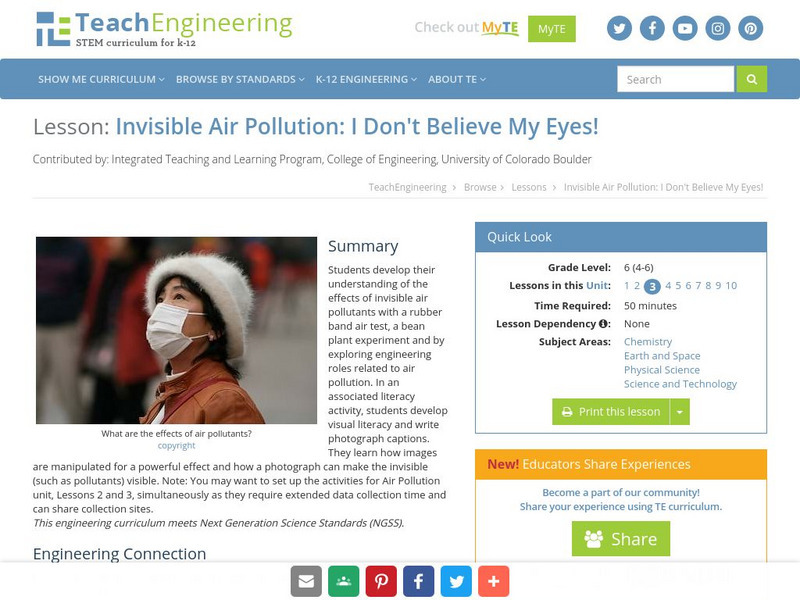
TeachEngineering
Teach Engineering: I Don't Believe My Eyes!
Students develop their understanding of the effects of invisible air pollutants with a rubber band air test, a bean plant experiment and by exploring engineering roles related to air pollution. In an associated literacy activity,...
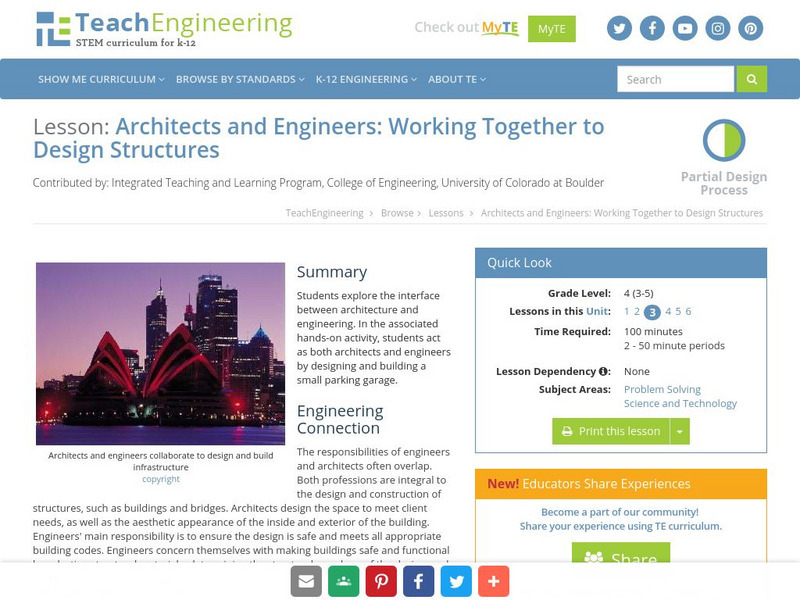
TeachEngineering
Teach Engineering: Architects and Engineers
Students explore the interface between architecture and engineering. In the associated hands-on activity, students act as both architects and engineers by designing and building a small parking garage.
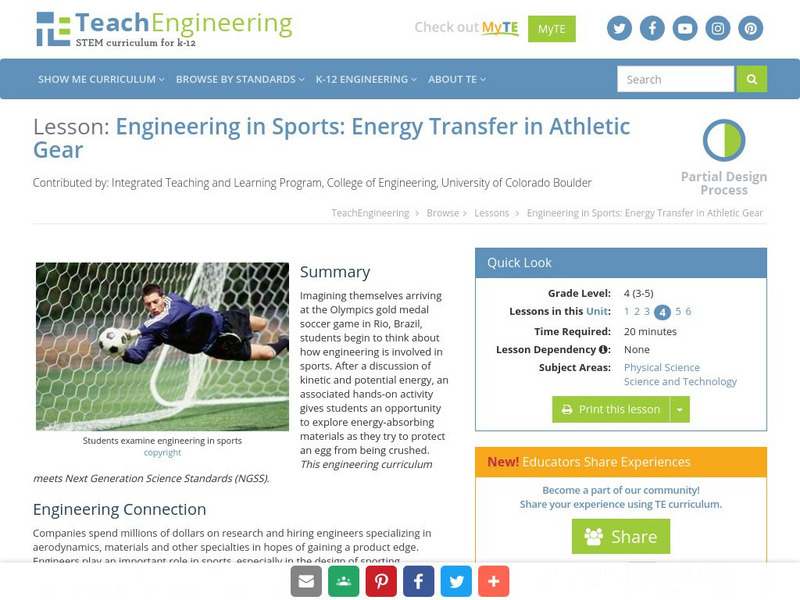
TeachEngineering
Teach Engineering: Engineering in Sports
Imagining themselves arriving at the Olympic gold medal soccer game in Beijing, students begin to think about how engineering is involved in sports. After a discussion of kinetic and potential energy, an associated hands-on activity...
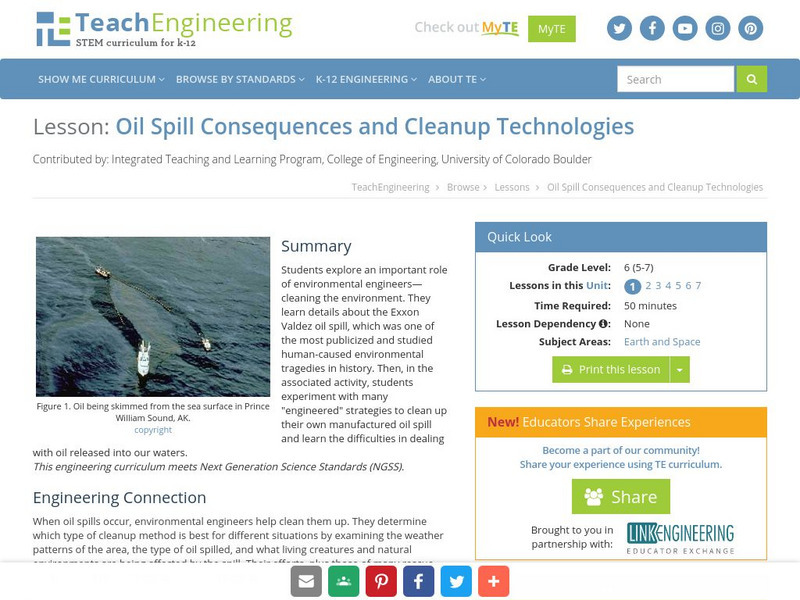
TeachEngineering
Teach Engineering: Oil Spill
This lesson will allow students to explore an important role of environmental engineers: cleaning the environment. Students will learn details about the Exxon Valdez oil spill, which was one of the most publicized and studied...
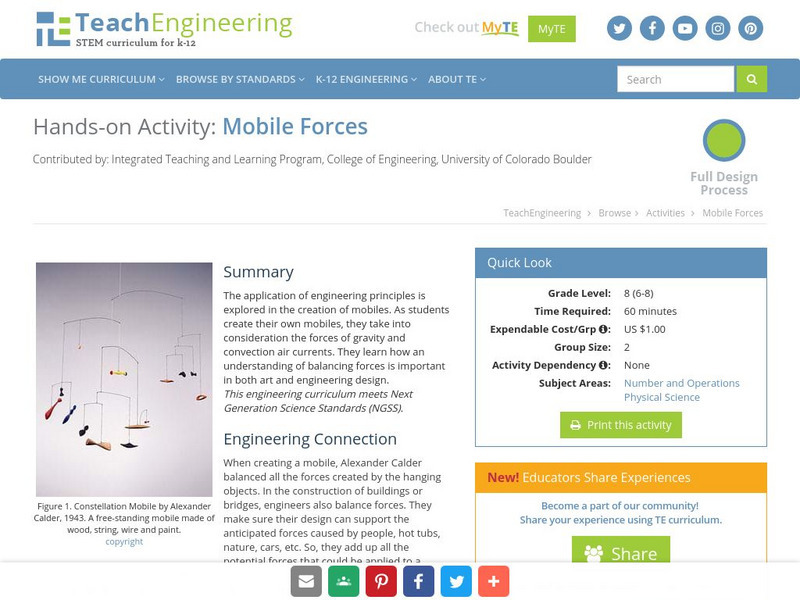
TeachEngineering
Teach Engineering: Mobile Forces
The application of engineering principles is explored in the creation of mobiles. As students create their own mobiles, they take into consideration the forces of gravity and convection air currents. They learn how an understanding of...
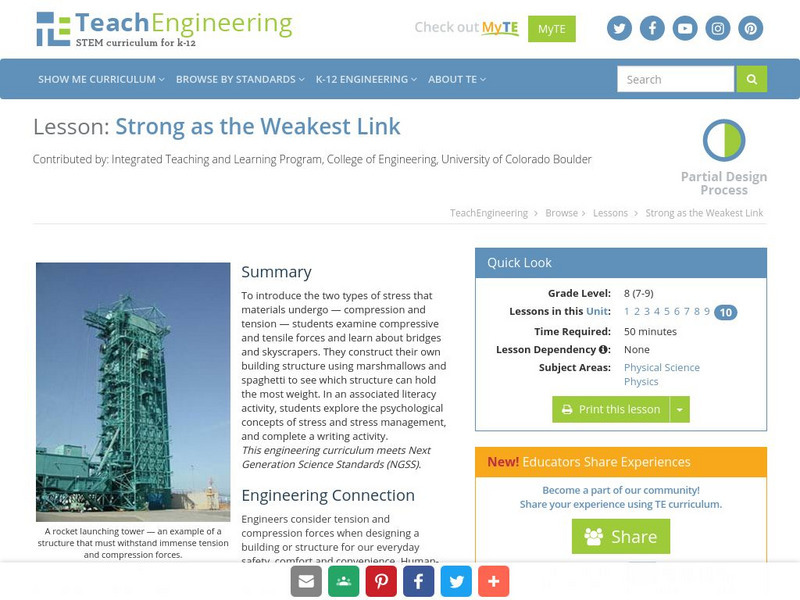
TeachEngineering
Teach Engineering: Strong as the Weakest Link
To introduce the two types of stress that materials undergo - compression and tension - students examine compressive and tensile forces and learn about bridges and skyscrapers. They construct their own building structure using...
Learn Engineering
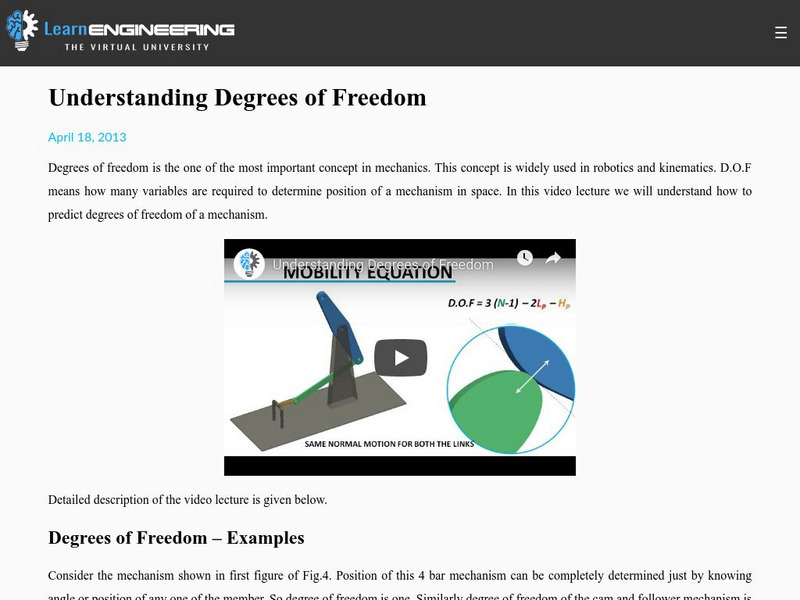
Learn Engineering: Understanding Degrees of Freedom
Explores how to predict degrees of freedom of a mechanism. Understand that in mechanics degrees of freedom is one of the most important concepts. Video length: 4 min. 41 sec.
TeachEngineering
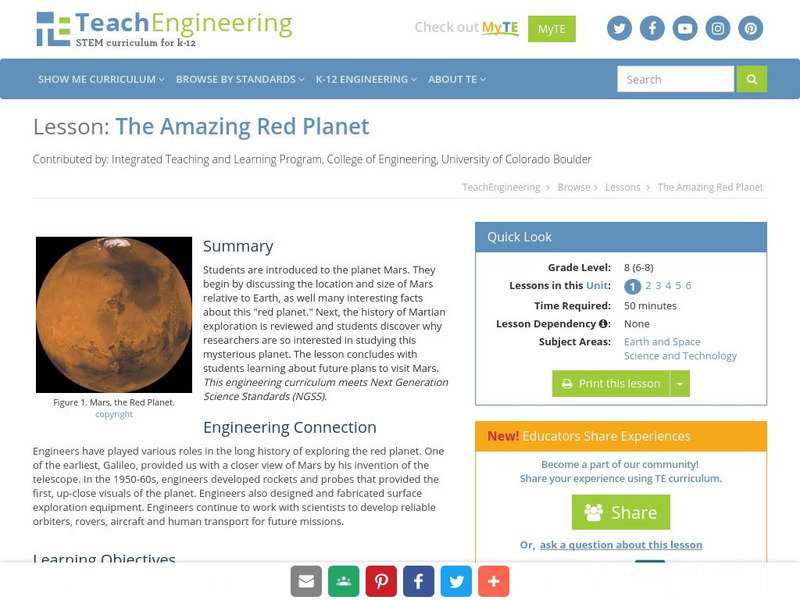
Teach Engineering: The Amazing Red Planet
The purpose of this lesson is to introduce learners to the planet Mars. This lesson will begin by discussing the location and size of Mars relative to Earth, as well as introduce many interesting facts about this red planet. Next, the...
TryEngineering
Try Engineering: Working With Watermills
Teams of students design, build, test, and evaluate a working watermill made from everyday materials. Lesson explores how watermills generate energy from water, while students gain an understanding of the structural engineering design...
TryEngineering
Try Engineering: Designing Drones
This lesson plan focuses on helicopters and drones, how they fly, how they are used in different ways that help people and the environment. Teams of students explore helicopter flight; and design, build, and test their own simple rotor...
TryEngineering
Try Engineering: Making Sense of Sensors
Lesson explore sensors focusing on ones that measure humidity. Students work in teams to design, build, test, and evaluate a hygrometer which was made out of everyday materials to measure humidity levels.
TeachEngineering
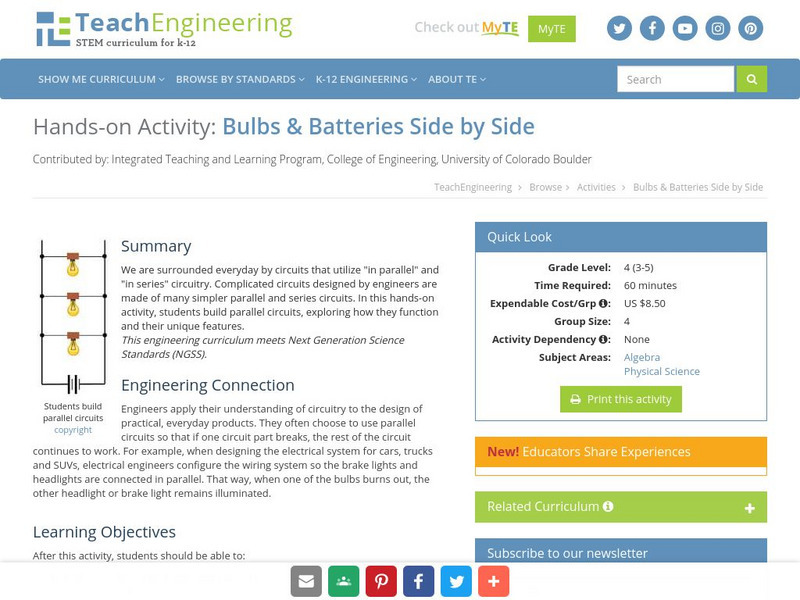
Teach Engineering: Bulbs & Batteries Side by Side
We are surrounded everyday by circuits that utilize "in parallel" and "in series" circuitry. Complicated circuits designed by engineers are made of many simpler parallel and series circuits. In this hands-on activity, students build...