![The Tech Interactive: Tech Tip: Data Collection: Reflecting on Your Design [Pdf] Lesson Plan](https://static.lp.lexp.cloud/images/attachment_defaults/resource/large/FPO-knovation.png "The Tech Interactive: Tech Tip: Data Collection: Reflecting on Your Design [Pdf] Lesson Plan")
The Tech Interactive
The Tech Interactive: Tech Tip: Data Collection: Reflecting on Your Design [Pdf]
This resource explains why data collection is a great way to make informed improvements to a design, and how to do it. Data can be quantitative - such as a measurement of distance or time - or qualitative, such as an observation of...
Technovation
Curiosity Machine: Challenges: Design a Robotic Arm
A challenge that asks students to move a marble, a straw, and a coin from the table into a cup using a robotic arm they designed. The site includes a lesson plan, tips, and a place for students to document their design process.
Technovation
Curiosity Machine: Challenges: Design a Microexpression Zoetrope
Build a zoetrope machine where you can animate a facial expression and the machine plays the animation back with this site. Site contains lesson plans, tips, and a place to document your design process.
Technovation
Curiosity Machine: Challenges: Design a Wind Up Mars Rover
Using common household items, students are challenged to build a Mars rover that can travel using elastic energy. Site includes a lesson plan, tips, and a place for students to document their design process.
Other
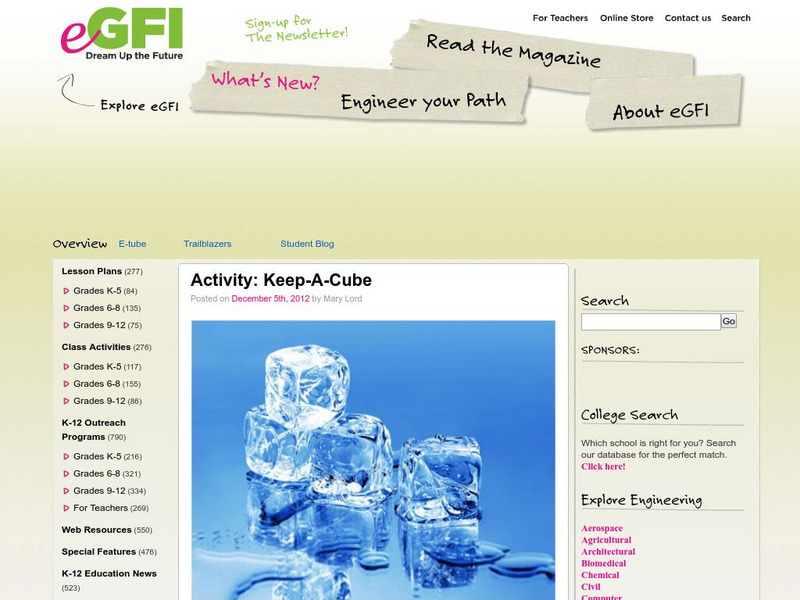
American Society for Engineering Education: E Gfi: Activity: Keep a Cube
In this activity, student teams in grades K-6 explore the design process by engineering a way to keep an ice cube from melting for 30 minutes. [6:00]
TeachEngineering
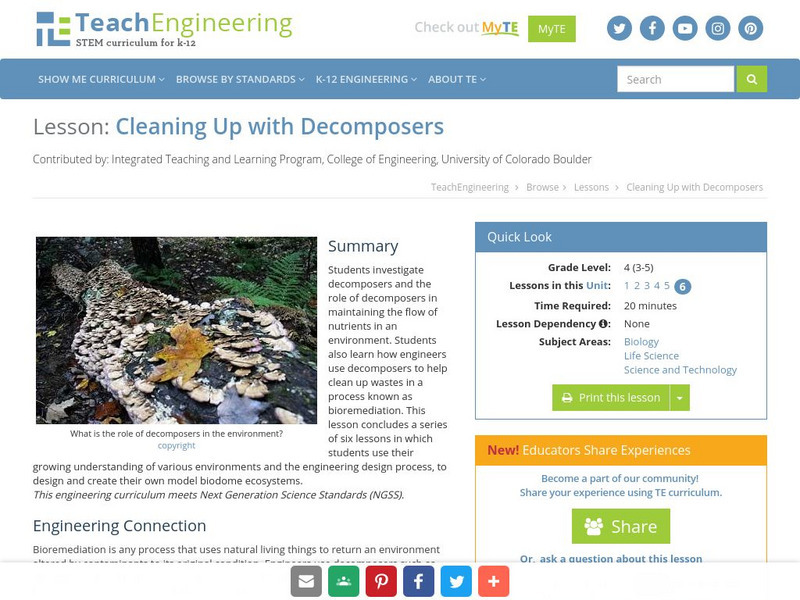
Teach Engineering: Cleaning Up With Decomposers
Students investigate decomposers and the role of decomposers in maintaining the flow of nutrients in an environment. Students also learn how engineers use decomposers to help clean up wastes in a process known as bioremediation. This...
Center for Innovation in Engineering and Science Education, Stevens Institute of Technology
Ciese: How Does Your Garden Grow?
Based on the book Muncha! Muncha! Muncha! by Candace Fleming. Students must use the engineering design process to plan and build a barrier that will keep hungry bunnies out of a garden.

Center for Innovation in Engineering and Science Education, Stevens Institute of Technology
Ciese: Scratch My Back
Starting with the book Big Smelly Bear by Britta Teckentrup, students use the engineering design process to design a solution to the bear's problem of not being able to scratch an itchy back.

Center for Innovation in Engineering and Science Education, Stevens Institute of Technology
Ciese: The Three Little Pigs
Young scholars are asked to use the engineering design process to construct a house for the third pig in The Three Little Pigs story that can withstand the huffing and puffing of the wolf.
TeachEngineering
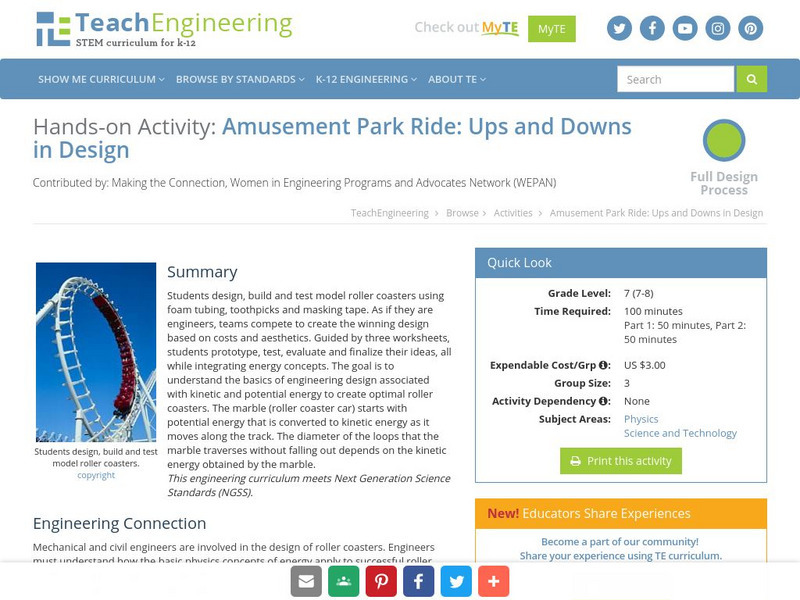
Teach Engineering: Amusement Park Ride: Ups and Downs in Design
This unit has students design and build foam tubing roller coasters. The design process integrates energy concepts as they test and evaluate their designs that address the task as an engineer would. The goal is for students to understand...
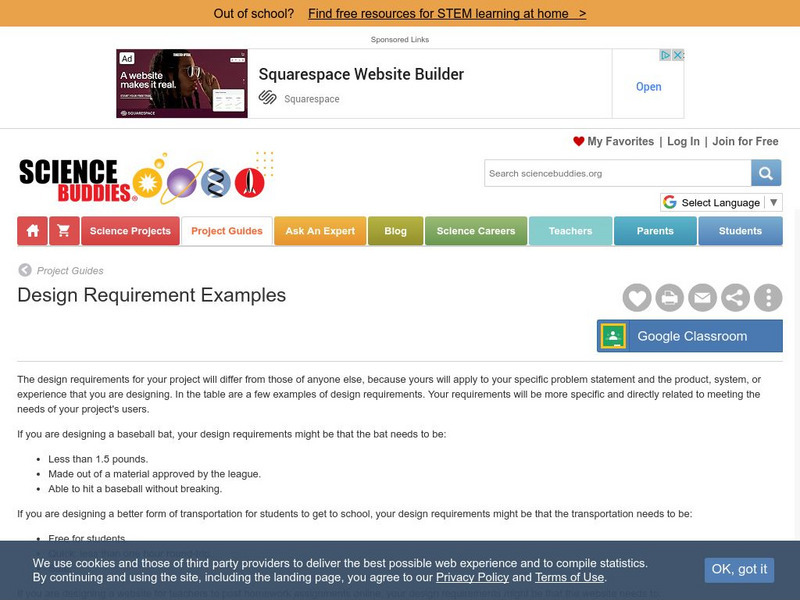
Science Buddies
Science Buddies: Design Requirement Examples
The design requirements for a science project will differ from those of anyone else because it will apply to a specific problem statement and the product, system, or experience that is being designed. In the table, are some examples of...

TeachEngineering
Teach Engineering: Dress for Success
In this design activity, students investigate materials engineering as it applies to weather and clothing. The students will design and analyze different combinations of materials for effectiveness in specific weather conditions....
TryEngineering
Try Engineering: Program Your Own Game
Teams of students learn about the work of software engineers as they design a simple computer game using free software available in multiple languages.
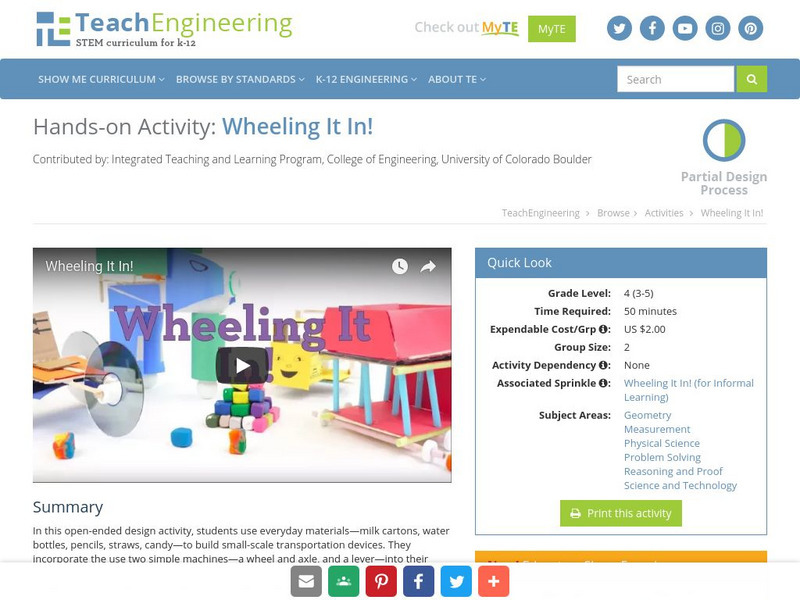
TeachEngineering
Teach Engineering: Wheeling It In!
In an open-ended design activity, students use everyday materials (milk cartons, water bottles, pencils, straws, candy) to build a small-scale transportation device. They incorporate the use of a wheel and axle, and lever into their...
TryEngineering
Try Engineering: Pipeline Challenge
Students become "engineers" as they learn how to develop pipeline systems for transportation. In this lesson, they work in teams to design, develop, and execute a pipeline plan to transport both a golf ball and a ping pong ball from one...
TryEngineering
Try Engineering: Irrigation Ideas
The focus of this civil engineering lesson plan is on designing, building, and testing an irrigation system made from everyday materials to move water from one place to another.
TryEngineering
Try Engineering: Can You Copperplate?
Chemical engineering lesson investigates the processes of chemical plating and electroplating. Teams of students work together to devise a chemical system for plating metal objects with copper, then test and evaluate their findings and...
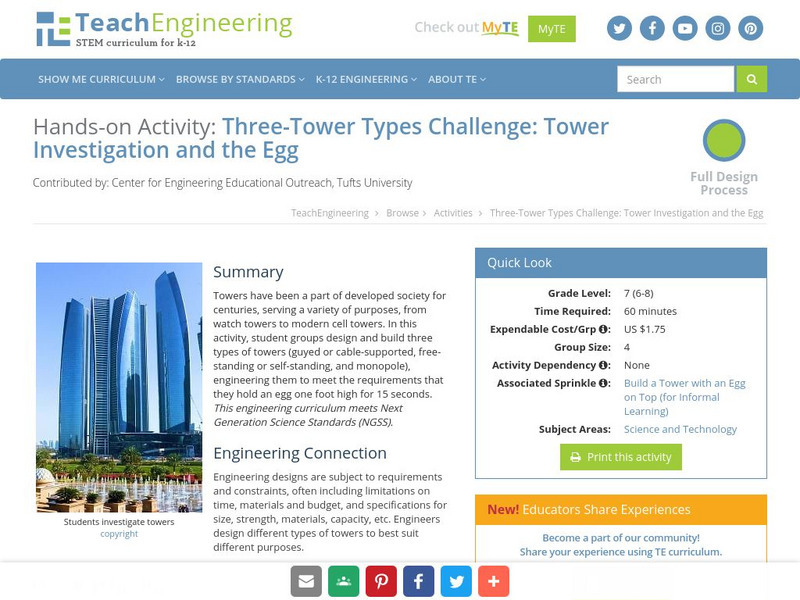
TeachEngineering
Teach Engineering: Tower Investigation and the Egg
Towers have been a part of developed society for centuries. Towers serve a variety of purposes, from lookouts to cellular towers. In this activity student groups will build three types of towers, engineering them to hold an egg one foot...
TryEngineering
Try Engineering: Chair Lift Challenge
Lesson investigates how engineers develop safe transportation systems to operate in a variety of climates and environments. Teams of students work together to construct a "chair lift" made from everyday materials as a test of this...
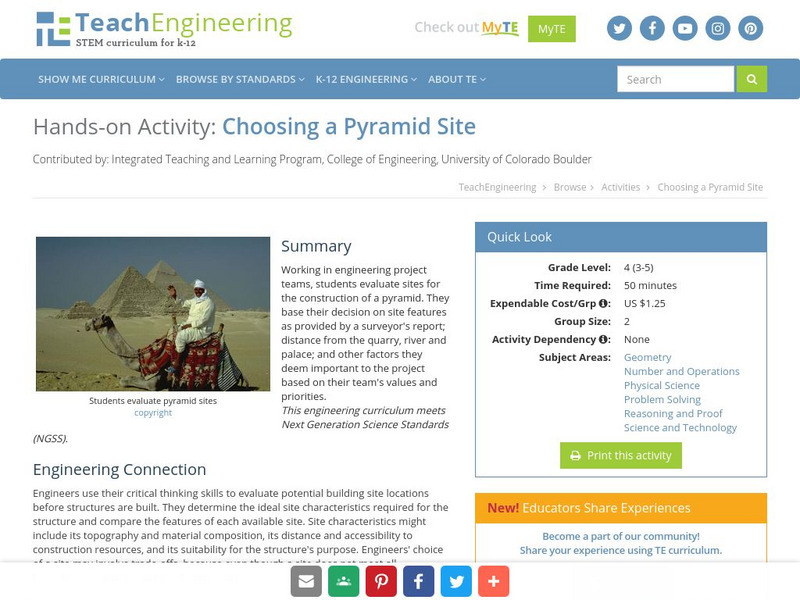
TeachEngineering
Teach Engineering: Choosing a Pyramid Site
Working in engineering project teams, students evaluate sites for the construction of a pyramid. They base their decision on site features as provided by a surveyor's report; distance from the quarry, river and palace; and other factors...
TeachEngineering
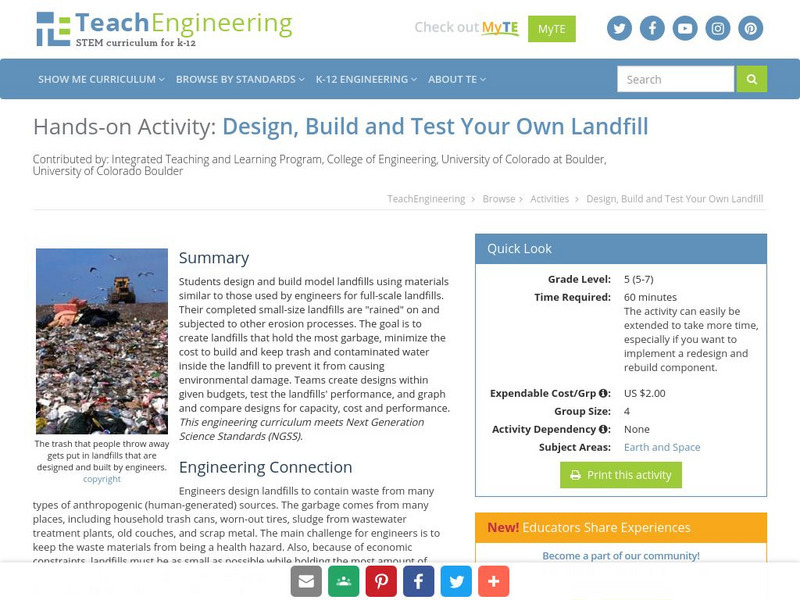
Teach Engineering: Design, Build and Test Your Own Landfill
Students design and build model landfills using materials similar to those used by engineers for full-scale landfills. Their completed small-size landfills are "rained" on and subjected to other erosion processes. The goal is to create...
Other
National Engineers Week Foundation: Flinker
Students investigate with common objects to see if they can make something that neither floats nor sinks, but rather "flinks" in the middle.
Other
Uss Constitution Museum: Design a Figurehead
This USS Constitution Museum resource is a lesson plan that calls for students to work together in teams to create a new figurehead for the USS Constitution that was destroyed while on patrol.
TeachEngineering
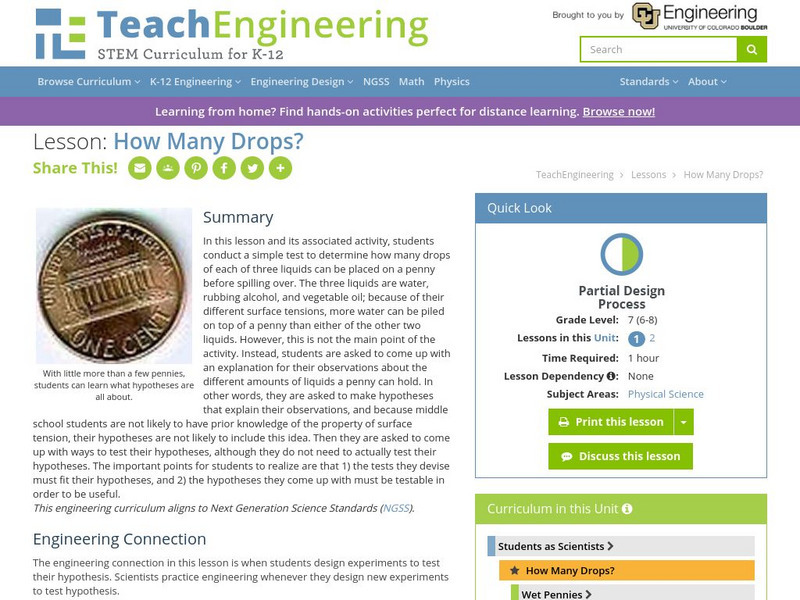
Teach Engineering: How Many Drops?
In this lesson and its associated activity, learners conduct a simple test to determine how many drops of each of three liquids can be placed on a penny before spilling over. The three liquids are water, rubbing alcohol, and vegetable...