Hi, what do you want to do?





TeachEngineering
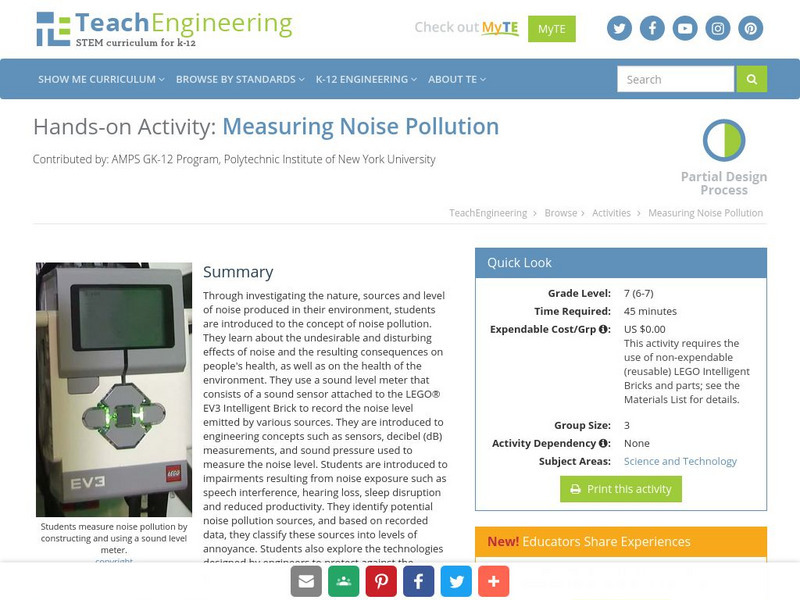
Teach Engineering: Measuring Noise Pollution
Through investigating the nature, sources and level of noise produced in their environment, students are introduced to the concept of noise pollution. They learn about the undesirable and disturbing effects of noise and the resulting...
Other
National Environmental Education Foundation
Have you always dreamed of having a career working to help the environment? Here, find information about student involvement, internships, grants and contests, green jobs, and environmentally-minded colleges.
TeachEngineering
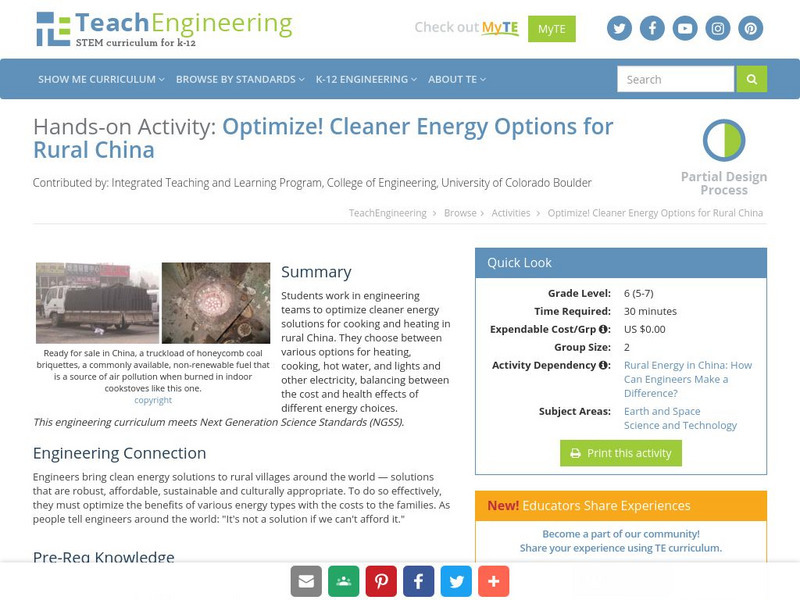
Teach Engineering: Optimize! Cleaner Energy Options for Rural China
Students work in engineering teams to optimize cleaner energy solutions for cooking and heating in rural China. They choose between various options for heating, cooking, hot water, and lights and other electricity, balancing between the...
TeachEngineering
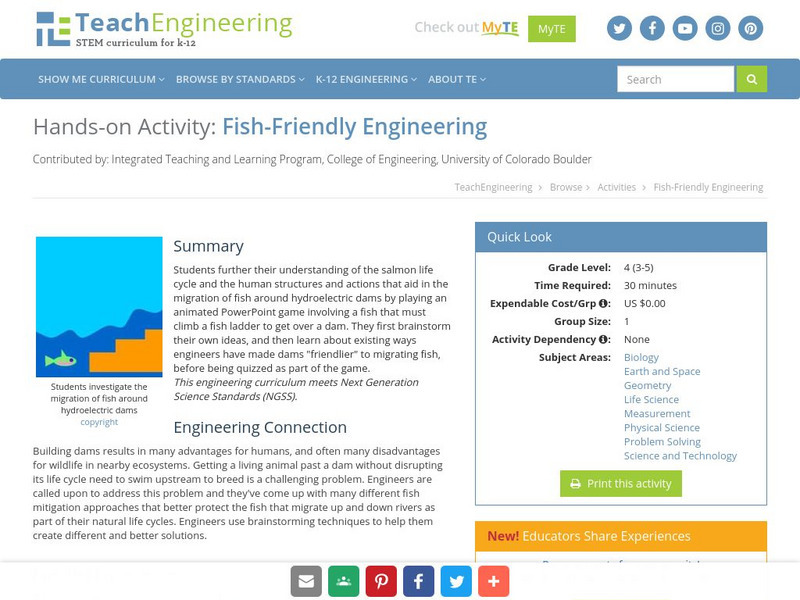
Teach Engineering: Fish Friendly Engineering
Students further their understanding of the salmon life cycle and the human structures and actions that aid in the migration of fish around hydroelectric dams by playing an animated PowerPoint game involving a fish that must climb a fish...
TeachEngineering
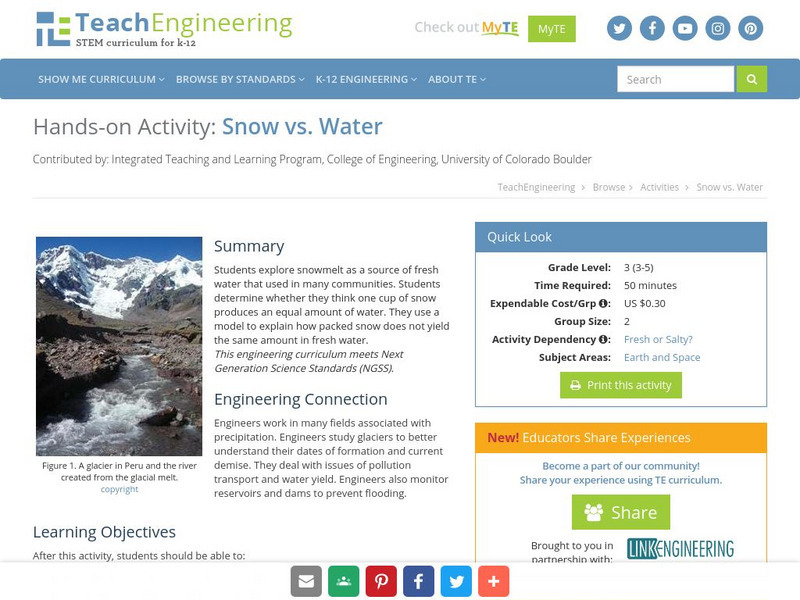
Teach Engineering: Snow vs. Water
Engineers work in many fields associated with precipitation. Engineers study glaciers to better understand their dates of formation and current demise. They deal with issues of pollution transport and water yield, and they monitor...
TeachEngineering
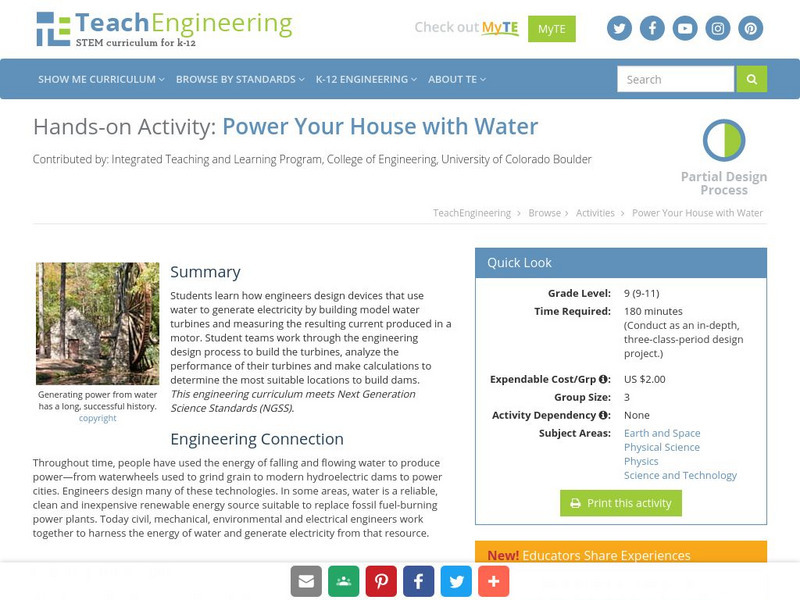
Teach Engineering: Power Your House With Water
Students learn how engineers design devices that use water to generate electricity by building model water turbines and measuring the resulting current produced in a motor. Students work through the engineering design process to build...
TeachEngineering
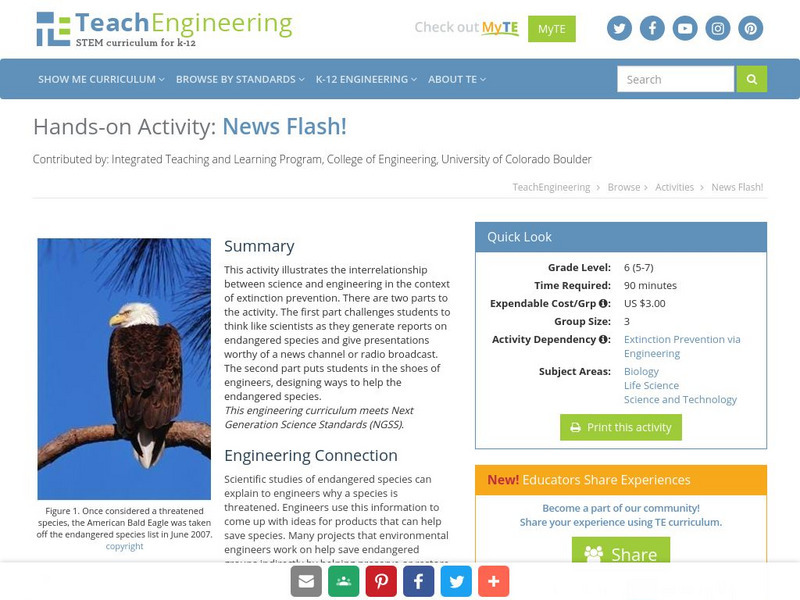
Teach Engineering: News Flash!
This activity illustrates the interrelationship between science and engineering in the context of extinction prevention. There are two parts to the activity. The first part challenges students to think like scientists as they generate...
TeachEngineering
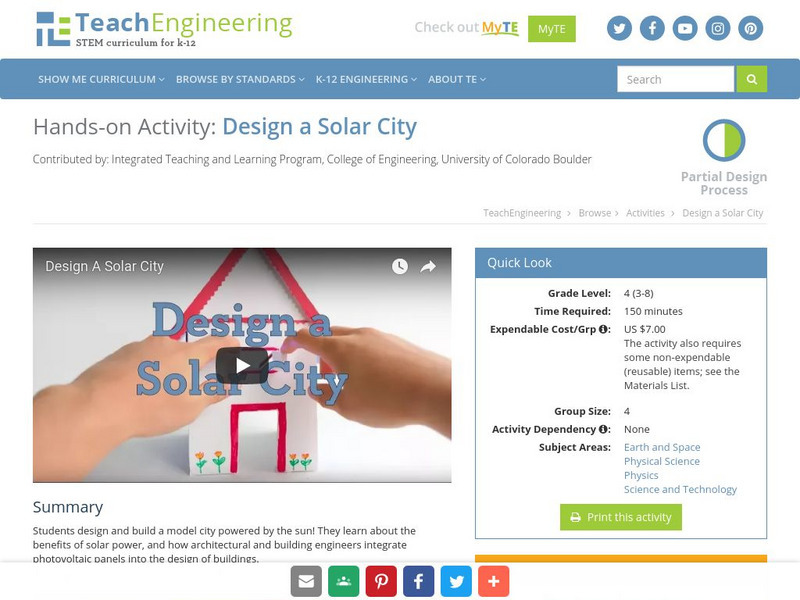
Teach Engineering: Design a Solar City
Students design and build a model city powered by the sun! They learn about the benefits of solar power, and how architectural and building engineers integrate photovoltaic panels into the design of buildings.
TeachEngineering
Teach Engineering: Measuring Light Pollution
Students are introduced to the concept of light pollution by investigating the nature, sources and levels of light in their classroom environment. They learn about the adverse effects of artificial light and the resulting consequences on...
TeachEngineering
Teach Engineering: Ocean Water Desalination
Young scholars learn about the techniques engineers have developed for changing ocean water into drinking water, including thermal and membrane desalination. They begin by reviewing the components of the natural water cycle. They see how...
TeachEngineering
Teach Engineering: Renewable Energy Living Lab: The Bright Idea
Students use real-world data to evaluate the feasibility of solar energy and other renewable energy sources in different U.S. locations. Working in small groups, students act as engineers evaluating the suitability of installing solar...
TeachEngineering
Teach Engineering: Renewable Energy Living Lab: Energy Experts
Students use real-world data to evaluate various renewable energy sources and the feasibility of implementing these sources. Working in small groups, students use data from the Renewable Energy Living Lab to describe and understand the...
TeachEngineering
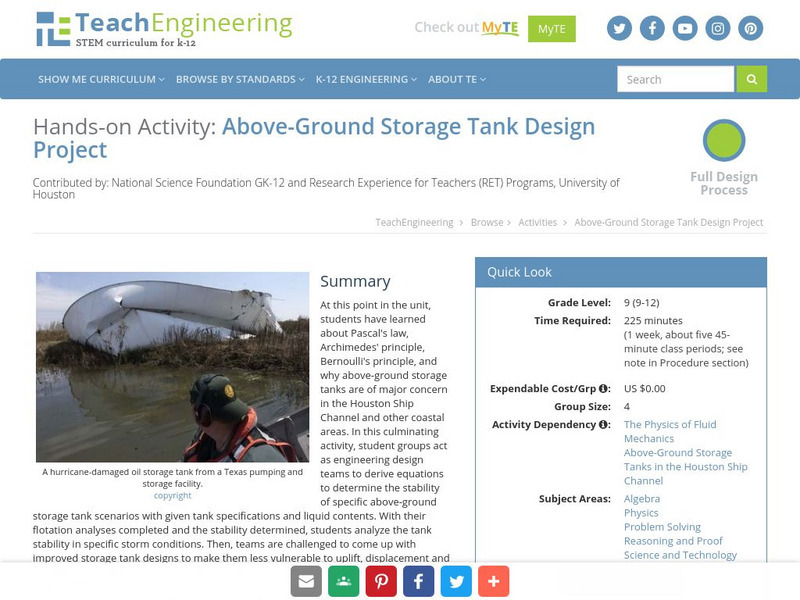
Teach Engineering: Above Ground Storage Tank Design Project
In this culminating activity, student groups act as engineering design teams to come up with improved storage tank designs to make them less vulnerable to uplift, displacement and buckling in storm conditions.
TeachEngineering
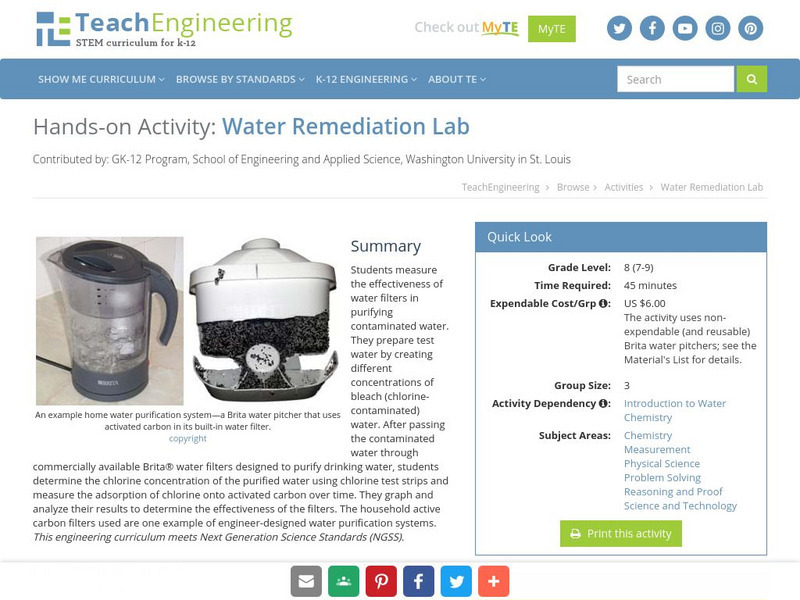
Teach Engineering: Water Remediation Lab
Students measure the effectiveness of water filters in purifying contaminated water. They prepare test water by creating different concentrations of bleach (chlorine-contaminated) water. After passing the contaminated water through...
TeachEngineering
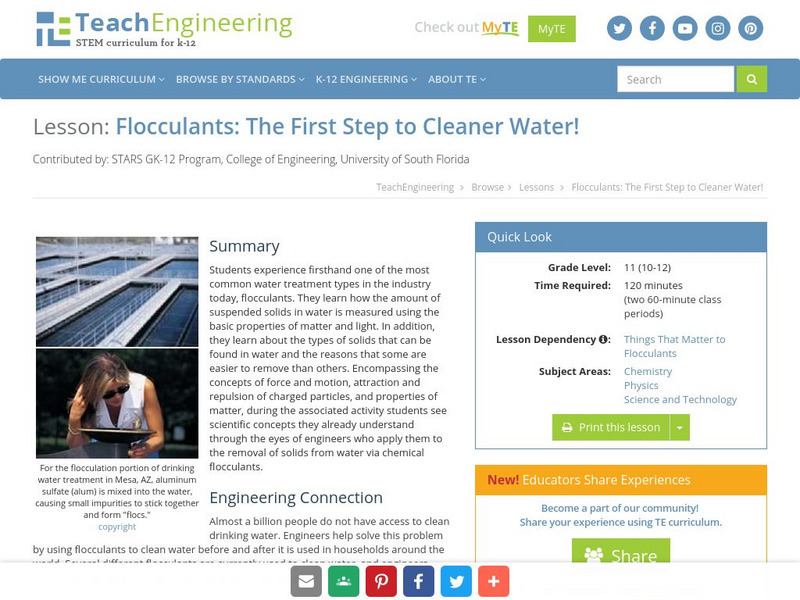
Teach Engineering: Flocculants: The First Step to Cleaner Water!
Students experience firsthand one of the most common water treatment types in the industry today, flocculants. They learn how the amount of suspended solids in water is measured using the basic properties of matter and light. In...
TeachEngineering
Teach Engineering: Human Water Cycle
Students learn about the human water cycle, or how humans impact the water cycle by settling down in civilizations. Specifically, they learn how people obtain, use and dispose of water. Students also learn about shortages of treated,...
TeachEngineering
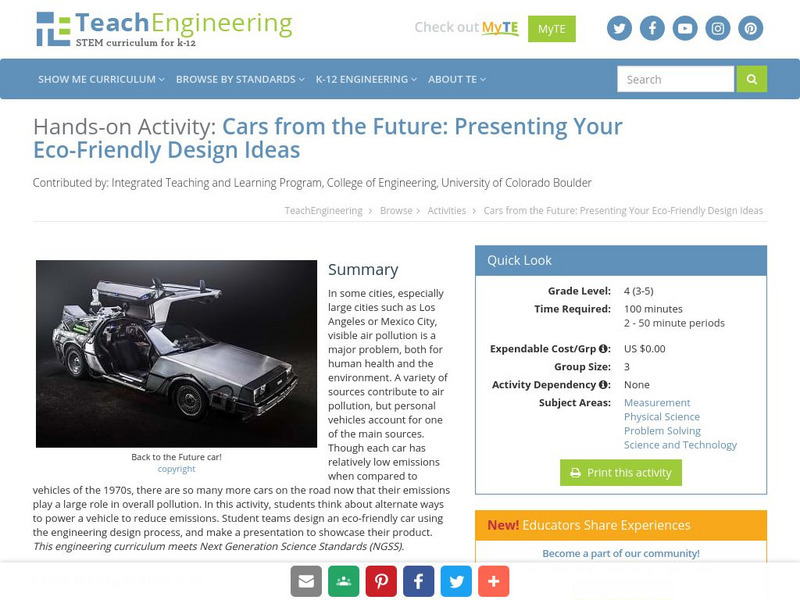
Teach Engineering: Cars From the Future
Students learn about air pollution caused by cars and what engineers are doing to try to help with the problem. Students then design their own environmentally friendly car and give a presentation to experience how engineers have to be...
TeachEngineering
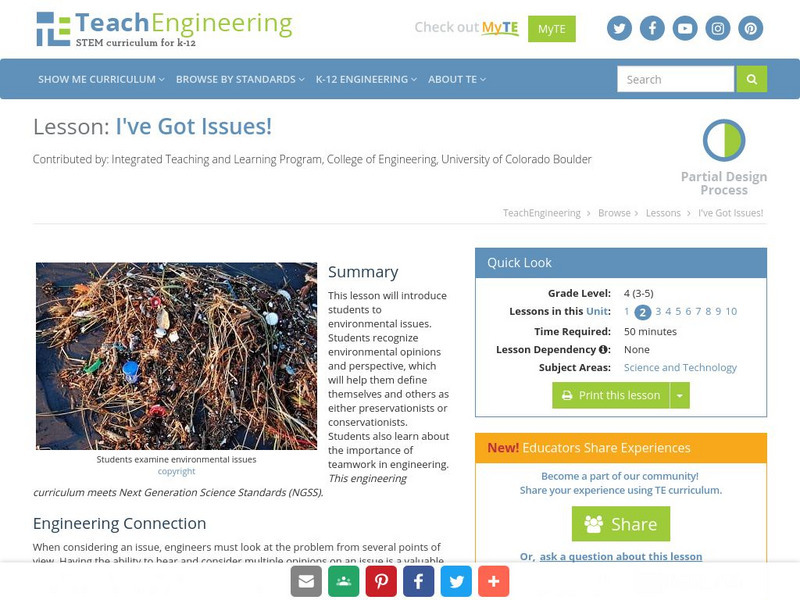
Teach Engineering: I've Got Issues!
This lesson plan will introduce students to environmental issues. Students will recognize environmental opinions and perspective, which will help them define themselves and others as either preservationists or conservationists. Students...
TeachEngineering
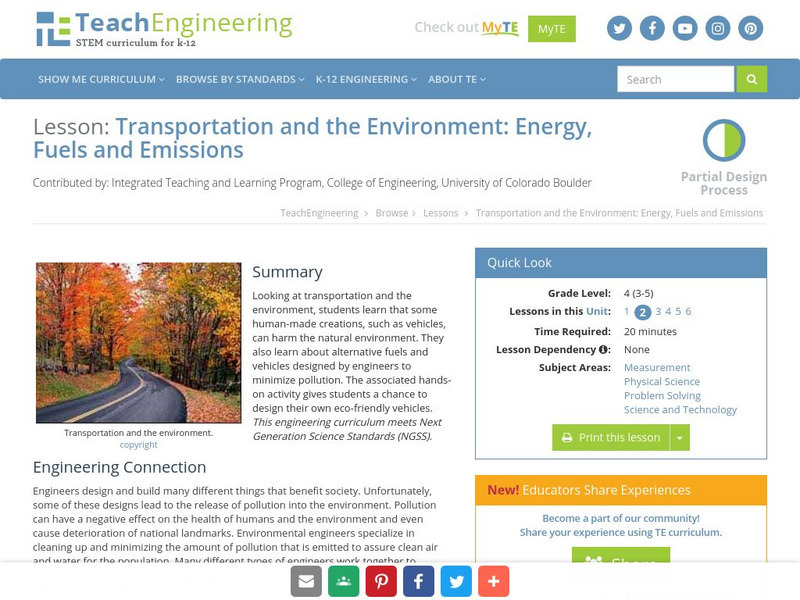
Teach Engineering: Transportation and the Environment
Looking at transportation and the environment, students learn that some human-made creations, such as vehicles, can harm the environment. They also learn about alternative fuels and vehicles designed by engineers to minimize pollution....
TeachEngineering
Teach Engineering: How Clean Is That Water?
This lesson plan helps students understand the factors that affect water quality and the conditions that allow for different animals and plants to survive. Students will look at the effects of water quality on various water-related...
TeachEngineering
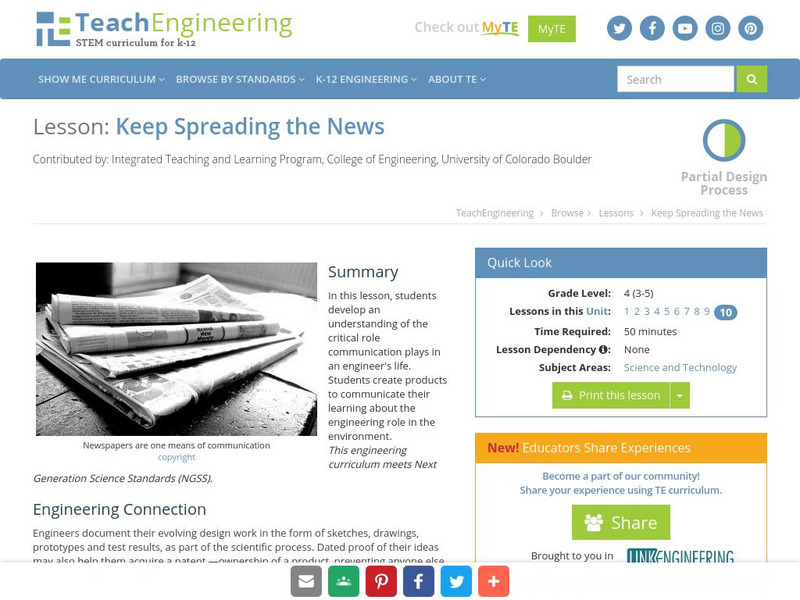
Teach Engineering: Keep Spreading the News
In this lesson, students develop an understanding of the critical role communication plays in an engineer's life. Students create products to communicate their learning about the engineering role in the environment.
TeachEngineering
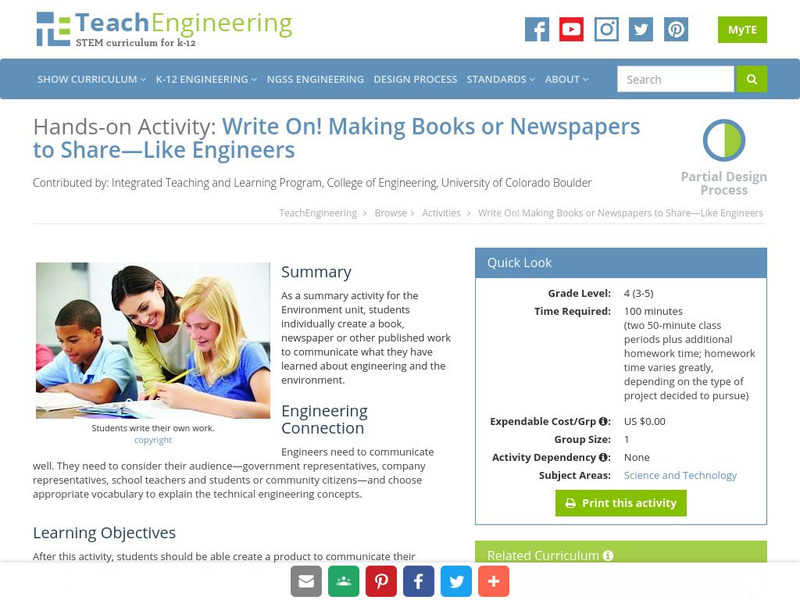
Teach Engineering: Write On!
In this activity, students create a book, newspaper or other published work to communicate what they have learned about engineering and the environment.
TeachEngineering
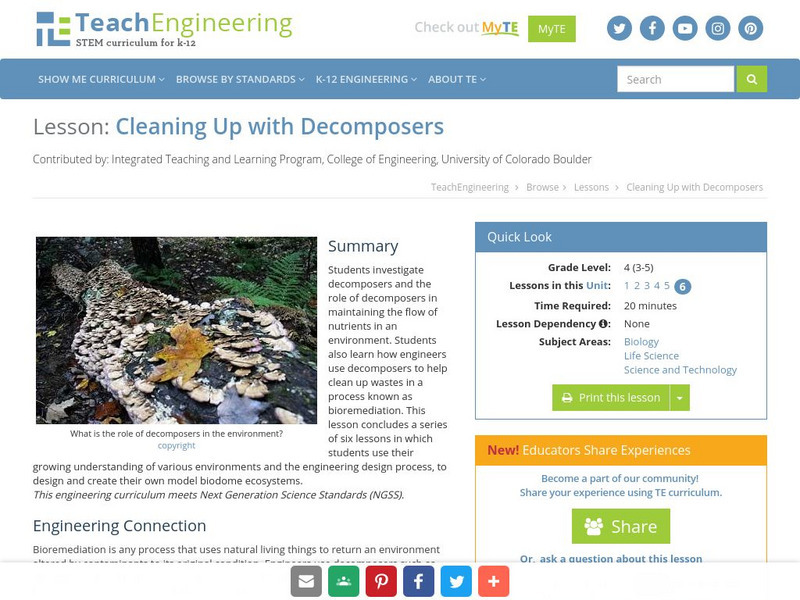
Teach Engineering: Cleaning Up With Decomposers
Students investigate decomposers and the role of decomposers in maintaining the flow of nutrients in an environment. Students also learn how engineers use decomposers to help clean up wastes in a process known as bioremediation. This...
TeachEngineering
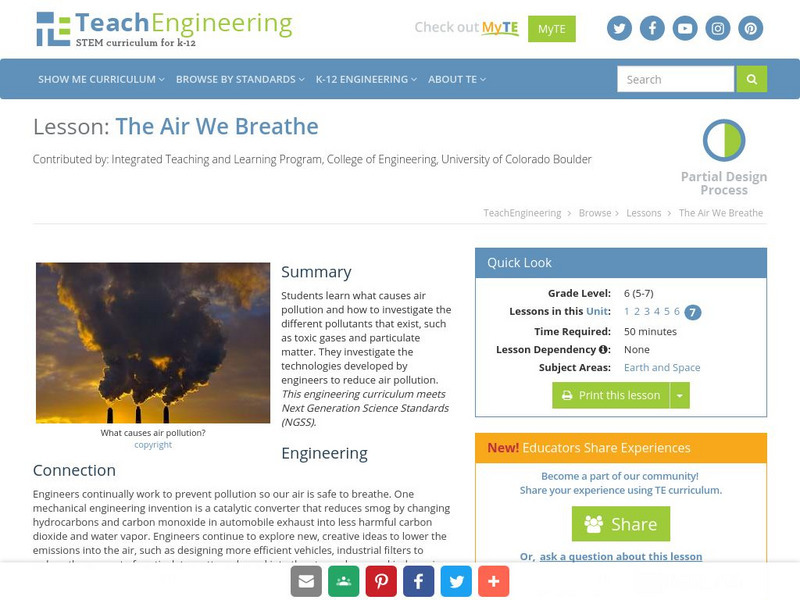
Teach Engineering: The Air We Breathe
During this lesson, middle schoolers will learn what causes air pollution and how to investigate the different pollutants that exist, such as toxic gases and particulate matter. Students will investigate the technologies developed by...