Hi, what do you want to do?





TeachEngineering
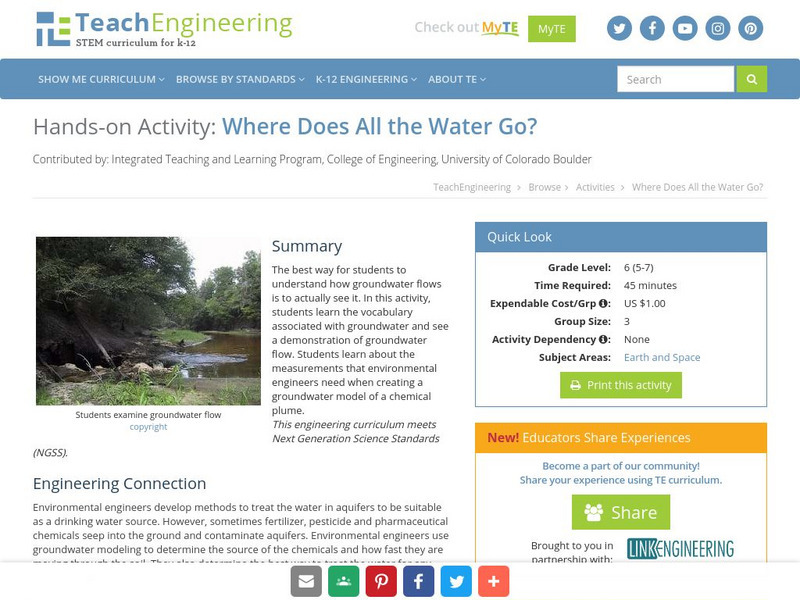
Teach Engineering: Where Does All the Water Go?
The best way for students to understand how groundwater flows is to actually see it. In this activity, students will learn the vocabulary associated with groundwater and see a demonstration of groundwater flow. Students will learn about...
TeachEngineering
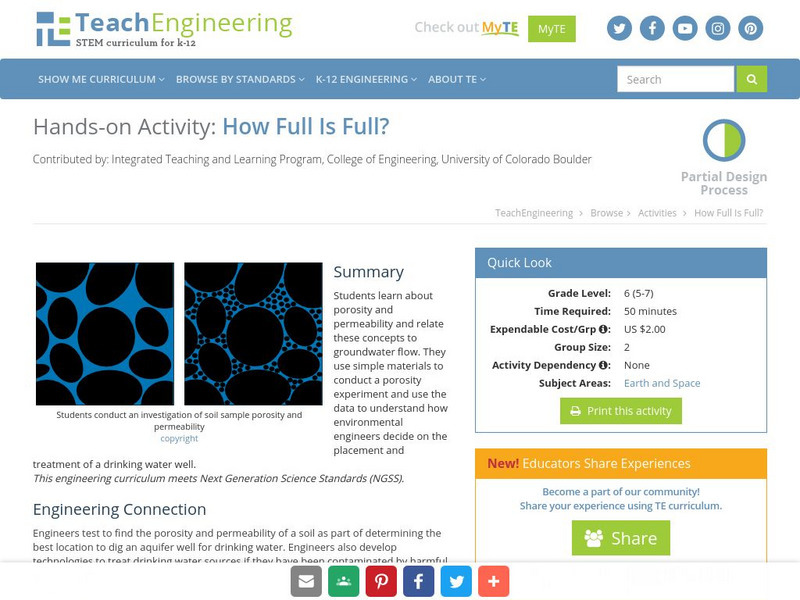
Teach Engineering: How Full Is Full?
During this activity, students will learn about porosity and permeability and relate these concepts to groundwater flow. Students will use simple materials to conduct a porosity experiment and use the information to understand how...
TeachEngineering
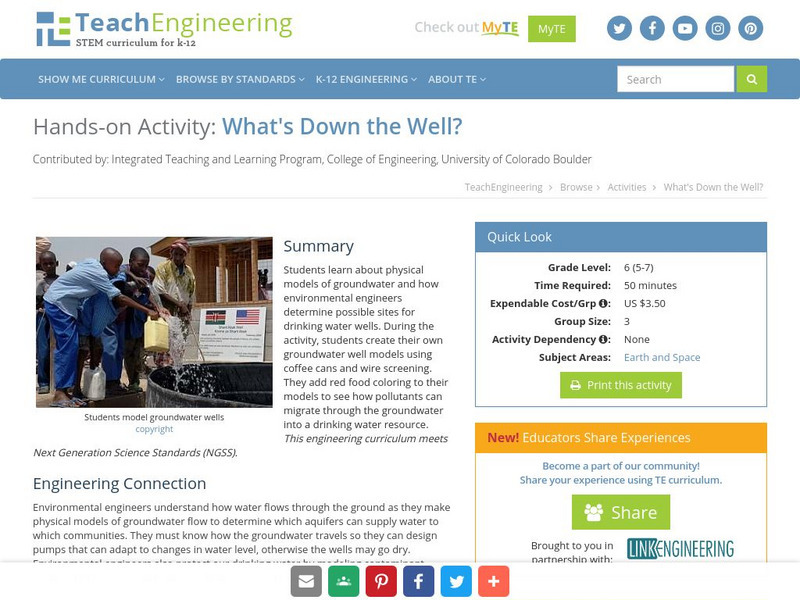
Teach Engineering: What's Down the Well?
This activity looks at physical models of groundwater and how environmental engineers determine possible sites for drinking water wells. During this activity, students will create their own groundwater well model using a coffee can and...
TeachEngineering
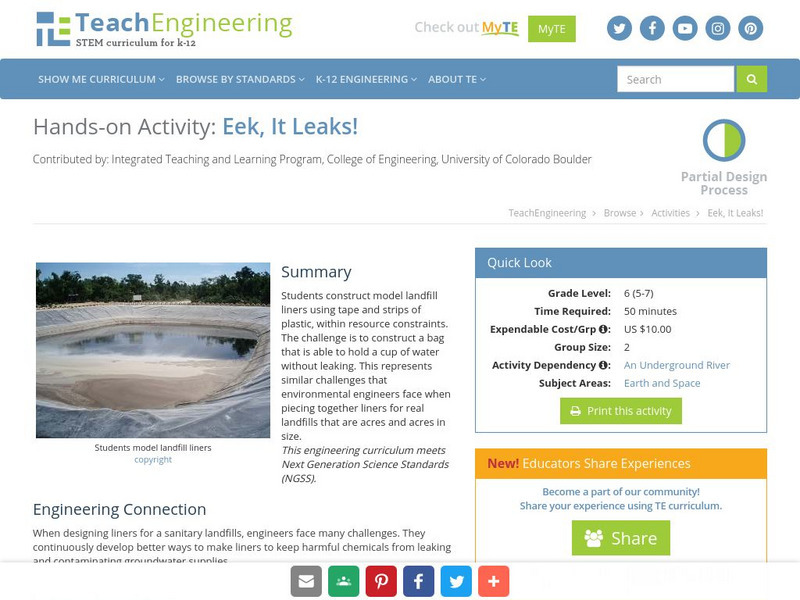
Teach Engineering: Eek, It Leaks!
During this activity, students will try to construct model landfill liners out of two-inch strips of garbage bags within resource constraints. The challenge is to construct a bag that will hold one cup of water without leaking. This...
TeachEngineering
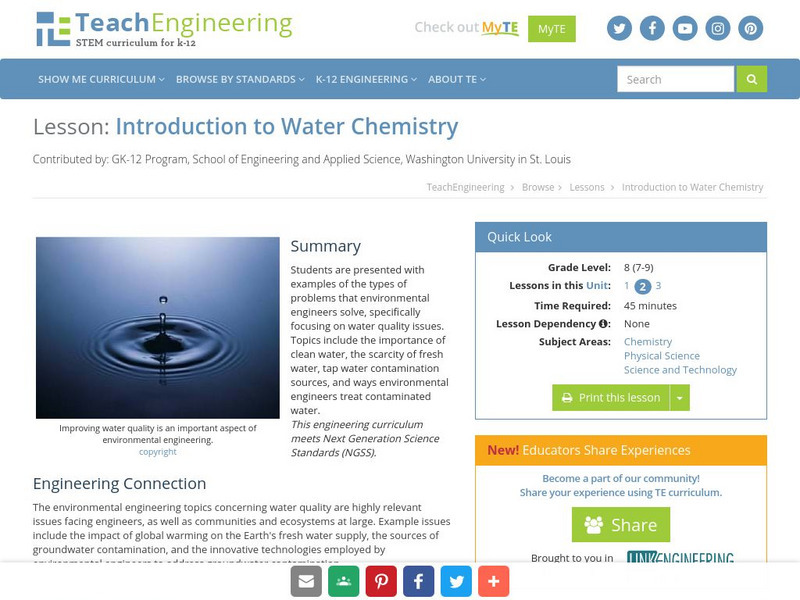
Teach Engineering: Introduction to Water Chemistry
Students are presented with examples of the types of problems that environmental engineers solve, specifically focusing on water quality issues. Topics include the importance of clean water, the scarcity of fresh water, tap water...
TeachEngineering
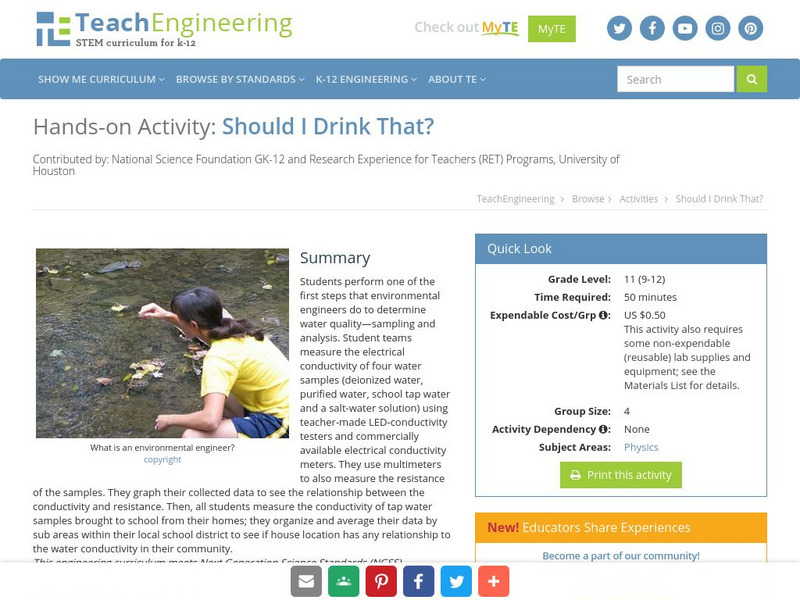
Teach Engineering: Should I Drink That?
Students perform the first steps that environmental engineers do to determine water quality - sampling and analysis. Student teams measure the electrical conductivity of four water samples using teacher-made LED conductivity testers and...
TeachEngineering
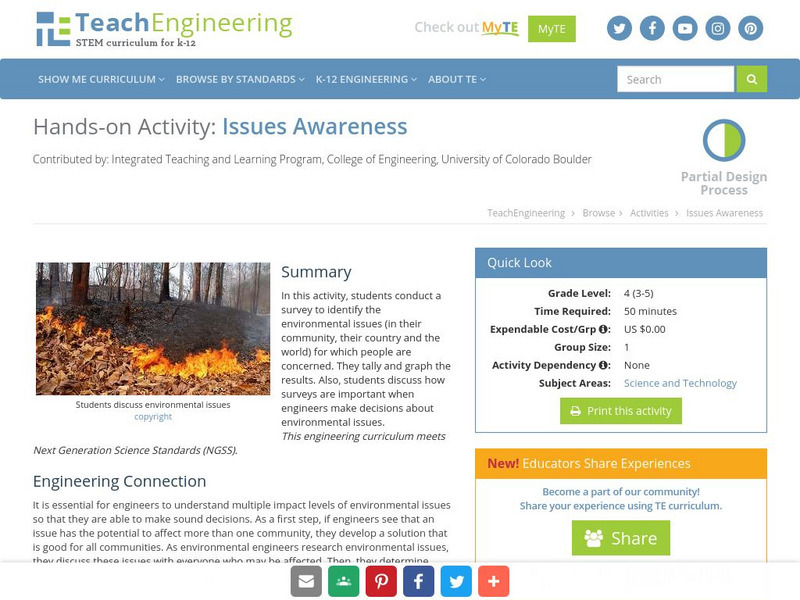
Teach Engineering: Issues Awareness
In this activity, students will conduct a survey to identify the environmental issues (in their community, their country and the world) for which people are concerned. They will tally and graph the results. Also, students will discuss...
Other
Planet Ark: World Environmental News
Welcome to Planet Ark's daily Reuters World Environment News - the most comprehensive source of environmental news on the Net. To read previous news stories, please use the search engine below to find stories relating to any...
TeachEngineering
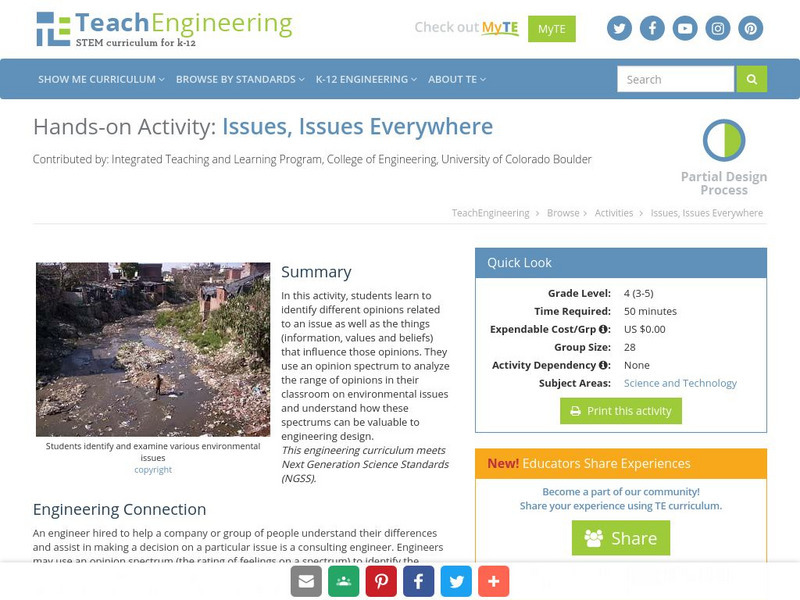
Teach Engineering: Issues, Issues Everywhere
In this activity, students will learn to identify different opinions related to an issue as well as the things (information, values and beliefs) that influence those opinions. They will use an opinion spectrum to analyze the range of...
TeachEngineering
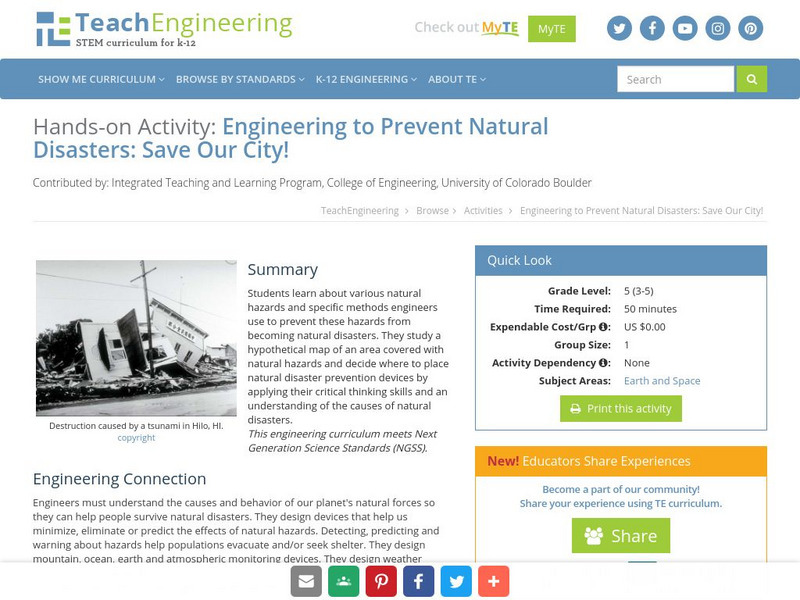
Teach Engineering: Save Our City!
Students learn about various natural hazards and specific methods engineers use to prevent these hazards from becoming natural disasters. They study a hypothetical map of an area covered with natural hazards and decide where to place...
TeachEngineering
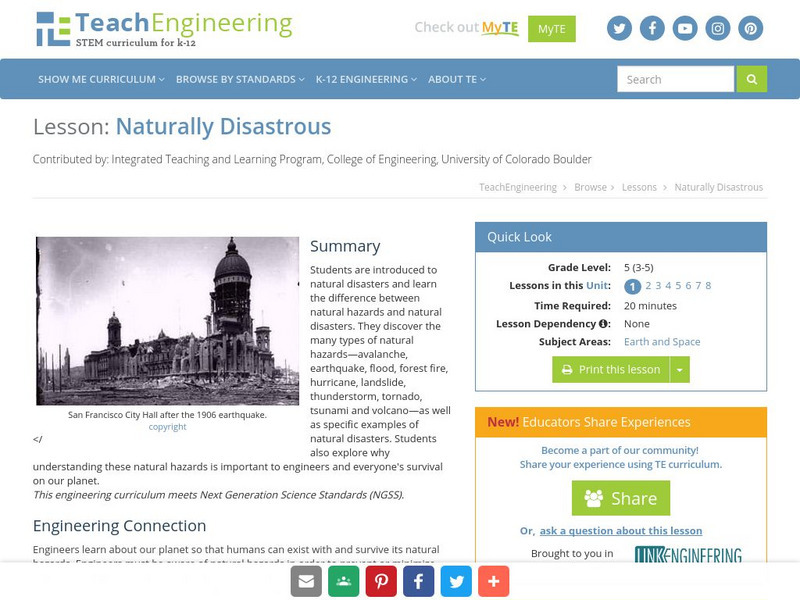
Teach Engineering: Naturally Disastrous
Students are introduced to natural disasters, and learn the difference between natural hazards and natural disasters. They discover the many types of natural hazards - avalanche, earthquake, flood, forest fire, hurricane, landslide,...
TeachEngineering
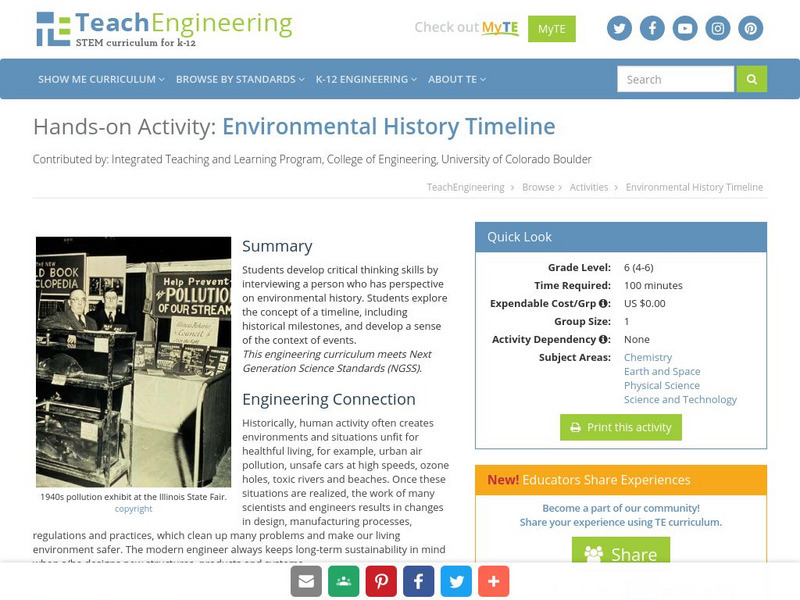
Teach Engineering: Environmental History Timeline
Students develop critical thinking skills by interviewing a person who has perspective on environmental history. Students explore the concept of a timeline, including historical milestones, and develop a sense of the context of events.
TeachEngineering
Teach Engineering: What's a Kid to Do?
Students write letters as part of an environmental action campaign. They become more aware of global environmental problems and play a part in their solution.
TeachEngineering
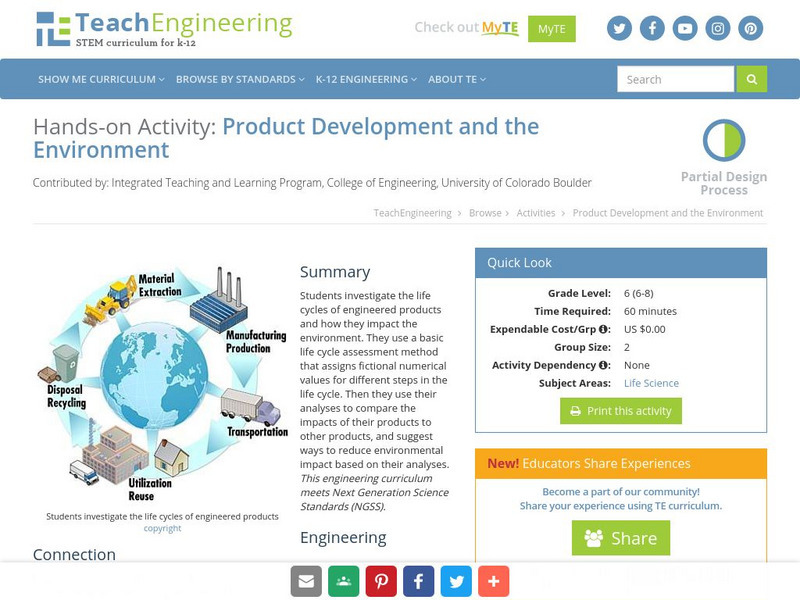
Teach Engineering: Product Development and the Environment
In this activity, students investigate the life cycle of an engineered product and how the product impacts the environment. They analyze a product using a simple life cycle assessment that assigns fictional numerical values for different...
TeachEngineering
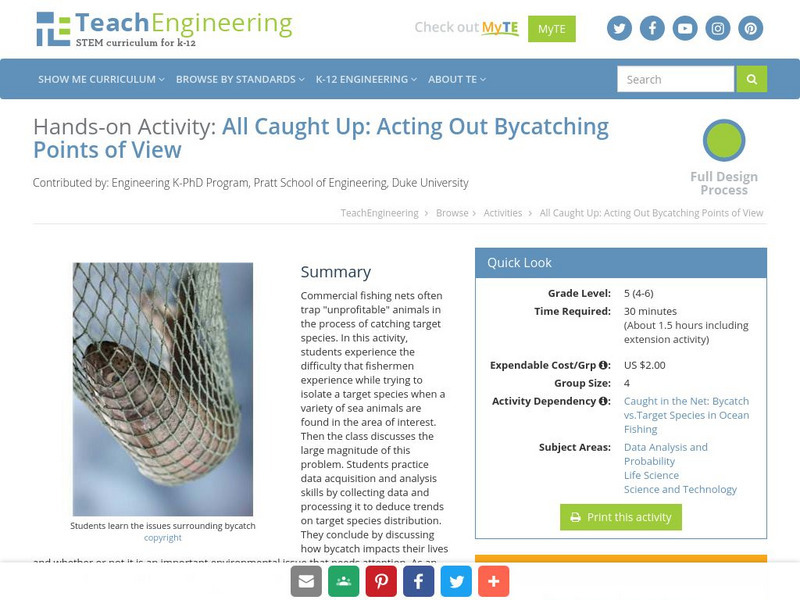
Teach Engineering: All Caught Up
Commercial fishing nets often trap unprofitable animals in the process of catching their target species. In the following activity, students will experience the difficulty that fishermen experience while trying to isolate a target...
TeachEngineering
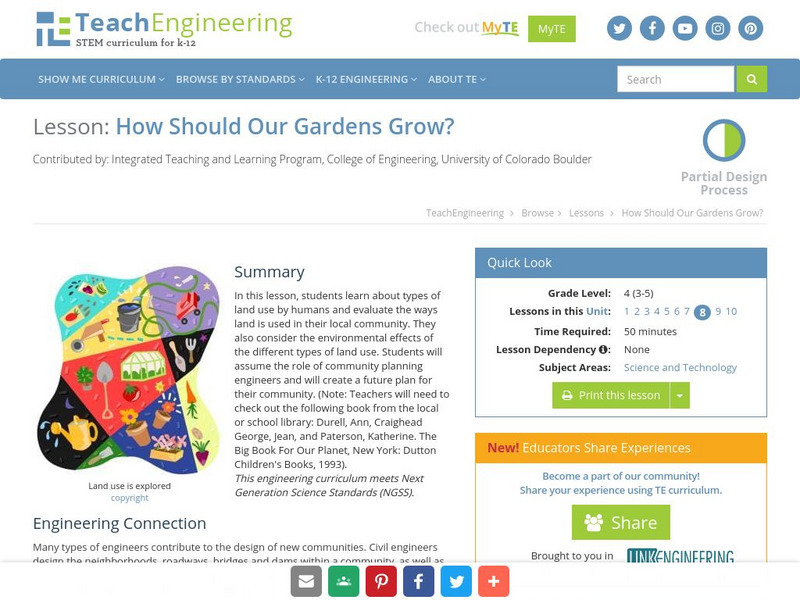
Teach Engineering: How Should Our Gardens Grow?
In this lesson, learners will learn about types of land use by humans and evaluate the ways land is used in their local community. They will also consider the environmental effects of the different types of land use. Students will assume...
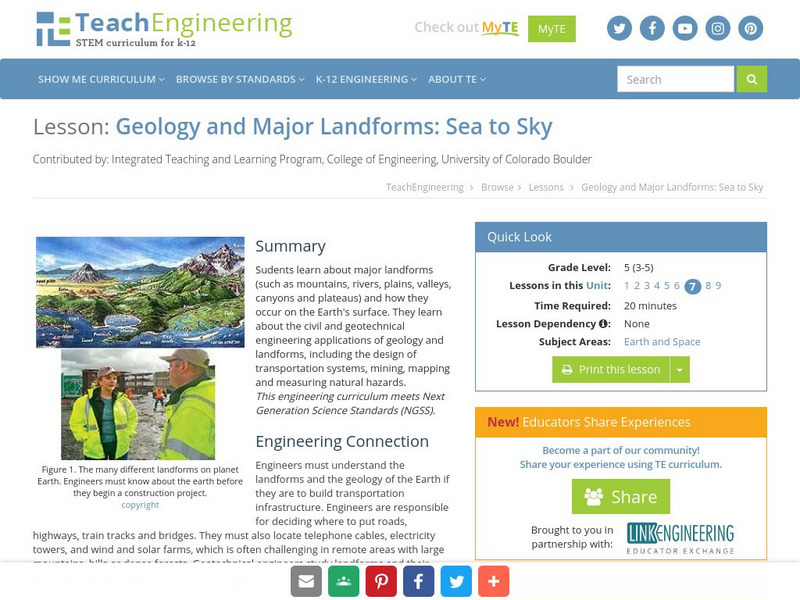
TeachEngineering
Teach Engineering: Sea to Sky
For this lesson, students learn about major landforms (e.g., mountains, rivers, plains, valleys, canyons and plateaus) and how they occur on the Earth's surface. They learn about the civil and geotechnical engineering applications of...
TeachEngineering
Teach Engineering: From Lake to Tap
In this activity, students will use a tutorial on the U.S. Environmental Protection Agency's website to learn about how surface water is treated to make it safe to drink.
TeachEngineering
Teach Engineering: What's Air Got to Do With It?
Students are introduced to the concepts of air pollution and air quality. The three lesson parts focus on the prerequisites for understanding air pollution. First, students use M&Ms to create a pie graph that expresses their...
Science Buddies
Science Buddies: Riprap: It's Not Hip Hop but Erosion Stop
The Grand Canyon serves as an excellent example of just what water can do over a period of millions of years. This week long lab will help you understand how erosion works, how engineers work to help prevent erosion.
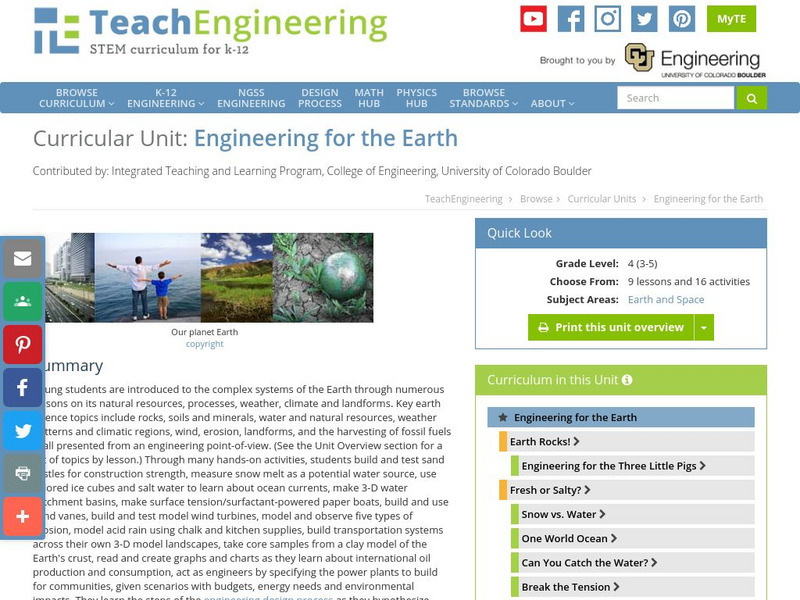
TeachEngineering
Teach Engineering: Engineering for the Earth
Young students are introduced to the complex systems of the Earth through numerous lessons on its natural resources, processes, weather, climate and landforms. Key earth science topics include rocks, soils and minerals, water and natural...
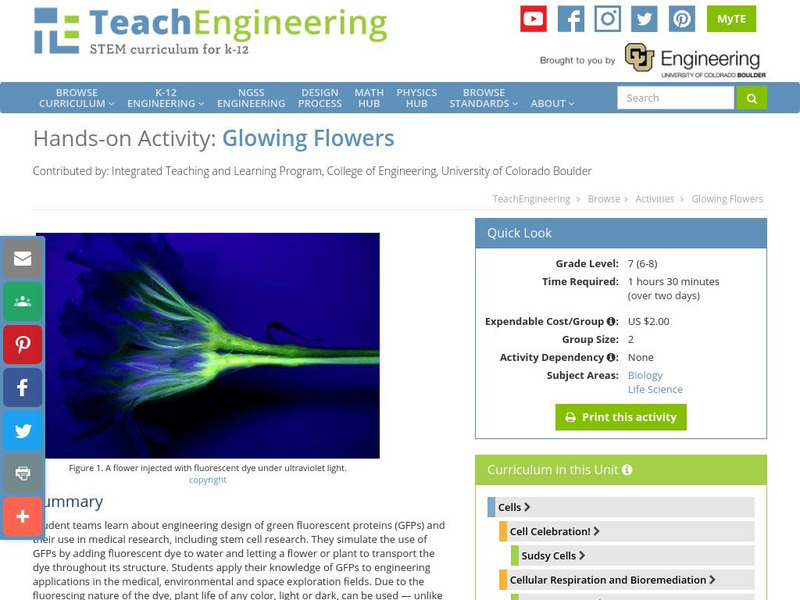
TeachEngineering
Teach Engineering: Glowing Flowers
Student teams learn about engineering design of green fluorescent proteins (GFPs) and their use in medical research, including stem cell research. They simulate the use of GFPs by adding fluorescent dye to water and letting a flower or...
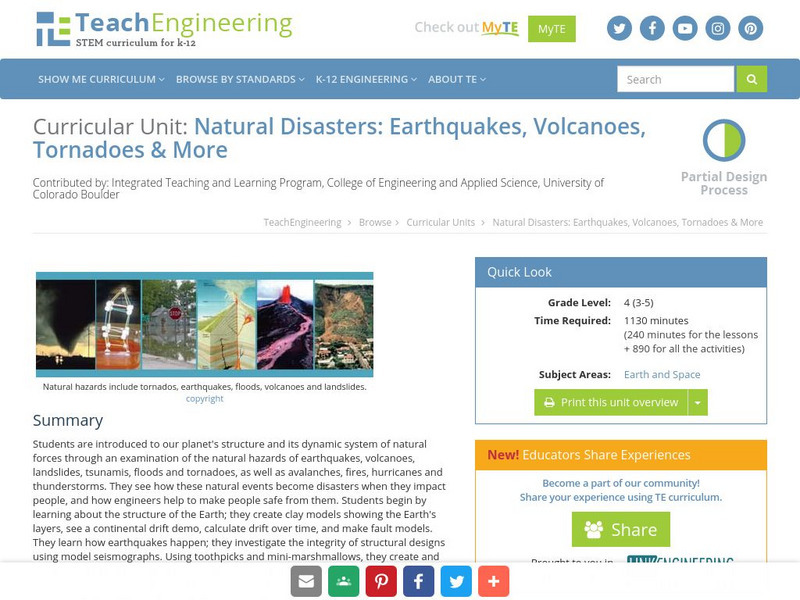
TeachEngineering
Teach Engineering: Natural Disasters
Students are introduced to our planet's structure and its dynamic system of natural forces through an examination of the natural hazards of earthquakes, volcanoes, landslides, tsunamis, floods and tornados, as well as avalanches, fires,...
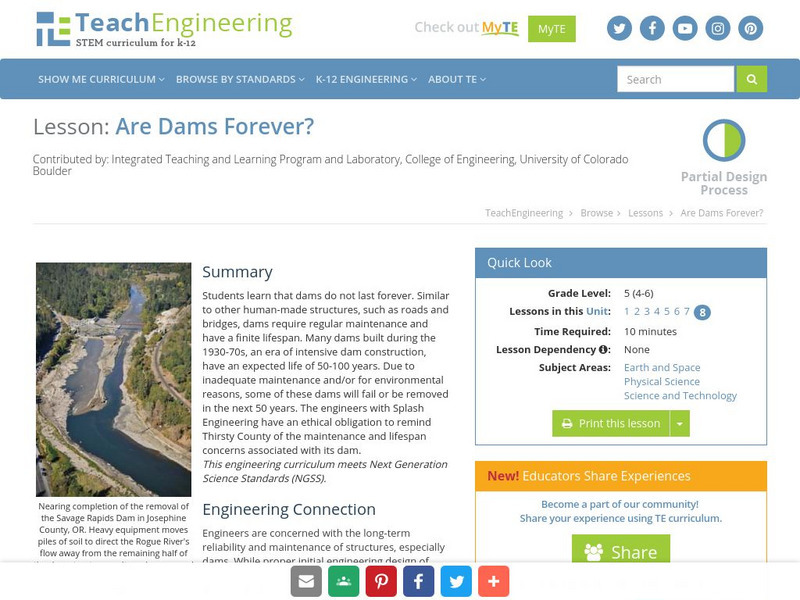
TeachEngineering
Teach Engineering: Are Dams Forever?
Young scholars learn that dams do not last forever. Similar to other human-made structures, such as roads and bridges, dams require regular maintenance and have a finite lifespan. Many dams built during the 1930-70s, an era of intensive...