Hi, what do you want to do?





TeachEngineering
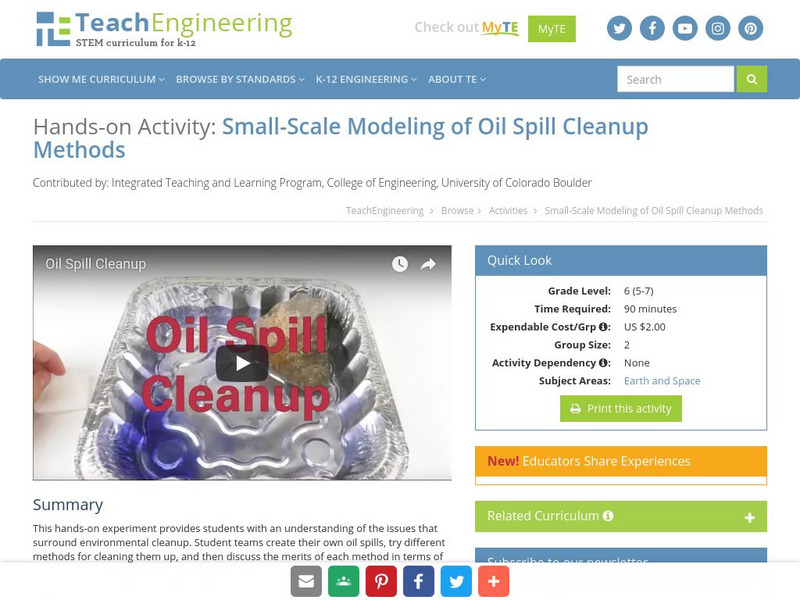
Teach Engineering: Oil Spill Cleanup
This hands-on experiment will provide students with an understanding of the issues that surround environmental cleanup. Students will create their own oil spill, try different methods for cleaning it up, and then discuss the merits of...
TeachEngineering
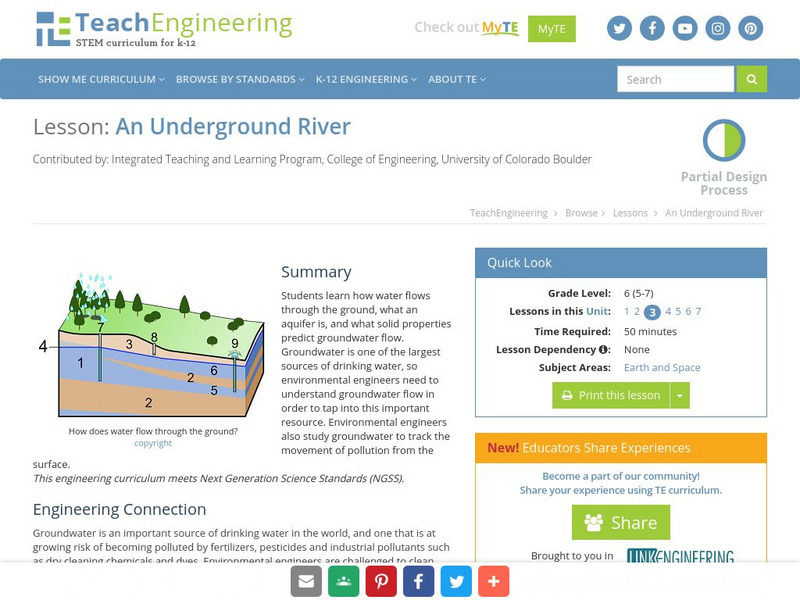
Teach Engineering: An Underground River
Groundwater is one of the largest sources of drinking water, so environmental engineers need to understand groundwater flow in order to tap into this important resource. Environmental engineers also study groundwater to predict where...
TeachEngineering
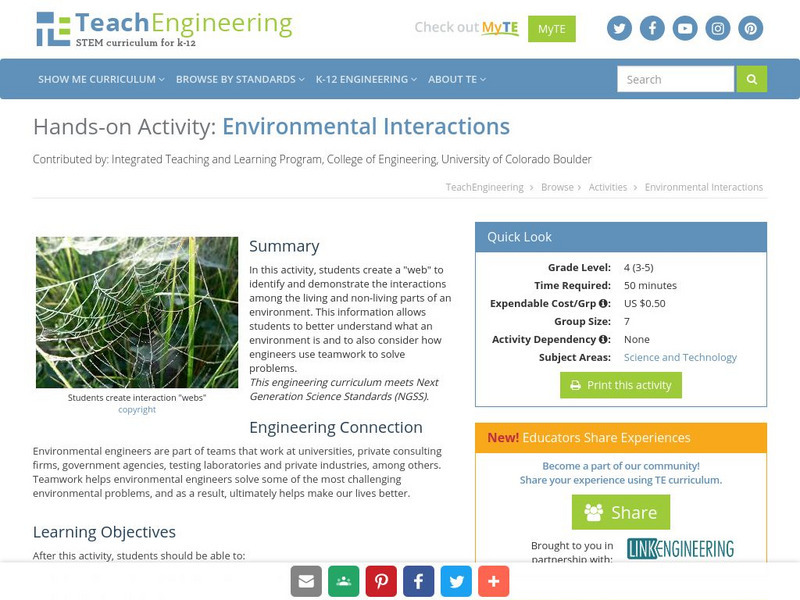
Teach Engineering: Environmental Interactions
In this activity, students create a "web" to identify and demonstrate the interactions among the living and non-living parts of an environment. This information allows students to better understand what an environment is and to also...
Other
World Wide Web Virtual Library: Civil Engineering
This site is an online library of information about civil engineering.
TeachEngineering
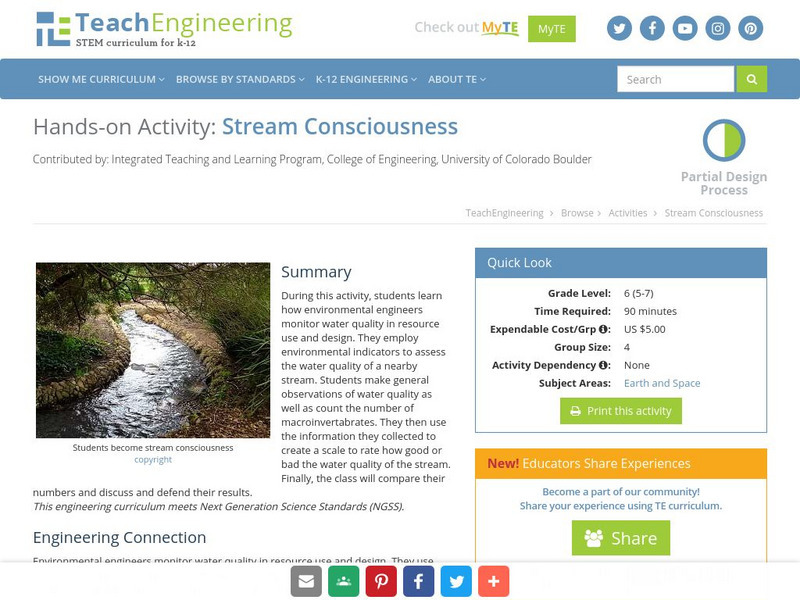
Teach Engineering: Stream Consciousness
During this activity, students will learn how environmental engineers monitor water quality in resource use and design. They will employ environmental indicators to assess the water quality of a nearby stream. Students will make general...
TeachEngineering
Teach Engineering: Keep Spreading the News
In this lesson, learners develop an understanding of the critical role communication plays in an engineer's life. Students create products to communicate their learning about the engineering role in the environment.
TeachEngineering
Teach Engineering: Write On!
In this activity, students create a book, newspaper or other published work to communicate what they have learned about engineering and the environment.
TeachEngineering
Teach Engineering: Cleaning Up With Decomposers
Students investigate decomposers and the role of decomposers in maintaining the flow of nutrients in an environment. Students also learn how engineers use decomposers to help clean up wastes in a process known as bioremediation. This...
TeachEngineering
Teach Engineering: Renewable Energy
In this lesson, students are introduced to the types of renewable energy resources. They are involved in activities to help them understand the transformation of energy (solar, water and wind) into electricity. Students explore the...
TeachEngineering
Teach Engineering: Glaciers, Water and Wind, Oh My!
This hands-on activity explores five different forms of erosion (chemical, water, wind, glacier and temperature). Students rotate through stations and model each type of erosion on rocks, soils and minerals. The students record their...
TeachEngineering
Teach Engineering: Washing Air
Students observe and discuss a simple model of a wet scrubber to understand how this pollutant recovery method functions in cleaning industrial air pollution.
TeachEngineering
Teach Engineering: Where Does All the Water Go?
The best way for students to understand how groundwater flows is to actually see it. In this activity, students will learn the vocabulary associated with groundwater and see a demonstration of groundwater flow. Students will learn about...
TeachEngineering
Teach Engineering: How Full Is Full?
During this activity, students will learn about porosity and permeability and relate these concepts to groundwater flow. Students will use simple materials to conduct a porosity experiment and use the information to understand how...
TeachEngineering
Teach Engineering: Eek, It Leaks!
During this activity, students will try to construct model landfill liners out of two-inch strips of garbage bags within resource constraints. The challenge is to construct a bag that will hold one cup of water without leaking. This...
TeachEngineering
Teach Engineering: What's a Kid to Do?
Students write letters as part of an environmental action campaign. They become more aware of global environmental problems and play a part in their solution.
TeachEngineering
Teach Engineering: All Caught Up
Commercial fishing nets often trap unprofitable animals in the process of catching their target species. In the following activity, students will experience the difficulty that fishermen experience while trying to isolate a target...
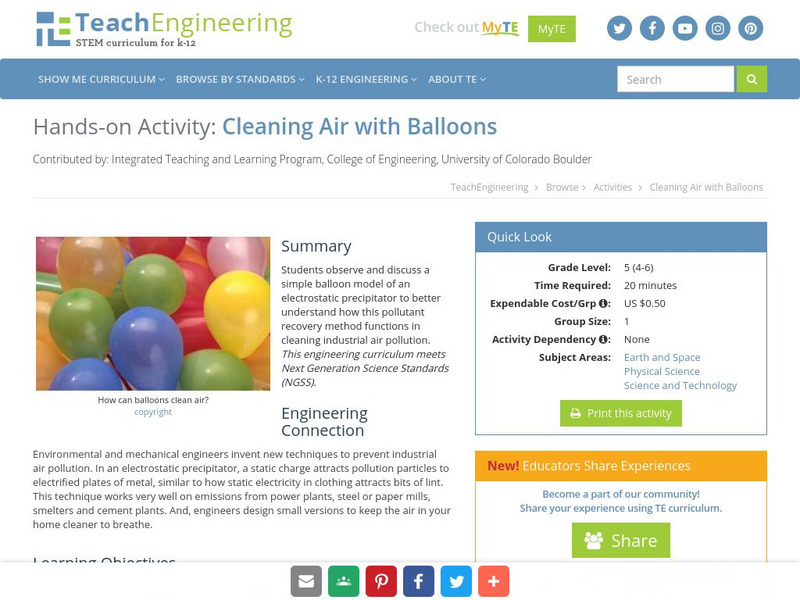
TeachEngineering
Teach Engineering: Cleaning Air With Balloons
Students observe and discuss a simple balloon model of an electrostatic precipitator to better understand how this pollutant recovery method functions in cleaning industrial air pollution.
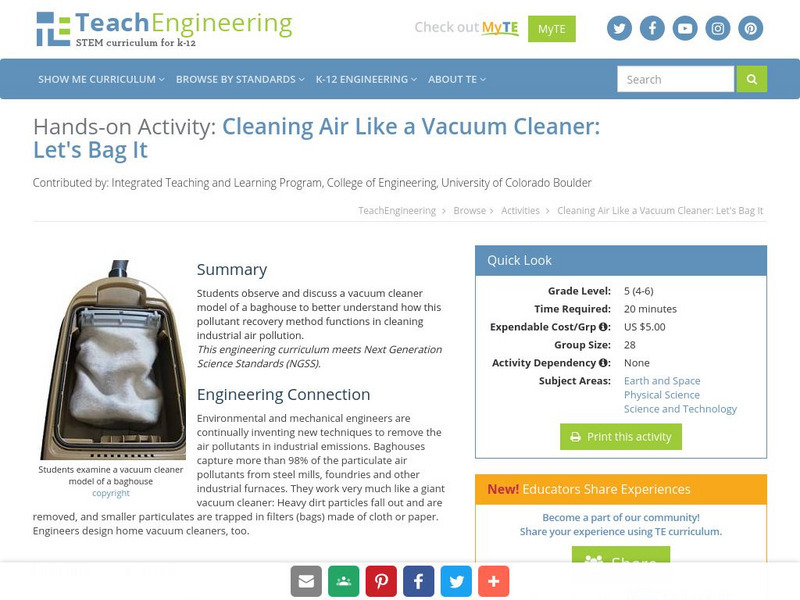
TeachEngineering
Teach Engineering: Let's Bag It
Students observe and discuss a vacuum cleaner model of a baghouse to better understand how this pollutant recovery method functions in cleaning industrial air pollution.
TeachEngineering
Teach Engineering: Rolling Blackouts & Environmental Impact
The goal is for the students to understand the environmental design considerations required when generating electricity. The electric power that we use every day at home and work is generated by a variety of power plants. Power plants...
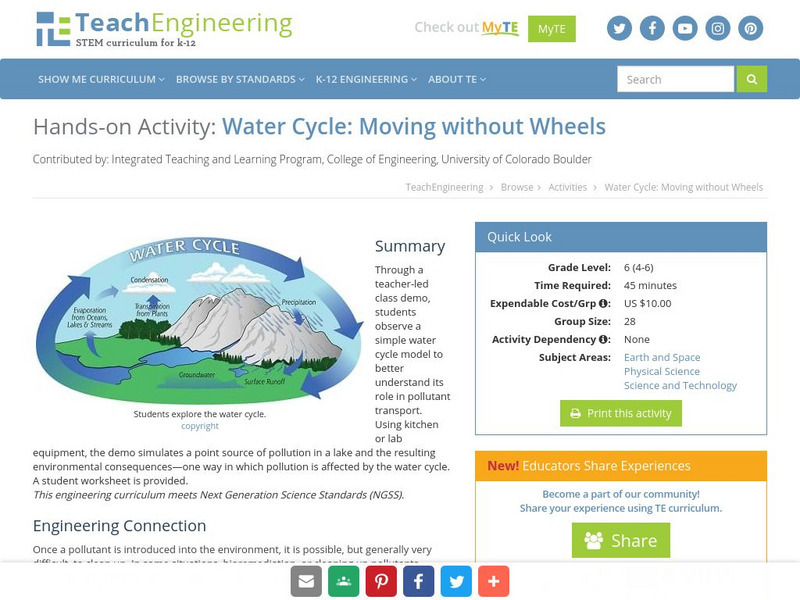
TeachEngineering
Teach Engineering: Moving Without Wheels
In a class demonstration, students observe a simple water cycle model to better understand its role in pollutant transport. This activity shows one way in which pollution is affected by the water cycle; it simulates a point source of...

Science Buddies
Science Buddies: Making Everyday Objects Out of Mushrooms: Environmentally Friendly Design
In this activity, you will use mushroom roots to grow a biodegradable material that can be molded into a product of your liking, like a flowerpot.
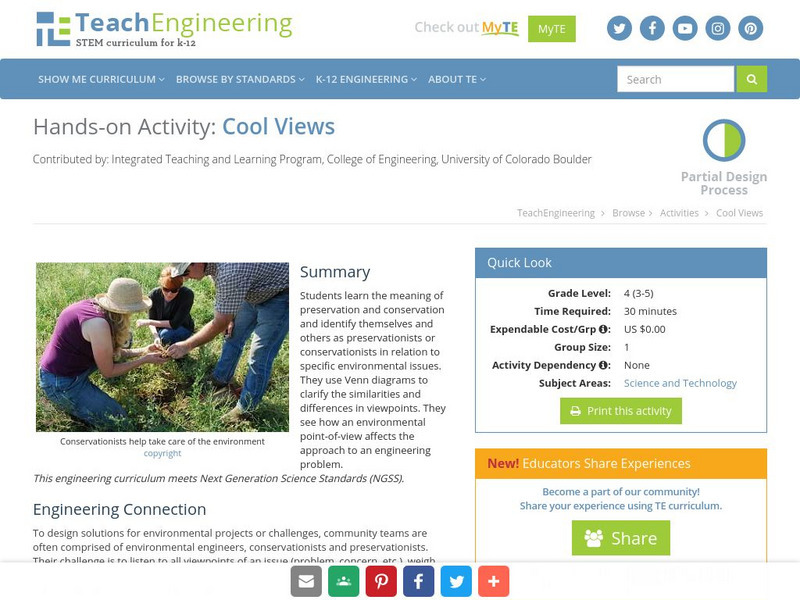
TeachEngineering
Teach Engineering: Cool Views
In this activity, students will learn the meaning of preservation and conservation and identify themselves and others as preservationists or conservationists in relation to specific environmental issues. They will understand how an...

Other
Union of Concerned Scientists: Science for a Healthy Planet and Safer World
The official website for Union of Concerned Scientists provides information on environmental issues and suggestions on actions people can take to curb environmental harm.
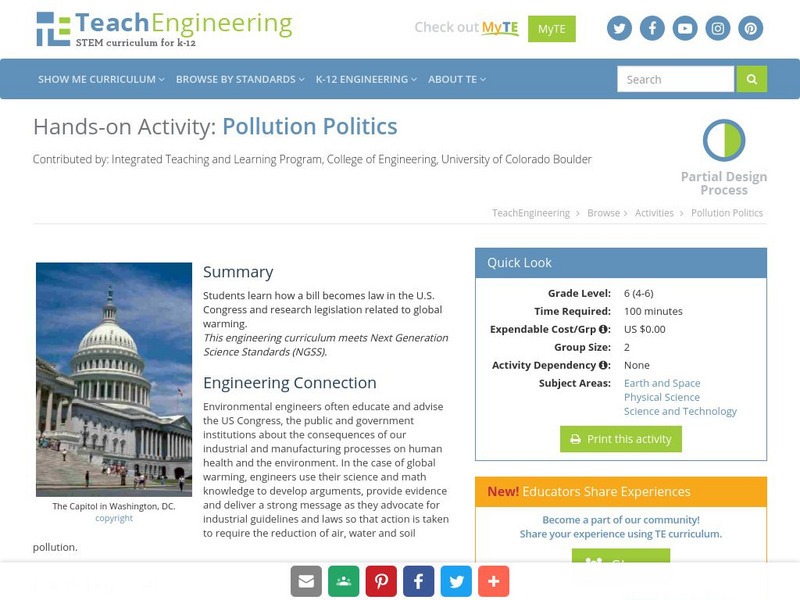
TeachEngineering
Teach Engineering: Pollution Politics
Students learn how a bill becomes law in the U.S. Congress and research legislation related to global warming.