Hi, what do you want to do?





Other
Thoreau Institute: The History of Environmentalism
This essay is a thorough investigation of the various political and philosophical changes which have occurred throughout the environmental movement. Examines the current situation and includes references. Excellent article.

Siteseen
Siteseen: American Historama: Us Environmental Protection Agency (Epa)
Discover detailed facts and information about the goals, purpose and function, and the history and origins of the Environmental Protection Agency (EPA).
US Environmental Protection Agency
Epa: Lesson Plans, Teacher Guides and Online Resources for Educators
Find an array of environmental and science-based lesson plans, activities and ideas from the EPA, other federal agencies, and external organizations.
US Environmental Protection Agency
Epa: Learn About Green Infrastructure
The EPA provides many ideas for integrating green infrastructures into communities. This site also discusses how this can build climate resilience and offers resources for doing a cost-benefit analysis, for addressing government...

US Environmental Protection Agency
Epa: Epa to Launch Noise Control Program
This 1972 EPA press release described the first actions that would be made under the Noise Control Act of 1972.
US Environmental Protection Agency
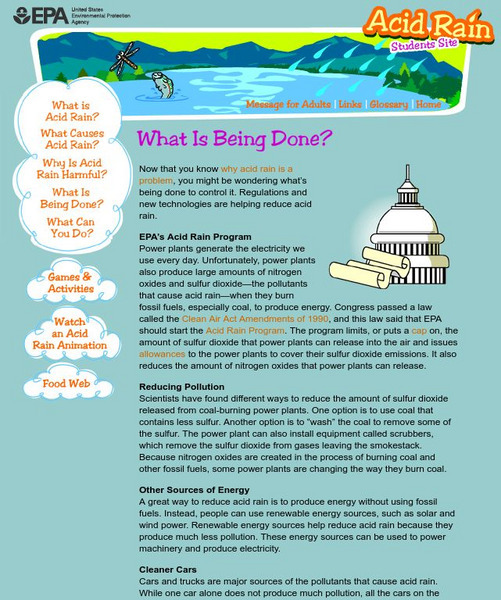
Epa: Acid Rain: What Is Being Done?
The EPA discusses the actions the government agencies are taking to reduce acid rain.
US Environmental Protection Agency
Epa: Criteria Air Pollutants
Find out about the six major air pollutants. In-depth descriptions of ozone, nitrogen dioxide, particulates, sulfur dioxide, carbon monoxide, and lead are provided.
US Environmental Protection Agency
Epa: Ground Water and Drinking Water
Learn about the safety of drinking water, find information on agencies that oversee our water, and gain access to the current drinking water standards and regulations.
US Environmental Protection Agency
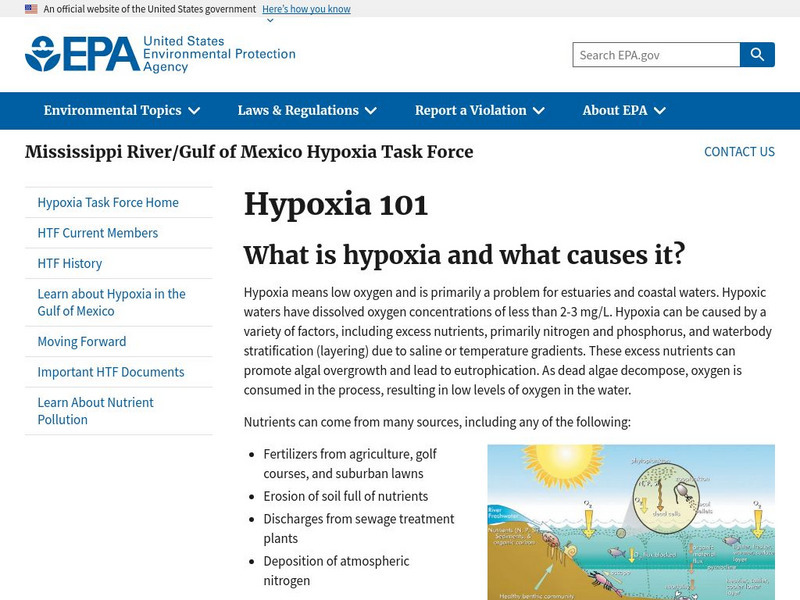
Epa: Hypoxia 101
Explains what hypoxia is, its causes, the sources, why it is important to reduce it, and where it occurs around the world. Includes a diagram showing how hypoxia develops in a water body and links to lots of additional resources.
US Environmental Protection Agency
Epa: Personal Emissions Calculator
Allow yourself 10-15 minutes to enter data to obtain an estimate of your personal greenhouse gas emissions. Then explore actions that you can take to reduce your energy and waste disposal costs. The calculator will display the amount of...
US Environmental Protection Agency
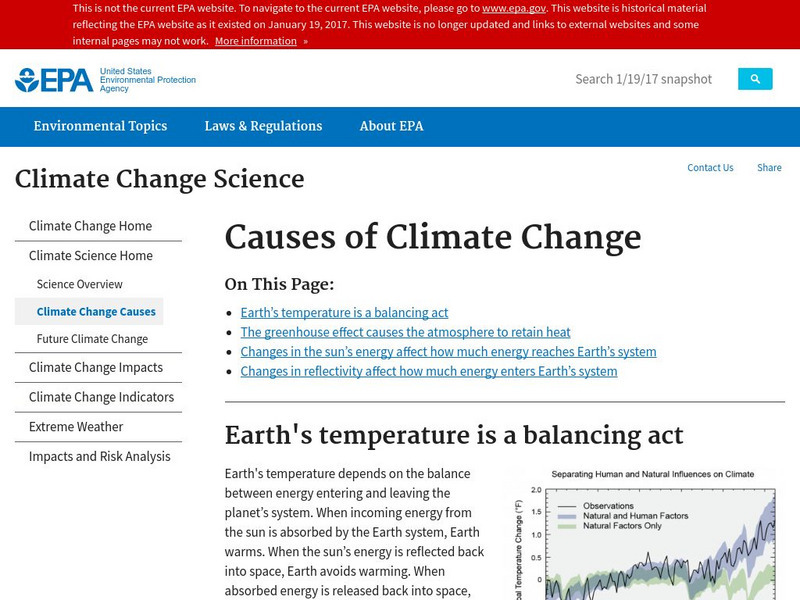
Epa: Causes of Climate Change
Earth's temperature depends on the balance between energy entering and leaving the planet's system . When incoming energy from the sun is absorbed by the Earth system, Earth warms. When the sun's energy is reflected back into space,...
US Environmental Protection Agency
Epa: Household Carbon Footprint Calculator
Enter your household energy data to find out your family's total carbon footprint. Explore some actions to take to reduce your carbon emissions, and then find out your estimated savings once you take those steps.

US Environmental Protection Agency
Epa: Air Toxics Website Manganese Compounds
Very thorough information on manganese. Lists its uses, where it is found, physical properties, and potential health effects.
US Environmental Protection Agency
Epa: Composting at Home
Investigate the benefits of composting and discover ways to do it easily at home.
US Environmental Protection Agency
Epa: Lead
Details of government initiatives to eradicate lead poisoning.
US Environmental Protection Agency
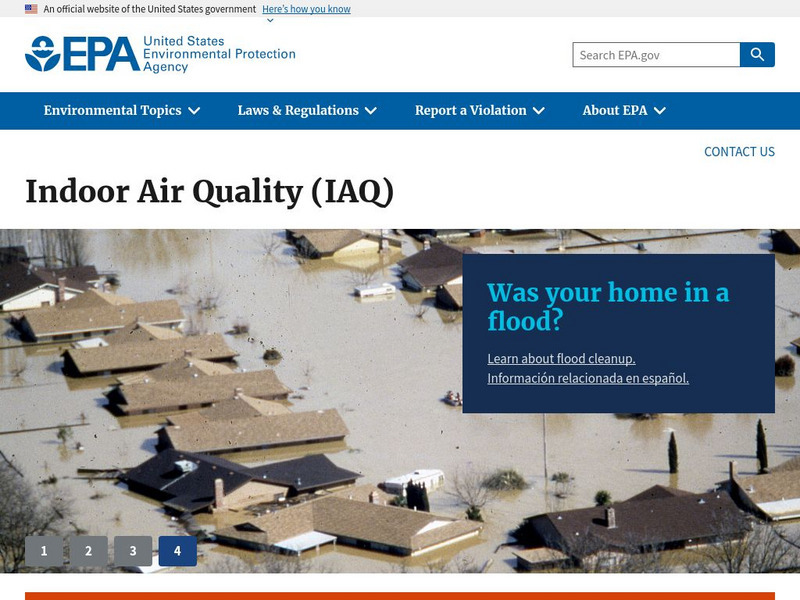
Epa: Indoor Air Quality
This website defines and explains indoor air pollution in all its forms. Content includes a focus on asthma, molds, secondhand smoke, and radon in public buildings and at home.
US Environmental Protection Agency
Epa: Summary of the Clean Water Act
Provides a brief overview of the Clean Water Act. Includes links to its history and to information about compliance and enforcement.
US Environmental Protection Agency
Epa: Determining the P H of Common Substances
In this acid rain experiment the students will be "determining the pH of common substances." This is a great lesson plan for an experiment.
US Environmental Protection Agency
Epa: Carbon Monoxide (Co)
This page gives the sources of carbon monoxide along with health effects and recommendations for CO levels in homes.
US Environmental Protection Agency
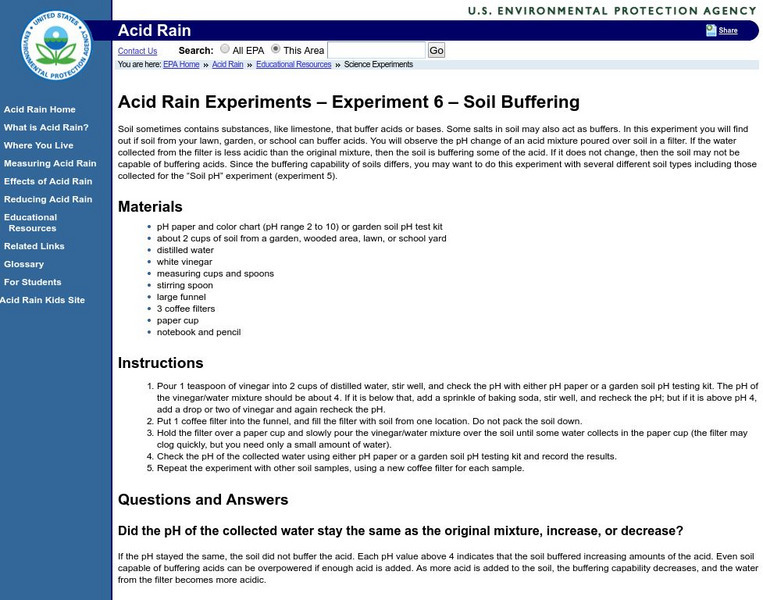
Epa: Soil Buffering Experiment
Use this site to explore the experimentation process of "Soil buffering."
US Environmental Protection Agency
Epa: Assessing Health Risks From Pesticides
This site provides information about the active ingredients registered as pesticides. Site discusses toxicology, exposure, dose-response and risk characterization.
US Environmental Protection Agency
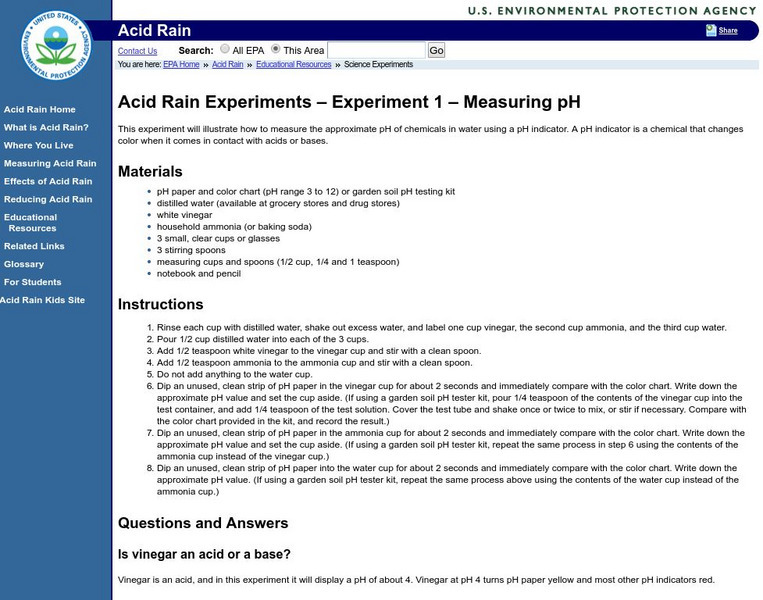
Epa: Measuring P H Experiment
This is an activity that deals with acid rain. "This experiment will illustrate how to measure the approximate pH of chemicals in water using a pH indicator." It is easy to follow the comprehensive set of directions.

US Environmental Protection Agency
Epa: Mercury in Your Environment
Students learn what the forms of mercury are, the sources, how to reduce the releases, and how it affects humans and the environment.
US Environmental Protection Agency
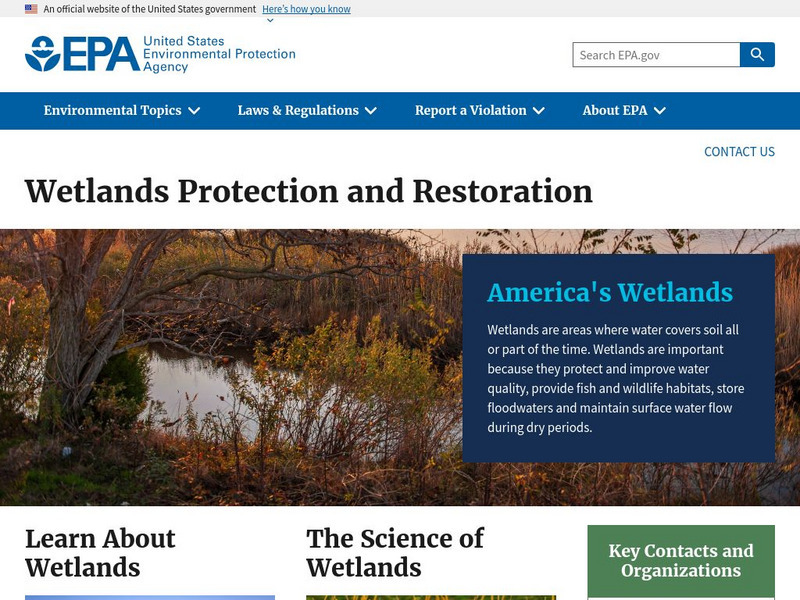
Epa: Wetlands Protection
This resource provides information regarding what private citizens can do to slow the rate of wetland loss and to improve the quality of our remaining wetlands.