Hi, what do you want to do?





Better Lesson
Better Lesson: Writing a Topic & Concluding Paragraph for the Essay
This lesson plan is a final step towards supporting students to practice writing an informative/explanatory paragraph conveying complex ideas and presenting information clearly and accurately. Second-grade students can usually write a...
ReadWriteThink
Read Write Think: Alphabiography Project Totally You
Contains plans for two lessons that ask students to write autobiographies using aspects of their lives for each letter of the alphabet. In addition to objectives and standards, this instructional plan contains links to sites used in the...
ReadWriteThink
Read Write Think: Examining Plot Conflict Through a Comparison/contrast Essay
Contains plans for six lessons that ask learners to examine types of conflict (character vs. character, character vs. self, character vs. nature, and character vs. society) before writing essays that compare and contrast two conflicts....
ReadWriteThink
Read Write Think: Comparing and Contrasting: Picturing an Organizational Pattern
Contains plans for two 50-minute lessons that teach about the comparison/contrast organizational pattern. In addition to objectives and standards, this instructional plan contains links to PDF handouts and sites used in the lessons as...

ReadWriteThink
Read Write Think: Cooking Up Descriptive Language Designing Restaurant Menus
Contains plans for four lessons that ask students to develop their descriptive writing skills by creating their own restaurant menus. In addition to objectives and standards, this instructional plan contains links to sites used in the...
ReadWriteThink
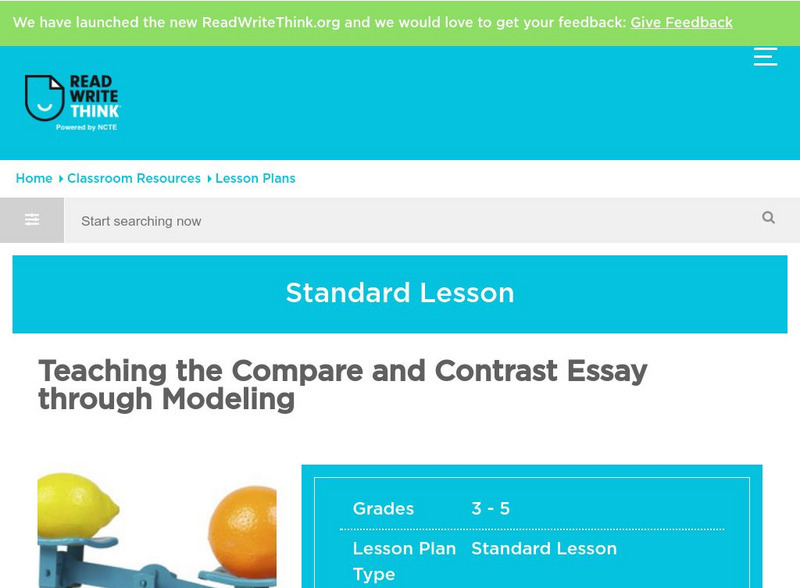
Read Write Think: Teaching the Compare and Contrast Essay Through Modeling
Contains plans for three lessons that teach students how to write comparison contrast essays after modeling the form to them. In addition to objectives and standards, this instructional plan contains links to sites used in the lessons as...
ReadWriteThink
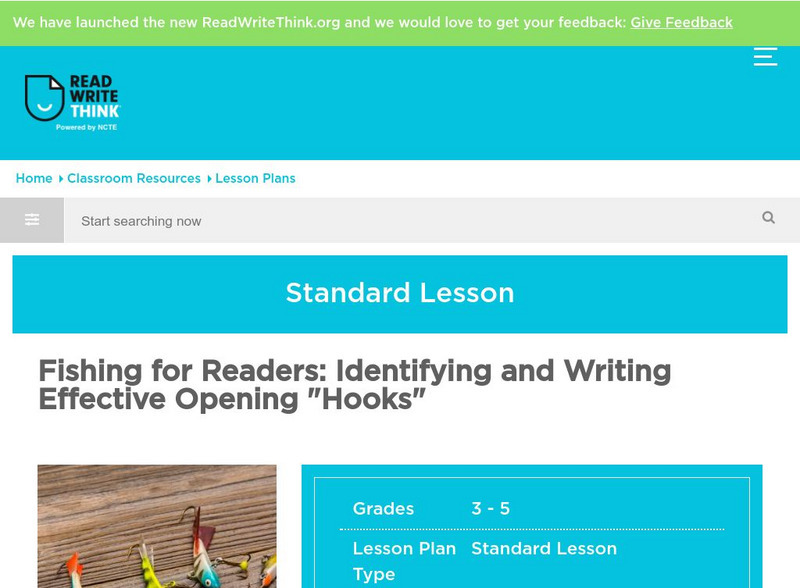
Read Write Think: Identifying and Writing Effective Opening "Hooks"
Contains plans for four lessons that teach students to write effective "hooks," or beginnings, to their writing. They read the introductions of fiction passages and analyze the techniques they use before applying these techniques in...
ReadWriteThink
Read Write Think: Biographies: Creating Timelines of Life
Online instructional activity which allows learners to choose a person of interest and create a timeline of their life. Includes working together, researching potential conflicting information, and developing essays from the original...
National Endowment for the Humanities
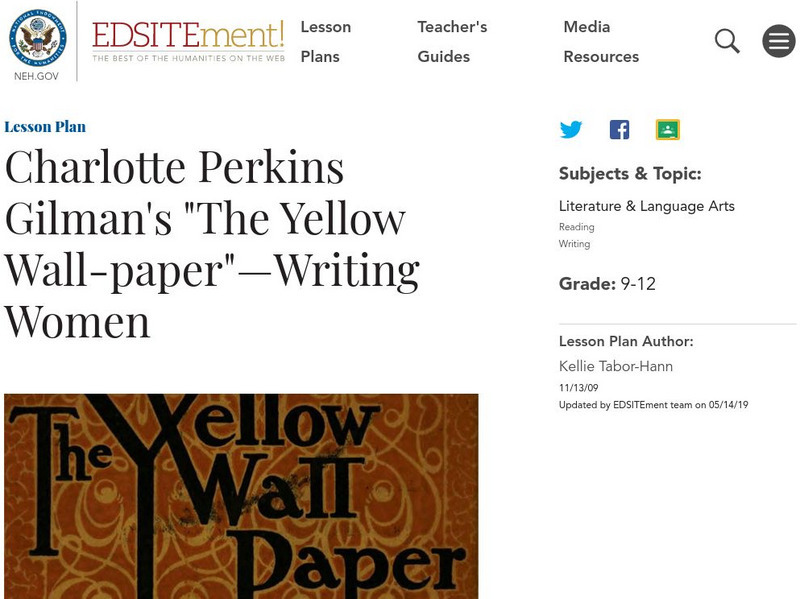
Neh: Edsit Ement:charlotte Perkins Gilman's "The Yellow Wall Paper" Writing Women
A close reading of "The Yellow Wall-paper" employing the analysis of such literary concepts as setting, narrative style, symbol, and characterization. Students will write an essay discussing what the story suggests about middle-class...
Sophia Learning
Sophia: Conclusions
A screencast lesson defining a conclusion and discussing how to write an effective conclusion. Students learn the traditional conclusion format as well as other formats that may better fit a writer's topic and purpose. Includes a section...
University of Sydney (Australia)
The Write Site: Practice: Constructing a Working Thesis
In this interactive lesson, students will refer to a synthesis grid to determine the "best" thesis to use when answering a business management question.

John F. Kennedy Center
The Kennedy Center: Multi Media Hero Analysis
Using what they learn about how heroes are depicted in art, literature, and music, students create their own definition of a hero, and then write an essay based on a hero they wish to research.
Sophia Learning
Sophia: Compare and Contrast Papers
This lesson introduces comparison/contrast papers.
Sophia Learning
Sophia: Analyzing Characterization
This lesson introduces the elements of character analysis and uses Poe's "Tell Tale Heart" for an example. RL.9-10.3 Analyzing Characters
University of California
History Project: The Path to Watergate
Students will write an essay on the causes of the Watergate affair using background information, a chronology of events, and nineteen primary source documents.
Smithsonian Institution
National Museum of Natural History: Does Our Background Shape Our Thinking About Environmental Issues? [Pdf]
A lesson where students explore the positive and negative impacts of human activities on the environment today and in the distant past, and examine how attitudes towards the environment might be shaped by one's experiences growing up....