Hi, what do you want to do?





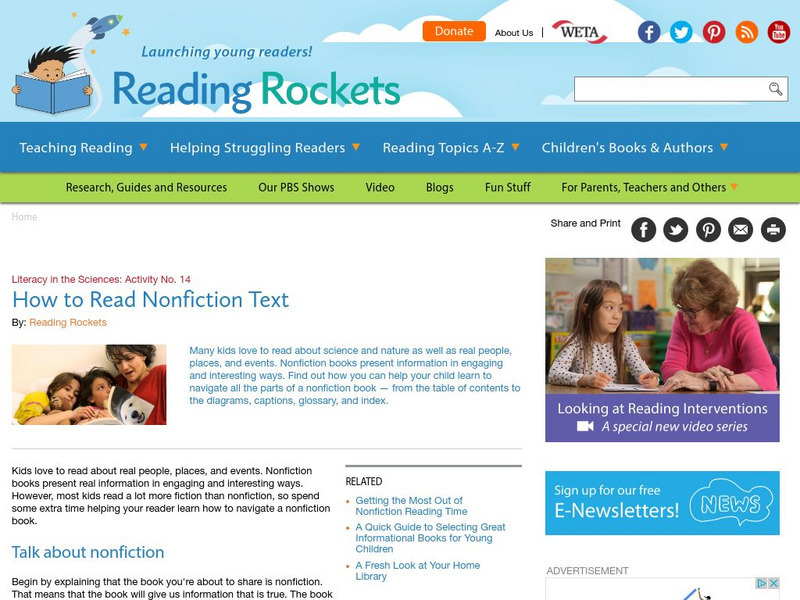
Reading Rockets
Reading Rockets: How to Read Nonfiction Text
Kids love to read about real people, places, and events. Nonfiction books present real information in engaging and interesting ways. However, most kids read a lot more fiction than nonfiction, so spend some extra time helping your reader...
Better Lesson
Better Lesson: Analyzing Text Complexity of Non Fiction Sources
This lesson will help students read and comprehend nonfiction, specifically biographies, through determining criteria for text complexity. Included is a PDF and Smart Notebook titled Determining Text Complexity, and an example of a...
Other
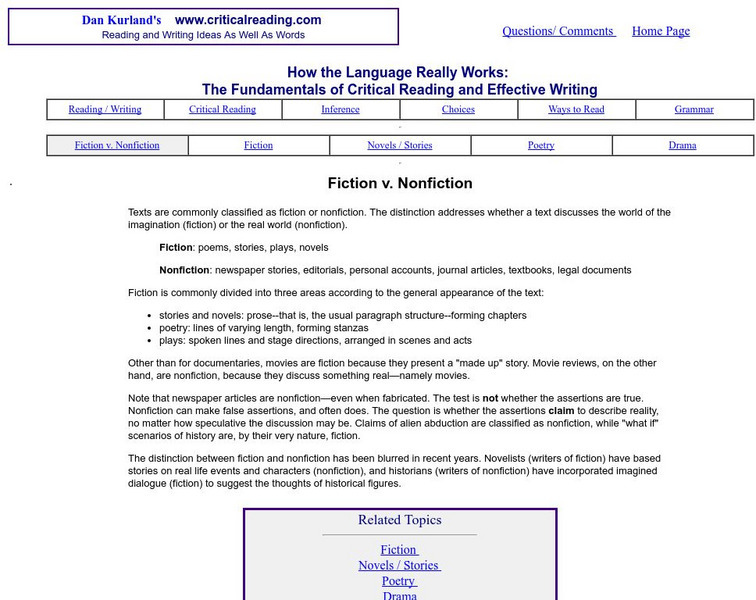
Definition: Fiction v. Nonfiction
This writing and reading tutorial provides a detailed explanation of the difference between fiction and nonfiction in rhetoric.
Read Works
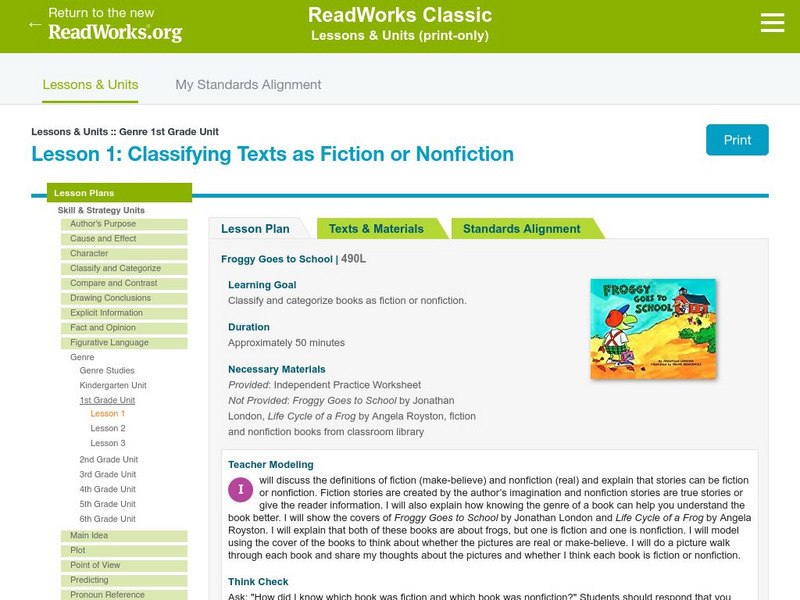
Read Works: 1st Grade Lesson: Classifying Texts
[Free Registration/Login Required] A lesson in which students use the books Froggy Goes to School by Jonathan London and Life Cycle of a Frog by Angela Royston to learn to classify texts as fiction or nonfiction. Lesson includes direct...
TES Global
Tes: Non Fiction Unit 4 Formal/impersonal Writing: Tourists
[Free Registration/Login Required] Students will analyze tourism brochures to determine features related to nonfiction writing in this unit. Tourism websites may be used in lieu of the brochures. Cotswold and the North Leigh Roman Villa...
TES Global
Blendspace: Nonfiction 2014 2015
A learning module with twenty-one links to images, websites, texts, slideshows, and videos about nonfiction and informational text reading skills.
Education.com
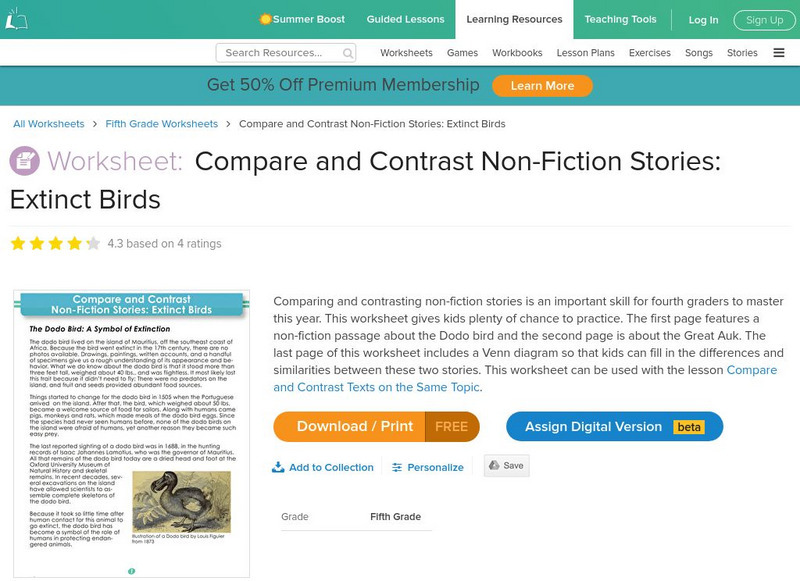
Education.com: Compare and Contrast Non Fiction Stories: Extinct Birds
[Free Registration/Login Required] Students will compare two informational texts about two extinct birds, the Great Auk and the Dodo. A Venn Diagram is provided to be used when comparing an contrasting tests.
Writing Fix
Writing Fix: Snowball Note Making and Summarizing
In this lesson, students will engage in this post-reading strategy for a nonfiction or a fiction piece. Each student will take notes on a four-square square graphic organizer about something they already knew, something they found...