Hi, what do you want to do?






Khan Academy
Khan Academy: Quiz: How Did the First Humans Live?
15 question quiz on the topic of the evolution of humans and how the first humans lived.

Khan Academy
Khan Academy: Gallery: How Did the First Humans Live?
Follow the human migration with this gallery that allows you to observe how our ancestors lived and gathered food.
Smithsonian Institution
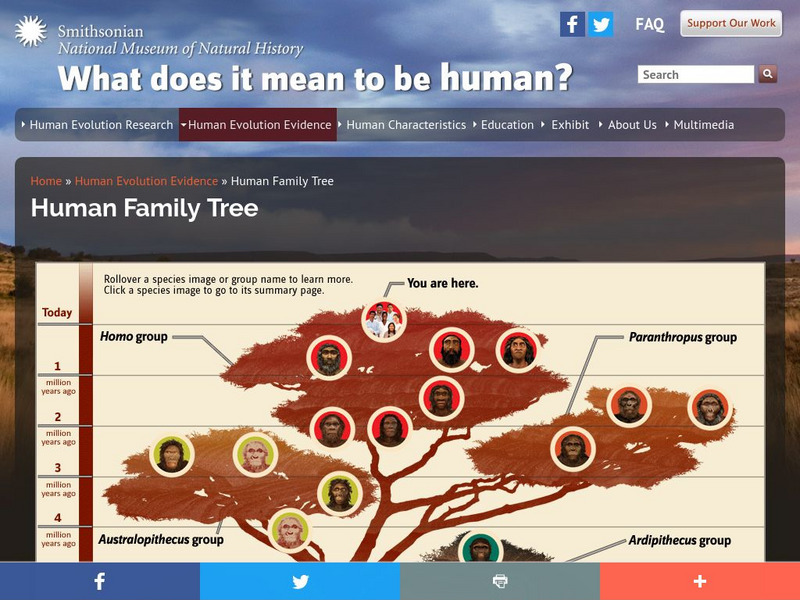
National Museum of Natural History: Human Origins: Human Family Tree
Find the human ancestor you are interested in and click on it either in the timeline or the list below for more details. Each fossil or reconstruction pictured includes links to more details about it.

Khan Academy
Khan Academy: Activity: Human Migration Patterns
Use this activity to figure out where the first humans lived. This activity requires students to read clues and use their understanding of the clues to create a map to give them a visual representation of early humans movements.
![Planet E Book: Of Human Bondage [Pdf] eBook](https://static.lp.lexp.cloud/images/attachment_defaults/resource/large/FPO-knovation.png "Planet E Book: Of Human Bondage [Pdf] eBook")
Planet eBooks
Planet E Book: Of Human Bondage [Pdf]
The complete text of "Of Human Bondage" by W. Somerset Maugham is available here in PDF format. Of Human Bondage, which was first released in 1915, is 1,009 pages pages long.
CK-12 Foundation
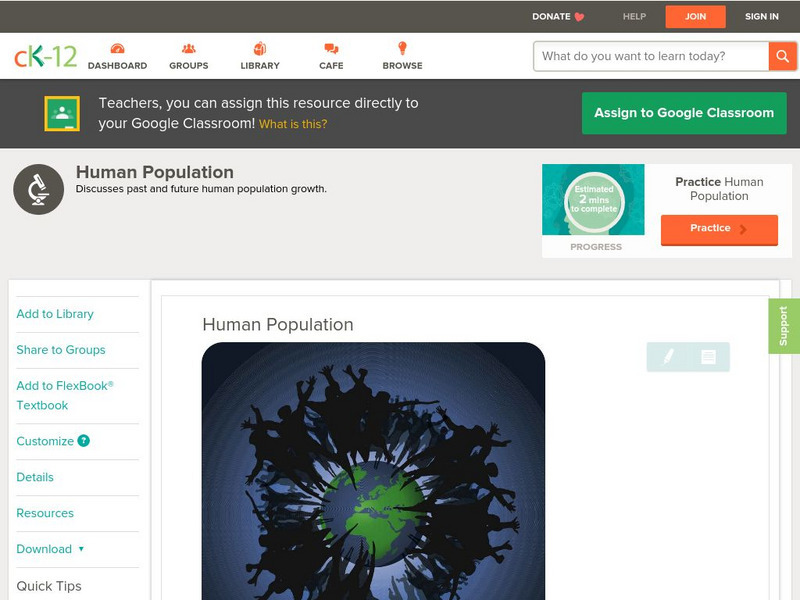
Ck 12: Life Science: Human Population
[Free Registration/Login may be required to access all resource tools.] How quickly is the human population growing? If we look at worldwide human population growth from 10,000 BCE through to today, our growth looks like exponential...
Other
Center for the Study of the First Americans
This institute attempts to provide answers to the questions: when did the first people enter the Americas, who were the first immigrants, where did they come from, and how did they get here?
Google Cultural Institute
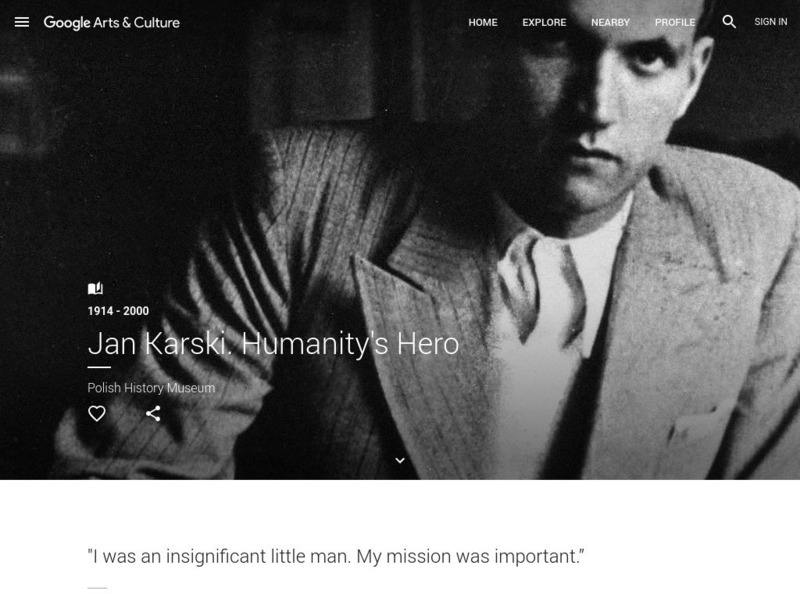
Google Cultural Institute: Jan Karski. Humanity's Hero
Photographic essay features an array of photos, primary source documents, and first-hand video testimony from the man who attempted to inform the world about the existence of the Holocaust.
Other
Council for Economic Education: The Neolithic Agricultural Revolution [Pdf]
This source includes general information and the chronology of the Neolithic Agricultural Revolution, or the time of development of the first human communities. After learning about the revolution, read a brief short-story about a...

Khan Academy
Khan Academy: Activity: Social Status, Power, and Human Burials
This activity provides you with an opportunity to start thinking about the impact that farming can have on the way humans live and relate to each other. It will also allow you to think about the kinds of questions archaeologists and...

Khan Academy
Khan Academy: Stepanova, the Results of the First Five Year Plan
Have you ever wondered what came before Photoshop? After the First World War, artists in Germany and the Soviet Union began to experiment with photomontage, the process of making a composite image by juxtaposing or mounting two or more...

Khan Academy
Khan Academy: Terracotta Warriors From Mausoleum of First Qin Emperor of China
The underground terracotta army found in the burial complex of Qin Shihuang reveals much about an ancient way of life. We gain a window of insight to the First Emperor's worldview and enduring influence.
PBS
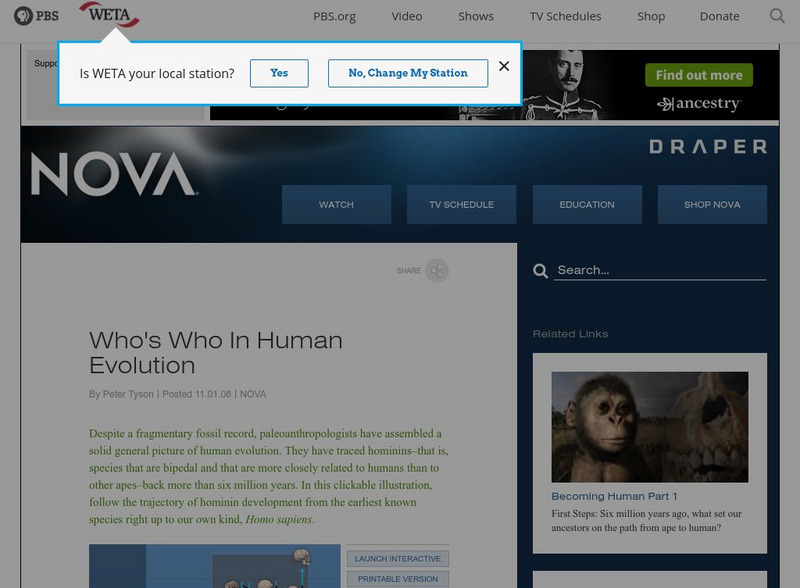
Pbs Nova: Who's Who in Human Evolution
Easy-to-understand chart of human evolution that traces hominins back more than six million years. Follow along using this clickable illustration right up to us, Homo sapiens. Clicking on each name will provide a brief descriptive...
Ministry of Education and Employment of Spain
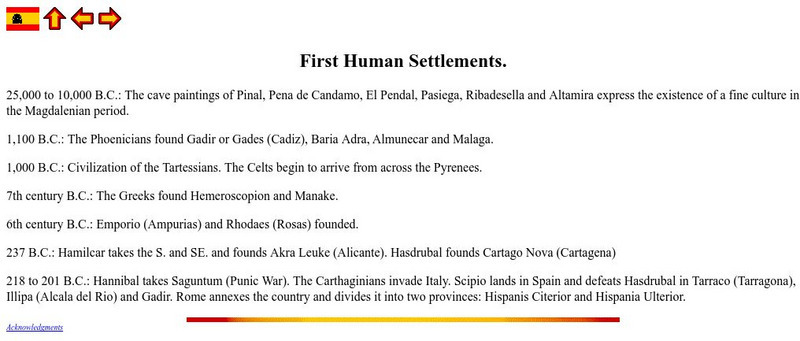
Si Spain: First Human Settlements
This resource provides brief information on the first traces of human life in the Iberian Peninsula.
Science Education Resource Center at Carleton College
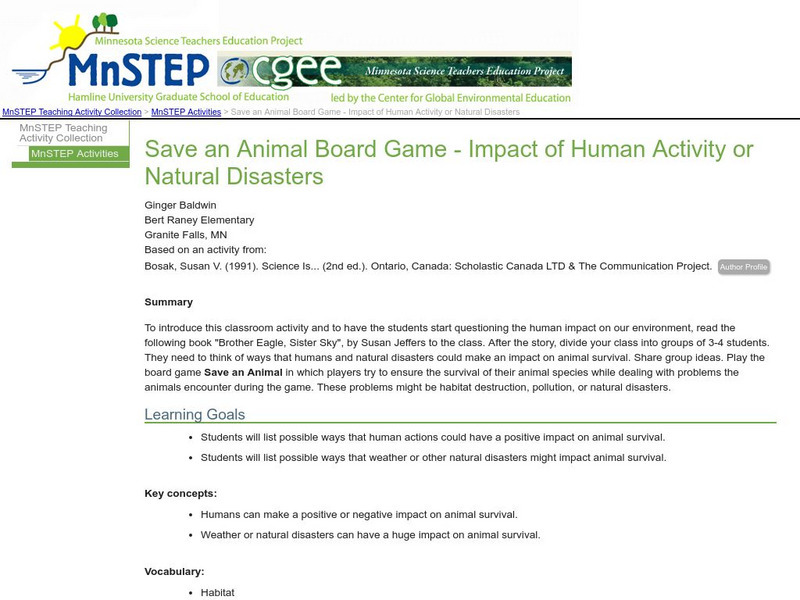
Serc: Mn Step: Animal Game Impact of Human Activity or Natural Disasters
A description of a lesson where students first listen to a story where they begin to think about and discuss the impact humans and natural disasters have on the environment. They then play a board game. This requires preparation...

Independence Hall Association
U.s. History: George Washington: The First Administration
Read about George Washington's presidency. See why his role was so important in setting precedents to be followed by future chief executives. Find out about some of the warts in his personality too, all of which made him more human.
DOGO Media
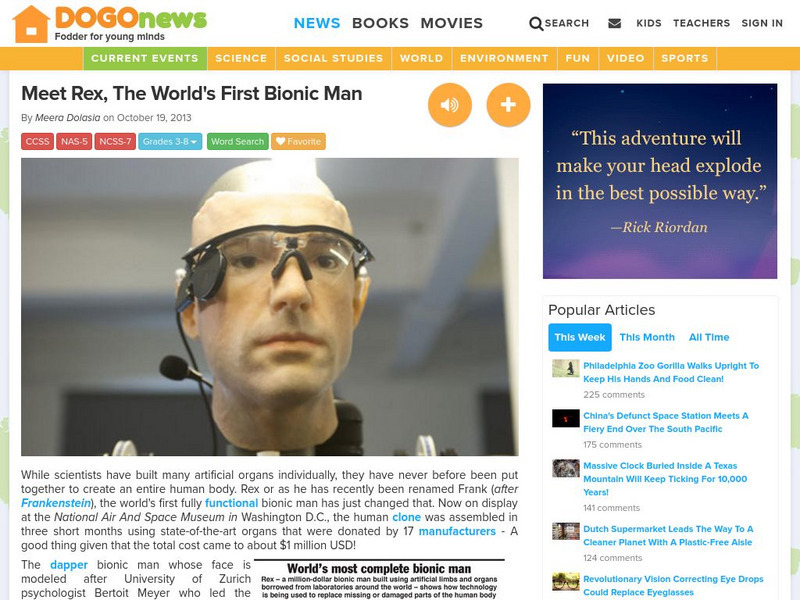
Dogo News: Week of 10 21 13: Meet Rex, the World's First Bionic Man
Article introduces readers to the world's first bionic man, a robot named Rex with approximately 60% - 70% of the functionality of a real human. Includes two brief videos.
PBS
Pbs Learning Media: Historic Relationships Between Dogs and Humans
In this video segment from Nature, learn the history of the world's first domesticated animal, the dog. [7:34]

Other
Live Science: First American Settlers Not Who We Thought
This article discusses findings that point to a pre-Clovis, New-World-humans model through artifacts dug up at various archaeological spots thoughout the Americas.

Other
Bradshaw Foundation: Journey of Mankind
An interactive map that shows how early humans traveled out of Africa and spread throughout the world. Starts from pre-150,000 B.C. and shows the history of how humans were able to populate the world. At each step there is information...
University of Wisconsin
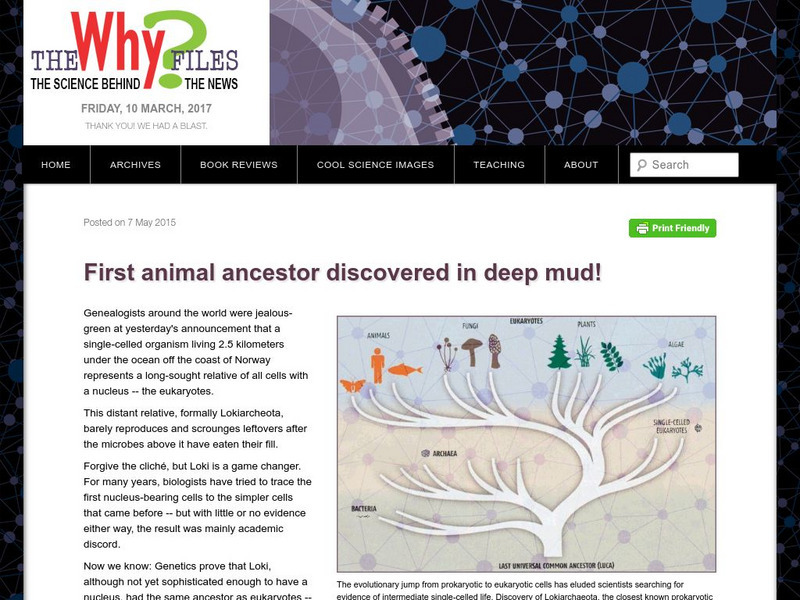
The Why Files: First Animal Ancestor Discovered in Deep Mud
Two billion years ago, we share a common ancestor with this new-found relative. Is this our origin?

National Geographic
National Geographic: Programs: Chesapeake Bay Water Quality Project
A project-based collaborative unit of study that teaches students about watershed health using real-time geospatial technology. Students engage in outdoor field experiences while using twenty-first century learning skills.
Smithsonian Institution
Lemelson Center: Inventors' Stories: Paul Mac Cready
Article on the inventions of Paul MacCready, who developed the world's first human-powered flight machine, called the Gossamer Condor.
University of Groningen
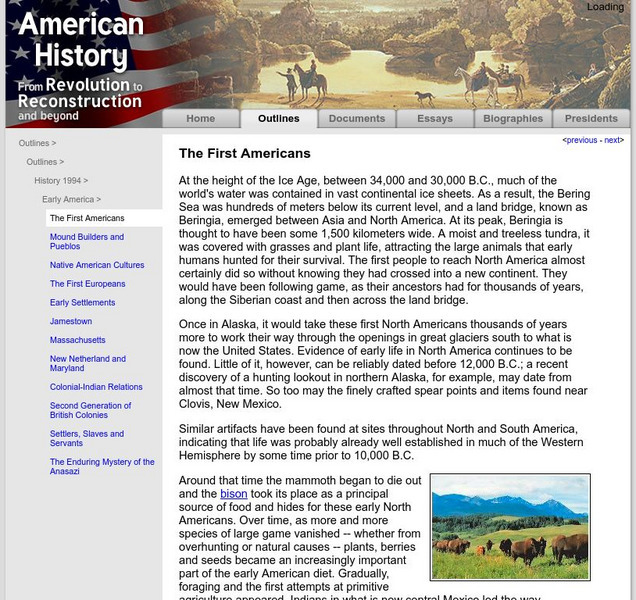
American History: Outlines: Early America: The First Americans
Gives an overview of the timeline of humans establishing themselves in the Americas, starting with the crossing of the Bering Sea land bridge some time before 12,000 B.C. Archaeological evidence shows humans moving south and eventually...