Hi, what do you want to do?






Baertracks
Creative Quotations From Edna St. Vincent Millay
This site offers quotations from Edna St. Vincent Millay on foraging, reflecting, adopting, nuturing, and knuckling down.

Baertracks
Creative Quotations From Katherine Anne Porter
This site from Creative Quotations contains a variety of quotes from novelist and short-story writer Katherine Anne Porter. Includes quotes on reflecting, foraging, nurturing, and knuckling down.
Smithsonian Institution
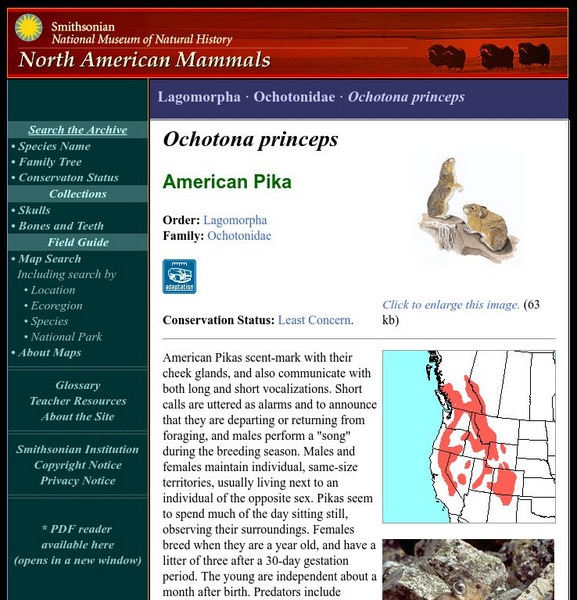
National Museum of Natural History: American Mammals: American Pika
American Pikas scent-mark with their cheek glands, and also communicate with both long and short vocalizations. Short calls are uttered as alarms and to announce that they are departing or returning from foraging, and males perform a...
Smithsonian Institution
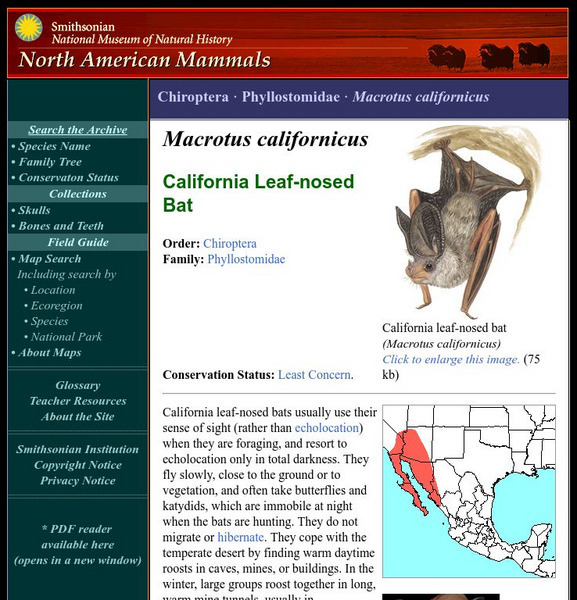
National Museum of Natural History: American Mammals: California Leaf Nosed Bat
California leaf-nosed bats usually use their sense of sight (rather than echolocation) when they are foraging, and resort to echolocation only in total darkness. They fly slowly, close to the ground or to vegetation, and often take...
Smithsonian Institution
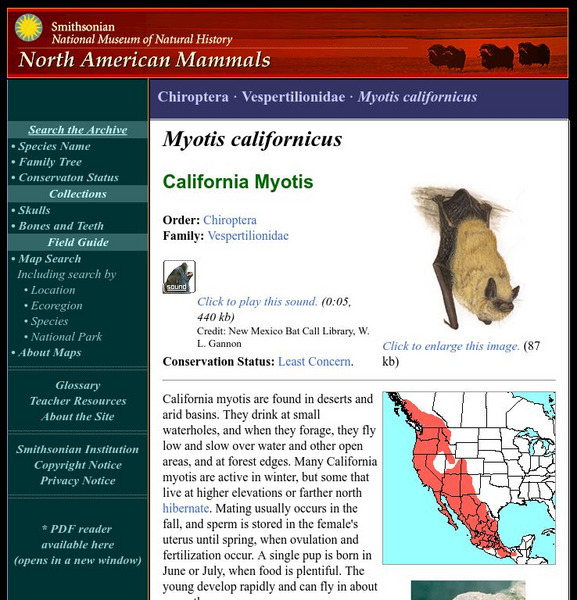
National Museum of Natural History: American Mammals: California Myotis
California myotis are found in deserts and arid basins. They drink at small waterholes, and when they forage, they fly low and slow over water and other open areas, and at forest edges. Learn more about the Myotis californicus, more...
Smithsonian Institution
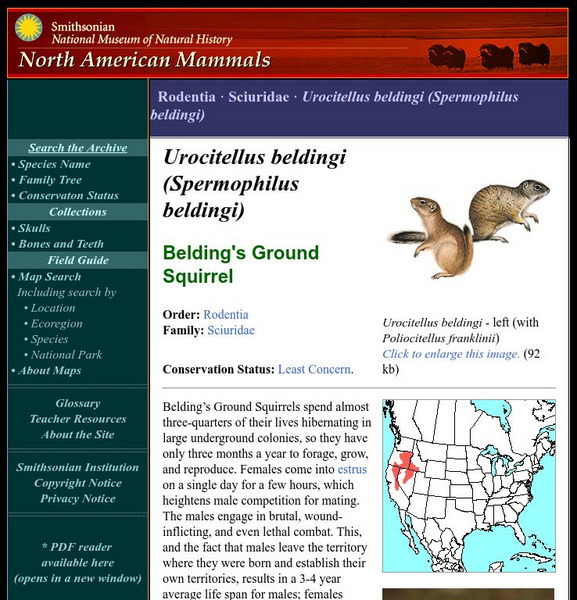
National Museum of Natural History: American Mammals: Belding's Ground Squirrel
Belding's Ground Squirrels spend almost three-quarters of their lives hibernating in large underground colonies, so they have only three months a year to forage, grow, and reproduce. Females come into estrus on a single day for a few...
Smithsonian Institution
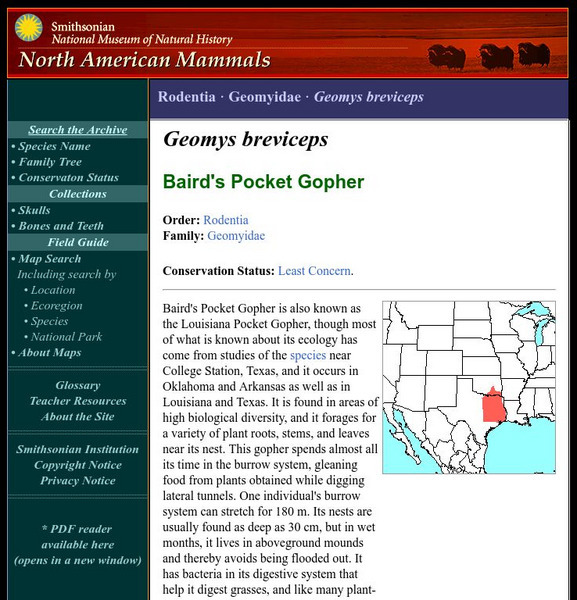
National Museum of Natural History: American Mammals: Baird's Pocket Gopher
Baird's Pocket Gopher is also known as the Louisiana Pocket Gopher, though most of what is known about its ecology has come from studies of the species near College Station, Texas, and it occurs in Oklahoma and Arkansas as well as in...
Smithsonian Institution
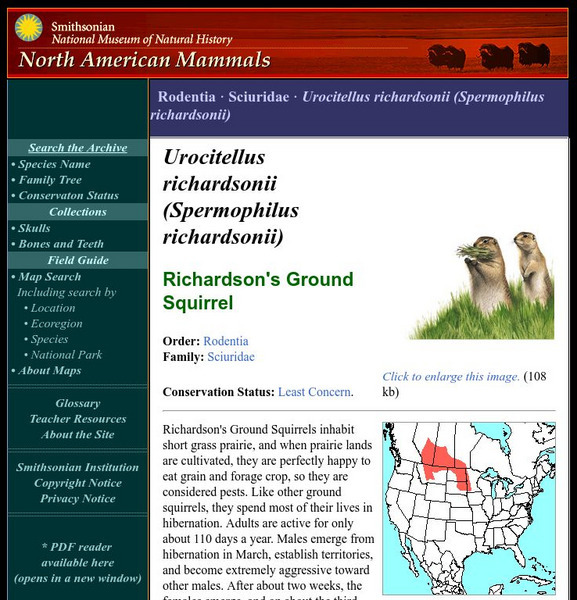
National Museum of Natural History: American Mammals: Richardson's Ground Squirrel
Richardson's Ground Squirrels inhabit short grass prairie, and when prairie lands are cultivated, they are perfectly happy to eat grain and forage crop, so they are considered pests. Like other ground squirrels, they spend most of their...
Smithsonian Institution
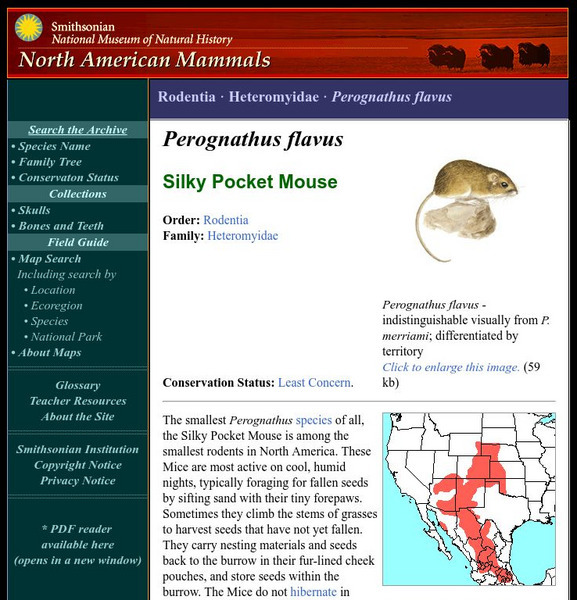
National Museum of Natural History: American Mammals: Silky Pocket Mouse
The smallest Perognathus species of all, the Silky Pocket Mouse is among the smallest rodents in North America. These Mice are most active on cool, humid nights, typically foraging for fallen seeds by sifting sand with their tiny...
Smithsonian Institution
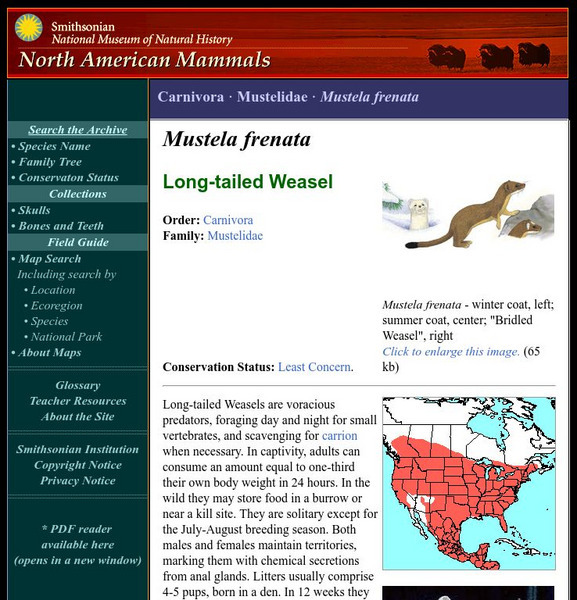
National Museum of Natural History: American Mammals: Long Tailed Weasel
Long-tailed Weasels are voracious predators, foraging day and night for small vertebrates, and scavenging for carrion when necessary. In captivity, adults can consume an amount equal to one-third their own body weight in 24 hours. Learn...
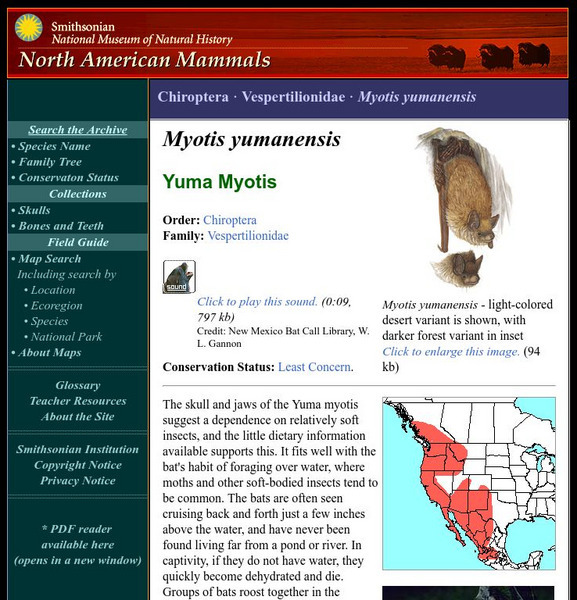
Smithsonian Institution
National Museum of Natural History: American Mammals: Yuma Myotis
The skull and jaws of the Yuma myotis suggest a dependence on relatively soft insects, and the little dietary information available supports this. It fits well with the bat's habit of foraging over water, where moths and other...
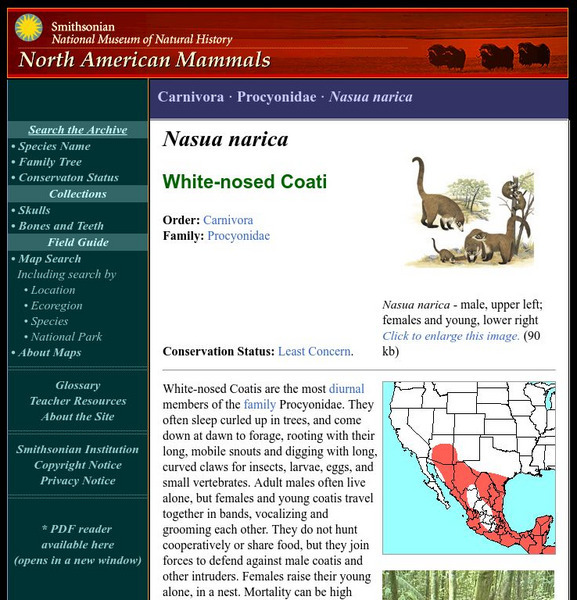
Smithsonian Institution
National Museum of Natural History: American Mammals: White Nosed Coati
White-nosed Coatis are the most diurnal members of the family Procyonidae. They often sleep curled up in trees, and come down at dawn to forage, rooting with their long, mobile snouts and digging with long, curved claws for insects,...
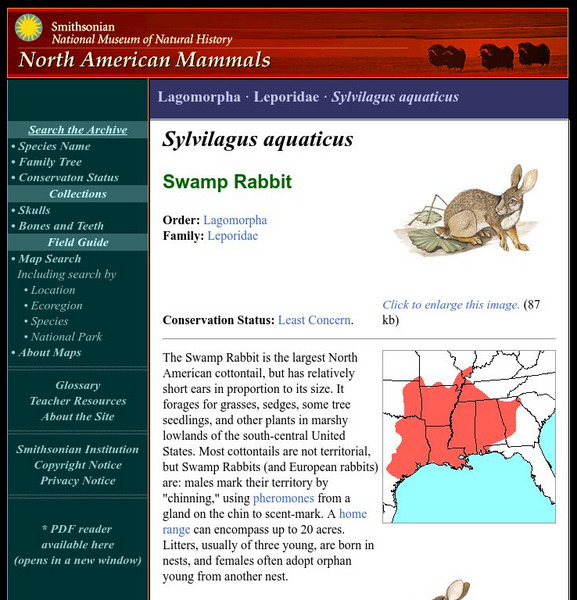
Smithsonian Institution
National Museum of Natural History: American Mammals: Swamp Rabbit
The Swamp Rabbit is the largest North American cottontail, but has relatively short ears in proportion to its size. It forages for grasses, sedges, some tree seedlings, and other plants in marshy lowlands of the south-central United...
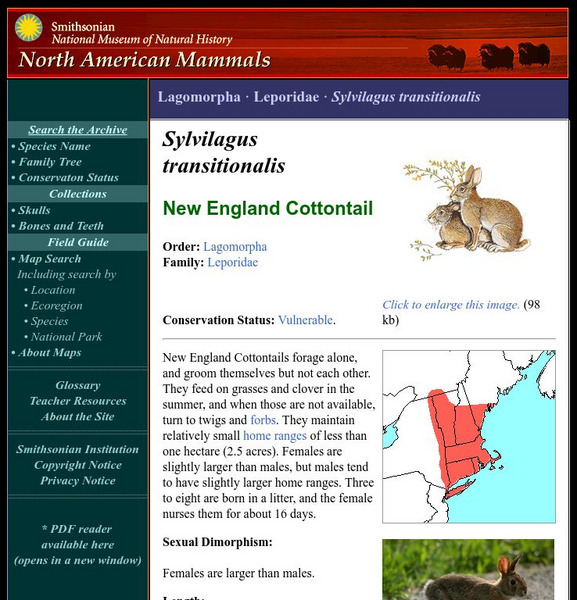
Smithsonian Institution
National Museum of Natural History: American Mammals: New England Cottontail
New England Cottontails forage alone, and groom themselves but not each other. They feed on grasses and clover in the summer, and when those are not available, turn to twigs and forbs. Learn more about the Sylvilagus transitionalis, more...
Smithsonian Institution
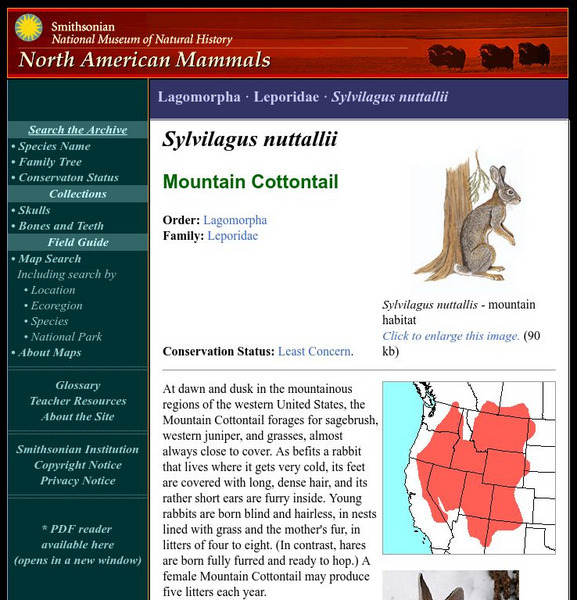
National Museum of Natural History: American Mammals: Mountain Cottontail
At dawn and dusk in the mountainous regions of the western United States, the Mountain Cottontail forages for sagebrush, western juniper, and grasses, almost always close to cover. As befits a rabbit that lives where it gets very cold,...
Smithsonian Institution
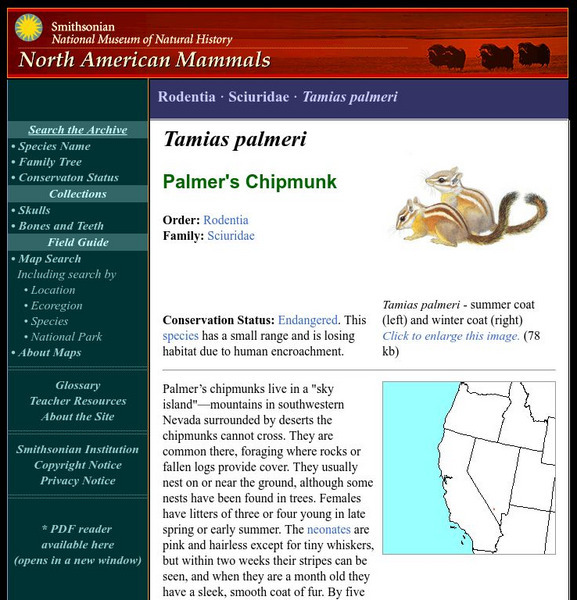
National Museum of Natural History: American Mammals: Palmer's Chipmunk
Palmer's chipmunks live in a "sky island" mountains in southwestern Nevada surrounded by deserts the chipmunks cannot cross. They are common there, foraging where rocks or fallen logs provide cover. Learn more about the Tamias palmeri,...
Smithsonian Institution
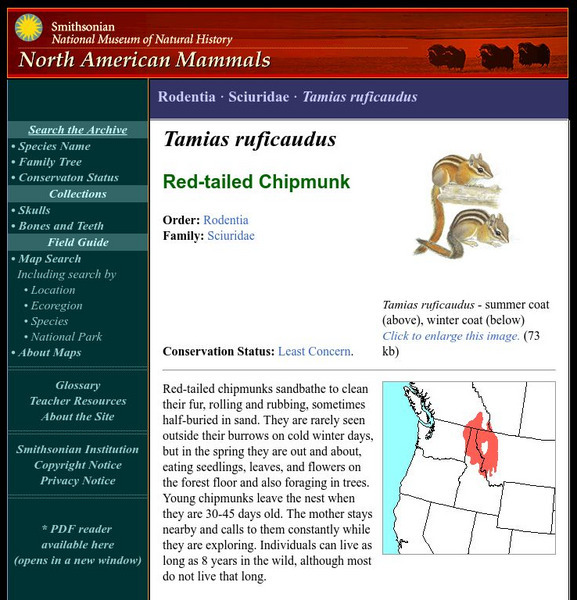
National Museum of Natural History: American Mammals: Red Tailed Chipmunk
Red-tailed chipmunks sandbathe to clean their fur, rolling and rubbing, sometimes half-buried in sand. They are rarely seen outside their burrows on cold winter days, but in the spring they are out and about, eating seedlings, leaves,...
Smithsonian Institution
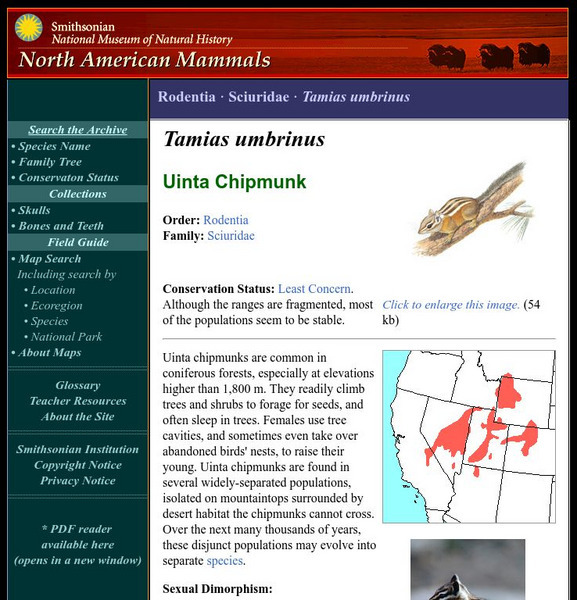
National Museum of Natural History: American Mammals: Uinta Chipmunk
Uinta chipmunks are common in coniferous forests, especially at elevations higher than 1,800 m. They readily climb trees and shrubs to forage for seeds and often sleep in trees. Learn more about the Tamias umbrinus, more commonly known...
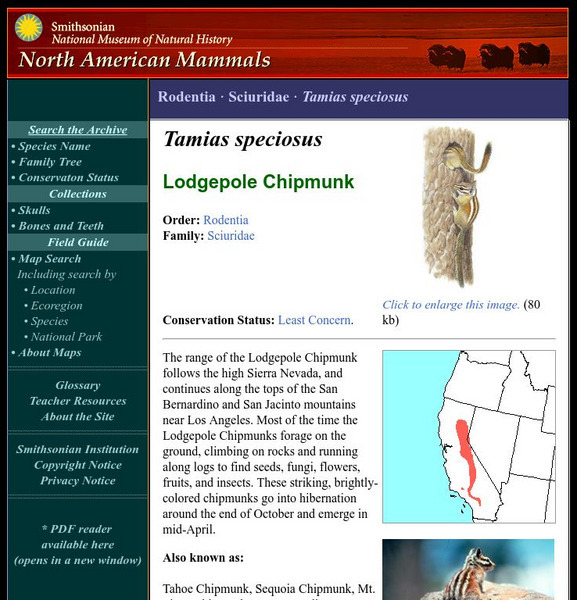
Smithsonian Institution
National Museum of Natural History: American Mammals: Lodgepole Chipmunk
The range of the Lodgepole Chipmunk follows the high Sierra Nevada, and continues along the tops of the San Bernardino and San Jacinto mountains near Los Angeles. Most of the time the Lodgepole Chipmunks forage on the ground, climbing on...
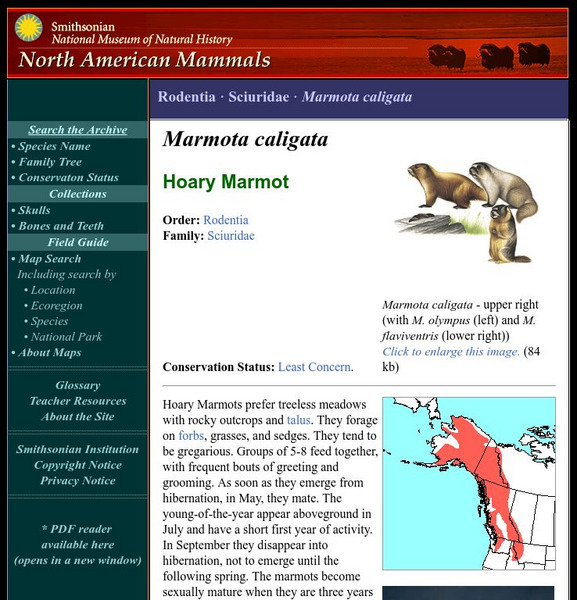
Smithsonian Institution
National Museum of Natural History: American Mammals: Hoary Marmot
Hoary Marmots prefer treeless meadows with rocky outcrops and talus. They forage on forbs, grasses, and sedges. Learn more about the Marmota caligata, more commonly known as a Hoary Marmot, in this easy-to-read species overview by the...
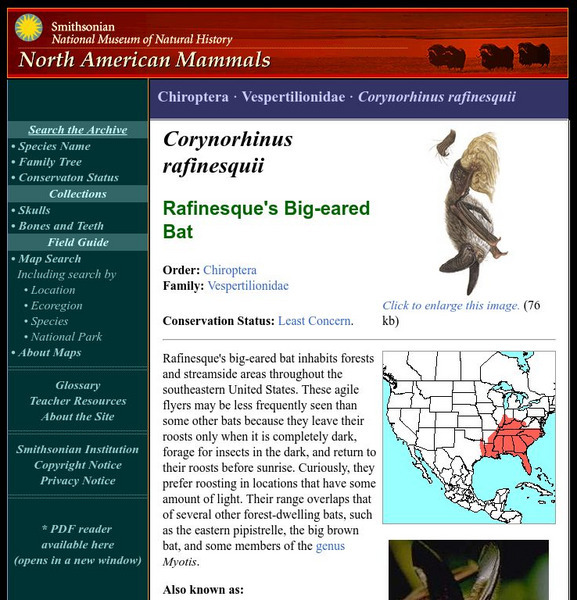
Smithsonian Institution
National Museum of Natural History: American Mammals: Rafinesque's Big Eared Bat
Rafinesque's big-eared bat inhabits forests and streamside areas throughout the southeastern United States. These agile flyers may be less frequently seen than some other bats because they leave their roosts only when it is completely...
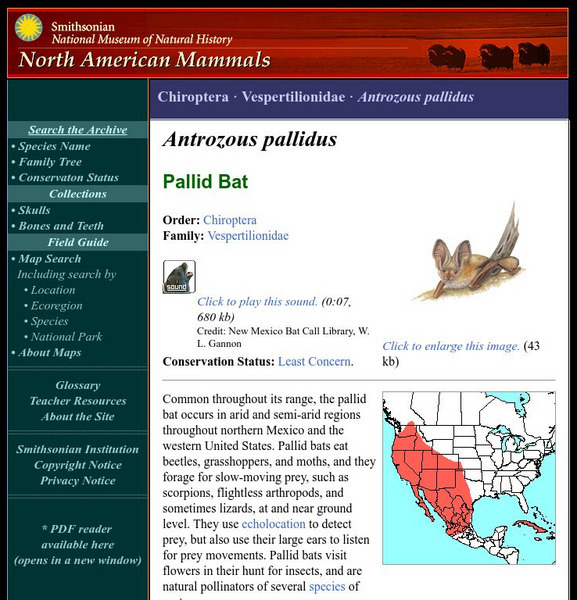
Smithsonian Institution
National Museum of Natural History: American Mammals: Pallid Bat
Common throughout its range, the pallid bat occurs in arid and semi-arid regions throughout northern Mexico and the western United States. Pallid bats eat beetles, grasshoppers, and moths, and they forage for slow-moving prey, such as...

Curated OER
Educational Technology Clearinghouse: Clippix Etc: Ostrich
Foraging Ostrich at the Sacramento Zoo

Other
Agri Food Trade Service: Agriculture, Food and Beverage Industry Tipsheets
Here's a collection of "fact sheets" offering details on Canada's various industries: Brewery, Dairy, Distillery, Fish and Seafood, Egg, Fruit, Grains and Oilseeds, Honey, Poultry, Red Meat, and more.