Hi, what do you want to do?






Physics Aviary
Physics Aviary: Practice Problems: Acceleration on Incline Problem Medium
Students must calculate the acceleration of an object down an incline when there is friction present. Mass, angle and coefficient of friction will be generated randomly.
Texas Education Agency
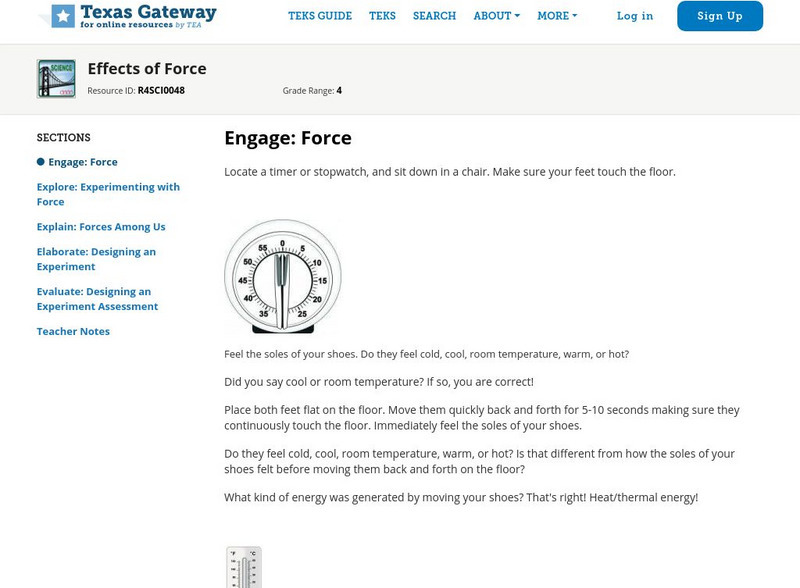
Texas Gateway: Effects of Force
Explore the effects of forces around us in the world.
Physics Aviary
Physics Aviary: Practice Problems: Motion on Incline Level 2
Students must calculate the distance an object will move up an incline using Newton's Laws. Mass, angle, gravitational field, coefficient of friction and initial speed will be generated randomly.
Physics Aviary
Physics Aviary: Practice Problems: Motion on Incline Level 3
Students must calculate the speed of a block when it returns to its original location on an incline using Newton's Laws. Mass, angle, gravitational field, coefficient of friction and initial speed will be generated randomly.
Sophia Learning
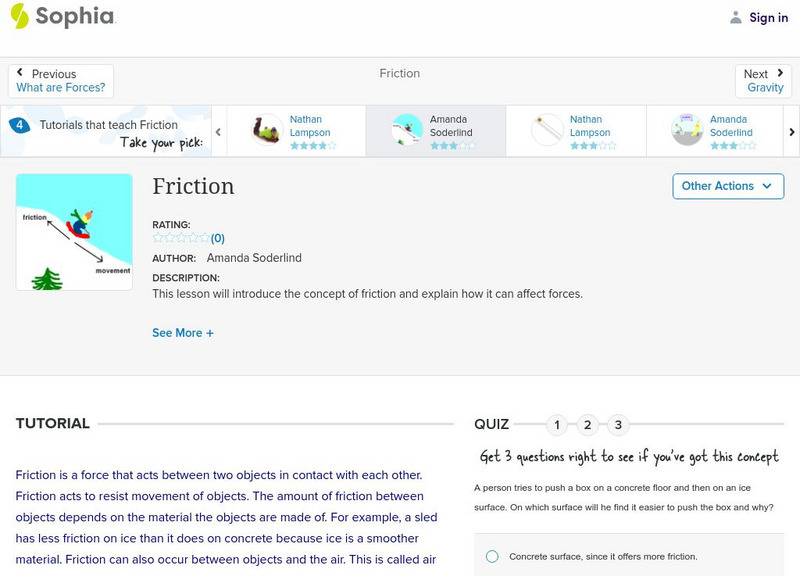
Sophia: Friction: Lesson 2
This lesson will introduce the concept of friction and explain how it can affect forces. It is 2 of 5 in the series titled "Friction."
Sophia Learning
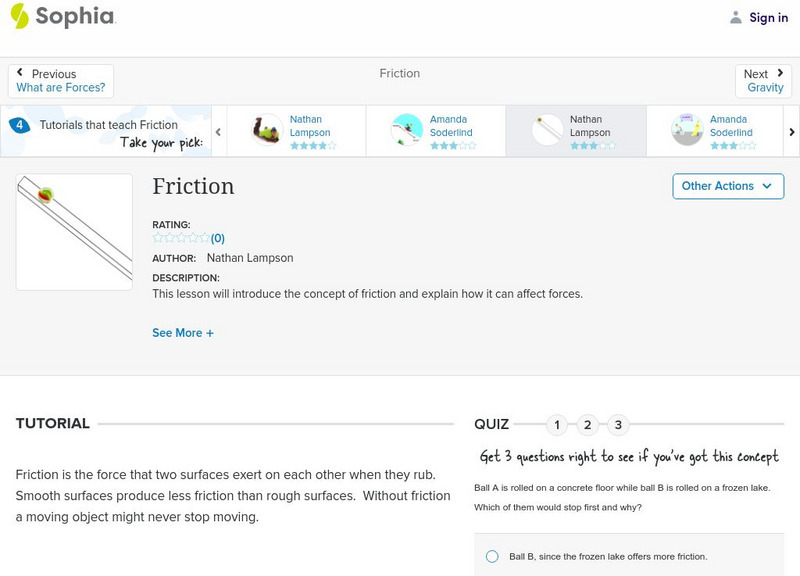
Sophia: Friction: Lesson 3
This lesson will introduce the concept of friction and explain how it can affect forces. It is 3 of 5 in the series titled "Friction."
Science4Fun
Science4 Fun: What Is Friction
What is friction? Illustrated discussion of friction including the three types, its importance, and why it is avoided.

E-learning for Kids
E Learning for Kids: Science: Pirates: What Are Some Forces Around Us?
Covers the meanings of force, friction, and gravity, and the differences between magnetic and elastic spring force, and between weight and mass. The effect of air resistance on an object's motion is also touched upon.
Physics Aviary
Physics Aviary: Practice Problems: Newton's Law With Friction (Force on Angle)
Students must calculate the acceleration of an object being pulled along a horizontal surface by a force on an angle. The surface has friction.
University of Minnesota
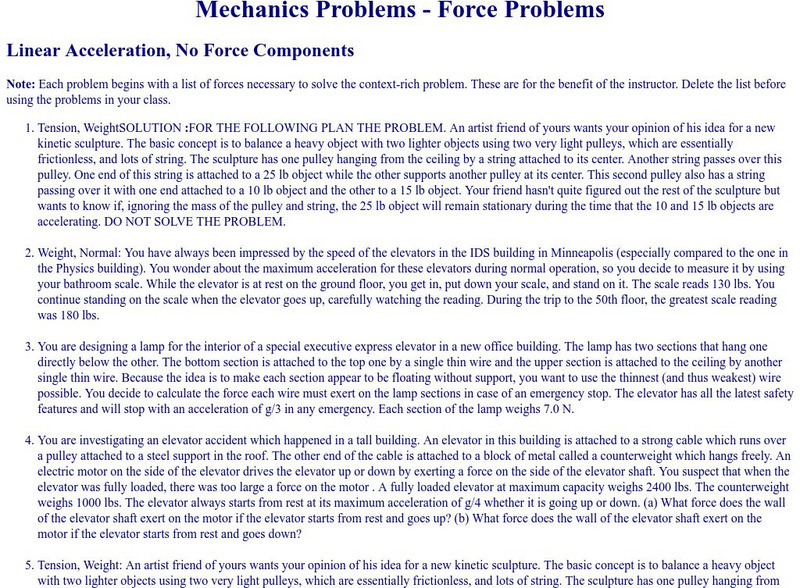
University of Minnesota: Mechanics Problems: Force Problems
This University of Minnesota site provides a series of contextually rich, real-world problems demonstrating force and Newton's second law of motion.
Physics Aviary
Physics Aviary: Visualizing Forces on an Incline
This program gives students a visual representation of the forces on a block that is on an inclined plane. The students can watch how force gravity, force normal, and force friction change as the angle of the plane changes. Students can...
Discovery Education
Discovery Education: Science of Everyday Life: Don't Slip! [Pdf]
In this lesson plan young scholars experience friction by sliding a block of wood over sandpaper. Students will experiment with frictional forces by measuring with spring scales or rubberbands.
Texas Education Agency
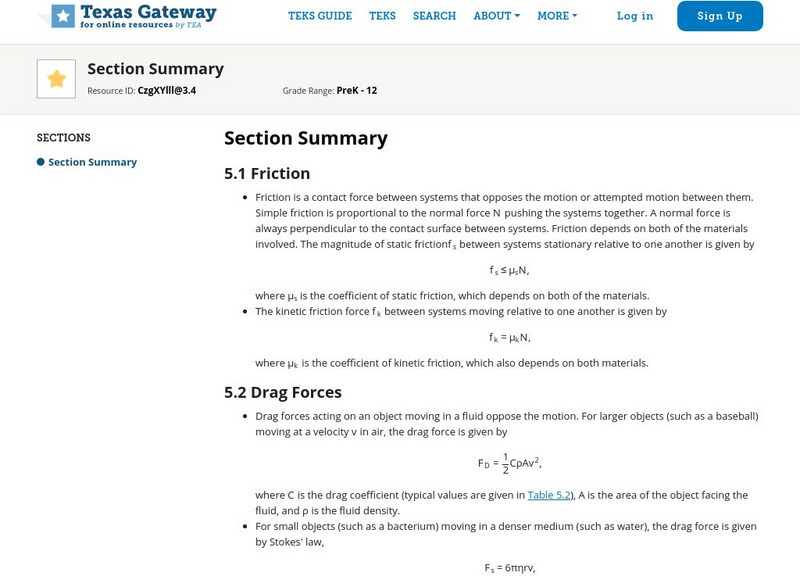
Texas Gateway: 5 Newton's Laws: Friction, Drag, and Elasticity: Summary
This page summarizes each section of Chapter 5: Further Applications of Newton's Laws: Friction, Drag, and Elasticity from the AP Physics online text. These include friction, drag force, and elasticity: stress and strain.
Science Education Resource Center at Carleton College
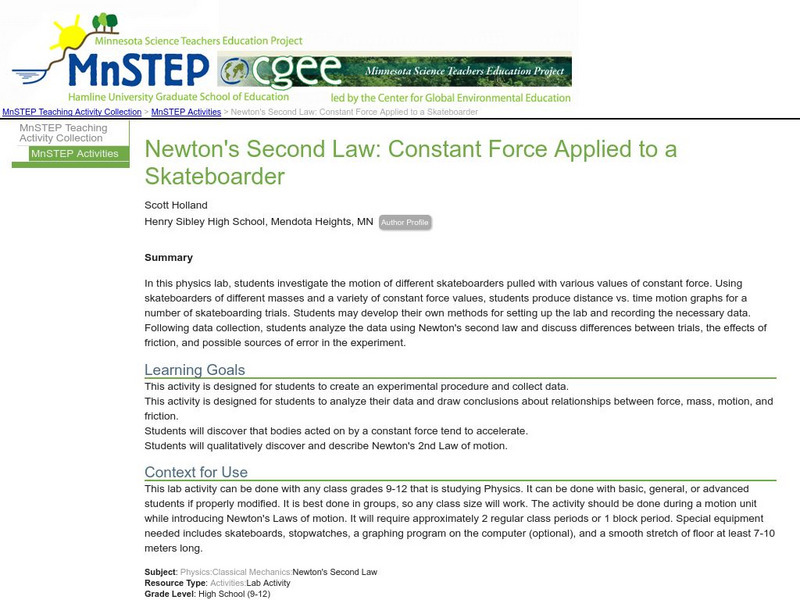
Serc: Newton's Second Law: Constant Force Applied to a Skateboarder
In this lab activity, students will become familiar with Newton's 2nd Law of Motion. By investigating the motion of different skateboarders pulled with a variety of constant force values, they will discover that bodies acted on by a...
Other
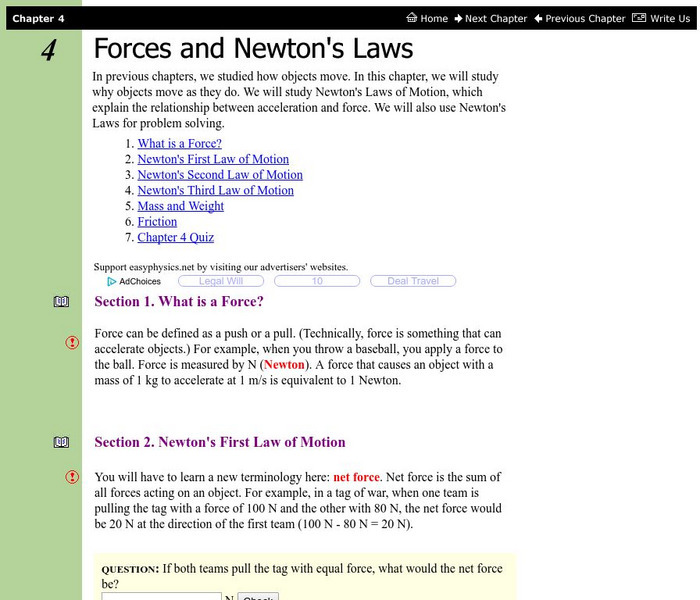
Easyphysics: Chapter 4 Forces
Learners investigate forces and Newton's laws. Some topics examined are mass, friction, and Newton?s laws of motion. The resource includes example problems with solutions and a chapter quiz.
Texas Education Agency
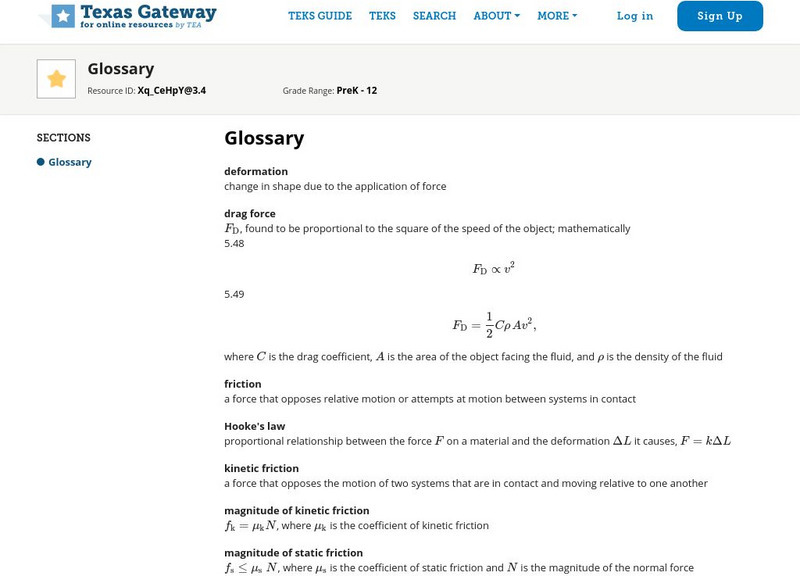
Texas Gateway: Glossary for Newton's Laws: Friction, Drag, and Elasticity
This is a glossary of terms and definitions used in Chapter 5: Further Applications of Newton's Laws: Friction, Drag, and Elasticity from the AP Physics online text.
Physics Classroom
The Physics Classroom: Newton's Second Law of Motion
Learn more about finding acceleration through the practices found in this lesson. "The process of determining the acceleration of an object demands that the mass and the net force are known." Check out this comprehensive site.
Science Education Resource Center at Carleton College
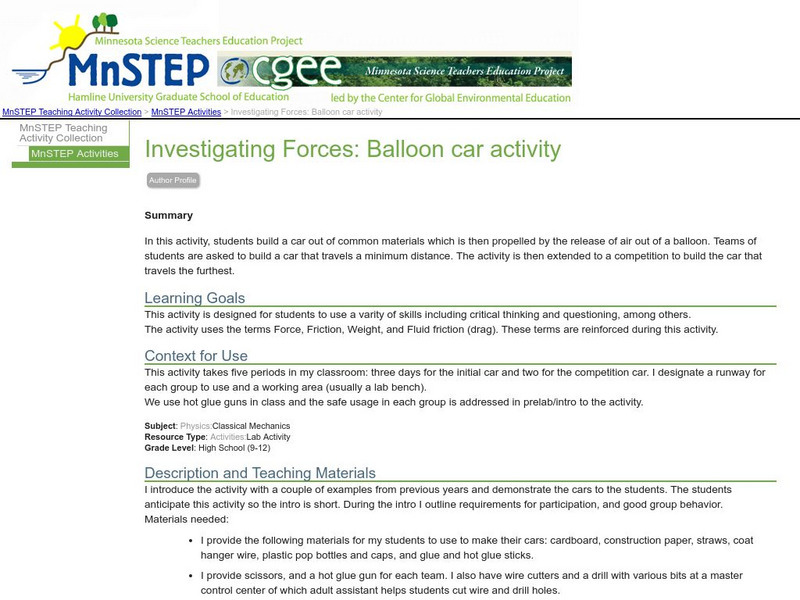
Serc: Investigating Forces: Balloon Car Activity
In this activity, teams of students build a car out of common materials which is then propelled by the release of air out of a balloon and must travel a minimum distance. The activity is then extended to a competition to build the car...
Physics Classroom
The Physics Classroom: Finding Individual Forces
Explore the world of finding individual forces. "The process of determining the value of the individual forces acting upon an object involve [sic] an application of Newton's Second law and an application of the meaning of the net force."
Physics Classroom
The Physics Classroom: Newton's First Law of Motion
A clear explanation of Newton's First Law of Motion, the law of inertia, with diagrams and real-world examples. Useful for both students and teachers. Written by a high school physics teacher.
Science Struck
Science Struck: Static Friction vs. Kinetic Friction: The Differences
Teaches what friction force is, the difference between static and kinetic friction, and how friction force is calculated.
University of Oregon
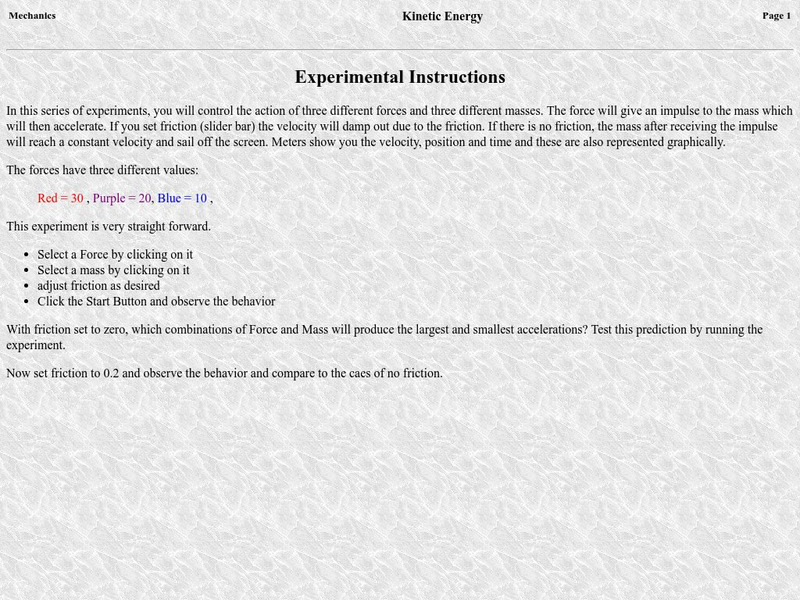
University of Oregon: Experimental Instructions
Visit this summary of friction. Use the interactive JAVA window to run friction simulations.
University of Illinois
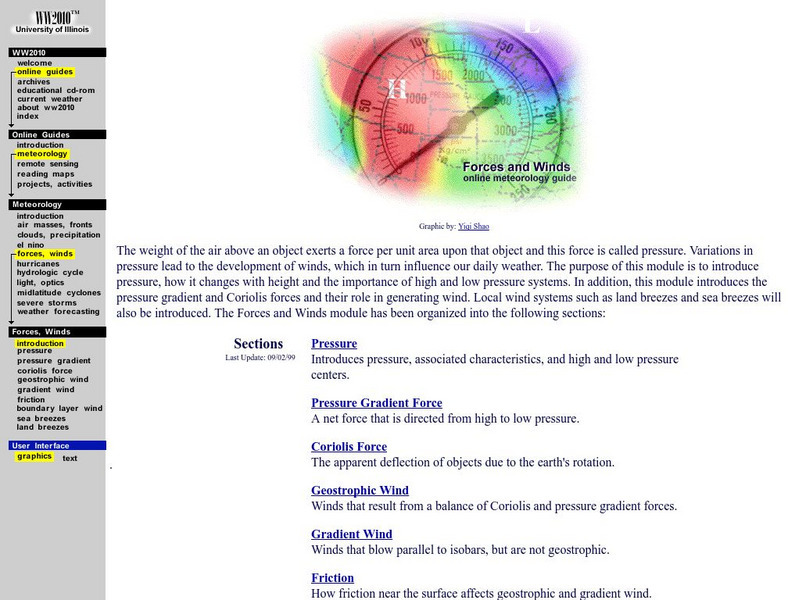
University of Illinois Urbana Champaign: Forces and Winds
What causes wind? How does wind affect our weather? This website is neatly organized into topics about pressure, gradient force, Coriolis force, geostrophic wind, gradient wind, friction, boundary layer wind, and sea and land breezes....
Texas Education Agency
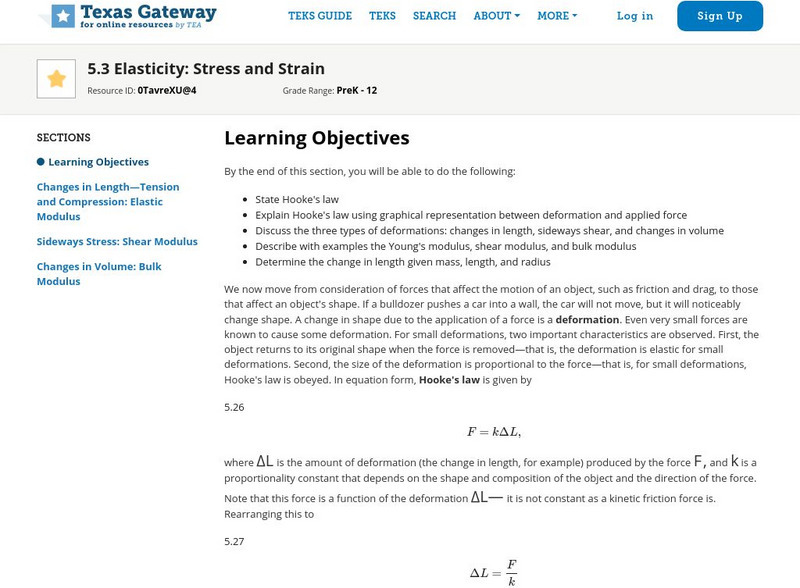
Texas Gateway: Further Applications of Newton's: Elasticity: Stress and Strain
By the end of this section, you will be able to state Hooke's law; explain Hook's law using graphical representations between deformation and applied force; discuss the three types of deformations: changes in length, sideways shear, and...