Hi, what do you want to do?





Rice University
Rice University: Web Adventures: Csi: The Experience
Based on the CSI television show, this series of four role-playing games helps students learn the scientific method and try their hand at solving crimes. Discover if you have what it takes to be a forensic scientist.
Museum of Science
Museum of Science and Industry: Online Science: Identify Your Fingerprints
Become a forensic investigator, and follow these simple step-by-step instructions to take, examine, and identify your fingerprints.
Science Buddies
Science Buddies: The Case of Mistaken Identity
Mysteries and detective stories have been popular since the time of Sherlock Holmes. The solutions to these fictional cases often involve untangling seemingly contradictory evidence from eyewitnesses. This project studies one procedure...
Other
Teachers First: Lessons: Who Did It? Forensics to Hone Science and Lab Skills
Comprehensive twenty-lesson unit, complete with a WebQuest and assessment materials, designed to introduce forensic science to middle schoolers in grades 6, 7, and 8.

Georgia Department of Education
Ga Virtual Learning: Forensic Anthropology
This comprehensive interactive tutorial explains forensic anthropology and the reason why it is important. Learn how forensic anthropologists differentiate between human and animal remains and also what information they can gather from...

Science Buddies
Science Buddies: Who Done It? Dna Fingerprinting and Forensics
DNA fingerprinting (also known as DNA profile analysis and DNA typing), is a method of distinguishing between individuals by analyzing patterns in their DNA. This project focuses on the first method of DNA fingerprinting to be developed,...
Science Education Resource Center at Carleton College
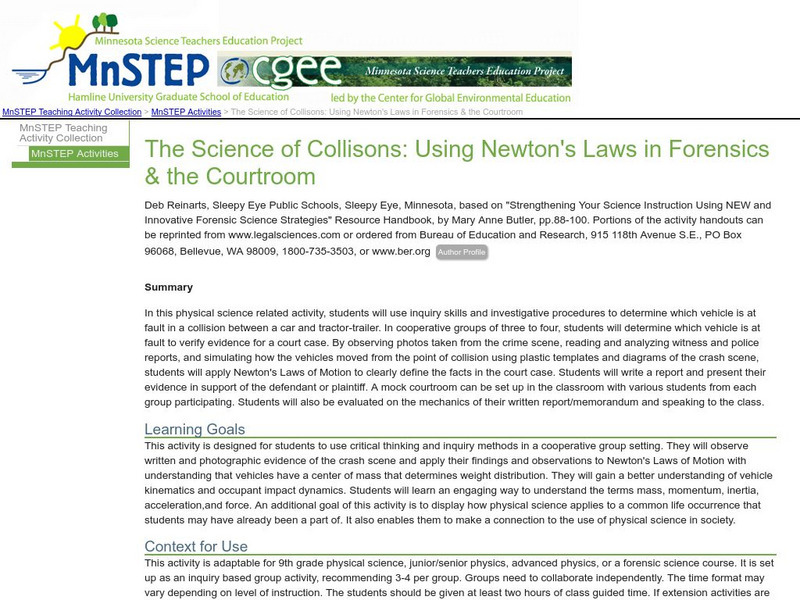
Serc: Science of Collisons: Using Newton's Laws in Forensics & the Courtroom
In this physical science related activity, students will use inquiry skills and investigative procedures to determine which vehicle is at fault in a collision between a car and tractor-trailer.
PBS
Pbs Learning Media: Dna Fingerprint Photos
These photographs supplied by Genelex Corporation depict actual DNA fingerprints and show the types of information that can be gleaned from them.
PBS
Pbs: Scientific American Frontiers: Unearthing Secret America
The fun part of history is finding the clues that unlock the secrets of the past. This is the companion site to the TV show with Alan Alda that features archeological discoveries. Students will find interesting lessons from the past on...
New York University
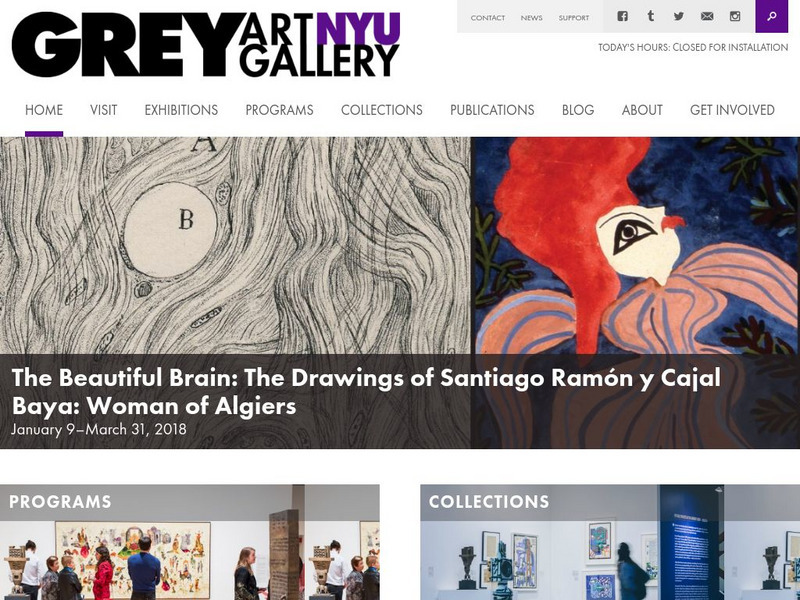
Mug Shots and Evidence: Alphonse Bertillon
Resource highlights Alphonse Bertillon's contribution to forensic science with the standardized mug shot.
PBS
Pbs Learning Media: Forensics and Dna Profiling
Find out how DNA profilers analyze bits of tissue to identify human remains. From the NOVA: "Lost on Everest" Web site.
Other
Fisher Science Education: Headline Discoveries Archive
What's new in the world of science? Find the latest articles about the newest discoveries and research in all the science disciplines: anatomy, astronomy, biology, biotechnology, chemistry, consumer science, environmental, forensics,...
Science Museum, London
Science Museum (London): Tutankhamen: Beneath the Mask
See and experience how modern science has been used to create a three-dimensional portrait of Tutankhamen, based not on Tut's famous golden but on X-rays of his mummy.
PBS
Pbs Teachers: Wanted Butch and Sundance: Classroom Activity
Examine how forensic anthropologists use data to investigate skeletal remains and use a data chart to estimate how tall a person might have been from the length of his or her bones.
Georgia Department of Education
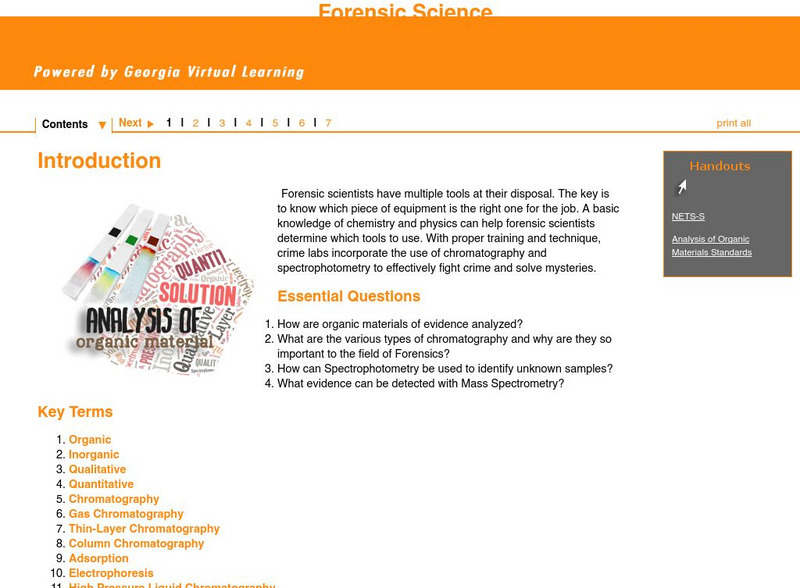
Ga Virtual Learning: Analysis of Organic Materials Analysis of Organic Materialsv
This comprehensive interactive tutorial continues to explore the forensic science field. Learn how organic materials of evidence are analyzed and what the various types of chromatography are, especially why they are so important to this...
PBS
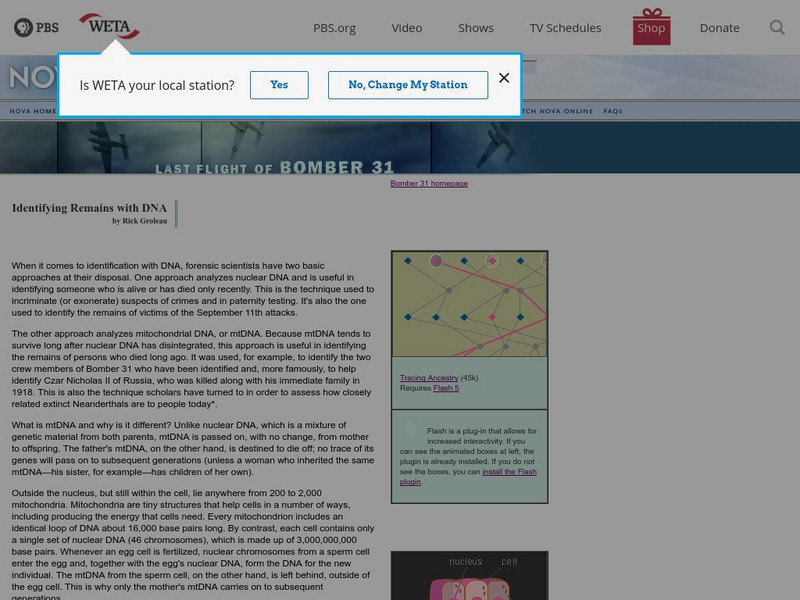
Nova: Identifying Remains With Dna
Mitochondrial DNA has different properties than nuclear DNA which make it beneficial in certain forensic settings. Get the details on the ways mitochondrial DNA is being used in forensic science.
Wikimedia
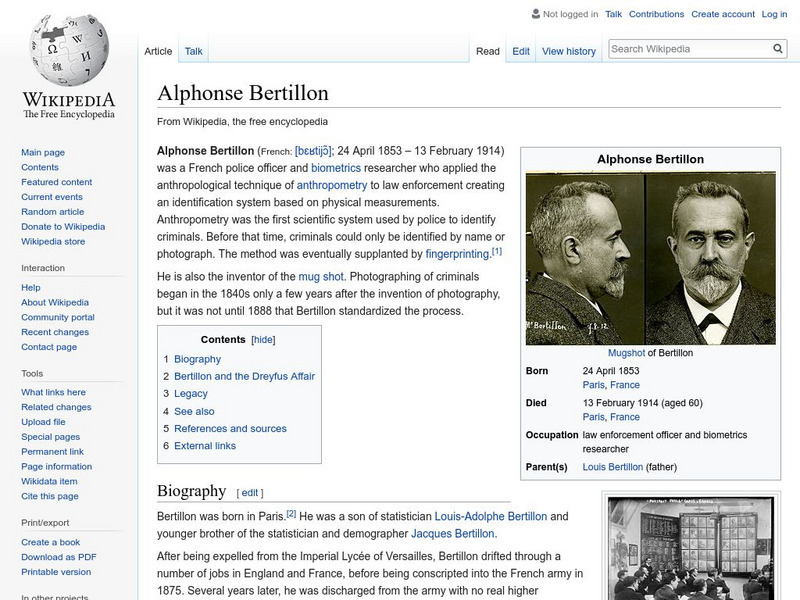
Wikipedia: Alphonse Bertillon
On-line encyclopedia provides information pertaining to Alphonse Bertillon's life work and accomplishments, particularly in the area of forensic science.

Georgia Department of Education
Ga Virtual Learning: Ap Biology: Molecular Genetics
This interactive learning module allows AP Biology students to explore DNA and molecular genetics. The study also covers the concepts of biotechnology.
Discovery Education
Discovery Education: Who Killed the Iceman?
This website provides a lesson plan (grades 8-12) for a science class on the examination of two different mummies, one being the Iceman from the Alps who is believed to be 5,300 years old while the other is an Inca girl about 500 years...
National Health Museum
Access Excellence: Dna Detectives
A hands-on activity from Access Excellence for advanced biology classes. Students are given a crime scenario and three suspects. Their mission is to determine 'Who Dunnit?' by obtaining and analyzing DNA samples. Requires extensive...
American Academy of Family Physicians
Family doctor.org: Autopsy: Questions and Answers
Article provides questions and answers to this procedure to educate the general public.
Other
Environmental Science: Environmental Science Careers
Explore this list of close to fifty science careers with a connection and focus on environmental science. Also compare average salaries of each.
Science Struck
Science Struck: A Quick Guide to the Different Types of Archaeology
The field of archaeology has been specializations that investigate the past through many different lenses, e.g., environmental relationships, landscape study, and aerial investigation. This resource describes many of these specialties.
A&E Television
History.com: 5 Iron Age Tools and Innovations
New techniques helped make iron stronger -- but there were also innovations in the use of gold, silver and stone. "The earliest iron objects in the world...start showing up around 3000 B.C.," says Nathaniel Erb-Satullo, a lecturer in...