Hi, what do you want to do?





Georgia Department of Education
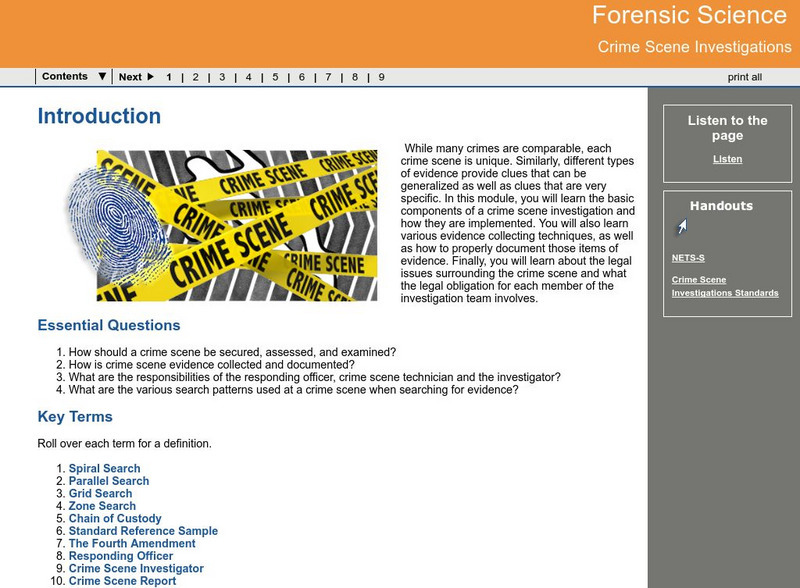
Ga Virtual Learning: Crime Science Investigation
In this comprehensive interactive tutorial you will learn the basic components of a crime scene investigation and how they are implemented. You will also learn various evidence collecting techniques, as well as how to properly document...
PBS
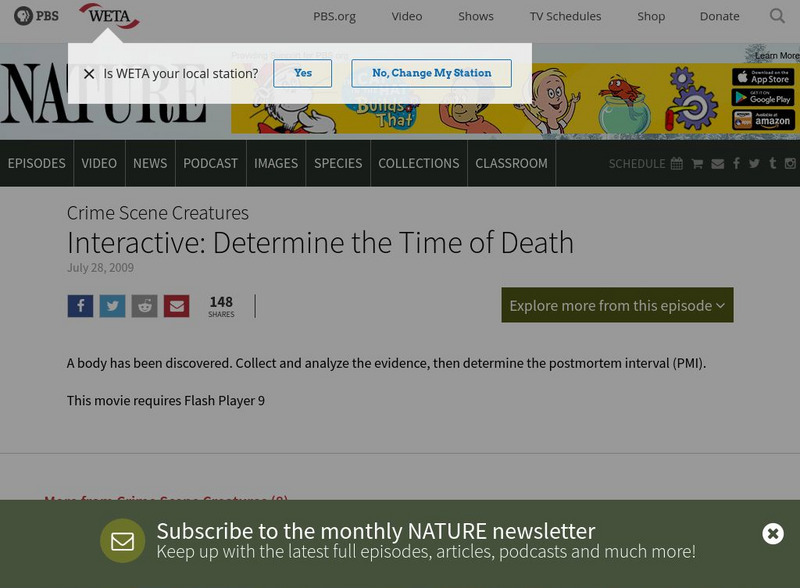
Pbs: Nature: Crime Scene Creatures
Become a detective with this interactive crime scene! Use tools and animals at the crime scene to help you determine the time of death of the body. By collecting specimens at the scene, students try to determine how long the person has...
Georgia Department of Education
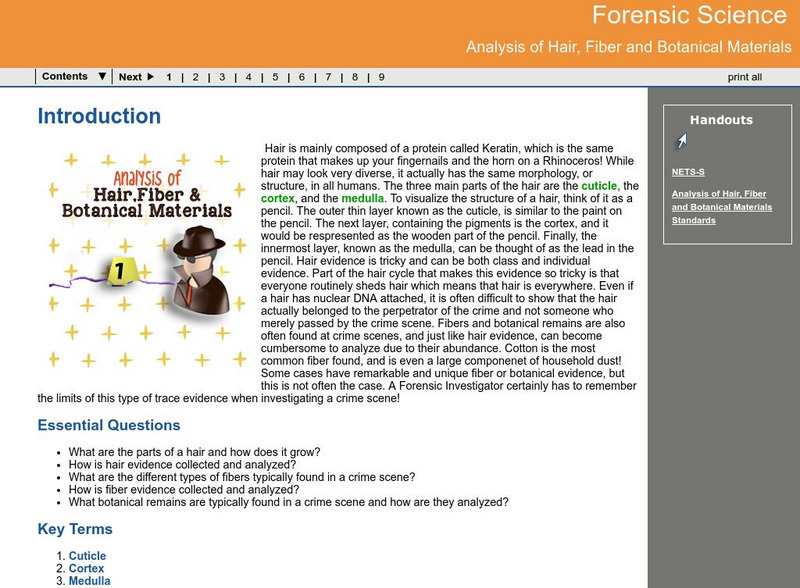
Ga Virtual Learning: Forensic Science: Analysis of Hair, Fiber and Botanical Mtl
This comprehensive interactive tutorial explores forensic science, particularly within the area of hair analysis. Investigate the parts of a hair and how it grows. Learn how is hair evidence is collected and analyzed and what different...
Georgia Department of Education
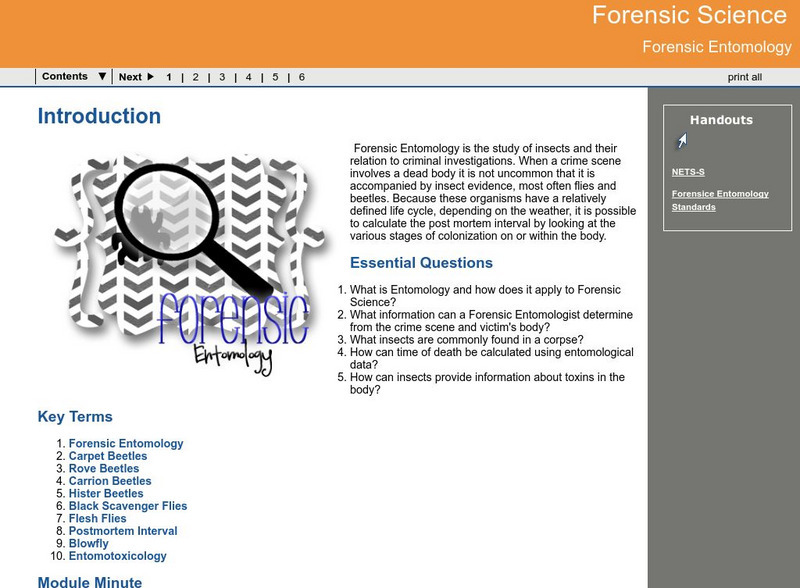
Ga Virtual Learning: Forensic Entomology
In this comprehensive interactive tutorial you will investigate the area of entomology and how it applies to forensic science. Learn what information a forensic entomologist can determine from a crime scene and a victim's body. Other...

Oak Ridge National Laboratory
Oak Ridge National Laboratory: Dna Forensics
A concise explanation of the use of DNA technologies in forensic identification from the Oak Ridge National Laboratory. Additional valuable resources are provided.
Natural History Museum
Natural History Museum: On Maggots and Murders: Forensic Entomology [Pdf]
Five-page article explains how forensic scientists, when investigating crimes, analyze maggots and blowflies to determine approximate times of death.
National Institutes of Health
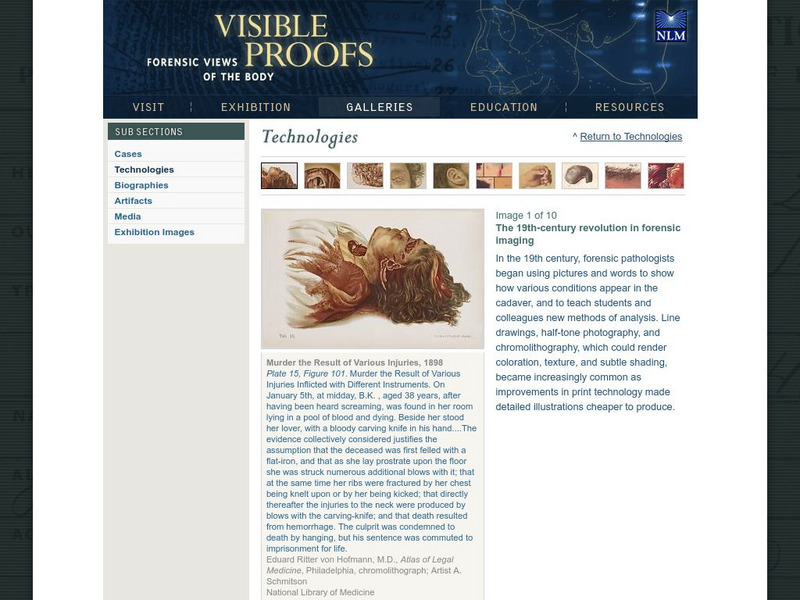
National Library of Medicine: The 19th Century Revolution in Forensic Imaging
In the 19th century, forensic pathologists began to use words and pictures to describe cadavers and to teach using cadavers in the classroom. See a number of interesting photos of various crime scenes on this interesting site.
Other
Crime Scene Investigation: Proper Tagging and Labeling of Evidence
What is the purpose of tagging and labeling items of evidence? What information belongs on the tag? These questions are answered in this concise but competent site.
Indiana University
A Crime Against Plants
Have your students delve into the evidence involving a small tree and arrive at an explanation of what happened in this thorough lesson plan site. .
Texas Instruments
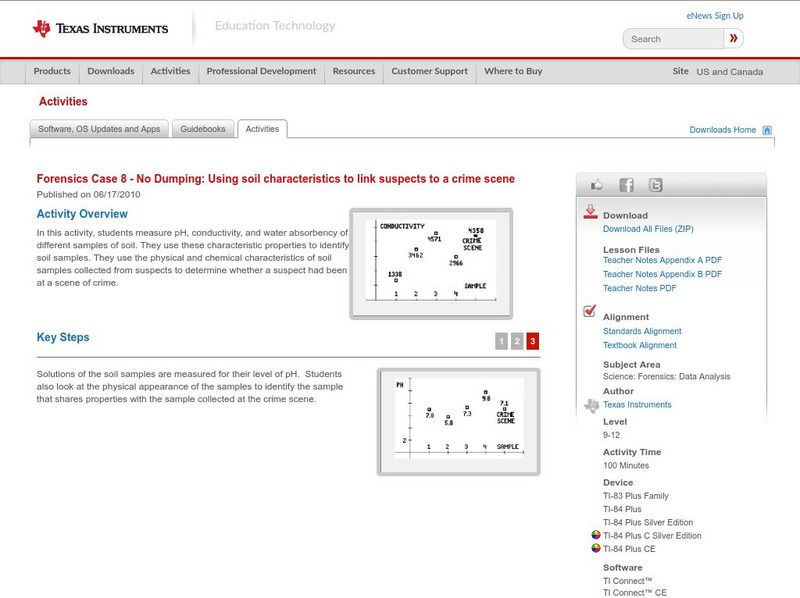
Texas Instruments: Forensics Case 8: Using Soil Characteristics to Link Suspects
In this activity, students measure pH, conductivity, and water absorbency of different samples of soil. They use these characteristic properties to identify soil samples. They use the physical and chemical characteristics of soil samples...

Cyberbee
Cyberbee: Who Dunnit?
If you are a crime scene investigation (CSI) fan, then you will love this site! You get to be the detective by examining the evidence, viewing the crime scene, dusting for fingerprints, interviewing the suspects, and solving the crime.
National Institutes of Health
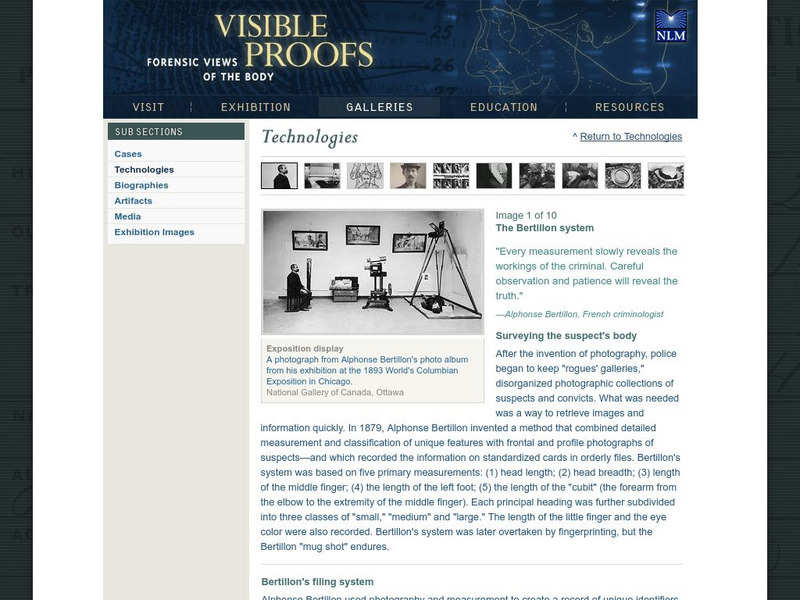
National Library of Medicine: The Bertillon System
Bertillon devised a system to make order out of the myriad of crime scene photos taken by the police. This brief site describes how that system worked and shows a number of crime scene photos taken from Bertillon's photo album.
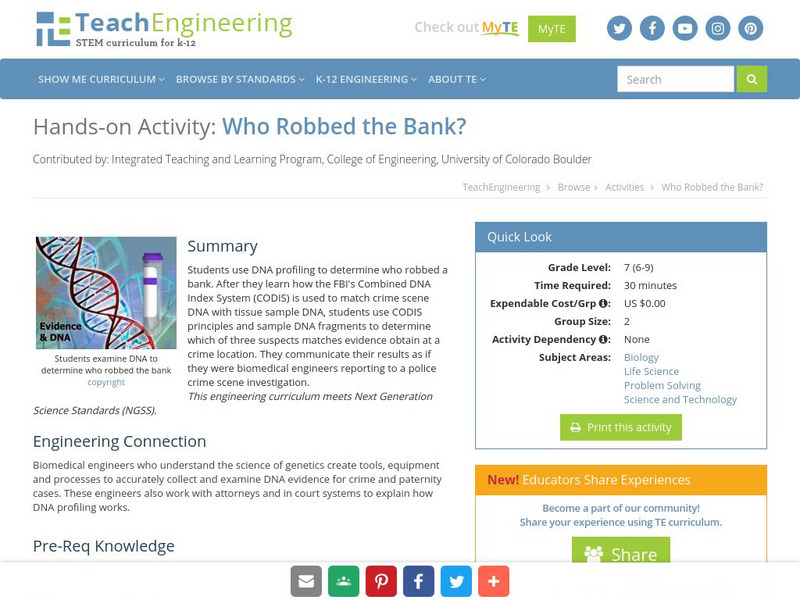
TeachEngineering
Teach Engineering: Who Robbed the Bank?
Students use DNA profiling to determine who robbed a bank. After they learn how the FBI's Combined DNA Index System (CODIS) is used to match crime scene DNA with tissue sample DNA, students use CODIS principles and sample DNA fragments...
Other
Simple Science: Cyber Sleuth
The interactive tutorial examines properties of digital images as they relate to forensic science. Learners classify and measure hair samples to determine the suspect most likely to have been at the crime scene. The resource has an...
Curated OER
Murder the Result of Various Injuries, 1898
In the 19th century, forensic pathologists began to use words and pictures to describe cadavers and to teach using cadavers in the classroom. See a number of interesting photos of various crime scenes on this interesting site.
Curated OER
Suicide by Cutting the Throat, 1898
In the 19th century, forensic pathologists began to use words and pictures to describe cadavers and to teach using cadavers in the classroom. See a number of interesting photos of various crime scenes on this interesting site.
Curated OER
Encircling Gunshot Wound in Brain, 1898
In the 19th century, forensic pathologists began to use words and pictures to describe cadavers and to teach using cadavers in the classroom. See a number of interesting photos of various crime scenes on this interesting site.
Curated OER
Suicide Through Stabbing, 1898
In the 19th century, forensic pathologists began to use words and pictures to describe cadavers and to teach using cadavers in the classroom. See a number of interesting photos of various crime scenes on this interesting site.
Curated OER
Head and Hand of a Drownee, 1864
In the 19th century, forensic pathologists began to use words and pictures to describe cadavers and to teach using cadavers in the classroom. See a number of interesting photos of various crime scenes on this interesting site.
Curated OER
Decomposed Stomach, 1864
In the 19th century, forensic pathologists began to use words and pictures to describe cadavers and to teach using cadavers in the classroom. See a number of interesting photos of various crime scenes on this interesting site.
Curated OER
Rope Marks and Upper Thigh, 1864
In the 19th century, forensic pathologists began to use words and pictures to describe cadavers and to teach using cadavers in the classroom. See a number of interesting photos of various crime scenes on this interesting site.
Curated OER
Murder the Result of Various Injuries, 1898
In the 19th century, forensic pathologists began to use words and pictures to describe cadavers and to teach using cadavers in the classroom. See a number of interesting photos of various crime scenes on this interesting site.
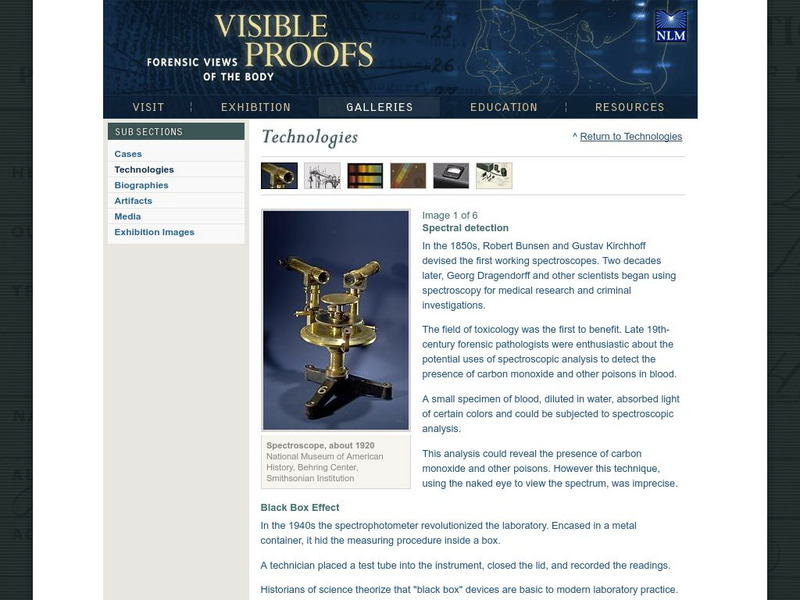
National Institutes of Health
National Library of Medicine: Spectral Detection
This concise site provides a brief discussion of the invention of the first work spectroscopes and their impact on forensic science.
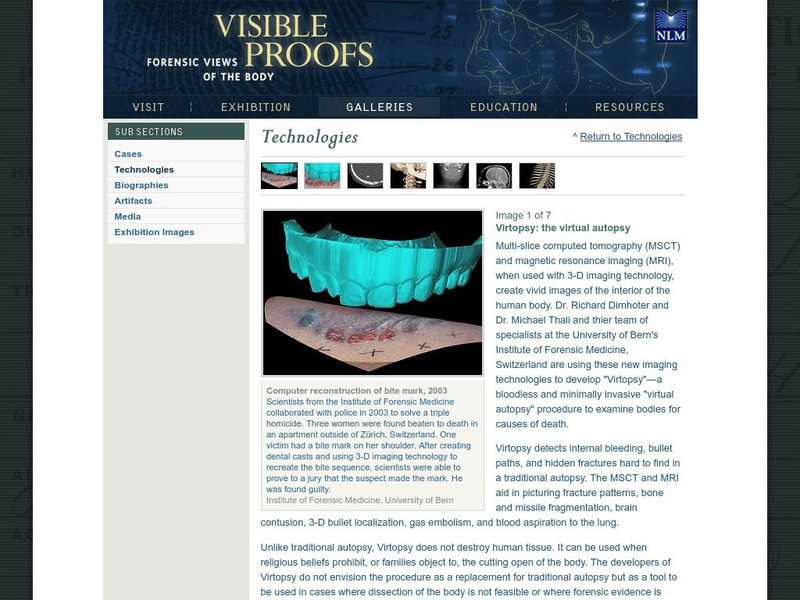
National Institutes of Health
National Library of Medicine: Virtopsy, the Virtual Autopsy
An interesting site that delves into how forensic scientists perform minimally invasive autopsies using state of the art technology.