Hi, what do you want to do?






Center for Technology in Teaching and Learning
CSI: The Experience - Family Forensics
Forensic scientists depend on their observation skills to analyze evidence down to the molecular level. Middle and high schoolers practice making observations and predictions with a series of crime scene activities, which includes a...
National Institutes of Health
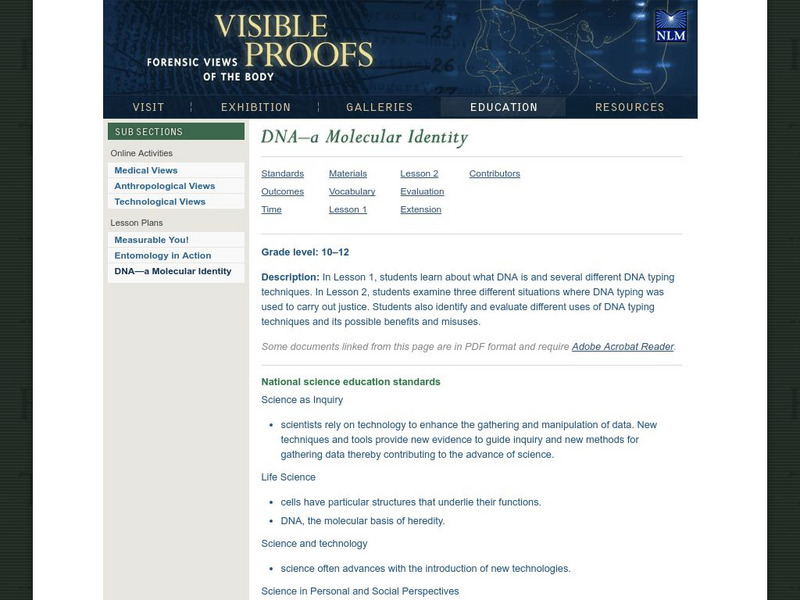
National Library of Medicine: Dna a Molecular Identity
In this lesson plan site, students learn about DNA and examine three different situations where DNA was used to solve a case.
National Institutes of Health
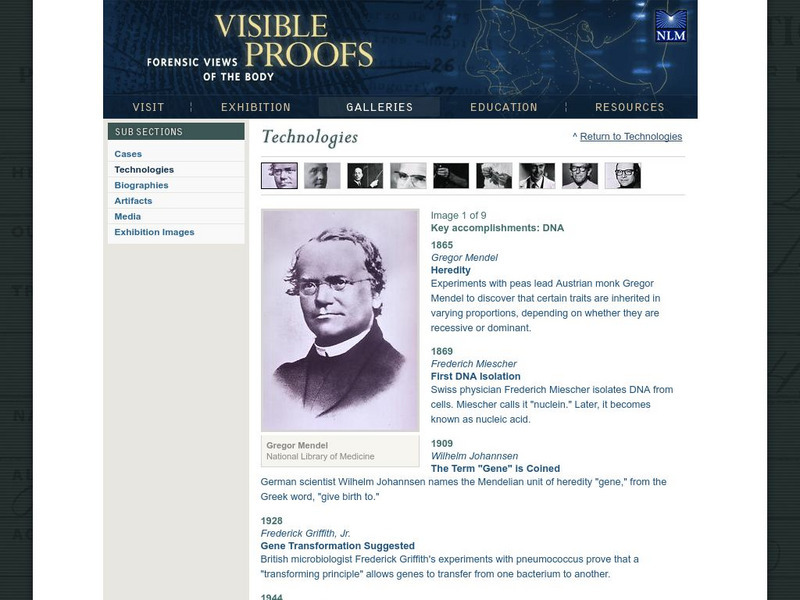
National Library of Medicine: Key Accomplishments, Dna
A brief history of the major discoveries related to DNA from 1865 until 1991. Pictures of the responsible reponsibile for these key accomplishments are included as well.
PBS
Pbs: What Jennifer Saw
How can eyewitness identification go wrong? What role can DNA play in protecting the innocent? This interesting site answers these questions and gets the opinions of several DNA experts on this fascinating subject.

PBS
Pbs: Interview With Jim Liebman, Constitutional Law Professor at Columbia Univ.
Does innocence matter in our criminal justice system? Don't the DNA cases show that we are not getting the right outcome in more cases than we previously thought?
PBS
Pbs: Interview With Bennett Gershman, Former Prosecutor
Why does the criminal justice system resist reopening cases based on new DNA evidence? This former prosecutor sheds light on the answer in this informative interview.