Hi, what do you want to do?






Curated OER
Barn Owl
In this barn owl worksheet, students read four paragraphs of information about barn owls, and study a photograph. There are no questions here.

University of California
Ucmp: The Desert Biome
Learn about the four types of deserts: hot and dry, semiarid, coastal, and cold with this key facts and information. Includes links to other biomes: aquatic, forest, grasslands, and tundra.

University of California
Ucmp: The World's Biomes
This is an introduction to the major biomes on Earth. This page groups biomes into five major types: aquatic, deserts, forests, grasslands, and tundra. Information on climate, animal/plant life, and much more is given for each of type...

University of California
Ucmp: The World's Biomes
The University of California Museum of Paleontology hosts this site devoted to the study of the earth's biomes, which are the world's major communities, classified according to the predominant vegetation and adaptations of organisms to...
PBS
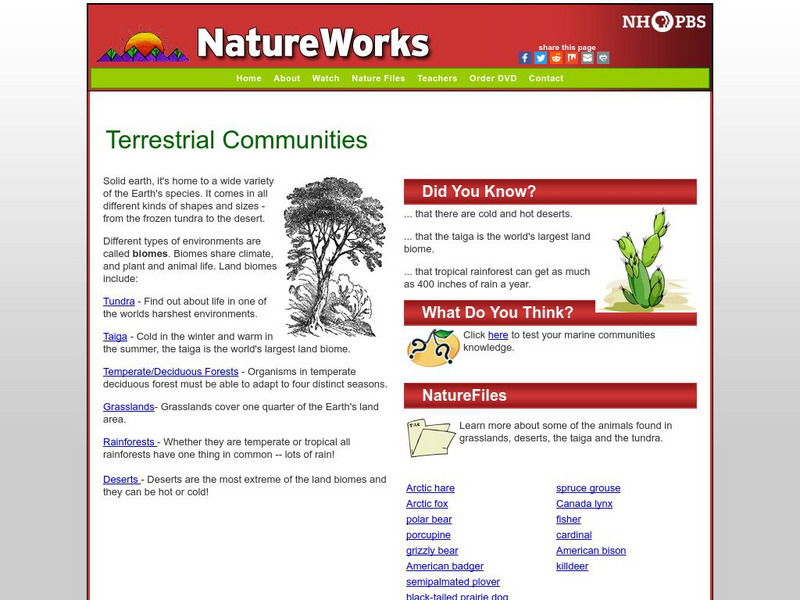
Nh Pbs: Nature Works: Terrestrial Communities
Explore land ecosystems around Earth. Learn about forests, tundra, taiga, grasslands, and deserts.
The Association of the British Pharmaceutical Industry
Abpi: Human and Animal Habitats
An interactive learning game where students answer whether or not certain environments would be suitable for different animals. Printable worksheets are available for review at the end of the activity.
Utah Education Network
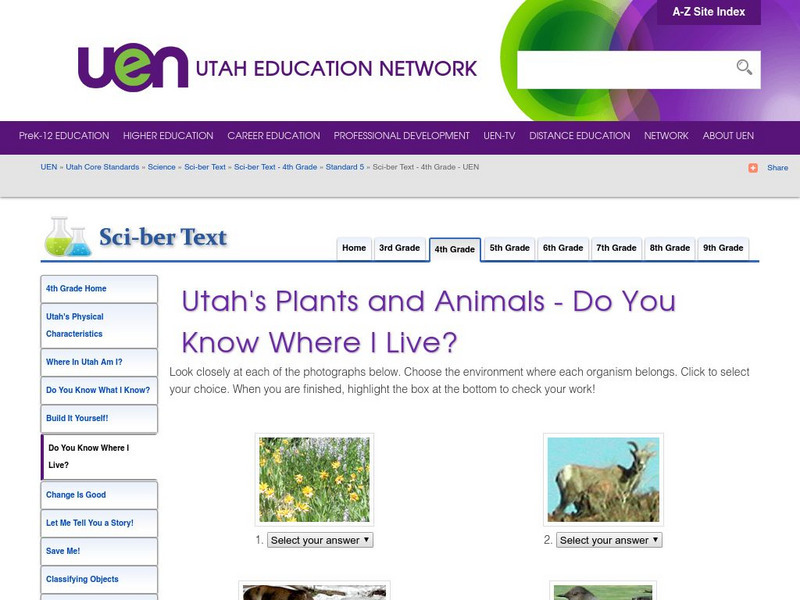
Uen: Utah's Plants and Animals Do You Know Where I Live?
Can you figure out what types of biomes different organisms belong in? You'll be presented with a variety of organisms and asked which of three biomes they belong in.
Palomar Community College District
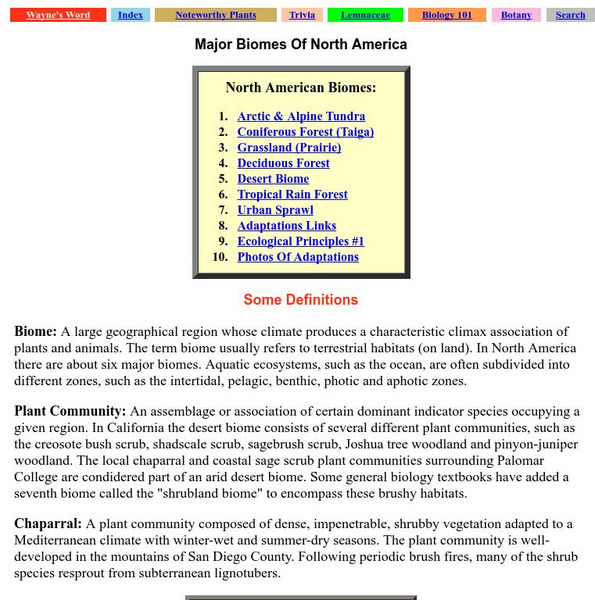
Major Biomes of North America
A good review of basic terminology followed by descriptions and pictures of the North American biomes.

Smithsonian Institution
National Museum of Natural History: American Mammals: Mexican Long Nosed Bat
The Mexican long-nosed bat feeds mainly on the nectar and pollen of agaves, and is found in Texas in June and July when the plants are in bloom there. Then it migrates southward into Mexico, where it lives in pine-oak forests and...
Channel 4 Learning
4 Learning: Geography Essentials, Weather Around the World
This resource offers in-depth information on weather and different types of climate including desert, tropical rain forests, and more. Also provides worksheets (Word documents) and images relating to weather.
Wonderville Media
Wonderville: African Elephants
African elephants are the biggest land animals on the planet, standing up to 13 feet tall and weighing as much as 14,000 pounds. They are even bigger than their elephant cousins in Asia. You can tell them apart because their ears...
Center for Educational Technologies
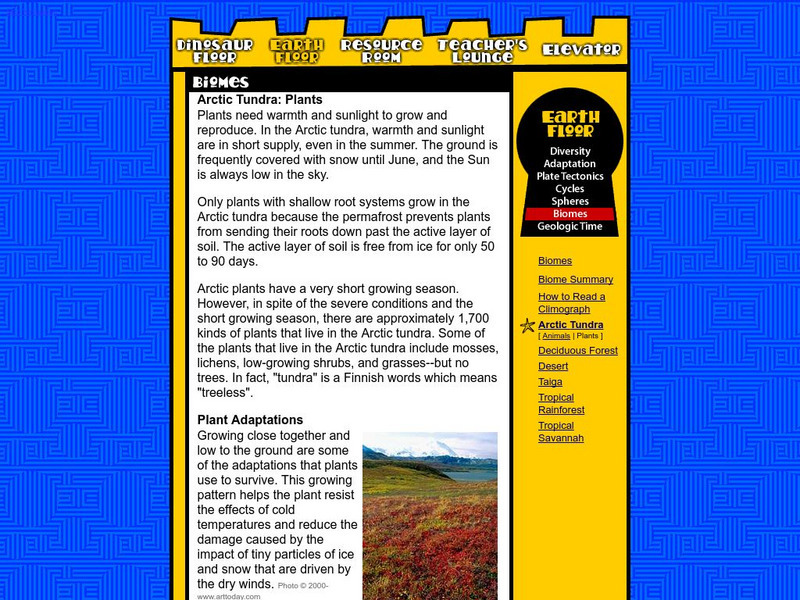
Wheeling Jesuit University: Arctic Tundra Biome
Provides text and pictures on the arctic tundra, its animals, plants, and their adaptations.
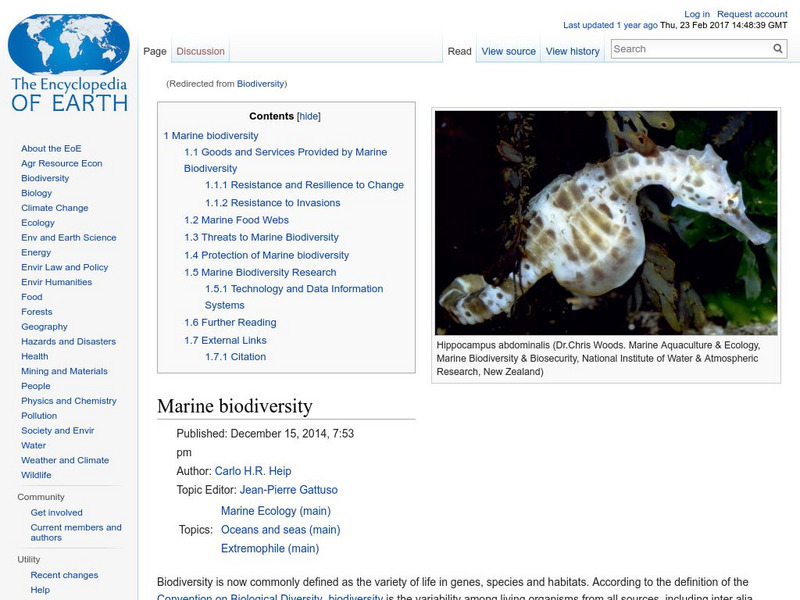
Encyclopedia of Earth
Encyclopedia of Earth: Biodiversity
A large collection of articles, news items, photos, slideshows, animations, and scientific reports, all related to biodiversity. Many articles on different ecosystems, e.g., deserts, grasslands, forests, etc. An excellent resource for...
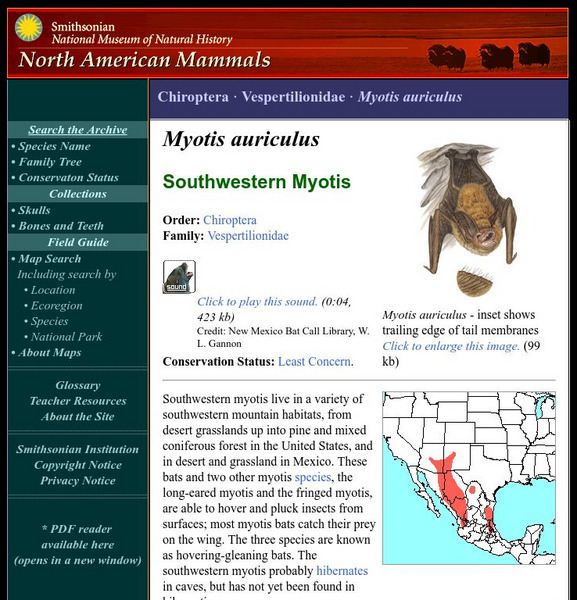
Smithsonian Institution
National Museum of Natural History: American Mammals: Southwestern Myotis
Southwestern myotis live in a variety of southwestern mountain habitats, from desert grasslands up into pine and mixed coniferous forest in the United States, and in desert and grassland in Mexico. These bats and two other myotis...
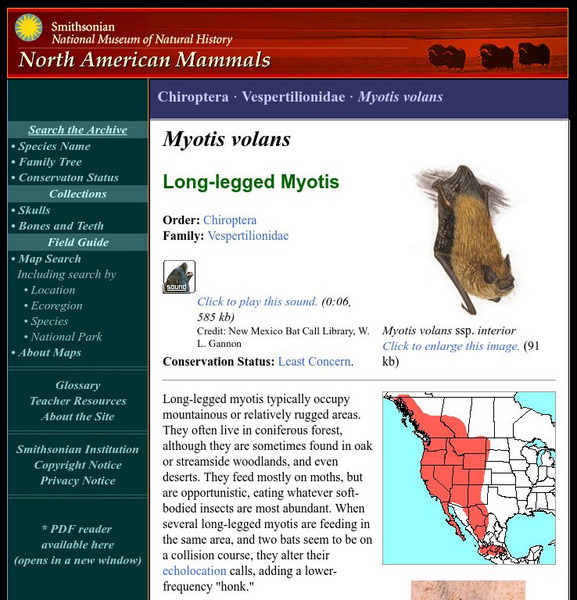
Smithsonian Institution
National Museum of Natural History: American Mammals: Long Legged Myotis
Long-legged myotis typically occupy mountainous or relatively rugged areas. They often live in coniferous forests, although they are sometimes found in oak or streamside woodlands, and even deserts. Learn more about the Myotis volans,...
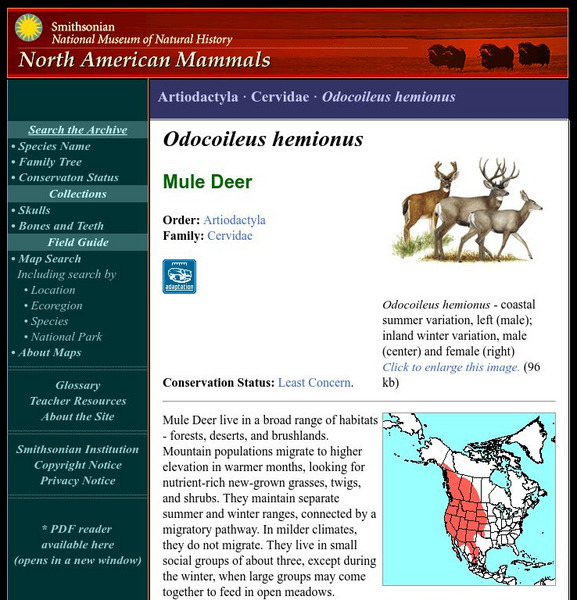
Smithsonian Institution
National Museum of Natural History: American Mammals: Mule Deer
Mule Deer live in a broad range of habitats - forests, deserts, and brushlands. Mountain populations migrate to higher elevation in warmer months, looking for nutrient-rich new-grown grasses, twigs, and shrubs. Learn more about the...
Smithsonian Institution
National Museum of Natural History: American Mammals: Least Chipmunk
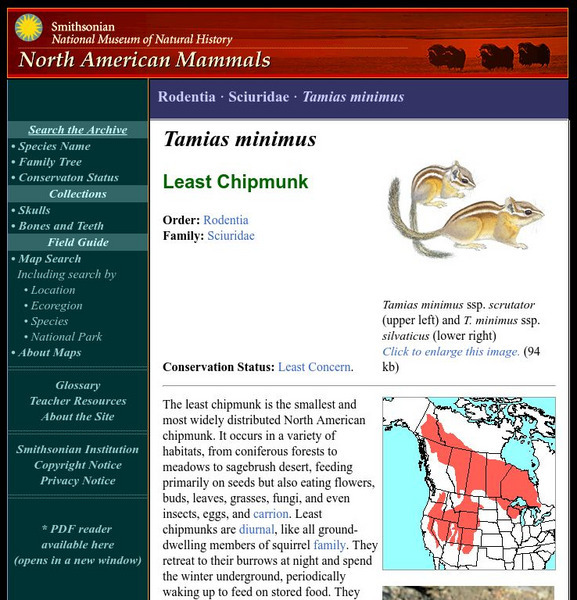
The least chipmunk is the smallest and most widely distributed North American chipmunk. It occurs in a variety of habitats, from coniferous forests to meadows to sagebrush desert, feeding primarily on seeds but also eating flowers, buds,...
Smithsonian Institution
National Museum of Natural History: American Mammals: California Myotis
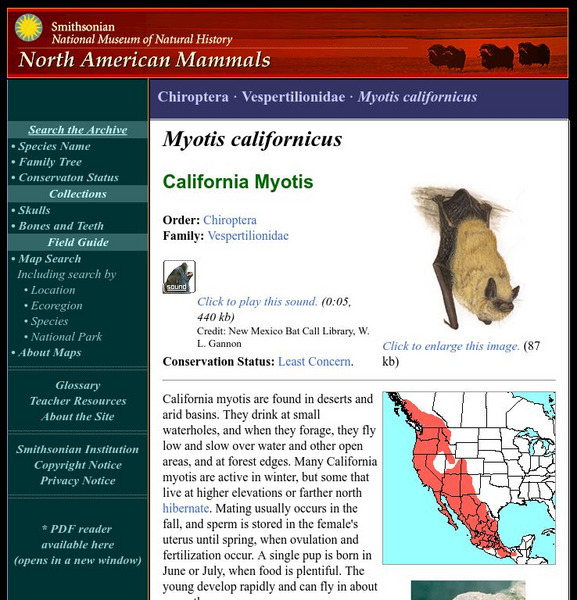
California myotis are found in deserts and arid basins. They drink at small waterholes, and when they forage, they fly low and slow over water and other open areas, and at forest edges. Learn more about the Myotis californicus, more...