Hi, what do you want to do?





US National Archives
Docsteach: Benjamin Franklin: Politician and Diplomat
In this activity, students will review and analyze the founding documents of the United States and understand Benjamin Frankin's contributions and connections to these founding documents. Franklin was the only man to help shape all of...

US National Archives
Nara: Teaching With Documents: Eli Whitney's Patent for the Cotton Gin
This National Archives and Records Administration site relates the history of Eli Whitney and his remarkable inventions. Links to sites with patent information on the cotton gin. Tons of teacher's resources can be found at this site.
US National Archives
National Archives: Teaching Six Big Ideas in the Constitution
The Constitution can be broken down into 6 main themes: Limited Government, Federalism, Republicanism, Separation of Powers, Checks and Balances, and Popular Sovereignty. Learners will study background on the Founding Fathers and use...

US National Archives
Docsteach: From Dred Scott to Civil Rights Act of 1875: Eighteen Years of Change
In 1857, the U.S. Supreme Court ruled in the Dred Scott decision that African-Americans were not citizens of the United States. Yet within 18 years, Black Americans would not only have citizenship, but would be guaranteed the right to...
National Endowment for the Humanities
Neh: Edsit Ement: The Preamble to the Constitution: A Close Reading Lesson
In this lesson plan, middle schoolers will consider "The Preamble to the Constitution: A Close Reading Lesson." The plan includes worksheets and other student materials that can be found under the resource tab.

US Environmental Protection Agency
Epa: Air Toxics Website Manganese Compounds
Very thorough information on manganese. Lists its uses, where it is found, physical properties, and potential health effects.
US National Archives
Nara: Charters of Freedom: The Bill of Rights
This site contains a complete transcription of The Bill of Rights, along with zoomable graphics of the original handwritten text. It also includes information about the historical context of the document, links to more constitutional...
US National Archives
Nara: Warren Commission Report Appendix
The concrete findings versus the speculations of President Kennedy's assassination are found within this document. Theories of the Mafia due to Jack Ruby's involvement are presented and countered with the factual evidence found by...
Yad Vashem, The World Holocaust Remembrance Center
Yad Vashem: Spiritual Resistance During the Holocaust
In an effort to preserve their dignity and culture during the Holocaust, the Jewish people found ways to resist the Nazis. This lesson plan is broken down by resistance methods such as the use of the camera, poetry, letters, and...
Other
Brookfield High School: Lesnansky's Control Center: Would You Rather? (Part 1)
In this activity, students will create a word processing document that will define four dilemmas in the game cards from Would You Rather? Lots of Would You Rather question examples can be found online. (The Part 2 lesson plan can be...
Other
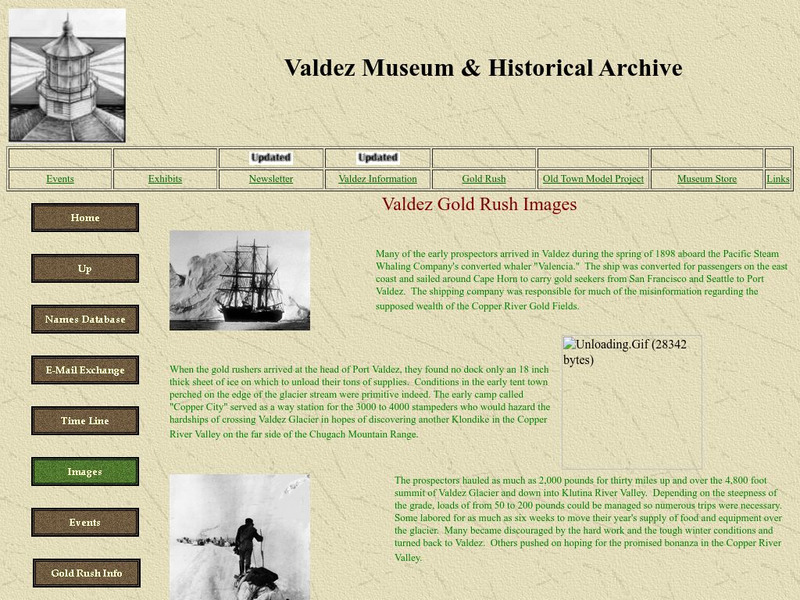
Valdez Museum Anbd Historical Archive: Valdez Gold Rush Images
This site documents the struggle that gold prospectors had to undergo. Images, their description, a timeline, majors events, and other links can be found on this.
Other
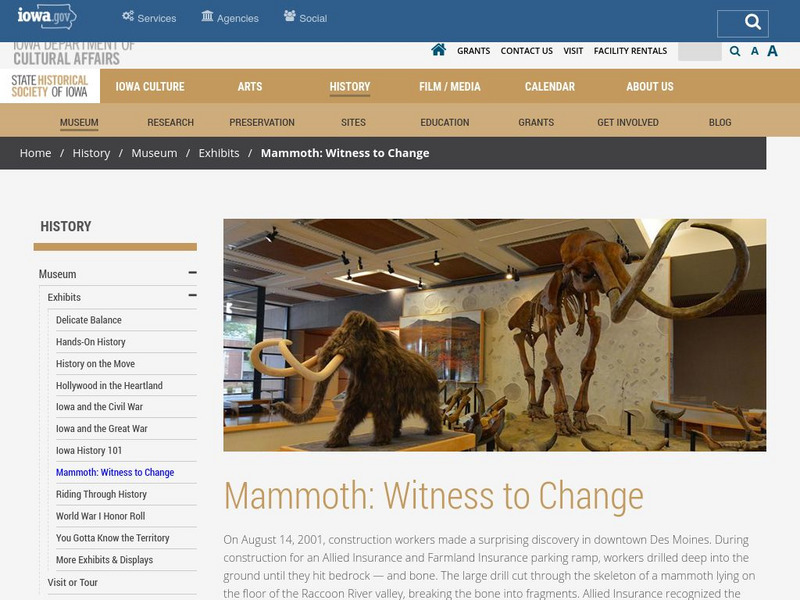
State Historical Society of Iowa: Mammoth: Witness to Change
An exhibition documenting the discovery of two mammoths and a mastodon, found in Wisconsin and Iowa. The Hebior mammoth was particularly significant as the excavation showed evidence that the mammoth had been killed by humans. Background...
Other
Copyrightlaws.com: 6 Best Practices for Legally Using Google Images
Google Images is an effective tool for locating the perfect image to use in presentations, documents and on social media. But before you use images found through Google, you must consider copyright law.
Other
The Descendants of Henry Doude: Perspectives: The Pequot War
A brief description of the Pequot War, a conflict between the Pequots and the English colonists from the Massachusetts Bay colony. There are two maps showing the location of Indian tribes in 1636 and again in 1639.