Hi, what do you want to do?




CK-12 Foundation
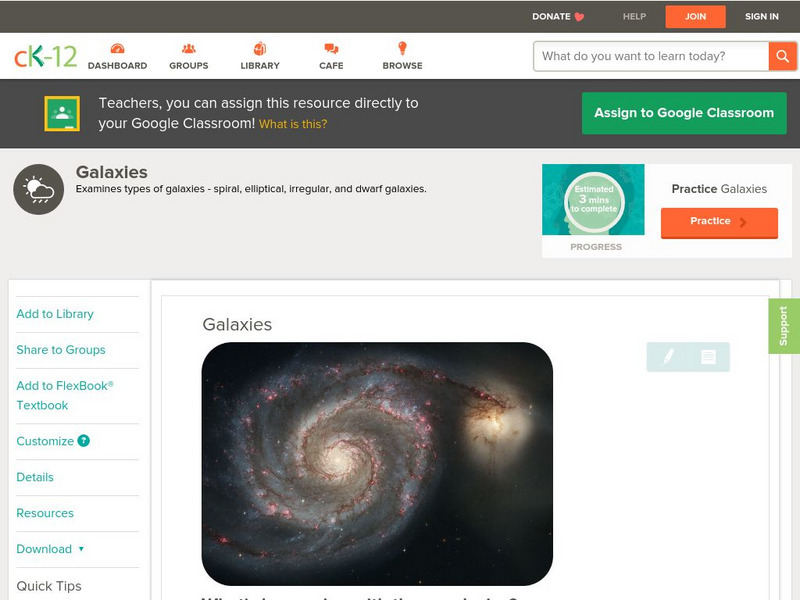
Ck 12: Earth Science: Galaxies
[Free Registration/Login may be required to access all resource tools.] Examines galaxies and how they are divided into three types according to shape.

Space Telescope Science Institute
Amazing Space: Galaxies
What is a galaxy? What is the name of our galaxy? Site offers answers to these questions as well as many more.

Space Telescope Science Institute
Amazing Space: Galaxies Galore: Games and More
This is a fun and useful site to learn about galaxies. Content includes a building model to create your own Milky Way, games for learning the various types of galaxies, and more fun games.
NASA
Nasa Space Place: What Is a Galaxy?
This resource explores the different types of galaxies through text and images.
NASA
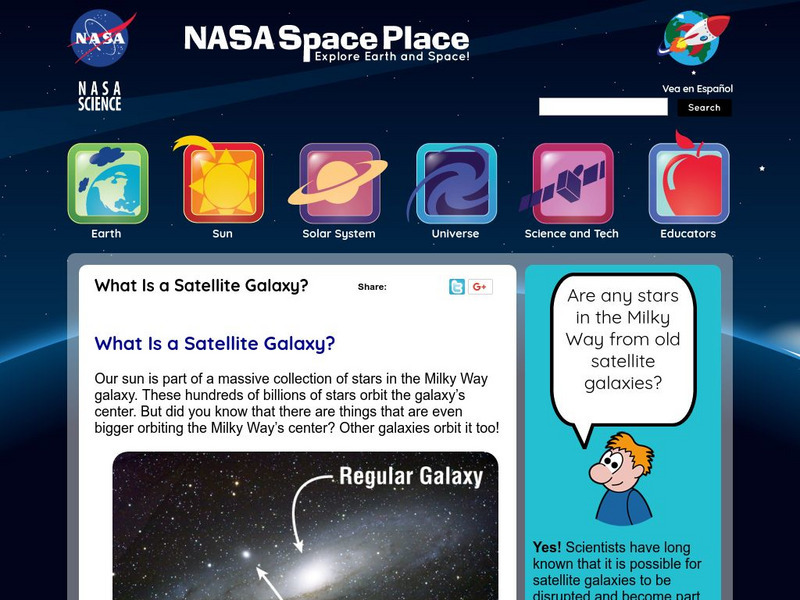
Nasa: Space Place: What Is a Satellite Galaxy?
Find out about the behavior and characteristics of the many satellite galaxies that orbit other galaxies.

Space Telescope Science Institute
Nasa: Hubble Space Telescope: Galaxies
At this site from HubbleSite you can learn all about galaxies and black holes. Click on the movie link and discover how old the universe is or study about what happens when two galaxies collide!
CK-12 Foundation
Ck 12: Earth Science: Galaxies Study Guide
A brief overview of the galaxies in space.
Mr. Nussbaum
Mr. Nussbaum: Galaxies Reading Comprehension
This learning module includes a nonfiction reading passage about galaxies including the Milky Way followed by a multiple choice self-assessment which gives students immediate feedback.

TED Talks
Ted: Ted Ed: What We Can Learn From Galaxies Far, Far Away
By studying the properties of the universe's largest pieces we can learn quite a lot about our own world and galaxy. [6:43]
Seeker
Seeker: Galaxies Undergo Dramatic Metamorphosis
Article reports on the changes galaxies have experienced that can be observed with the Hubble telescope.
Other
University of Cambridge Cosmology: Galaxies
This site from the University of Cambridge allows you to view information on spiral, elliptical, and Milky Way galaxies, as well as galaxy clusters. Provides basic facts about each one.
Space Telescope Science Institute
Galaxy Hunter: A Cosmic Photo Safari
Travel the universe and learn about galaxies. Investigate Hubble Deep Field observations to learn more.
University of California
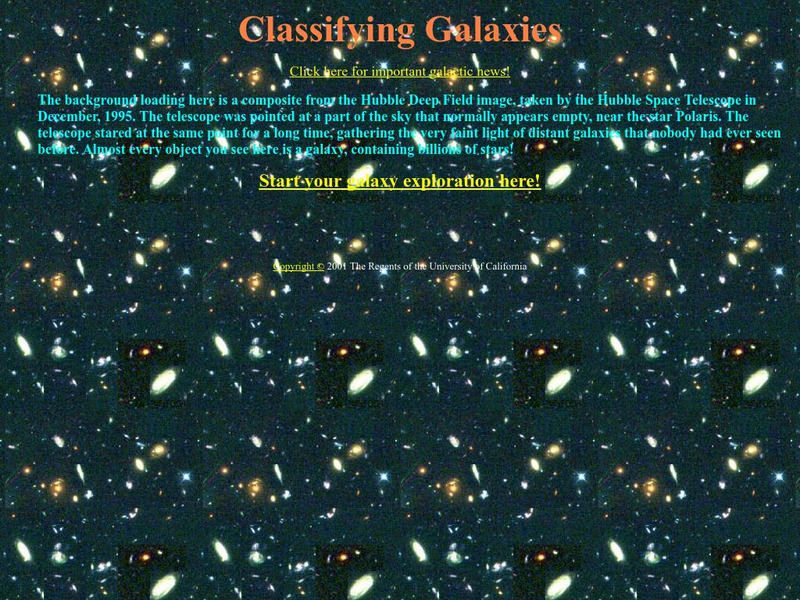
University of California Berkeley: Classifying Galaxies
Find out how galaxies are classified and then see if you can apply that knowledge to identify the different types of galaxies. In addition to explaining Hubble's galaxy classification system, the site has links to Hubble Space Telescope...
PBS
Pbs Nova Online: Spin a Spiral Galaxy
PBS site provides various views of spiral galaxies. (Quick Time required) With this technology, you can manipulate the image to spin it around and look at it from various angles.

Cosmos 4 kids
Cosmos4 Kids: Galaxy Cluster Basics
Understand what galaxy clusters are on this site which contains both information and a video.
Space Telescope Science Institute
Amazing Space: Galaxy Hunter
Journey to the wildest regions of space, and wrestle with cosmic giants, galaxies. Explore the Hubble Deep Fields from a statistical point of view.
BBC
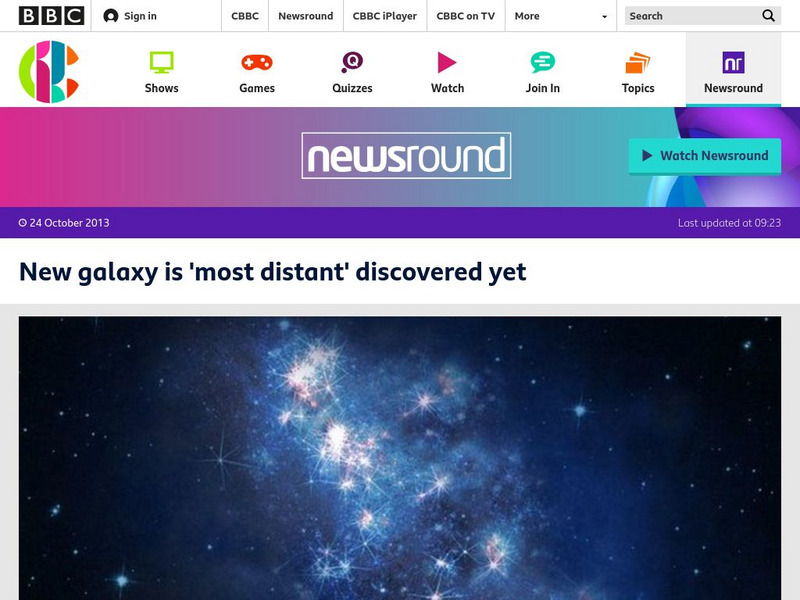
Bbc Newsround: New Galaxy Is 'Most Distant' Discovered Yet
Article reports on the discovery by the Hubble telescope of the most distant galaxy known at this point.
Other
University of Leicester: Irregular Galaxies
Provides a general overview of irregular galaxies, including a specific look at type I and type II irregulars.
Other
University of Leicester: Spiral Galaxies
Provides a general overview of spiral galaxies, including descriptions of the different classes of spiral galaxy.
NASA
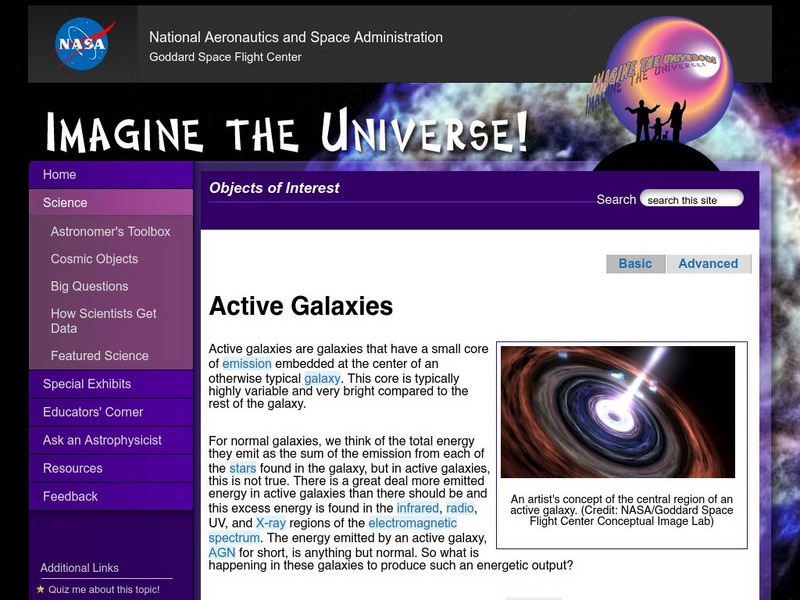
Nasa: Imagine the Universe: Active Galaxies and Quasars
Describes quasars as being classified within the category of an active galaxy. A description of the emergence of high-energy. Definitions of key words are provided.gamma-ray quasars as an important component of the gamma-ray sky.
Other
Sloan Digital Sky Survey: Galaxy Zoo
Explore the universe like you have never seen it. Take part in classifying images of galaxies taken from the Hubble telescope archives. This is a crowdsourced scientific research project.

Thinkport Education
Thinkport: Translating Qualitative & Quantitative Details a New Galaxy
In this science-themed literacy lesson, students learn how to read for and differentiate between qualitative and quantitative information.
Other
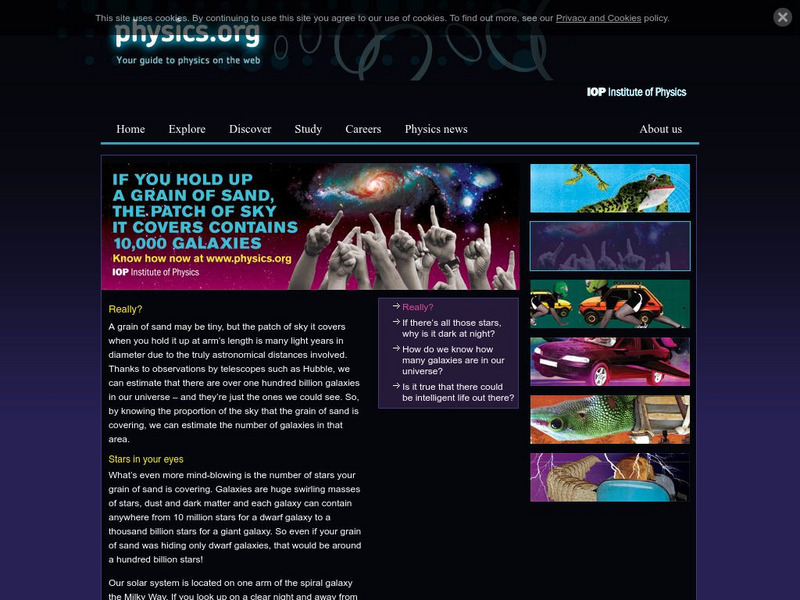
Physics.org: A Grain of Sand Covers 10,000 Galaxies
A fascinating look at how big our solar system really is. Shows how we can only see a tiny bit of our vast universe.

TED Talks
Ted: Ted Ed: Could Human Civilization Spread Across the Whole Galaxy?
Could human civilization eventually spread across the whole Milky Way galaxy? Could we move beyond our small, blue planet to establish colonies in the multitude of star systems out there? These questions are pretty daunting, but their...