Hi, what do you want to do?





TeachEngineering
Teach Engineering: The Great Pacific Garbage Patch
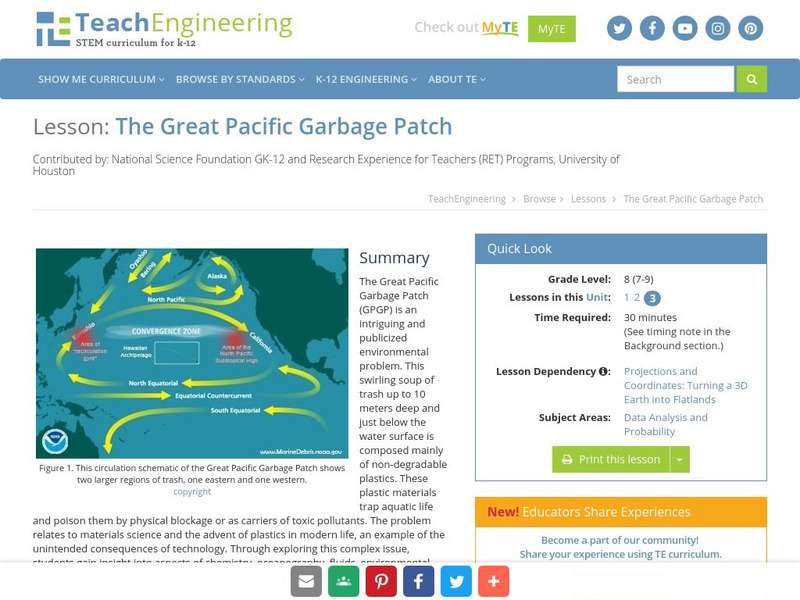
The Great Pacific Garbage Patch (GPGP) is an interesting and somewhat publicized environmental problem. A swirling soup of trash up to 10 meters deep and just below the water surface is composed mainly of non-degradable plastics. These...
Better Lesson
Better Lesson: Introducing Engineering
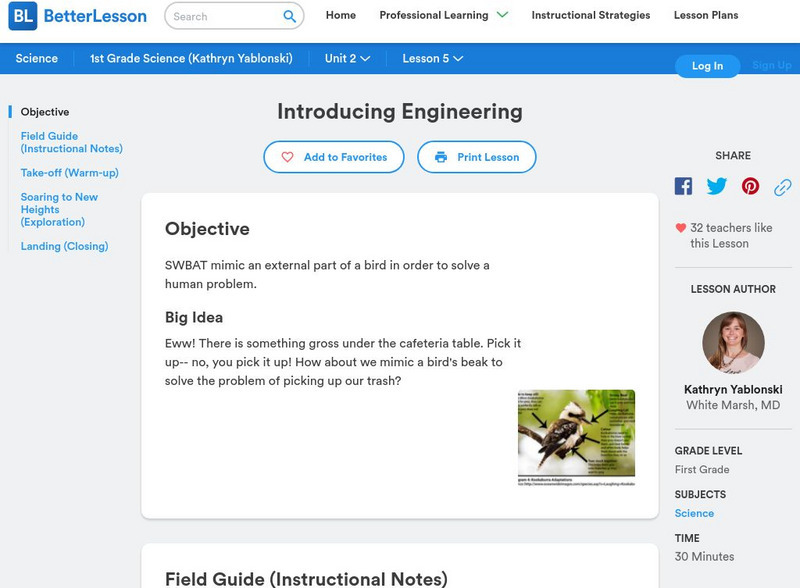
There is something gross under the cafeteria table. Do you pick it up? Gross! How about we mimic a bird's beak to solve the problem of picking up our trash? This lesson models walking through the first few steps of the Engineering Design...
TeachEngineering
Teach Engineering: Trash Talkin'
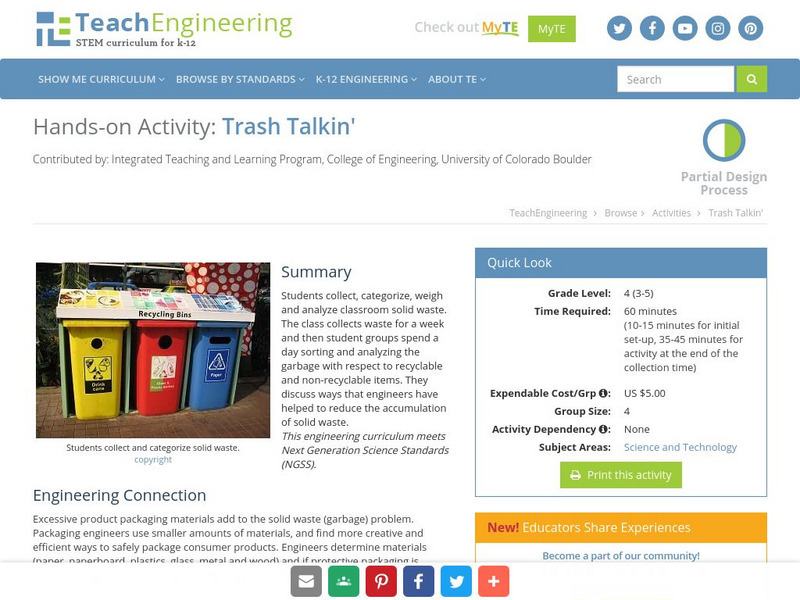
In this activity, students collect, categorize, weigh and analyze classroom solid waste. The class collects waste for a week and then student groups spend a day sorting and analyzing the garbage with respect to recyclable and non...

Better Lesson
Better Lesson: Math Trash
A activity where students collect trash, sort, and record the mass in grams. They will use their knowledge of numbers to figure out what category of trash had the most. The biggest idea of the activity is that students will be more...
CK-12 Foundation
Ck 12: Earth Science: Ocean Garbage Patch
[Free Registration/Login may be required to access all resource tools.] How trash gets caught by ocean currents into certain locations.
PBS
Pbs: The Lowdown: The Math of Trash: Percents and Proportions
Discover how percents and proportions help explain issues like climate change, composting, and zero waste in this video from KQED. In the accompanying classroom activity, students estimate the percentage of various types of trash that...
PBS
Pbs Learning Media: Printable Lesson: Litterbug Clean Up!
For this printable lesson, children will learn about the environment by going outdoors and picking up litter. Use this printable lesson, video clips, science notebook pages, and support materials from the PBS KIDS show Elinor Wonders Why...
TeachEngineering
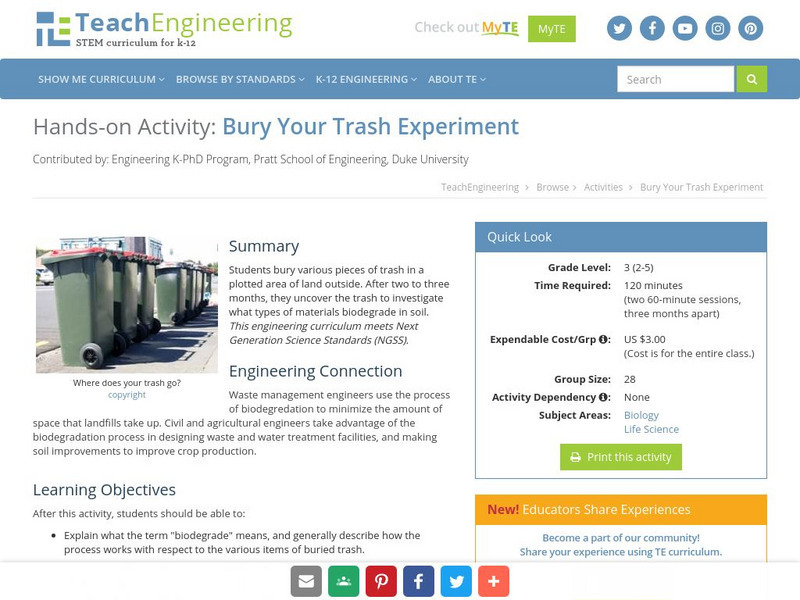
Teach Engineering: Bury Your Trash!
This activity will allow students to bury various pieces of trash in a plotted area of land outside. After approximately two to three months, the trash will be uncovered to allow the students to investigate what types of materials...
TeachEngineering
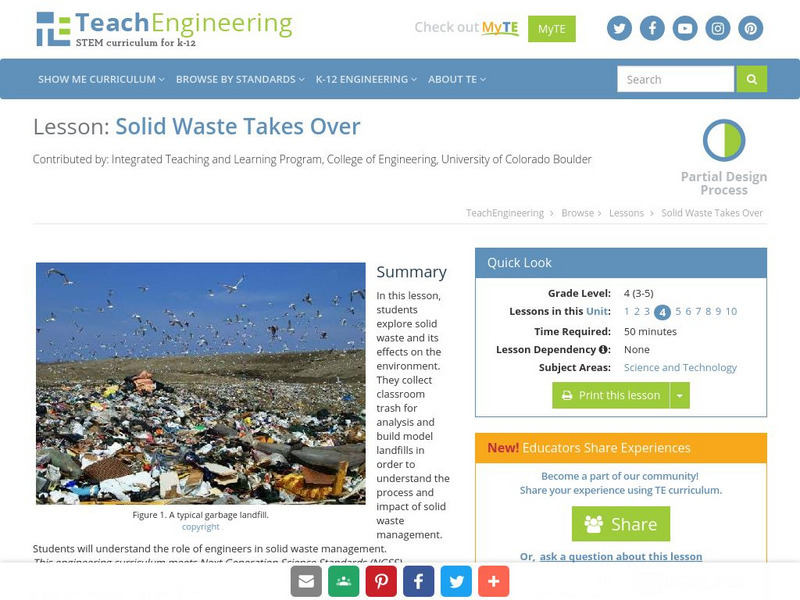
Teach Engineering: Solid Waste Takes Over
In this instructional activity, students explore solid waste and its effects on the environment. They will collect classroom trash for analysis and build model landfills in order to understand the process and impact of solid waste...
Annenberg Foundation
Annenberg Learner: Garbage: Hazardous Waste Solutions
This concise article explores possible solutions to the hazardous waste problem.
Better Planet Productions
Earth Care: Whose Garbage Is It? [Pdf]
After researching the political and environmental issues around Toronto, Ontario's shipment of its waste to Ann Arbor, Michigan, students will hold a debate and write an opinion paper.
Teachnology
Teachnology: Lesson Plan: Basketball Vocabulary
In this 3rd-5th grade lesson, young scholars practice their vocabulary words using a mini-basketball. Given a part of the definition, students guess the vocabulary word; if they are correct, they shoot a mini-baskeball into a net in the...
Science Buddies
Science Buddies: The Big Dig
Even though many cities have recycling programs, a lot of trash still ends up in the dump. Find out which materials will break down and which materials won't. Will the results of this experiment change which products you often buy?

TED Talks
Ted: Ted Ed: Captain Charles Moore on the Seas of Plastic
Capt. Charles Moore discusses the growing problem of plastic trash in our seas and oceans and what the solutions might be. [7:24]
Better Planet Productions
Earth Care: Good Garbage vs Bad Garbage [Pdf]
Kindergarten students will participate in schoolyard cleanup and learn to tell the difference between safe and unsafe litter.
Better Planet Productions
Earth Care: Garbage vs Recycle Centre [Pdf]
Kindergarten students will learn the importance of recycling by using the correct receptacles in their classroom.

PE Central
Pe Central: K 2 Pe Lesson Ideas: Oscar's Garbage Can
Students practice their throwing skills as they toss "Trash," (foam balls, yarn balls) into "Oscar's Garbage Can." This lesson includes suggestions for varying the activity and making sure it is safe.
PE Central
Pe Central: K 2 Pe Lesson Ideas: Grocery Bag Fun
Students practice tossing and catching a simple, inexpensive object--a plastic garbage bag, ideal for young children learning to catch.
Marilyn J. Brackney
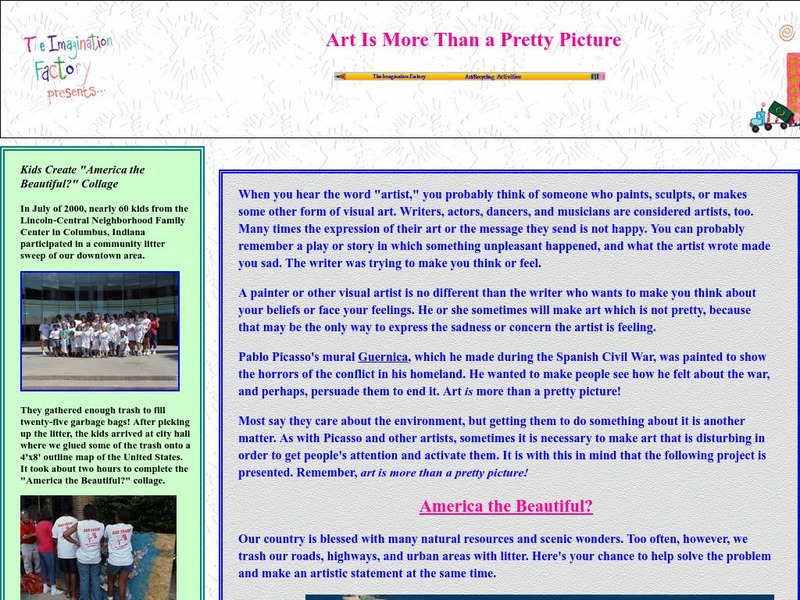
Imagination Factory: Art Is More Than a Pretty Picture
With this art activity, individuals or groups can use a wide variety of objects to create a collage of America. The example collage is made of garbage, and is intended to be a commentary on our problems with trash.
Other
Clean Sweep u.s.a.: Energy to Burn [Pdf]
This informative and interactive site examines how we can get power from garbage. Topics include: waste to energy plants, only ash remains, a bright idea, and more.
Better Planet Productions
Earth Care: Audit of Household Waste [Pdf]
After performing an audit of their families' household garbage, students compare their results in class and come up with ways they can encourage environmentally friendly practices at home.
Scholastic
Scholastic: Earth Day, Every Day
A lesson plan for students to learn about Earth Day, recycling, and other ways to be aware of the environment. A key component to the lesson plan is the book, "Where Does the Garbage Go," by Paul Showers.

TeachEngineering
Teach Engineering: What Will Biodegrade?
Students investigate what types of materials biodegrade in the soil, and learn what happens to their trash after they throw it away. The concepts of landfills and compost piles will be explained, and the students will have an opportunity...

TED Talks
Ted: Ted Ed: Vermicomposting: How Worms Can Reduce Our Waste
Nearly one third of our food ends up in the trash can. Matthew Ross details the steps we can all take to vermicompost at home, and why it makes good business sense to do so. [4:29]