Hi, what do you want to do?






Curated OER
Where Does History Stand on the Last Stand?
Students examine the Battle of Little Bighorn and its impact on United States and Native American culture through reading current and historic New York Times articles and by creating a research-based exhibit about this historic event.
Wikimedia
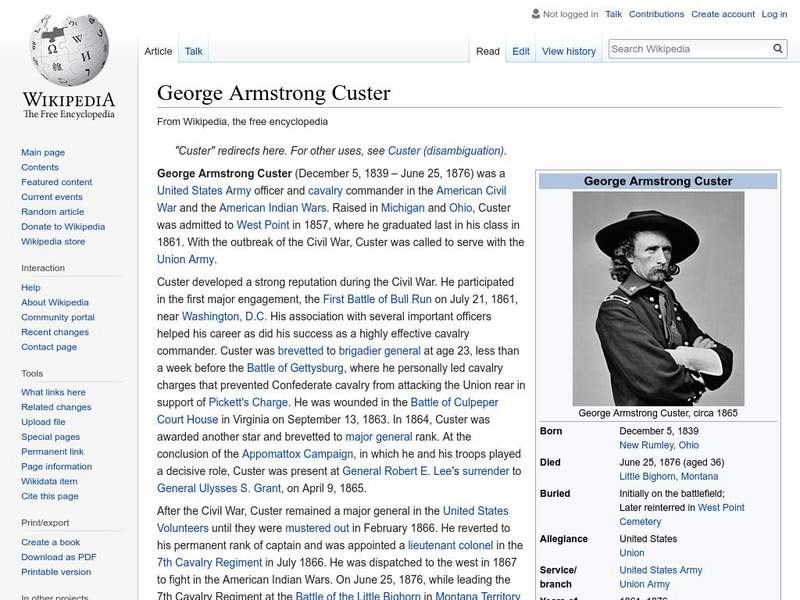
Wikipedia: George Armstrong Custer
This site from Wikipedia provides extensive information about the life of General George Custer, and gives details of his military career and his defeat at the Battle of Little Bighorn.
PBS
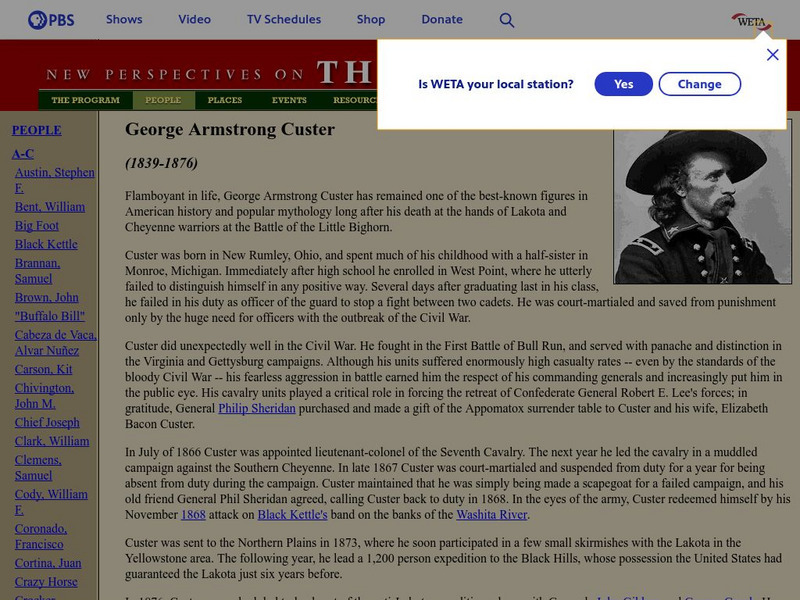
Pbs the West: George Armstrong Custer
This is a biography of General George Armstrong Custer who was killed in the Battle of the Little Bighorn against the Lakota Indians.
![Chronicles of Oklahoma: Custer's Hunting Horse [Pdf] Website](https://static.lp.lexp.cloud/images/attachment_defaults/resource/large/FPO-knovation.png "Chronicles of Oklahoma: Custer's Hunting Horse [Pdf] Website")
Oklahoma State University
Chronicles of Oklahoma: Custer's Hunting Horse [Pdf]
A biographical sketch of a Kiowa Native American named "Hunting Horse" who lived from 1846 to the 1950's and for a time served with General George Custer as a scout. The article gives cultural details on the life of the Kiowa.
Independence Hall Association
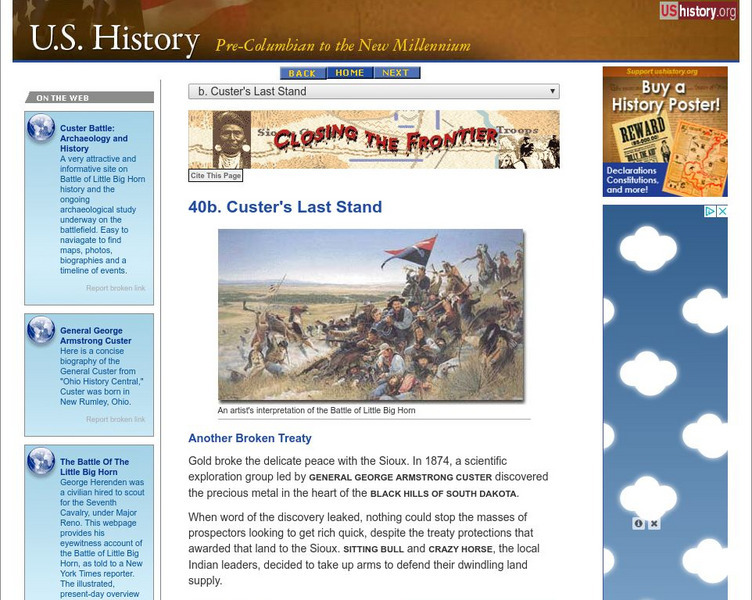
U.s. History: Custer's Last Stand
Read a brief description of General George Custer and his troops engagement with the Sioux at the Little Big Horn River. See what happened to the Sioux, and find out what the general perception of the Indian Wars was to the American public.
Son of the South
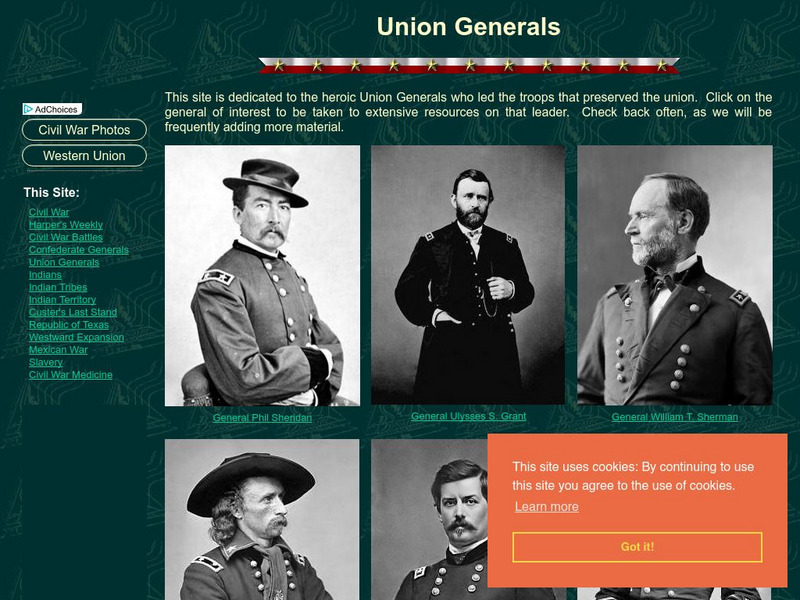
Son of the South: Union Generals
Presents biographies and resources for six Union Army generals.
Curated OER
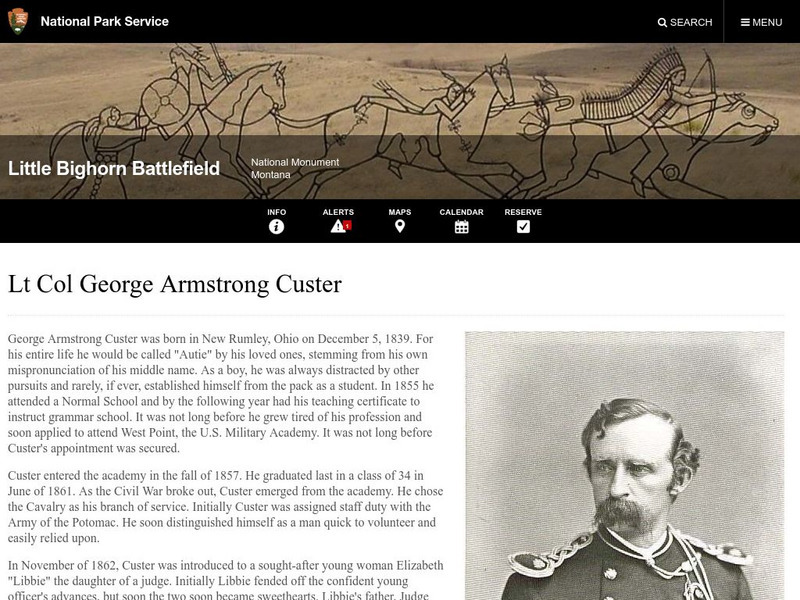
National Park Service: Little Bighorn Battlefield: George Armstrong Custer
Short description of Custer just before the Battle of the Little Bighorn, as well as a brief listing of information about his military career.
Curated OER
Educational Technology Clearinghouse: Clip Art Etc: George Custer
General George A. Custer, born in New Rumley, Harrison County, Ohio, December 5th, 1839, died in Montana, June 25th, 1876, was graduated at the United States Military Academy in June 1861, and reported for duty at Washington; was...
PBS
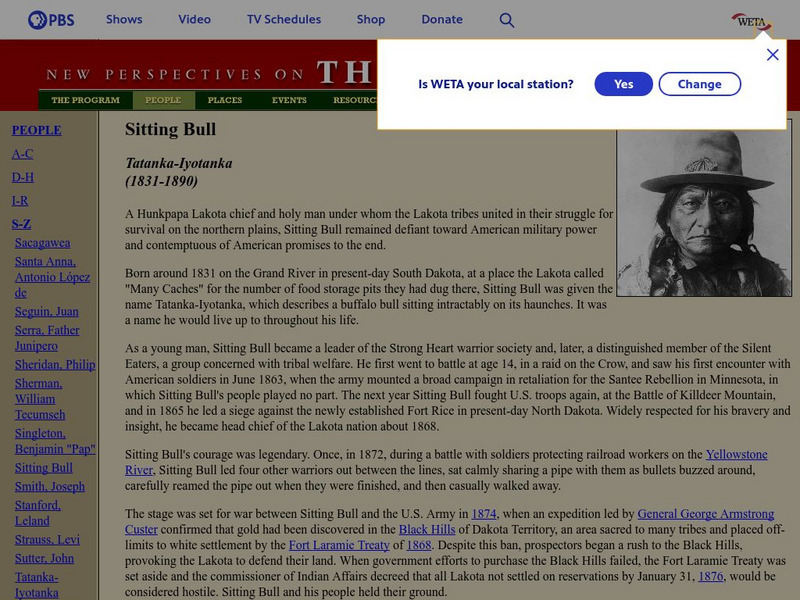
The West: Sitting Bull Tatanka Iyotanka
This is a biography of Lakota Indian Chief Sitting Bull who led his tribe in the Battle of the Little Bighorn against General George Custer.
PBS
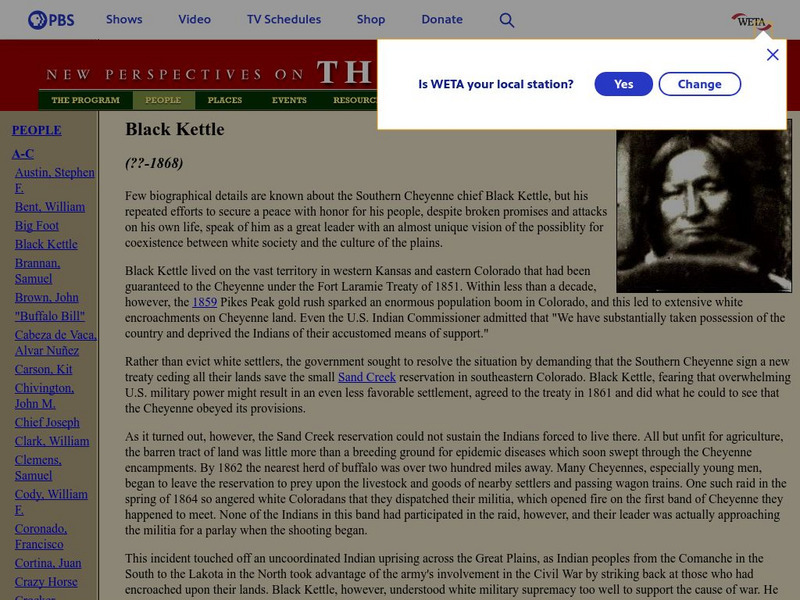
The West: Black Kettle
This is a profile of the Southern Cheyenne Indian chief, Black Kettle, who escaped death at the Sand Creek Massacre only to later be murdered by the forces led by General George Custer at Washita River.
PBS
Pbs the West: The Everywhere Spirit
This PBS site describes events between 1866 and 1868 in the Indian Wars. Including the Lakota attack on a wagon train bringing supplies to Ft. Kearny and Custer's attack on the Cheyennes on the Washita River.
The History Place
The History Place: Battle of Gettysburg
This site from The History Place provides a detailed account of the most famous and important battle of the U.S. Civil War, the battle of Gettysburg. Check out the link, near the bottom of the page, to a letter from President Lincoln to...
Curated OER
National Park Service: Archeology at the Battle of the Little Bighorn
This site from the Midwest Archaeological Center provides general information on the Battle of the Little Bighorn, with additional information derived from modern excavations at the battle site.
Other
Combined Arms Research Library: Atlas of the Sioux Wars:
An in-depth look at the Sioux Wars from 1862-1877. Included are maps for many topics discussed.
Country Studies US
Country Studies: The Plight of the Indians
This site explains how as westward expansion grew, more and more Indians encountered settlers, ranchers and miners who sought life, land, and riches out West. Conflicts between settlers and Indians soon involved the federal government...

Curated OER
National Park Service: Wind Cave National Park: History of the Black Hills
Story of the discovery of gold in the Black Hills of South Dakota and resulting violations of 1868 treaty with Lakota Indians.
Other
The Weekly South Dakotan: South Dakota History for 4th Grade
From the very beginning and through the twentieth century, this comprehensive collection of lessons will enrich students studying the history in between and the effects on South Dakota.
PBS
Pbs: New Perspectives on the West
This in-depth resource presents a history of the American West from pre-Columbian times until World War I with profiles, documents, and images. It encourages visitors to link these into patterns of historical meaning for themselves....