Hi, what do you want to do?






Curated OER
Animating Motion
Learners apply what they recall about objects in motion by animati ng sequences of pictures that model a set of physical conditions. They animate the orbital motions of the Earth, the space shuttle, and the Moon based on calculations of...

Curated OER
Satellites
Eighth graders explore the history of space travel and satellites. Through a teacher demonstration, 8th graders observe how a satellite revolves another object. They identify natural and artificial satellites, explore how satellites...

Curated OER
Mars
After reading a short excerpt about the planet named after the Roman god of war, Mars, your class will answer four comprehension questions. The activity challenges them to fold over the paper and answer the questions without referring...

American Museum of Natural History
A Closer Look at Mars
A website looks at how we know so much about Mars—telescopes, robots, and spacecraft—and the search for martian life. Following the informational text are three questions that quiz pupils about possible life on Mars.

Curated OER
Solar System: Let's Take a Trip
Third graders consider outer space. In this introductory solar system lesson, 3rd graders complete a KWL chart and listen to the story The Magic School Bus: Lost in the Solar System, by Joanna Cole & Bruce Degen. They will contribute...

Curated OER
The Solar System Word Search 2
In this solar system word puzzle worksheet, students examine the 26 words an names in the word bank and locate them in the word search puzzle.

Curated OER
Enslaved and Running
Students use runaway slave advertisements to discover how the language varies from the 18th to 21st century. Using primary source documents, they research the brutality of slavery and the desire of those in slavery to be free. They...

PBS
Pbs Learning Media: Why Doesn't the Moon Fall Down?
In this animated video segment adapted from NASA, astronomer Doris Daou explains how the forces of speed and gravity keep the moon in a constant orbit around Earth. [1:36]
University of Colorado
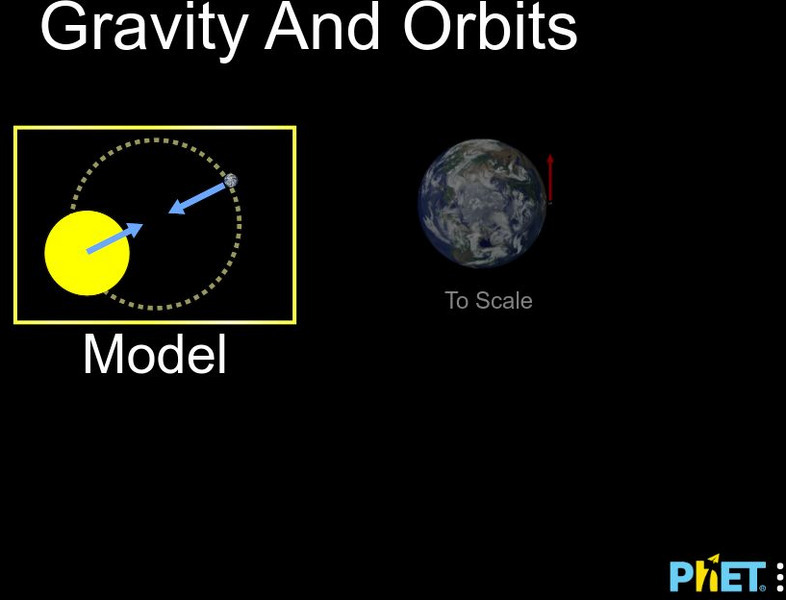
University of Colorado: Ph Et Interactive Simulations: Gravity and Orbits
Move the sun, earth, moon, and space station to see how it affects their gravitational forces and orbital paths. Visualize the sizes and distances between different heavenly bodies, and turn off gravity to see what would happen without it.

University of Colorado
University of Colorado: Ph Et Interactive Simulations: Gravity and Orbits
An interactive simulation that teaches about gravitational force, circular motion, and astronomy by manipulating the sun, earth, moon, and a space station to observe the effects of gravity and orbital paths. This simulation can either be...
Science Museum, London
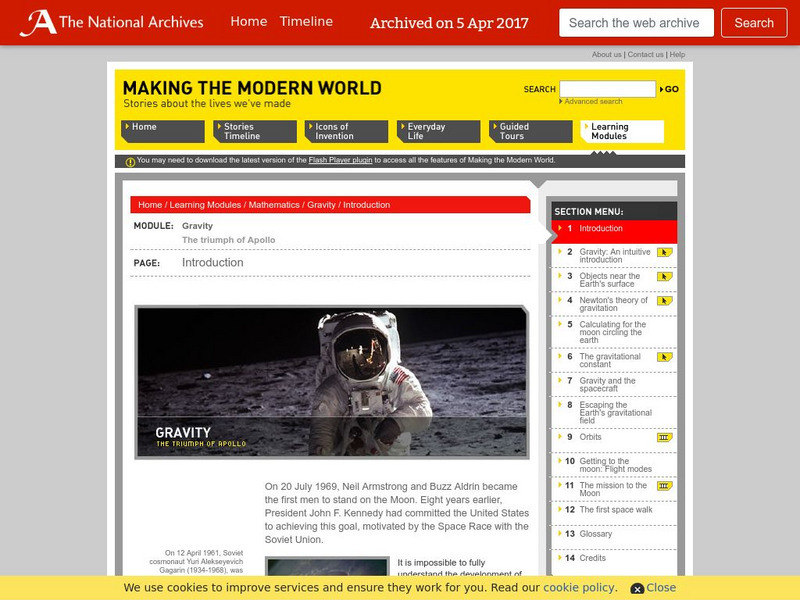
Making the Modern World: Gravity
The learning module helps students gain a deeper understanding of gravity. Some topics explored are orbits, the mission to the Moon, and the first space walk. Activities and videos are included.
American Geosciences Institute
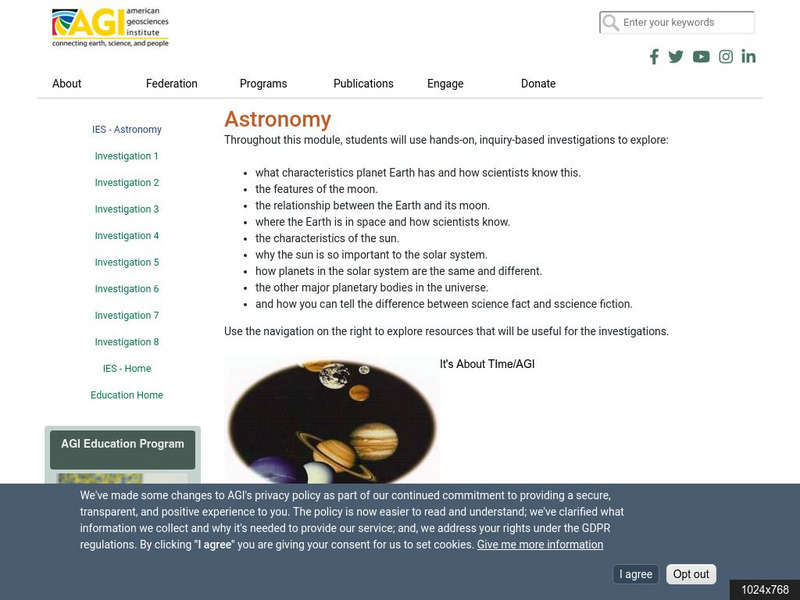
American Geosciences Institute: Astronomy
Eight hands-on lessons module in which students explore the characteristics of planet Earth, its moons, the sun, the solar system, planets, and the difference between science fact and science fiction.
Project Britain
Primary Homework Help: Earth and Space Quiz
This resource provides information about Earth and space. In addition, there is a quiz provided.
MadSci Network
Mad Scientist: Why High Tide Away From the Moon or Sun?
An excellent and thorough answer to the often asked question about high tide "bulges" on the side of Earth facing away from the Moon or Sun.
Kidport
Kidport: The Moon Landing
Travel back in history and see the first men on the moon. See photos of the crew, the launch, the landing and more.
Physics Classroom
The Physics Classroom: The Apple, the Moon, and the Inverse Square Law
Describes the logic behind the development of Newton's law of universal gravitation. Beginning with Johannes Kepler and his three laws of planetary motion, content walks the reader through Newton's thought process and development of this...
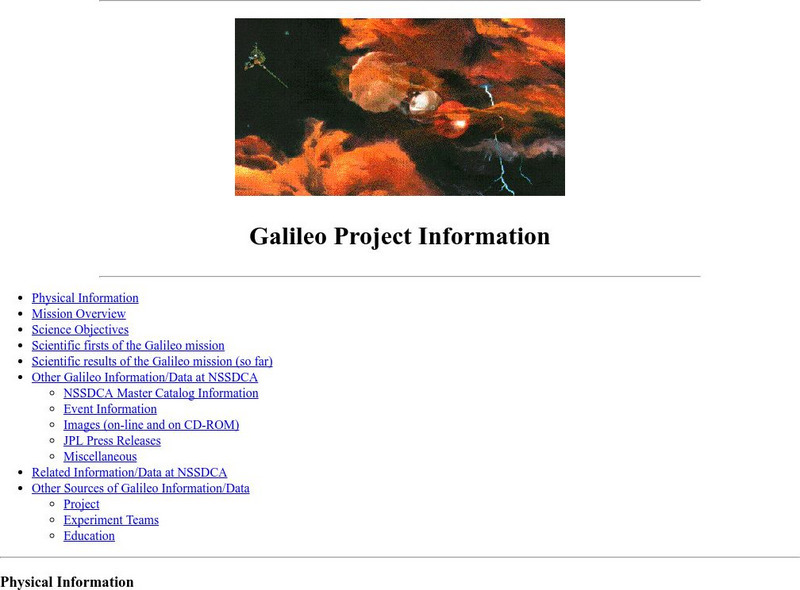
NASA
Nasa Space Science Data Archive: Galileo Project Information
This is the homepage of all of the archived information about and from the Galileo Mission. Included is data from the flybys of Venus, Earth, Moon, and Asteroids Gaspra and Ida, as well as the current data from Jupiter and its moons. See...
Kidport
Kidport: The Space Shuttle
Students can see actual photos of a space shuttle launching from earth as well as the people who now could go because of technology. Learn about some of the equipment and vehicles used to make it happen.
Physics Classroom
The Physics Classroom: Circular and Satellite Motion: The Inverse Square Law
Through illustrated examples and interactive practice, students explore Newton's ability to relate the cause for heavenly motion (the orbit of the moon about the earth) to the cause for Earthly motion (the falling of an apple to the...

American Association of Physics Teachers
Com Padre Digital Library: Open Source Physics: Newton's Mountain Model
A science simulation launches a projectile from the top of a mountain testing Newton's theory introduced in Principia.
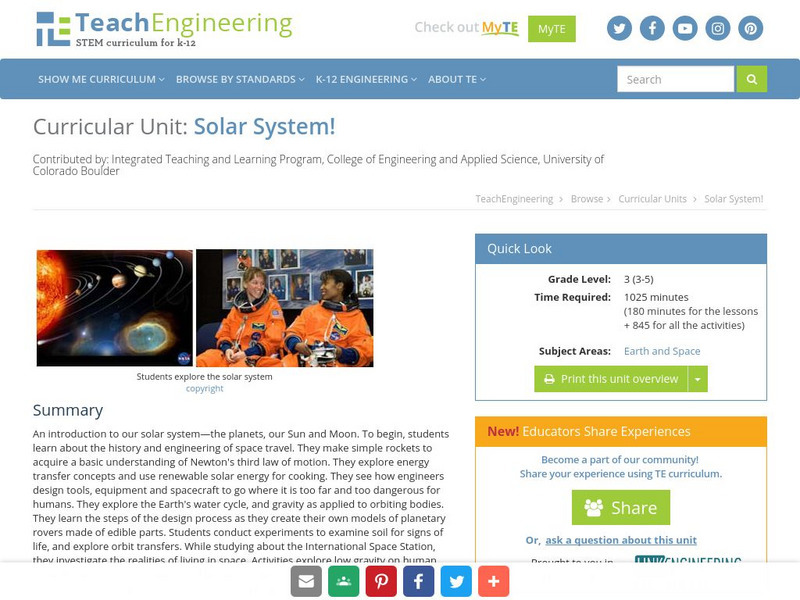
TeachEngineering
Teach Engineering: Solar System!
An introduction to our solar system: the planets, our Sun and our Moon. Students begin by learning the history and engineering of space travel. They make simple rockets to acquire a basic understanding Newton's third law of motion. They...