Hi, what do you want to do?





CK-12 Foundation
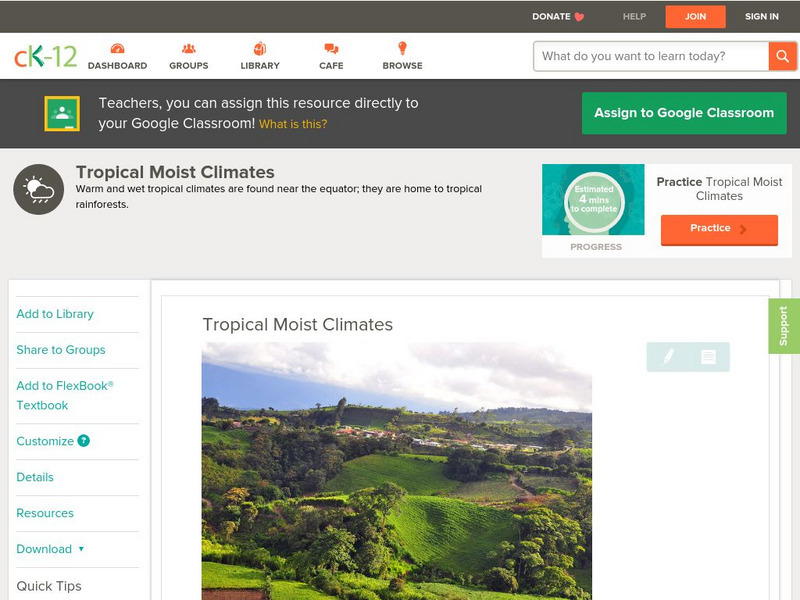
Ck 12: Earth Science: Tropical Moist Climates
[Free Registration/Login may be required to access all resource tools.] Describes characteristics of tropical climates.
CK-12 Foundation
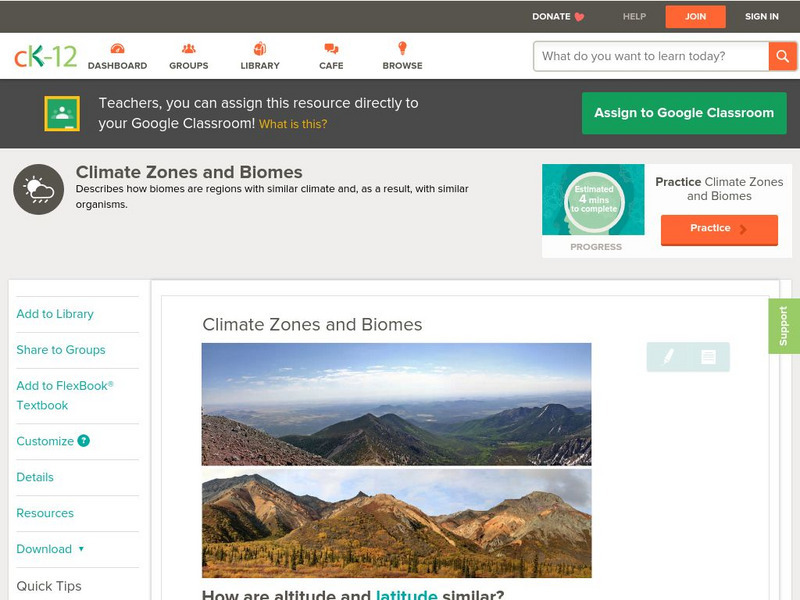
Ck 12: Earth Science: Climate Zones and Biomes
[Free Registration/Login may be required to access all resource tools.] Describes how regions with similar climates are grouped into climate zones and biomes.
CK-12 Foundation
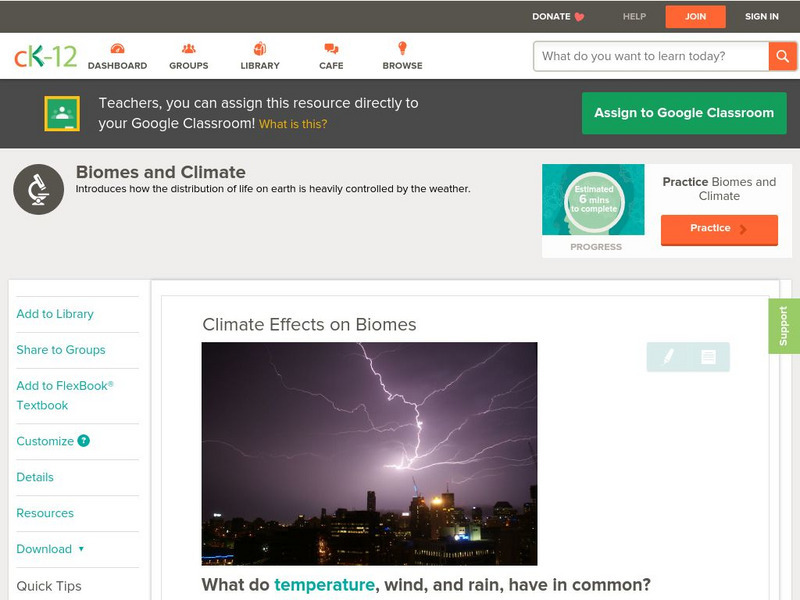
Ck 12: Biology: Climate Effects on Biomes
[Free Registration/Login may be required to access all resource tools.] Discusses how climate affects the biome.
BBC
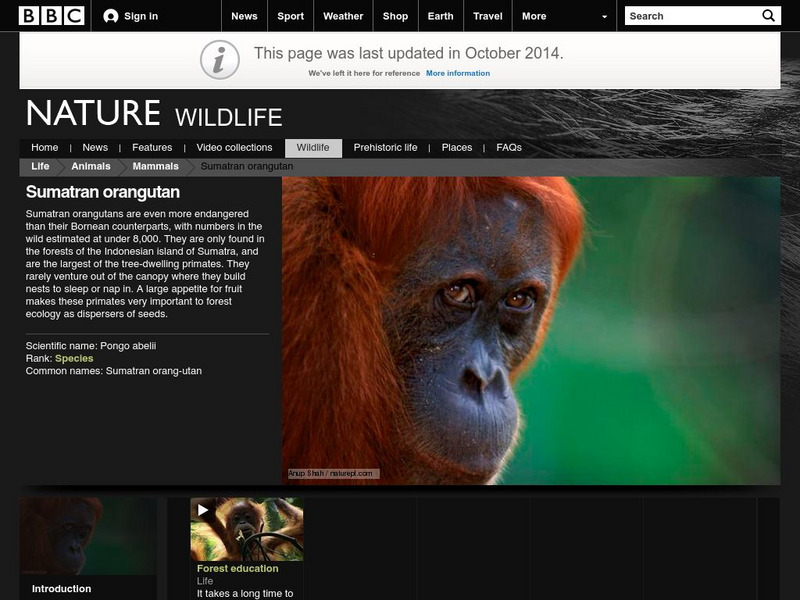
Bbc: Nature Wildfacts: Sumatran Orangutan
This resource provides information about the Sumatran orangutan.

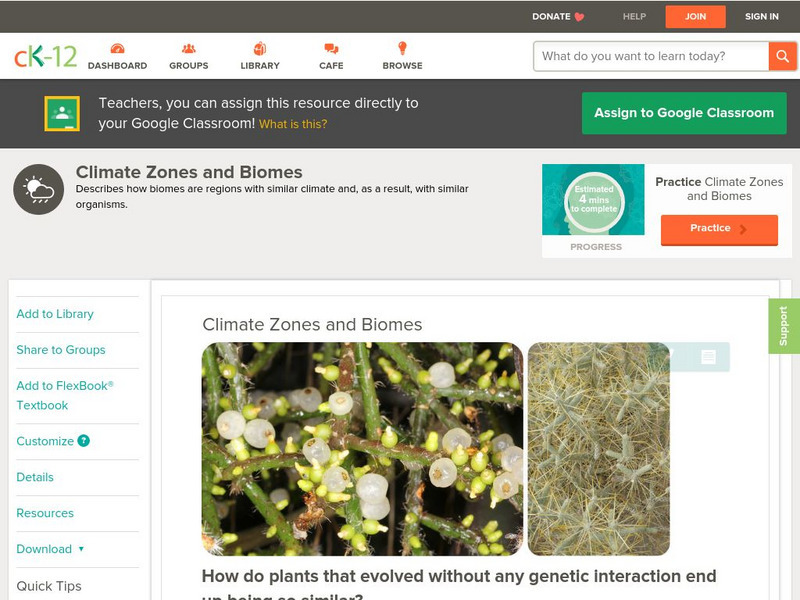
CK-12 Foundation
Ck 12: Earth Science: Climate Zones and Biomes
[Free Registration/Login may be required to access all resource tools.] Describes how regions with similar climates are grouped into climate zones and biomes.
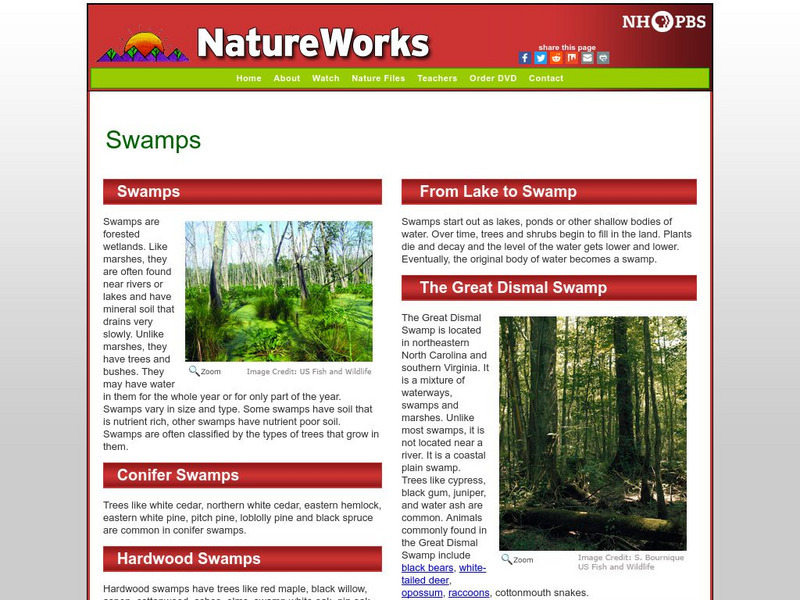
PBS
Nh Pbs: Nature Works: Swamps
What characteristics make a swamp a swamp? This site features information on the Great Dismal Swamp, Conifer Swamps, Okefenokee Swamps, Shrub Swamps, Hardwood Swamps, and Cypress Swamps. This site also offers some great photographs of...

CK-12 Foundation
Ck 12: Biology: Organization of Living Things
[Free Registration/Login may be required to access all resource tools.] How organisms are organized.
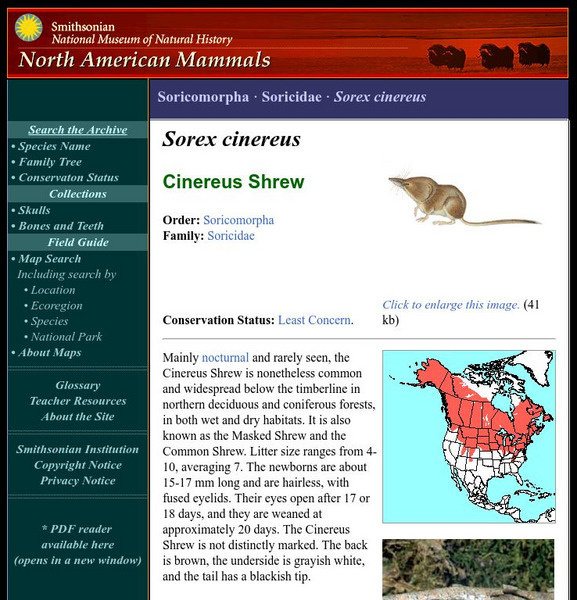
Smithsonian Institution
National Museum of Natural History: American Mammals: Cinereus Shrew
Mainly nocturnal and rarely seen, the Cinereus Shrew is nonetheless common and widespread below the timberline in northern deciduous and coniferous forests, in both wet and dry habitats. It is also known as the Masked Shrew and the...
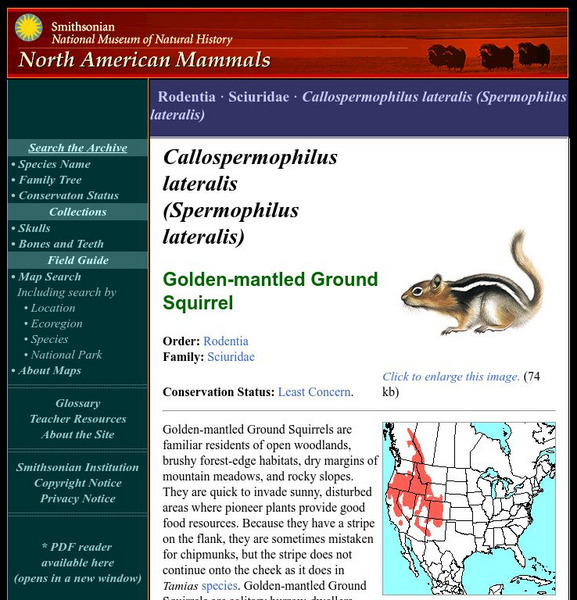
Smithsonian Institution
National Museum of Natural History: American Mammals: Golden Mantled Ground Squirrel
Golden-mantled Ground Squirrels are familiar residents of open woodlands, brushy forest-edge habitats, dry margins of mountain meadows, and rocky slopes. They are quick to invade sunny, disturbed areas where pioneer plants provide good...
Smithsonian Institution
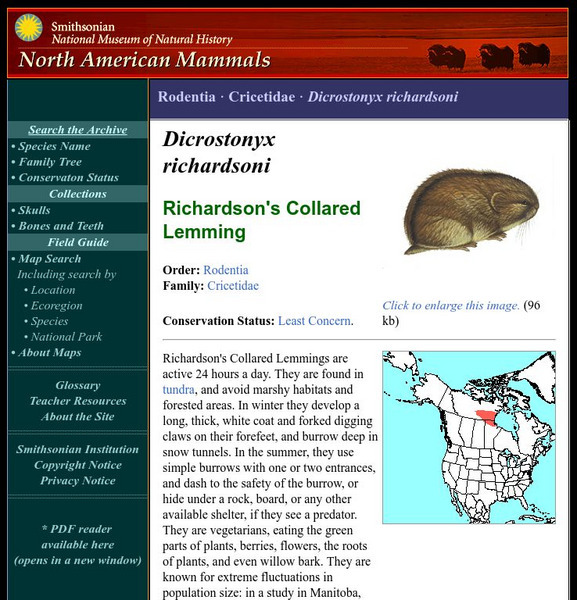
National Museum of Natural History: American Mammals: Richardson's Collared Lemming
Richardson's Collared Lemmings are active 24 hours a day. They are found in tundra, and avoid marshy habitats and forested areas. Learn more about the Dicrostonyx richardsoni, more commonly known as a Richardson's Collared Lemming, in...
Smithsonian Institution
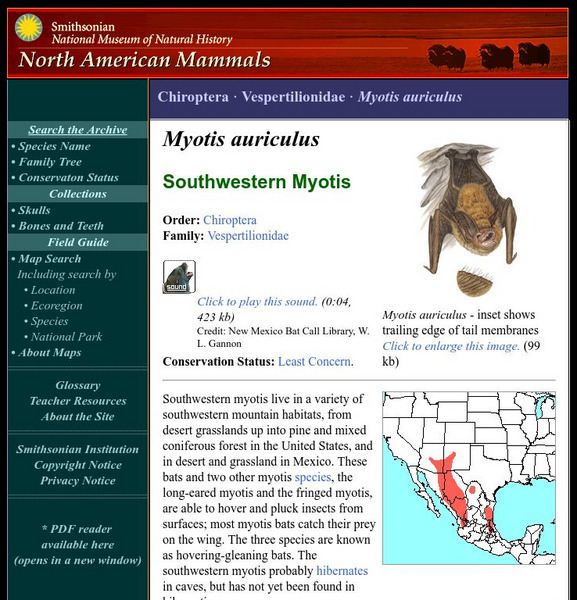
National Museum of Natural History: American Mammals: Southwestern Myotis
Southwestern myotis live in a variety of southwestern mountain habitats, from desert grasslands up into pine and mixed coniferous forest in the United States, and in desert and grassland in Mexico. These bats and two other myotis...
Smithsonian Institution
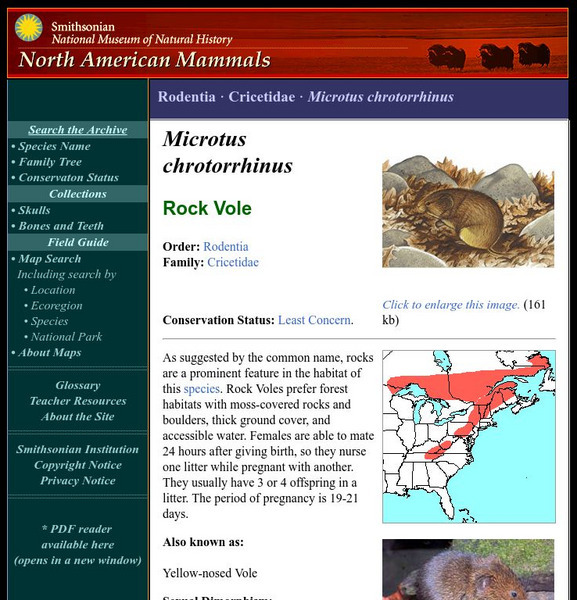
National Museum of Natural History: American Mammals: Rock Vole
As suggested by the common name, rocks are a prominent feature in the habitat of this species. Rock Voles prefer forest habitats with moss-covered rocks and boulders, thick ground cover, and accessible water. Learn more about the...
Smithsonian Institution
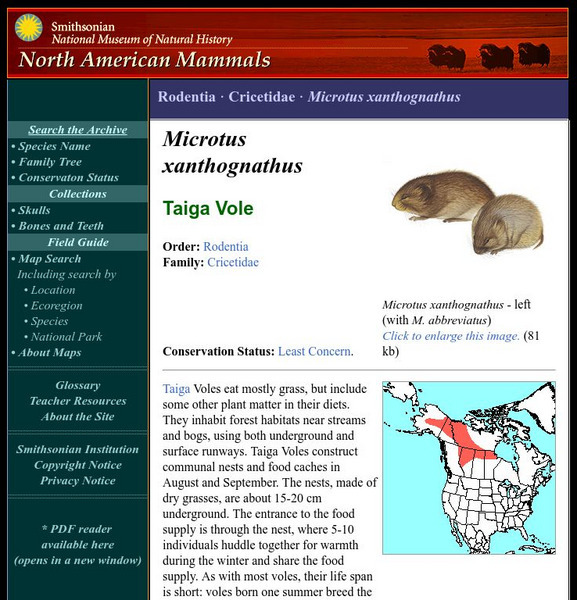
National Museum of Natural History: American Mammals: Taiga Vole
Taiga Voles eat mostly grass, but include some other plant matter in their diets. They inhabit forest habitats near streams and bogs, using both underground and surface runways. Learn more about the Microtus xanthognathus, more commonly...
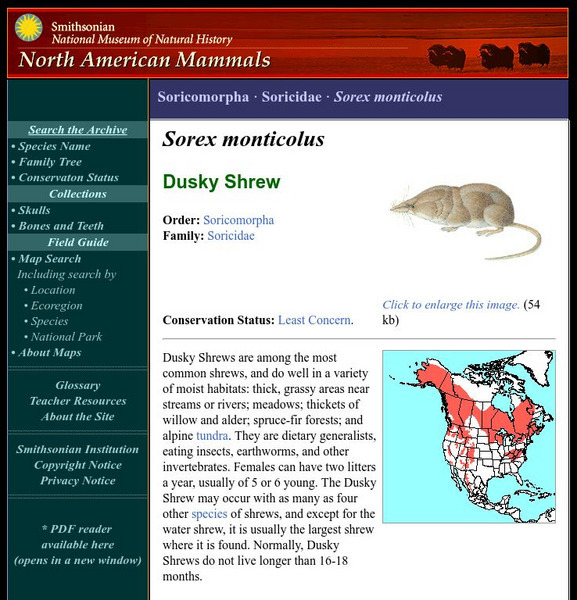
Smithsonian Institution
National Museum of Natural History: American Mammals: Montane Shrew
Montane Shrews are among the most common shrews, and do well in a variety of moist habitats: thick, grassy areas near streams or rivers; meadows; thickets of willow and alder; spruce-fir forests; and alpine tundra. They are dietary...
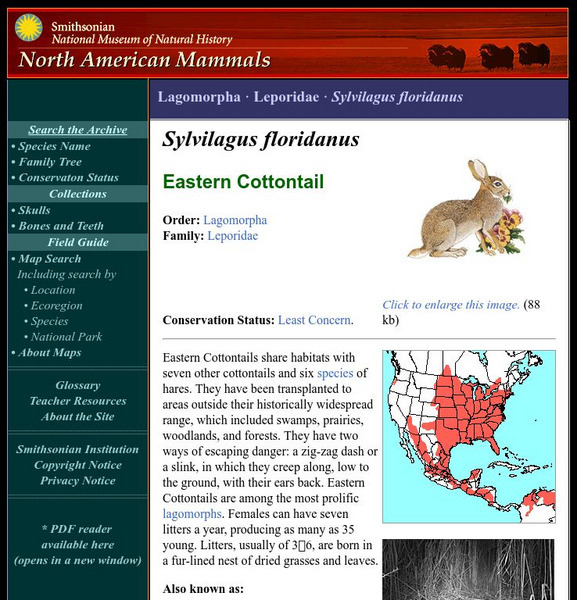
Smithsonian Institution
National Museum of Natural History: American Mammals: Eastern Cottontail
Eastern Cottontails share habitats with seven other cottontails and six species of hares. They have been transplanted to areas outside their historically widespread range, which included swamps, prairies, woodlands, and forests. Learn...
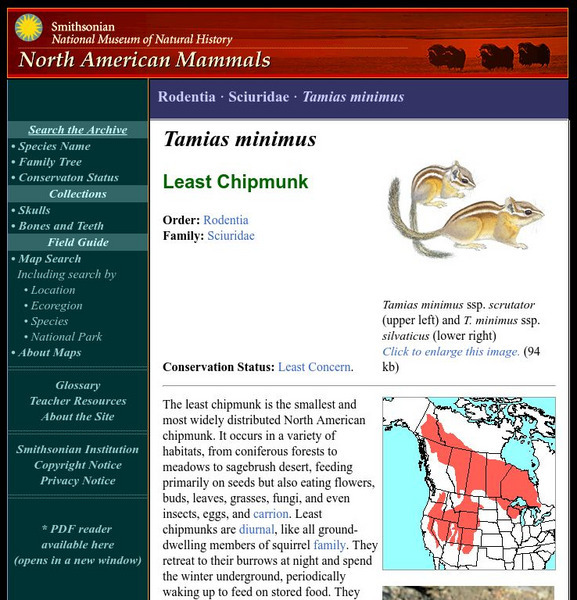
Smithsonian Institution
National Museum of Natural History: American Mammals: Least Chipmunk
The least chipmunk is the smallest and most widely distributed North American chipmunk. It occurs in a variety of habitats, from coniferous forests to meadows to sagebrush desert, feeding primarily on seeds but also eating flowers, buds,...
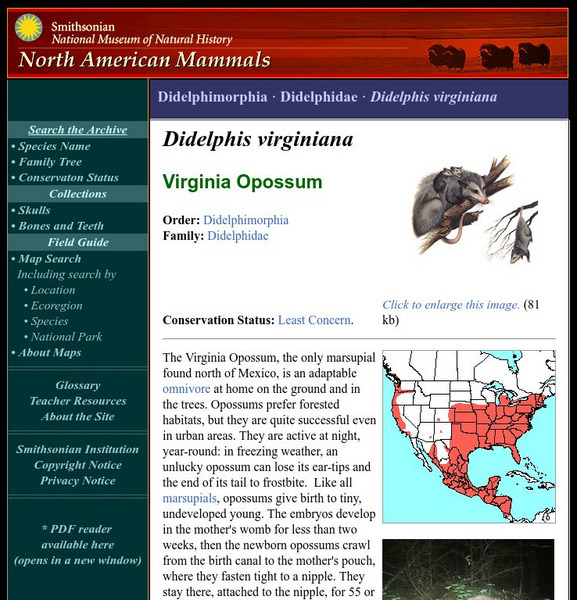
Smithsonian Institution
National Museum of Natural History: American Mammals: Virginia Opossum
The Virginia opossum, the only marsupial found north of Mexico, is an adaptable omnivore at home on the ground and in the trees. Opossums prefer forested habitats, but they are quite successful even in urban areas. Learn more about the...
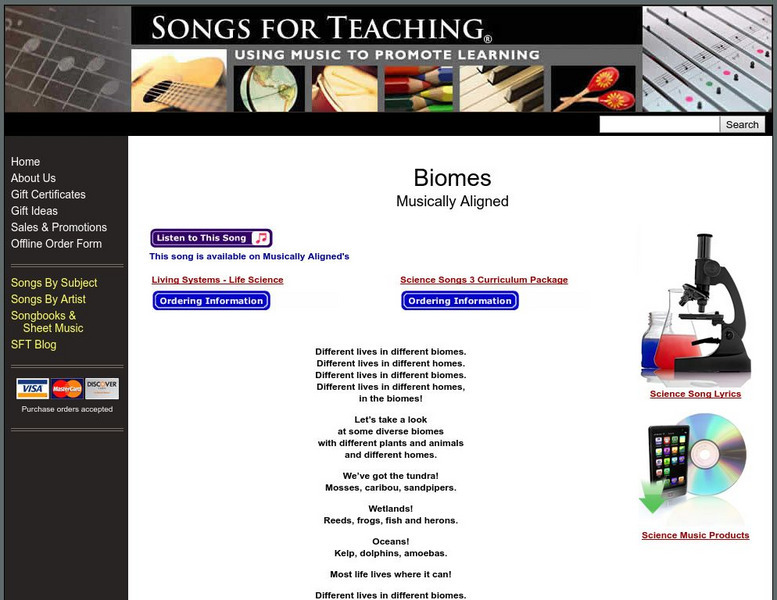
Songs for Teaching
Songs for Teaching: Biomes
Use this site to see how many of the animals and plants that your students can remember from each biome after listening to this song.
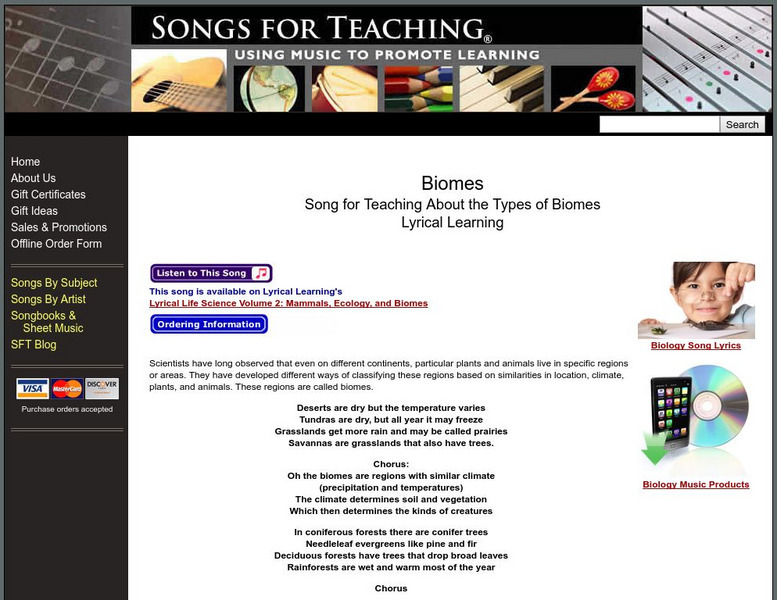
Songs for Teaching
Songs for Teaching: Types of Biomes
Doug Eldon performs this great song which tells about the different biomes and their characteristics. Great way to begin your unit on the biomes.

Ducksters
Ducksters: Science for Kids: World Biomes and Ecosystems
Kids learn about the world's biomes and ecosystems. The network of life and biodiversity needed for all to survive.

Discovery Education
Discovery Education: Plants
The Discovery Channel provides numerous lesson plans dealing with plants. Content is organized by grade level, but all lesson plans include suggestions for adaptations for older or younger audiences.
Curated OER
Unesco: Australia: Greater Blue Mountains Area
The Greater Blue Mountains Area consists of 1.03 million ha of sandstone plateaux, escarpments and gorges dominated by temperate eucalypt forest. The site, comprised of eight protected areas, is noted for its representation of the...