Hi, what do you want to do?





PBS
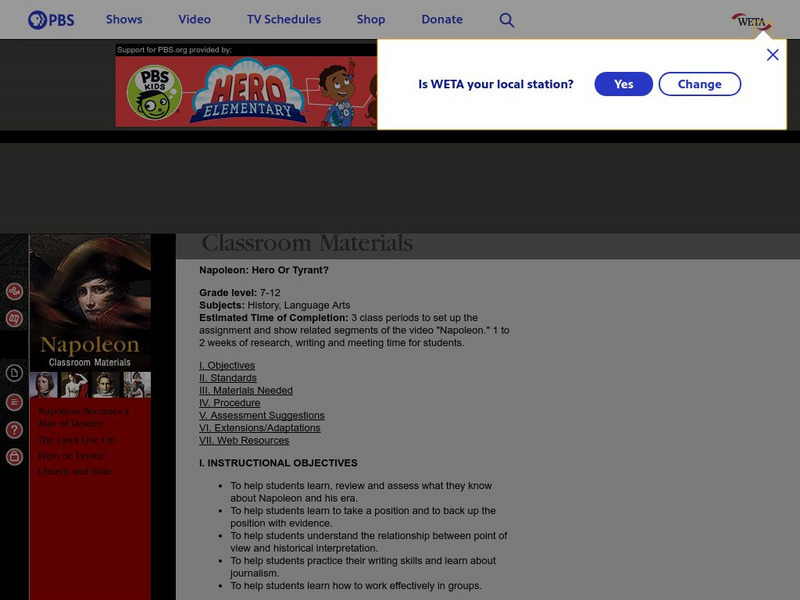
Pbs Teachers: Was Napoleon a Hero or Tyrant? (Lesson Plan)
In this lesson, students examine comments from contemporary historians and come to their own conclusions as to whether Napoleon should be defined as a hero or a tyrant. They will explore and discuss historical viewpoints after Napoleon's...
Cengage Learning
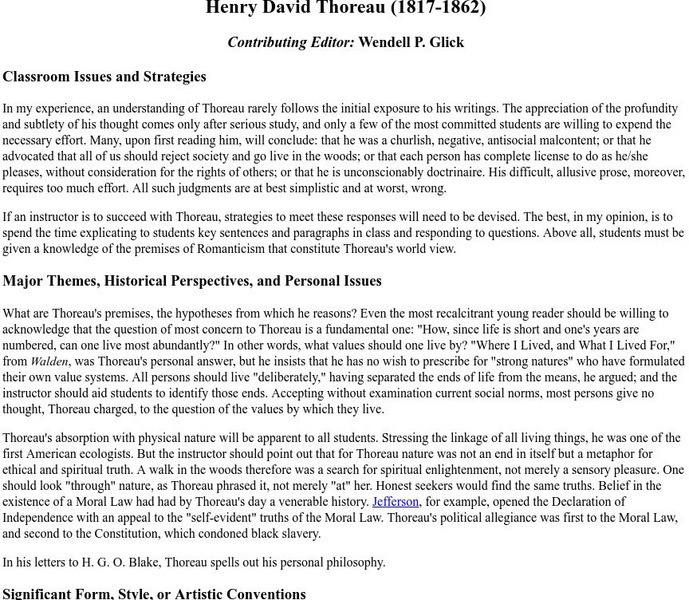
Henry David Thoreau (1817 1862)
This lesson plan discusses teaching students the themes found in Henry David Thoreau. Describes historical perspectives and influences, form, style, and artistic conventions, and the original audience for his work. Includes study...

Harvard University
Harvard University Library: Open Collections: Contagion: Florence Nightingale
Biographical information about Florence Nightingale along with access to Nightingale's letters and books (scanned originals plus transcripts) from Harvard's collections. Part of a larger site about historical perspectives on disease.
Other
Feminist.com: Taking a New Look at the Woman Suffrage Movement
An article on the historical aspects of the women's suffrage movement, with a feminist viewpoint.
MadSci Network
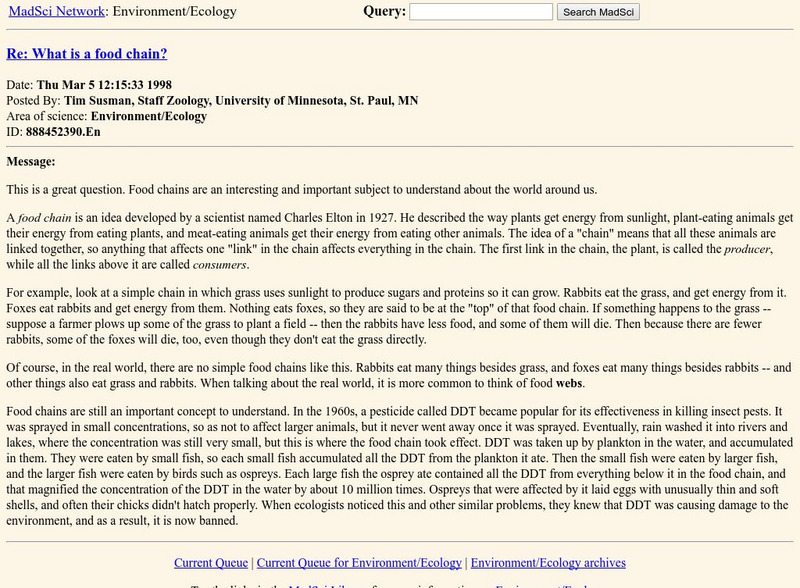
What Is a Food Chain?
Discussion of what makes up a food chain and its significance. Includes some historical perspectives on developing the concept, and on how a pesticide called DDT affected food chains during the 1960's.
Utah Education Network
Uen: Argumentative Writing/wwi & Wwii Unit
In this unit, students will gain background information on historic wars. Student will compare different media forms about these events, attend to different perspectives, research the unit's essential question, and then write an...
PBS
The West: Documents on the Sand Creek Massacre
Contains the text of documents on the Sand Creek Massacre, including two editorials from the Rocky Mountain News, Congressional testimony by John S. Smith, and a deposition by John M. Chivington