Hi, what do you want to do?






PBS
Pbs Learning Media: Primary Source Set: The Atomic Bomb and the Nuclear Age
A collection that uses primary sources to explore the Atomic Bomb and the Nuclear Age it started.

Khan Academy
Khan Academy: Us History: 1890 1945: The Manhattan Project and the Atomic Bomb
In 1945, the United States dropped two atomic bombs on Japan, ending World War II.

Read Works
Read Works: World War Two the Atomic Bomb
[Free Registration/Login Required] An informational text about the creation of the atomic bomb. A question sheet is available to help students build skills in reading comprehension.

Khan Academy
Khan Academy: The Manhattan Project and the Atomic Bomb
Discusses the Manhattan Project of the United States which worked on developing nuclear weapons during World War II. It led to the two atomic bombs that were dropped on Japan in August 1945, ending the war with Japan.
Other
Nuclearfiles.org: Chronology on Decision to Bomb
This detailed chronology of the events and communication of 1945-1946 shows Truman's role in the process of the decision to drop the world's first atomic bomb used in warfare upon Hiroshima and then the second upon Nagasaki. Also...
Digital History
Digital History: The Decision to Drop the Bomb [Pdf]
The day before the bombing of Pearl Harbor, President Franklin Roosevelt gave the go-ahead to scientists to develop an atomic bomb. This site gives a good overview of the war in the Pacific against Japan, the increasing successes of the...
Ohio State University
Osu History Teaching Institute: The Manhattan Project
Students will discuss the role of technology of the atomic bomb and explore the destruction of Nagasaki and Hiroshima during WWII. Students will then outline some of the social and political changes that resulted from the Manhattan Project.
Woodrow Wilson International Center for Scholars
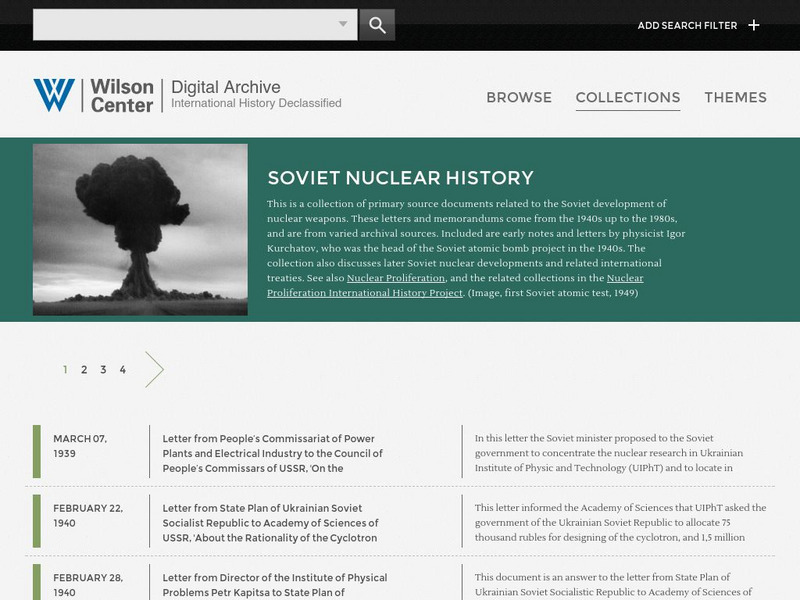
Wilson Center: Soviet Nuclear History
A digital archive of documents from the 1940s-1980s that relate to the nuclear weapons race in the Soviet Union. Included in archive are notes from the head of the Soviet atomic bomb project, Igor Kurchatov and documents related to...
University of Groningen
American History: Outlines: War, Victory and the Bomb
Overview of the final stages of WWII in which war in the Pacific and the Atomic bomb lead to Japanese surrender and criminal trials against Nazi generals.
Harry S. Truman Library and Museum
Tpml: Truman and the Bomb, a Documentary History
This site offers a comprehensive list of primary source documents from Harry S. Truman regarding the Potsdam Conference and decision to use atomic weapons.
Independence Hall Association
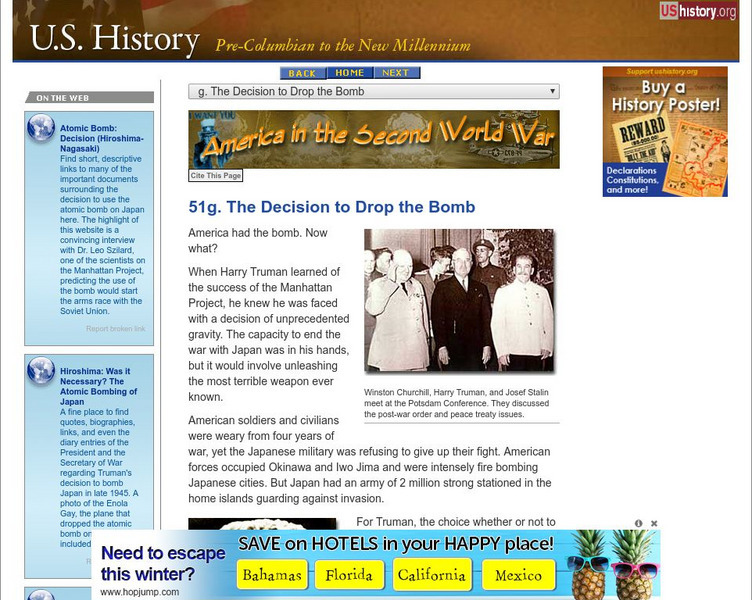
U.s. History: The Decision to Drop the Bomb
Was it necessary to drop the atomic bomb on Japan in order to save lives? Were the consequences worse than the waiting for a surrender of Japan? Read this discussion of the decision to drop the bomb, find out about the possible motives...
Digital History
Digital History: The Aftermath of the Decision [Pdf]
A touching and horrifying description of the devastation caused by the dropping of atomic bombs on Hiroshima and Nagasaki, which brought about the surrender of Japan in World War II. Suggested student exercises accompany the information....
Independence Hall Association
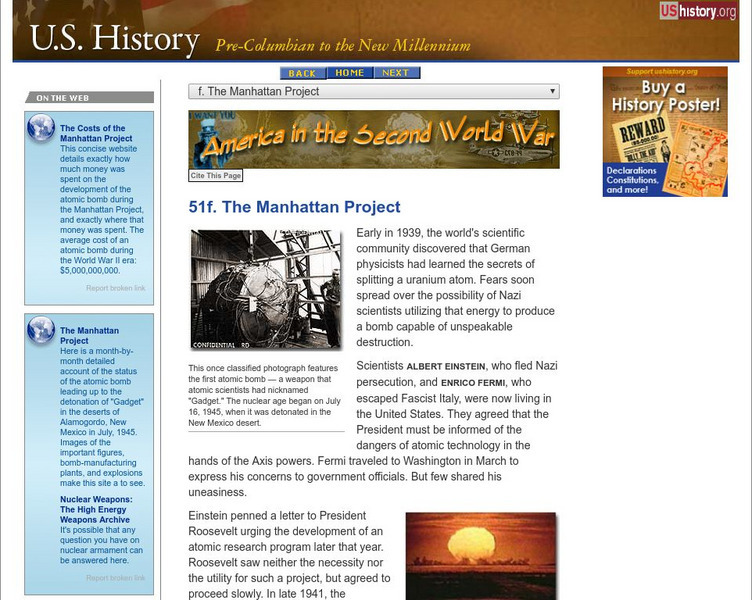
U.s. History: The Manhattan Project
Read about the Manhattan Project, the United States' attempt to create an atomic bomb before the scientists in Nazi Germany were able to.

Khan Academy
Khan Academy: Us History: 1945 1980: Atomic Fears and the Arms Race
Read about the impact of nuclear proliferation in the 1950s, including fears of atomic bombs and increasing militarization.
A&E Television
History.com: Vj Day: Victory Over Japan Day
Comprehensive discussion of V-J Day or the day victory was declared in Japan. Includes details and facts about World War II and the war in the Pacific, the surrender, related photos and speeches, battle maps, and more.
Curated OER
The First Atomic Bomb Explodes at Trinity Test Site July 16, 1945.
Use this site to learn the history of the controversial creation of the atomic bomb in the United States. Sound clips from National Public Radio and a photo gallery help to give you a first hand experience of the making of the atomic bomb.
Flow of History
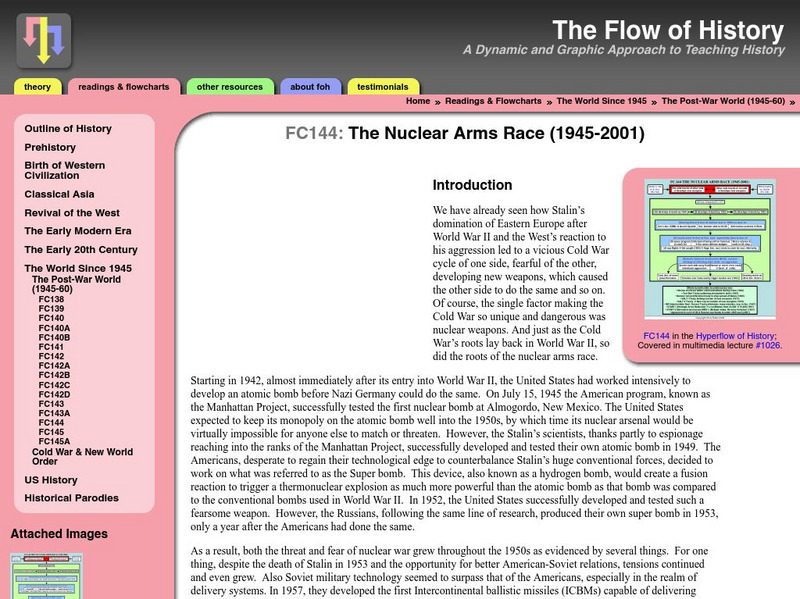
Flow of History: Nuclear Arms Race
The events and countries involved in the nuclear arms race are profiled. Text plus a colored graphic flowchart make the topic visually appealing and of interest to both students and educators.
Flow of History
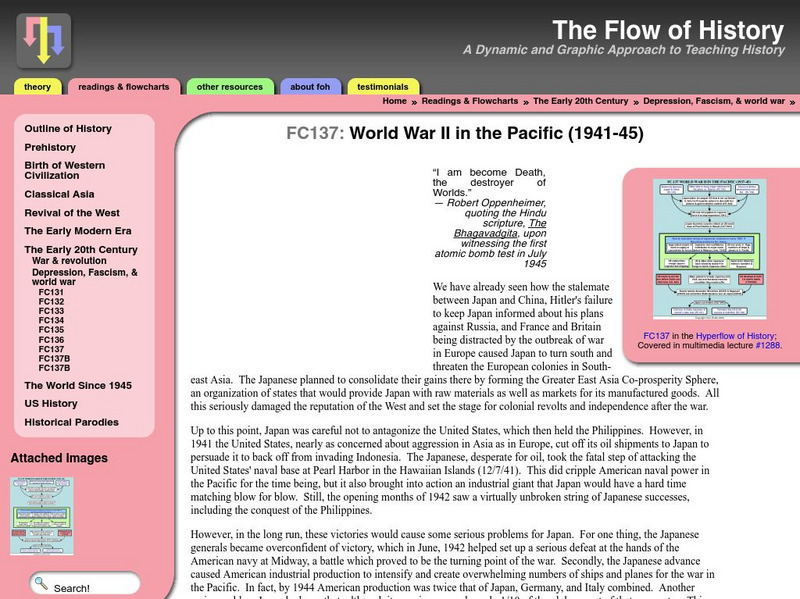
Flow of History: World War Two in the Pacific
The stages of World War Two in the Pacific is profiled. Through text and a colored graphic flowchart, one can easily follow the progression of hostility and battles in the Pacific. Useful for both students and educators.
PBS
Pbs Teachers: Secret Victories of the Kgb
Explore the role of espionage in wartime and investigate Soviet spy activities during the Cold War. Trace the history of the atomic bomb and explore Soviet activities in stealing nuclear secrets during the Manhattan Project.

BBC
Bbc Mundo: El Ano Magico De Einstein
A special feature on Einstein from the BBC, in Spanish. Follow Einstein's life, including his role in the development of the atomic bomb; learn about the impact and practical applications of his work; or watch a speech he gave in 1950...
Other
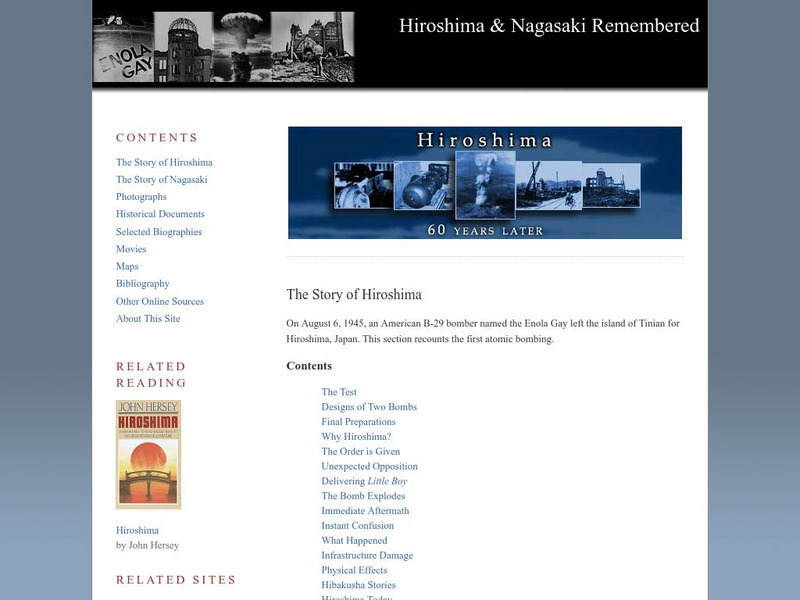
Hiroshima and Nagasaki Remembered
History, archival film footage, photographs, pictures, maps, and biographies of people connected to the bombings, and related documents and resources.
Other
Lewis and Clark University: Hiroshima Photographs
This is a collection of photographs showing several parts of Hiroshima after the bombing. Each picture shows the damage done and the destruction around each building still standing.
Other
Los Alamos National Laboratory
The official website of the Los Alamos National Laboratory. You will find the history of the laboratory as well as many of the key figures. There is also an interactive history of the Manhattan Project. Be sure to check out the photo...
Other
Kingwood Library: American Cultural History: 1940 1949
Take a walk through this part of American history surrounding World War II. Each section includes cultural history of the time, with links pertaining to art and architecture, books and literature, education, fads and fashion, historic...