Hi, what do you want to do?






Science Museum, London
Science Museum: Ada Lovelace
Some say that Ada Lovelace was the first programmer because she wrote instructions for a computing device designed by Charles Babbage. This site presents a brief history of Ada's life and the important role she played in the history of...
History of Computing Science
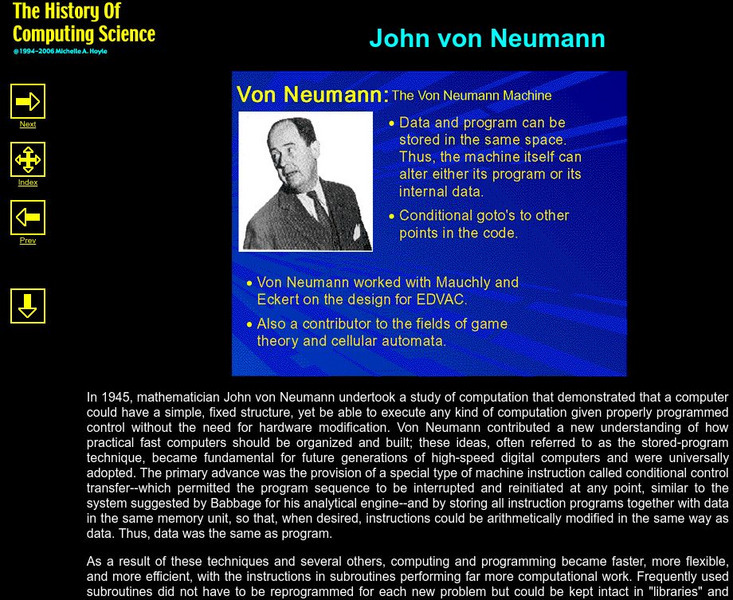
History of Computing Science: John Von Neumann
John von Neumann was a brilliant mathematician. His work impacted several fields of study. This lecture series provides a brief description of his life and contribution to computer science.
History of Computing Science
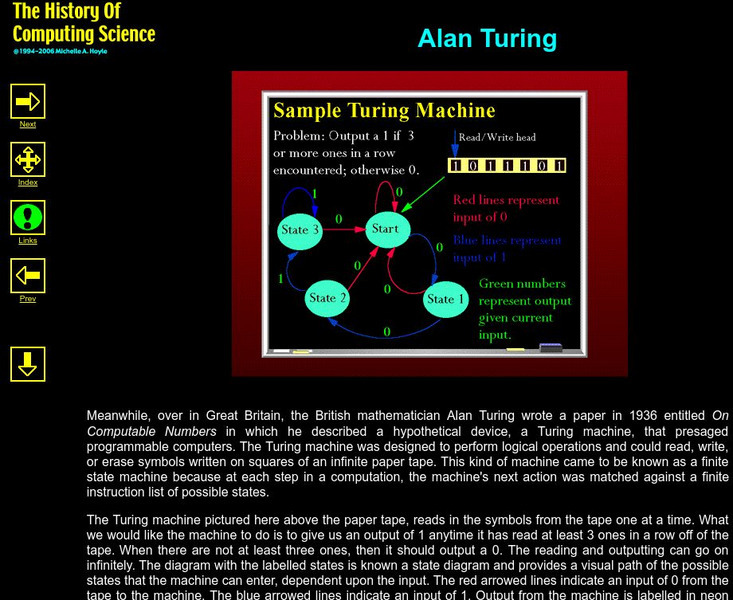
History of Computing Science: Alan Turing
Alan Turing is sometimes referred to as the father of modern computer science. This lecture series provides a brief description of his well-known contribution, the Turing Machine.
History of Computing Science
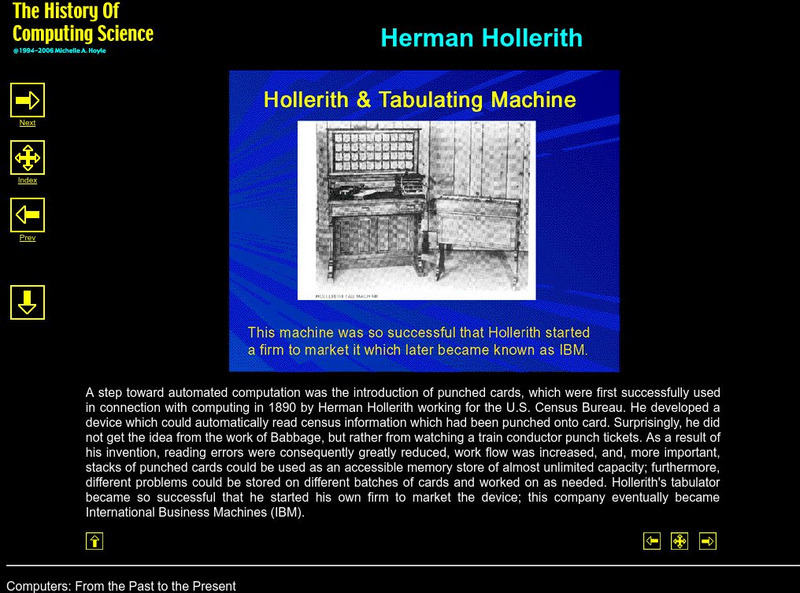
History of Computing Science: Herman Hollerith
Herman Hollerith holds a prominent place on the timeline of computer history. This lecture series presents a brief description of Hollerith's tabulating machine and the impact it eventually had on the computing world.

History of Computing Science
History of Computing Science: The First Mechanical Calculator
The Pascaline was the first mechanical adding machine and was developed by Blaise Pascal. This lecture series presents a brief description of the history of the machine and how it worked.

History of Computing Science
History of Computing Science: The Difference Engine
The difference engine was never built, but its design was an important step in the history of computing devices. This lecture series presents a brief description of this early mechanical computing device.

History of Computing Science
History of Computing Science: The Web
This History of Computing lecture series presents a simple and clear description of the World Wide Web.
Other
University of Delaware: Major Resource Kits
Major Resource Kits link academic majors to career alternatives by providing information on career paths, sample job titles, and a short bibliography of Career Resource Center materials available to students in a particular major....
History of Computing Science
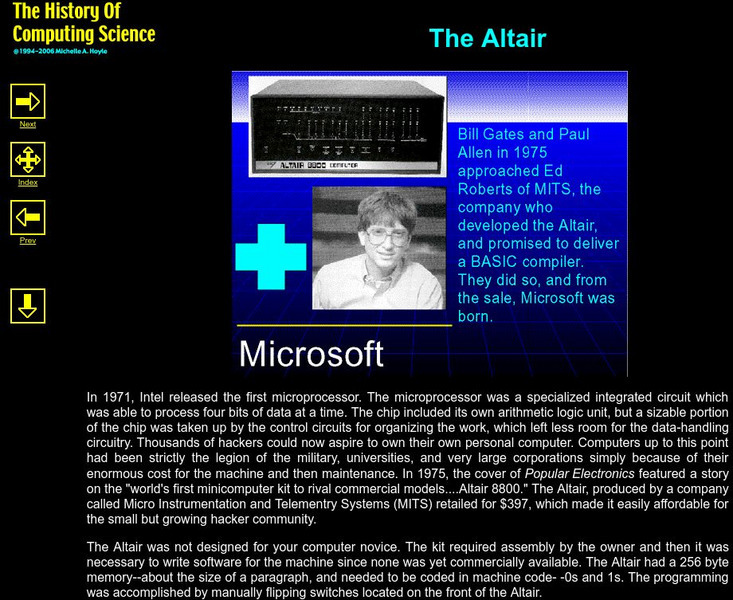
History of Computing Science: The Altair
The Altair 8800 was the first personal computer. This lecture series gives a brief description of the Altair 8800 and the impact it had on the computer industry.

History of Computing Science
History of Computing Science: Edvac
EDVAC (Electronic Discrete Variable Automatic Computer) was an early computer that was one of the first to use the binary number system to represent information. This lecture is a brief presentation of the EDVAC.
History of Computing Science
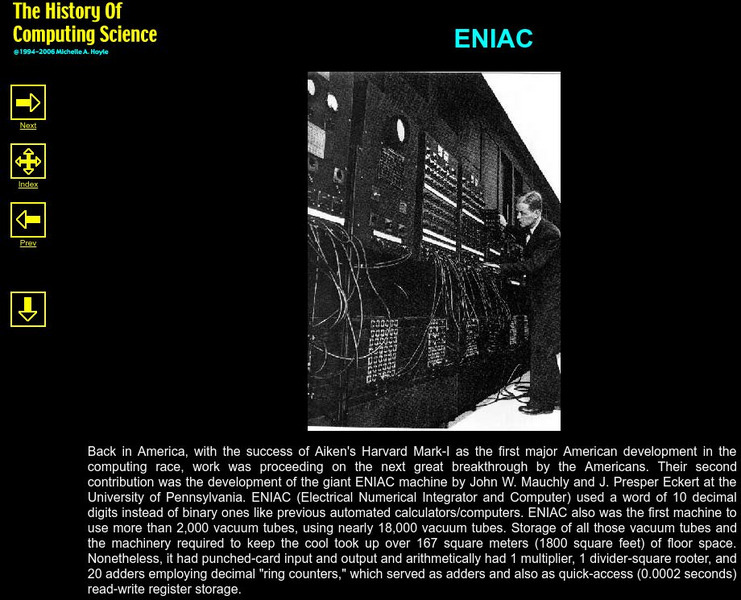
History of Computing Science: Eniac
The ENIAC (Electrical Numerical Integrator and Computer)was a large computer based on vacuum tubes and introduced in 1946. This lecture gives a brief presentation of the ENIAC.

History of Computing Science
History of Computing Science: Basic & Other Languages
There are many computer programming languages in use today. This lecture series presents a brief description of the progression of programming languages.
History of Computing Science
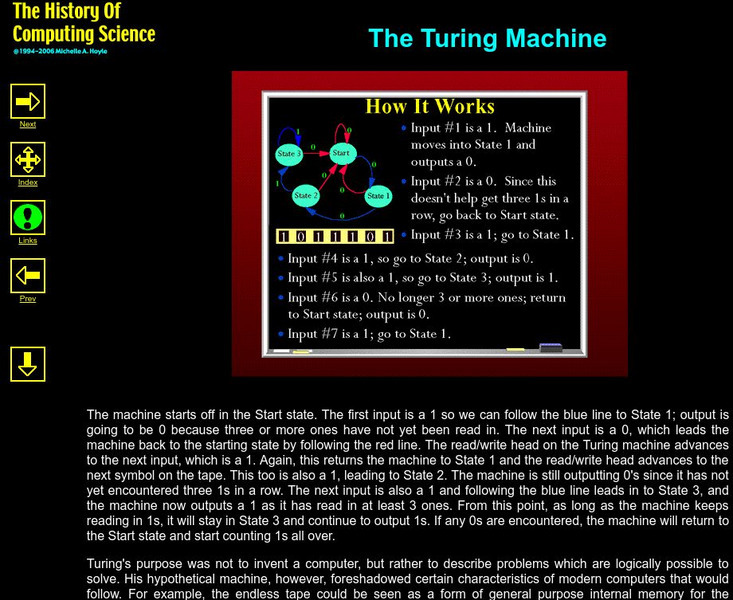
History of Computing Science: The Turing Machine
A Turing Machine is not an actual machine, but rather a symbolic system that can be used to represent any algorithm used to solve a problem. This lecture series gives a very brief description of the Turing Machine.
Science Buddies
Science Buddies: Can Gaming Help You Score Better in School?
There are a variety of educational computer games on the market in the areas of math, history, science, and language, as well as many simpler versions free on the Internet. This exercise asks that you make up a test based on the subject...
Other
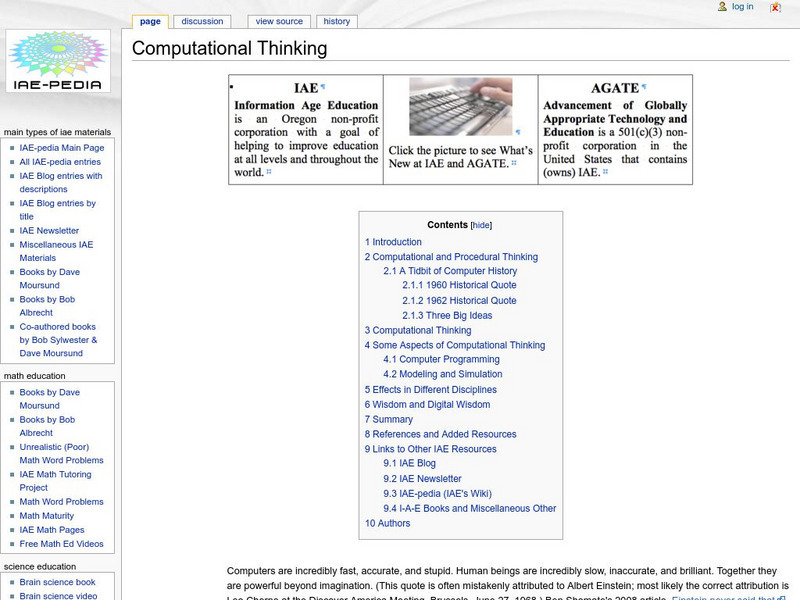
Iae Pedia: Computational Thinking
Find some facts behind computational thinking, learn the history of this problem solving method, and understand how it affects different disciplines.
Smithsonian Institution
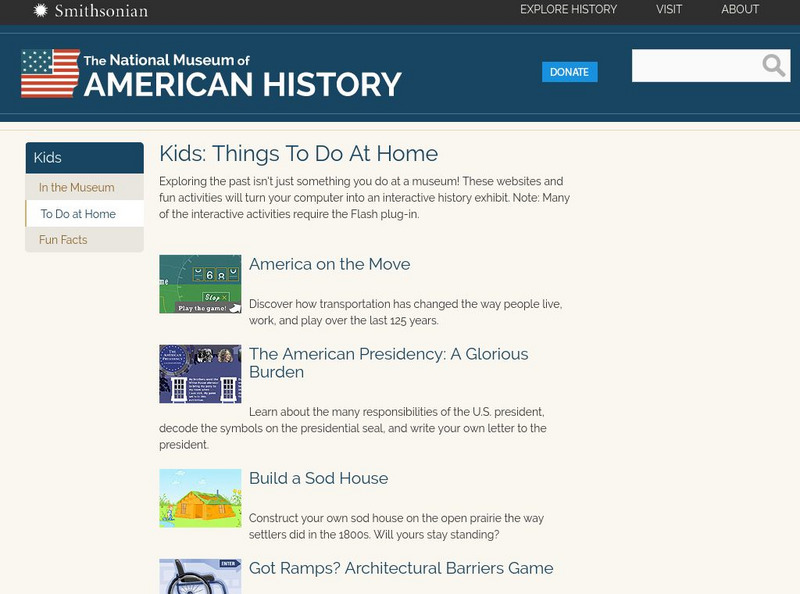
National Museum of American History: Things to Do at Home
Families can come together through games designed to make history something fun and integral to family life. Build a sod house like prairie settlers did in the 1800s. Go back in time to visit five families that lived in the same house...

National High Magnetic Field Laboratory
Magnet Academy: John Ambrose Fleming
John Ambrose Fleming was an electronics pioneer who invented the oscillation valve, or vacuum tube, a device that would help make radios, televisions, telephones and even early electronic computers possible. A brilliant innovator,...
Science Education Resource Center at Carleton College
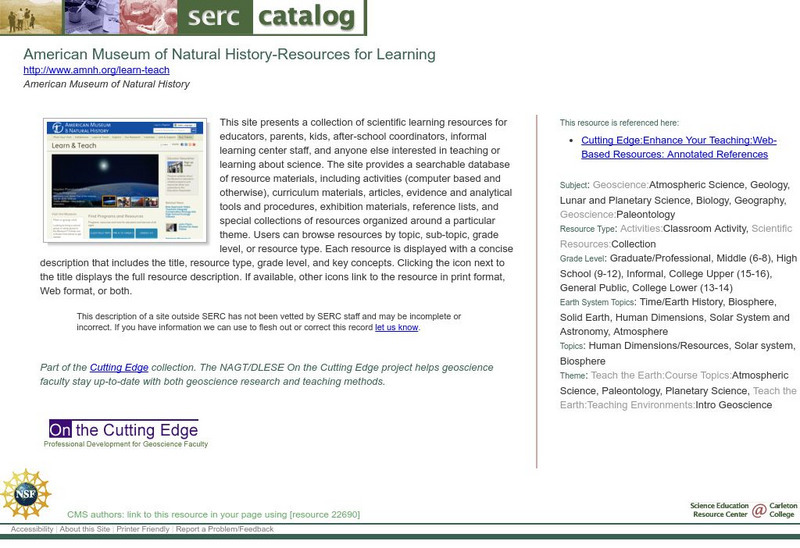
Serc: American Museum of Natural History Resources for Learning
This site presents a collection of scientific learning resources for educators, parents, kids, after-school coordinators, informal learning center staff, and anyone else interested in teaching or learning about science. The site provides...
Other
Rutgers Marine & Coastal Sciences: Cool Classroom
Students and teachers can explore the work of marine scientists and observe the ocean from their computers. Learn about Rutgers Coastal Ocean Observation Laboratory, discover why oceanography is important, and see what life is like in...
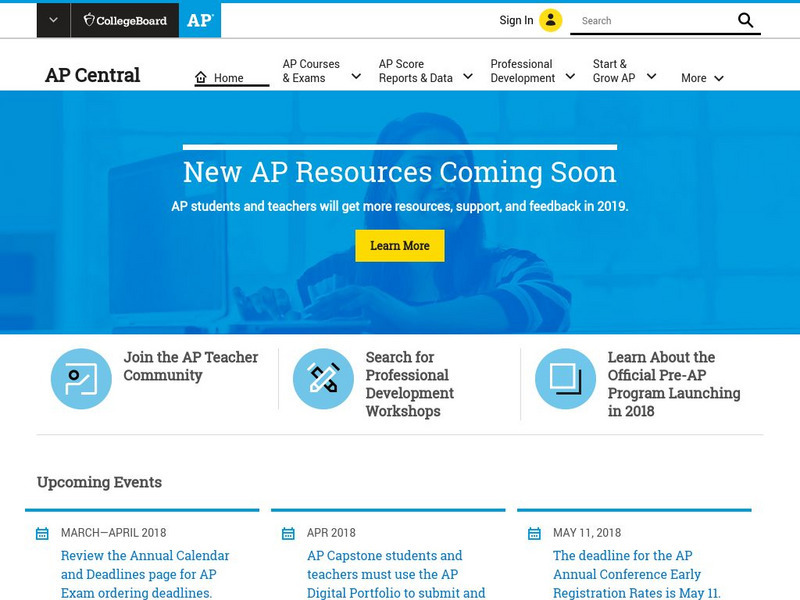
The College Board
College Board: Ap Central
This is the centralized site for information about all AP courses offered by College Board. It contains information for students and teachers about each of the AP courses (almost 40 in all), including a course description and relevant...
PBS
Pbs Learning Media: Technology Over Time
In this interactive activity adapted from A Science Odyssey, learn how technology in the home has changed through the years. Scroll through a timeline from 1900 to 2010 to explore technological innovations in the home (such as...
Curated OER
University of St. Andrews: John Von Neumann
The University of St. Andrews provides a biography on John von Neumann. Learn about his contributions to game theory and computer science.
Curated OER
University of St Andrews: Alonzo Church
Short biographical entry on Church's accomplishments in logic and significance for modern computer science.
Other
Musical Math
This site includes 14 activities which explore how math and music are related. Great exercise opportunity for any student to sharpen their math and musical skills.