Hi, what do you want to do?






Curated OER
National Library of Medicine: Nicholas Flamel
One of history’s most famous alchemists, Nicolas Flamel.
The Association of the British Pharmaceutical Industry
Abpi: Infectious Diseases: Timeline
An interactive timeline of important events in medical technology history. Click on an event to read more about a notable event or famous person who studied medicine. Includes a self-checking quiz at the end of the lesson.
Other
Horshoe Crabs and Human Use
A well-written review of the link between Horseshoe Crabs and humans through history. Includes timelines of milestone events.
Houghton Mifflin Harcourt
Harcourt: Biographies
A fantastic resource where you can find biographies of historical figures. You can search by the person's name or by topics, such as Presidents, United States Leaders, Scientists, Inventors, Humanitarians, Explorers and Pioneers,...
Science Museum, London
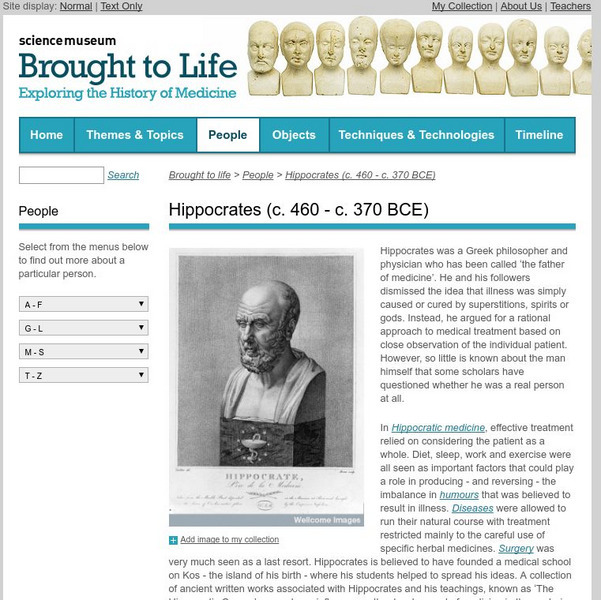
Science Museum: Brought to Life: Hippocrates (C. 460 C. 370 Bce)
A brief overview of Hippocrates and his ideas about effective medicine.
Other
Opthalmology in Ancient Rome
A short article on the treatment of eye diseases in ancient Rome. There were doctors who specialized in this practice.

University of Virginia
The Doctor in Roman Society
A short description on the status of Roman doctors. They were not regarded very highly since they cured so few people.
NASA
Nasa: Bibliography on Martian Exploration
This site from NASA provides a selected Annotated Bibliography on Martian Exploration presents classical Mars reading material from Percival Lowell and Alfred Russel Wallace from the turn of the last century, Werner von Braun and Willy...
Other
Discover Magazine
Discover Magazine brings you the world of science: the latest research news, enhanced versions of articles, and a full-text archive.
Curated OER
Bbc Radio 4: This Sceptered Isle: Church, Law and Medicine: Nicholas Culpeper
Artist's rendering of Nicholas Culpeper.
Curated OER
Arsenic Based Medicine, Wm. R. Warner & Co., About 1900
The Marsh Test, developed in 1832, was designed to detect poison in drinks. A short history of this test is provided along with photo of the test apparatus.
Curated OER
Arsenic Based Medicine, Wm. R. Warner & Co., About 1900
The Marsh Test, developed in 1832, was designed to detect poison in drinks. A short history of this test is provided along with photo of the test apparatus.
PBS
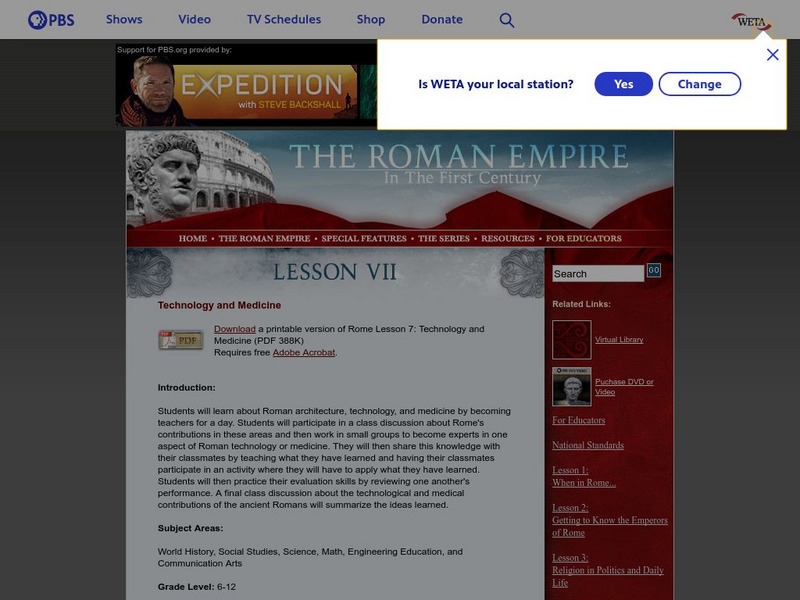
Pbs.org: The Roman Empire in the First Century
Students will learn about Roman architecture, technology, and medicine by becoming teachers for a day. Students will participate in a class discussion about Rome's contributions in these areas and then work in small groups to become...
British Library
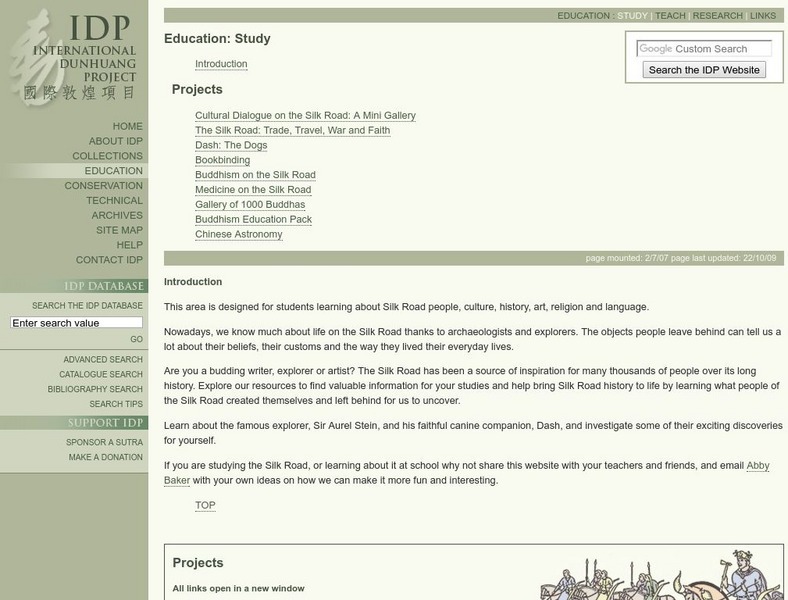
British Library: International Dunhuang Project
This area is designed for students learning about Silk Road people, culture, history, art, religion and language. Nowadays, we know much about life on the Silk Road thanks to archaeologists and explorers. The objects people leave behind...
Wikimedia
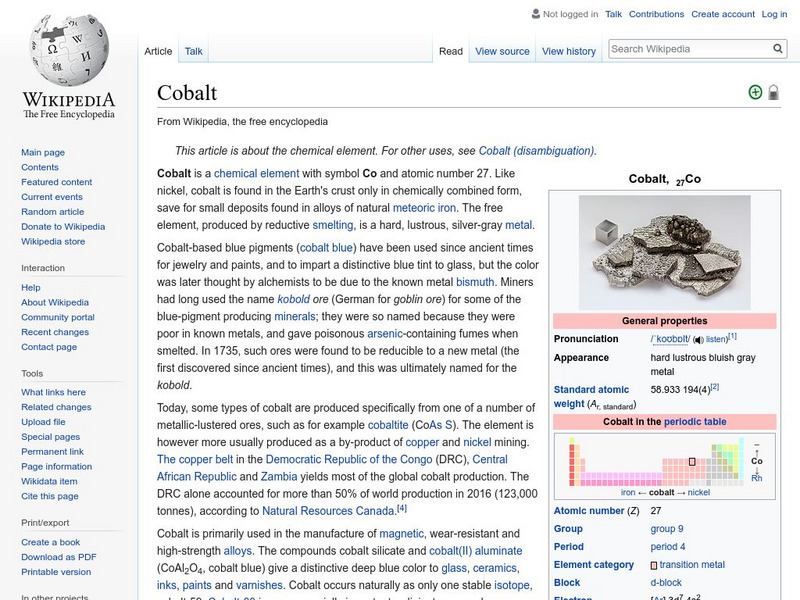
Wikipedia: Cobalt
This Wikipedia online encyclopedia site provides information on the element Cobalt (Co). Entry includes the characteristics, history, biological role, occurrence, compounds, isotopes, and more about Cobalt.
Houghton Mifflin Harcourt
Harcourt: Biographies
A fantastic resource where you can find biographies of historical figures. You can search by the person's name or by topics, such as Presidents, United States Leaders, Scientists, Inventors, Humanitarians, Explorers and Pioneers,...
Other
National Nuclear Science Week
Here's a site dedicated to National Nuclear Science Week, Jan. 23-27, 2012. Sponsored by the National Museum of Nuclear Science & History, this special week is focused on all parts of nuclear science. You can find activities, lesson...
PBS
Pbs Learning Media: Decolonizing the Map: Creating the Indigenous Mapping Collective
For many Indigenous communities, mapping plays a large role in reclaiming their lands. Mapping is not new to Indigenous peoples, in fact, some of the world's earliest maps can be seen in cave paintings or heard in the stories that have...
Canadian Museum of History
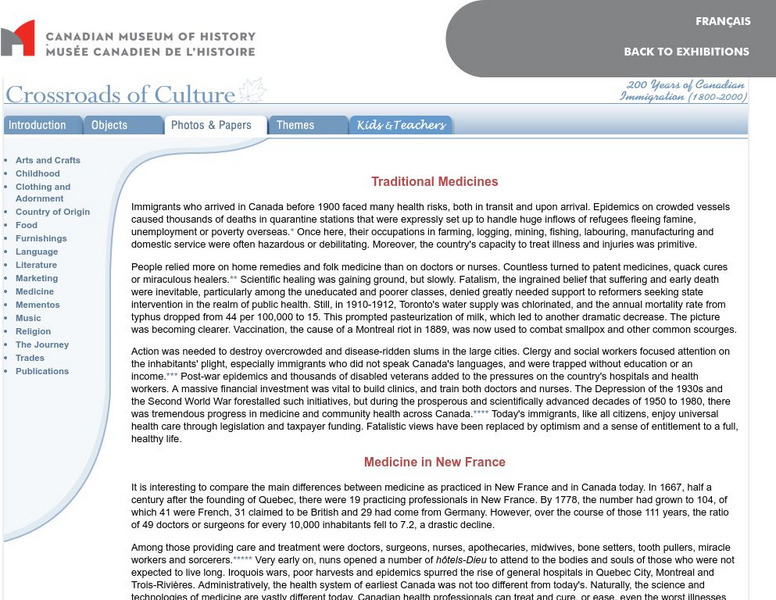
Cmc: Crossroads of Culture: Traditional Medicine of Immigrants
This article is only text, so should be used as a source for homework or projects, rather than as an interactive site. Great concise info for younger students who don't need extremely in depth text.

Ducksters
Ducksters: Aztec Empire for Kids: Writing and Technology
Kids learn about the writing and technology of the Aztec Empire including their calendar, agriculture, and medicine on this site.
Colonial Williamsburg Foundation
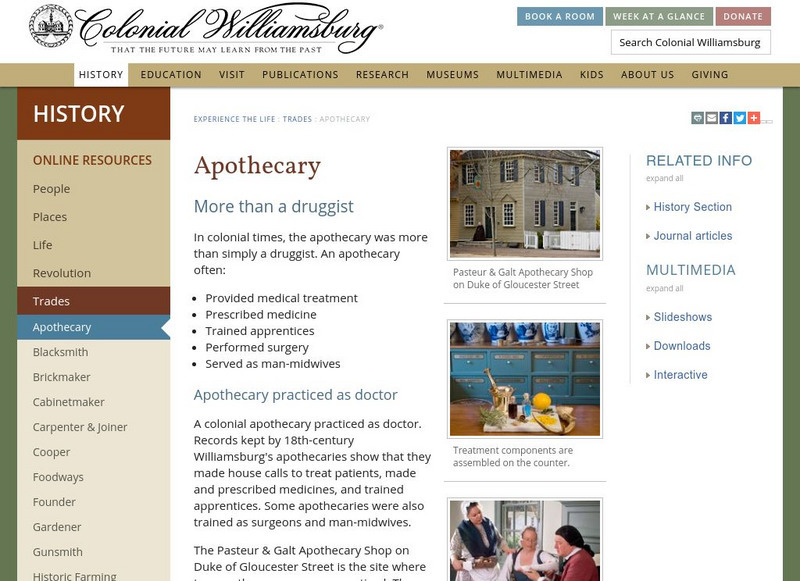
Colonial Williamsburg: Apothecary Shop
This site gives you an idea of what you might find in a colonial Apothecary Shop. Don't know what that is? Even better, go visit the shop of Pasteur & Galt.
National High Magnetic Field Laboratory
Magnet Academy: Willem Einthoven
Willem Einthoven invented a string galvanometer that lead to the electrocardiogram, which measures heart activity. For his discovery, Einthoven was awarded the Nobel Prize in Physiology or Medicine in 1924.
Smithsonian Institution
Smithsonian Learning Lab: American Indian Heritage Teaching Resources
Great online resource for finding teaching material to help students learn about American Indian Heritage Month. Features a wealth of information on Native American history, medicine, rituals, religion, art, and culture.

Ducksters
Ducksters: Native Americans for Kids: Religion
Kids learn about Native American Indian religion including the Great Spirit, rites of passage, and medicine men on this website.