Hi, what do you want to do?






Curated OER
Cloning
In this cloning activity, students will read a paragraph about how cloning has been a benefit to medicine and agriculture. Students will underline the main idea in the paragraph and write down three supporting details. Then students will...

Curated OER
Microbes: Louis Pasteur - A Microbe Discoverer
Learners study Louis Pasteur and the process of pasteurization in controlling microbes. In this pasteurization lesson, students discuss microorganisms and how they can affect health. They discuss Louis Pasteur and research his work by...

Curated OER
Investigate Science Using Crayfish
Young scientists discover the importance of scientific investigation by observing live crayfish. They carefully observe the patterns of crayfish in different environments. Then they discuss their conclusions and define what all living...

Curated OER
Seashell Homes
Pupils listen to a story about seashells. They discuss shelled animals. Learners describe the function of seashell. Pupils relate the function of a seashell to their own dwelling. They differentiate between shelled animals that make...

Curated OER
Characteristics of Snakes and Turtles
Students examine the characteristics of snakes and turtles and compare/contrast reptiles with mammals. They watch a video, answer discussion questions, complete information charts, conduct Internet research, and create a habitat diorama.

Curated OER
Investigating the Relationship of Mass to Volume
Third graders explore the relationship of mass to volume. In this physical science lesson, 3rd graders participate in an investigation with a several materials and measure the mass and volume using scientific tools. Students discuss and...

Curated OER
Elephants
In this elephants interactive worksheet, students read short passages of information about elephants before answering 10 multiple choice questions. They check their answers and start again if needed.

Curated OER
The Five Senses - Barefoot Walking Trip
Young scholars go outside and take a little barefoot walking trip. They talk to each other about their experiences on the trip to help them remember everything they can. They go on a walk for at least 15 minutes. Ask questions during the...

Curated OER
Butterfly Life Cycle
Second graders explore biology. In this life cycle lesson, 2nd graders act out the stages a caterpillar goes through to become a butterfly. They spend days prior to this lesson observing caterpillars they have collected and developing...
Unite for Literacy
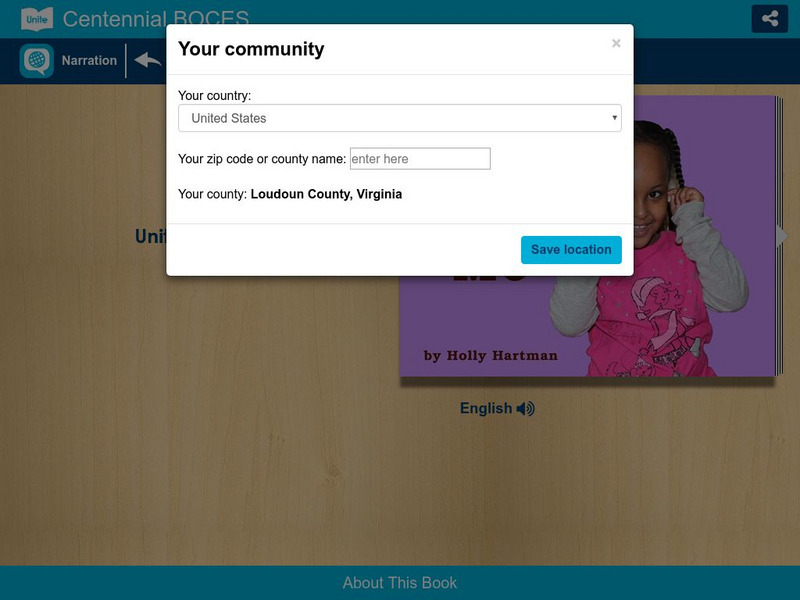
Unite for Literacy: Cboces: Migrant Education Program: Parts of Me
A beginning reader introducing the names of body parts. Includes audio narration in 22 additional languages with text in English.

Other
Get Body Smart: Human Anatomy and Physiology: System Quizzes
A collection of interactive, self-checking quizzes on human body systems. Covers muscular, skeletal, circulatory, nervous, and respiratory systems.
Other
Get Body Smart: Human Anatomy and Physiology: Human Body Systems
This source offers a great overview of the various systems of the human body. Each part is identified and described on this site by a veteran science professor. Many interactive quizzes are located here as well for students looking to...
OpenStax
Open Stax: Anatomy & Physiology: Anatomical Terminology
This site provides learners with information regarding anatomical terminology. It covers anatomical position, directional and regional terms used, body planes, body cavities and their organs, and the serous membranes.
Alabama Learning Exchange
Alex: "Head, Shoulders, Knees and Toes"
Students will have the opportunity to learn names of many parts of the human body and how they help the body function healthy. Students will put a skeleton together to create a full human body.This lesson plan was created as a result of...
![Educaplus: Partes Del Cuerpo [In Spanish] Activity](https://content.lessonplanet.com/knovation/original/120235-dad58cdcde6e636142c9ea42c579d131.jpg?1661803657 "Educaplus: Partes Del Cuerpo [In Spanish] Activity")
Educaplus (Jesús Peñas Cano)
Educaplus: Partes Del Cuerpo [In Spanish]
Use your logic to find the secret name of the different parts of the human body.
Enchanted Learning
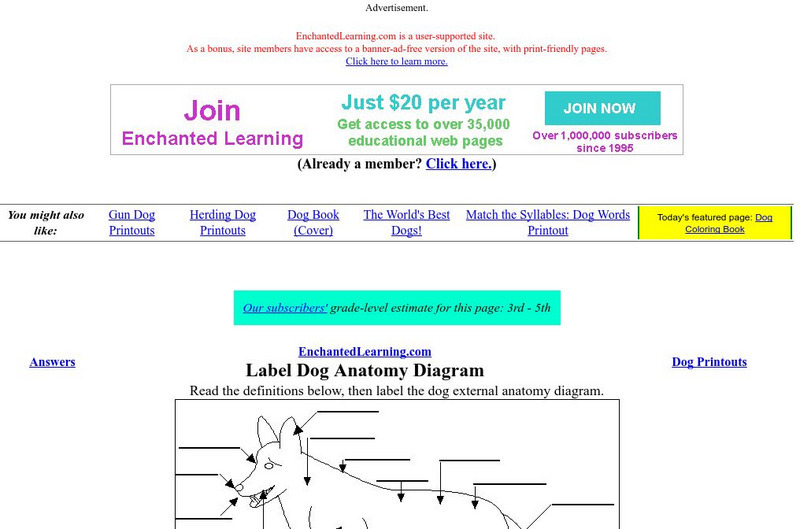
Enchanted Learning: Dog Anatomy
Just like humans, dogs have names for the different parts of their body. Anatomy terms associated with dogs are explained, and students are given a blank diagram of a dog to label.

Soft Schools
Soft Schools: Skin Cross Section Game
An interactive labeling exercise helps students practice naming parts of the largest organ in the human body, the skin.
Inner Body
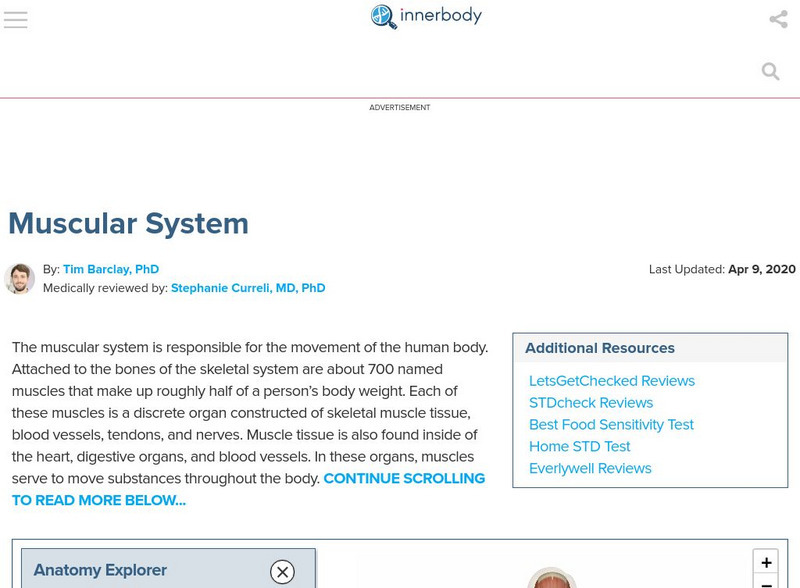
Innerbody: Muscular System
At this site, students can interact with the muscular system of the human body. Click on a region of the body or the name of a muscle, and zoom in to examine it. Outlines and magnifying glasses appear and when you click on them, you see...