Hi, what do you want to do?





Pamela Seed
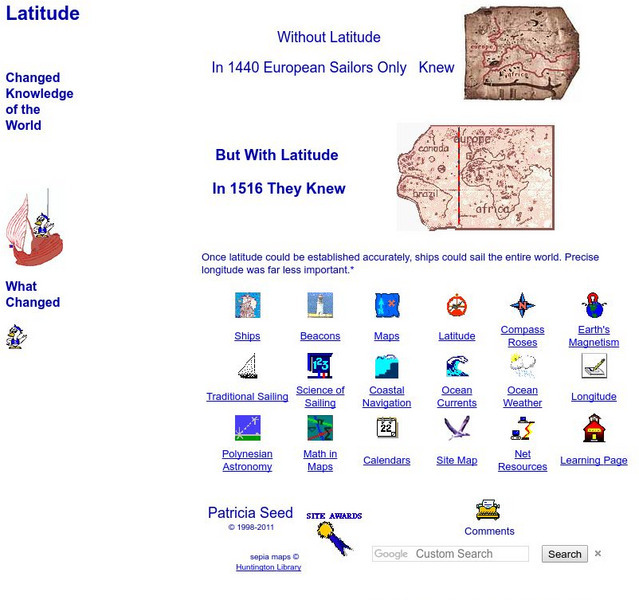
Rice: Latitude: The Art and Science of 15th Century Navigation
This is a great site to read about how navigation began in Europe and what tools were used. Make sure to read the segments on coastal navigation, maps, and ocean currents.

Other
The Trans Atlantic Slave Trade Database: Introductory Maps
Nine full-color, excellent quality maps depicting the Trans-Atlantic Slave trade, each with an interpretation and explanation of the voyages portrayed during the specific time period.

United Nations
Unesco: Interactive Map of the Cities Along the Silk Roads
A map showing the locations of cities that participated in trade along the Silk Roads, stretching from Italy to Japan. Each red dot is provides information about the location and links to a UNESCO page with more in-depth information...
Other
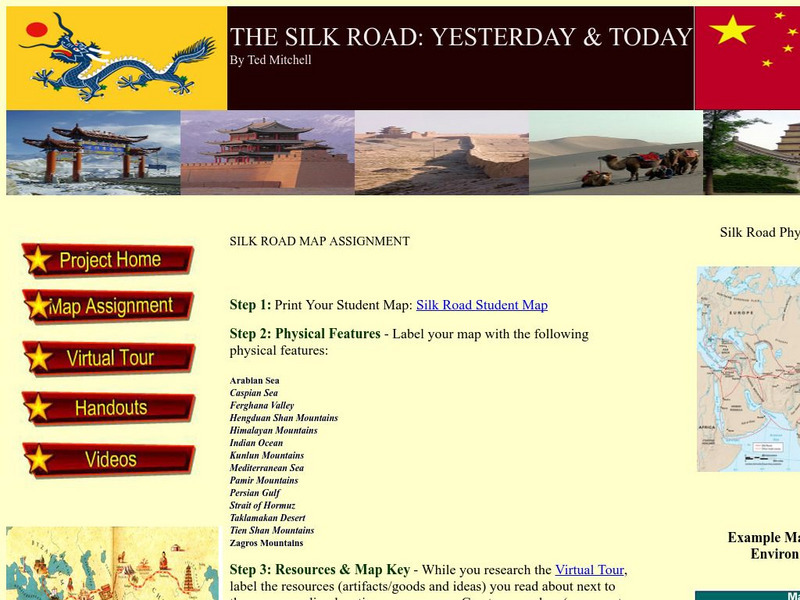
The Silk Road Yesterday and Today: Map Assignment
Assignment from virtual learning module in which students label a map of the Silk Road route with physical features, then take a virtual tour to research goods, artifacts and ideas traded along the way. Students also complete a graphic...

TED Talks
Ted: Ted Ed: How Farming Planted Seeds for the Internet
What does farming have to do with invention and innovation? Patricia Russac explores how farming was a major innovation leading to the civilization we know today. [3:59]
Utah Education Network
Uen: Utah Communities and the Railroad [Pdf]
Third graders will use the computer to briefly research six communities in Utah and evaluate key factors that determine how a community develops and explain changes within communities caused by human inventions. They will be able to...
Other
The Geography Site
The Geography Site offers many links for your geography research. Links offered are to physical geography, human geography, environment, online lessons, and much more.
Columbia University
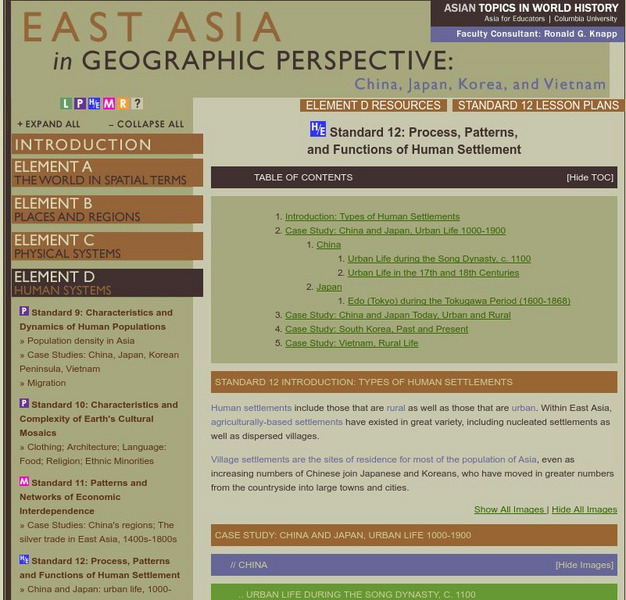
Columbia University: East Asia in Geographic Perspective
Process, Patterns, and Functions of Human Settlement

PBS
Pbs: American Experience: Mass Exodus From the Plains
This site is from PBS.org explaining the migration of people out of the plains during the dust bowl. Use this article to learn all about the reasons people left and where they went.
Other
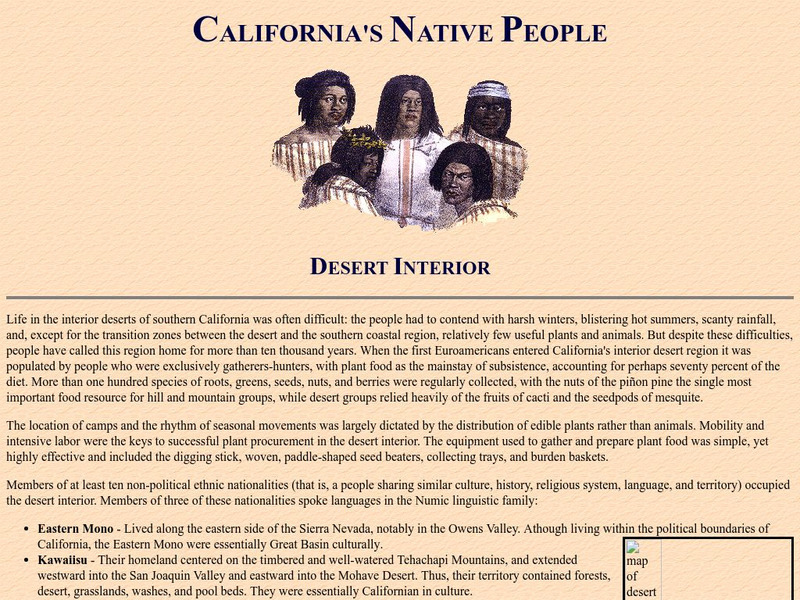
California's Native People, Desert Interior
This site has information about the settlement patterns of the Native People of California based on the location and availability of resources.
Annenberg Foundation
Annenberg Learner: Collapse: The Maya
Captivating site containing information about the collapse of civilizations. It explores the needs and characteristics of a healthy civilization that must be maintained in order to avoid collapse.
Princeton University
Princeton University: Maps of the Islamic Middle East
This site from the Princeton University includes a map collection from Roolvink's "Atlas of the Middle East" with a variety of historical maps on Islam.
Geographypods
Geographypods: Renaissance Day: Discovering the 'Lost World'
Gain knowledge of how exploration, mapping, and voyages of the Renaissance period shaped and changed our understanding of the modern world.
Smithsonian Institution
Smithsonian Education: Migrations in History
This extensive site chronicles the migration of people throughout history. The migration of people, objects, ideas, and cultures are explored and the impact of such moves discussed.

Oswego City School District
Regents Prep: Global History: Neolithic Revolution
The Neolithic Revolution created a shift in how people lived. Humans began settling down into villages and establishing methods of agriculture and domesticating animals to relinquish the need for nomadic lifestyles. Read a short summary...
University of Wisconsin
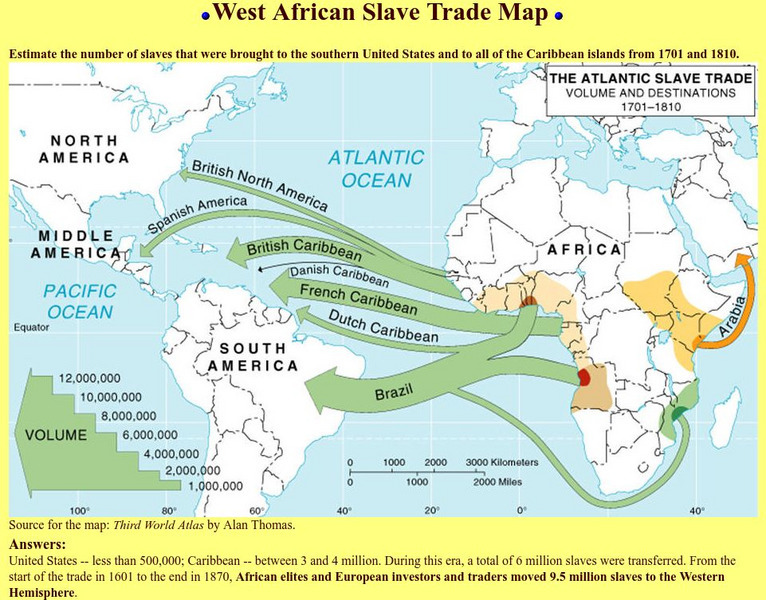
Uwec: West African Slave Trade Map
A map showing the numbers and routes used in the slave trade.

Minneapolis Institute of Arts
The Minneapolis Institute of Arts: Yuan Dynasty Map
This site from The Minneapolis Institute of Arts provides a full color map that details the expanse of the Yuan Dynasty from 1280 - 1365 A.D.
Curated OER
Insula Hyspana, 1494
Numerous visual images of artifacts from English settlements at Jamestown and at Plymouth, and from Spanish settlement in Hispaniola, and three original accounts of each of those early settlements that describe the possibilities and the...
Curated OER
Unesco: Tajikistan: Proto Urban Site of Sarazm
Sarazm, which means "where the land begins", is an archaeological site bearing testimony to the development of human settlements in Central Asia, from the 4th millennium BCE to the end of the 3rd millennium BCE. The ruins demonstrate the...
Curated OER
Unesco: Sweden: Agricultural Landscape of Southern Oland
The southern part of the island of Oland in the Baltic Sea is dominated by a vast limestone plateau. Human beings have lived here for some five thousand years and adapted their way of life to the physical constraints of the island. As a...
Curated OER
Unesco: China: Fujian Tulou
Fujian Tulou is a property of 46 buildings constructed between the 15th and 20th centuries over 120 km in south-west of Fujian province, inland from the Taiwan Strait. Set amongst rice, tea and tobacco fields the Tulou are earthen...

Khan Academy
Khan Academy: Us History: 1865 1898: The Homestead Act and the Exodusters
The Homestead Act of 1862 gave free land to Americans willing to improve it, regardless of race, sex, or nation of origin.
BBC
Bbc: Development and Health
This interactive website is a lesson for students in determining the factors that divide developed and developing countries. Major health issues of each are also included. Archived.
Discovery Education
Discovery Education: African American Population Shifts
After completing this mini-unit, students will understand some of the economic, educational, and lifestyle reasons why African Americans have moved from one place in the United States to another.
Other popular searches
- Geography Human Settlement
- Human Settlement Patterns
- Reasons for Human Settlement
- Early Human Settlement
- Human Settlement and Water
- Human Settlement in Canada