Hi, what do you want to do?





Other
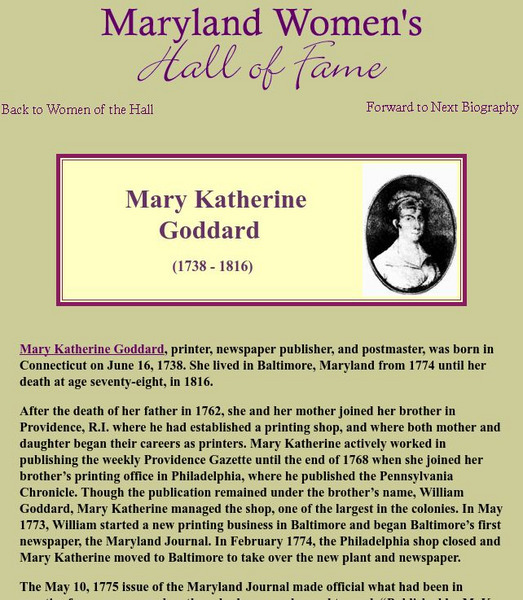
Maryland Women's Hall of Fame: Mary Katherine Goddard
A woman before her time, Mary Katherine Goddard became a printer, newspaper publisher, and postmaster in Baltimore, Maryland. From her press came the first printed copy of the Declaration of Independence. The website gives a brief...
Other
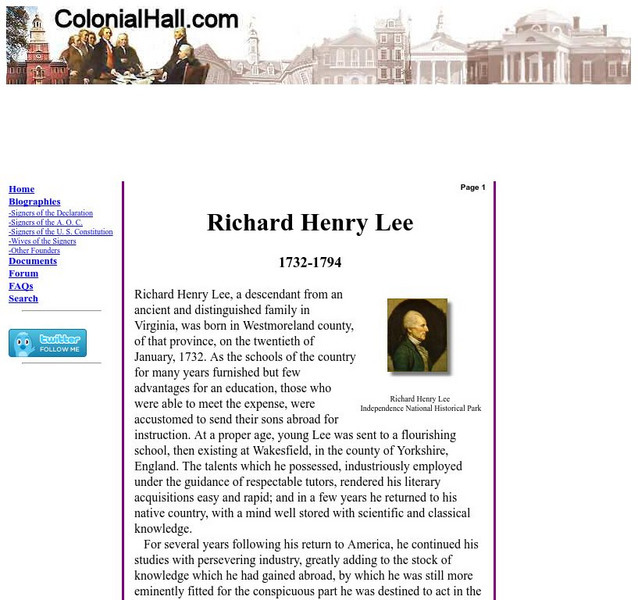
Colonial Hall: Richard Henry Lee
This site provides a detailed biography of Richard Henry Lee, including his role in the Virginia House of Burgesses, second Continental Congress, and American independence.
Other
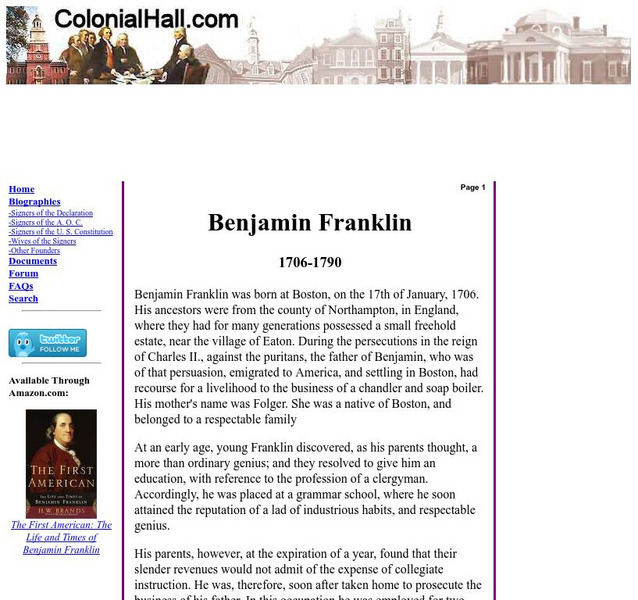
Colonial Hall: Benjamin Franklin, 1706 1790
An extensive biography of founding father and signer of the Declaration of Independence, Benjamin Franklin, transcribed from an 1829 publication, Lives of the Signers to the Declaration of Independence, by Rev. Charles A. Goodrich.

Other
Texas Ranger Hall of Fame and Museum: Timeline
A timeline of the history of the Texas Rangers beginning in 1821 with Mexico's Independence from Spain and covering the years up until the present day. The information can also be downloaded in PDF format.
Independence Hall Association
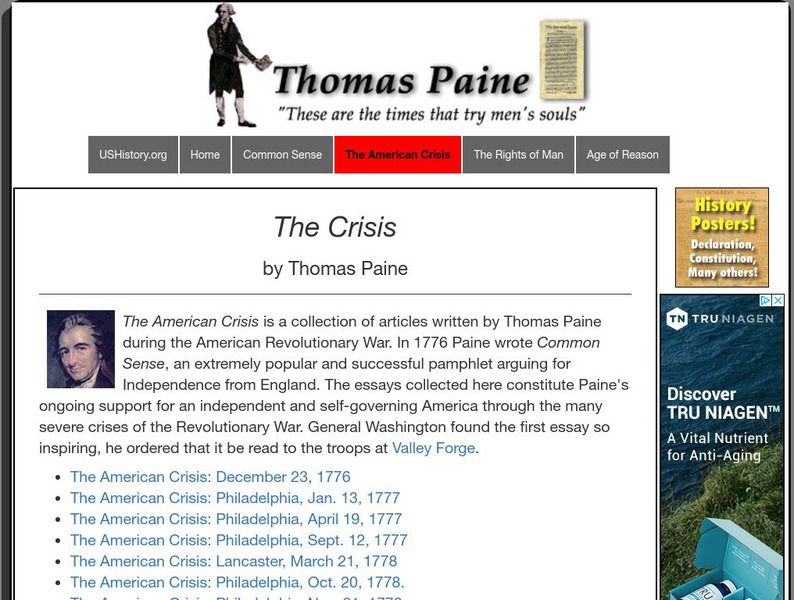
U.s. History: The Crisis by Thomas Paine
The original text of the collection of articles written by Thomas Paine during the American Revolution giving support to for an independent American.
Independence Hall Association
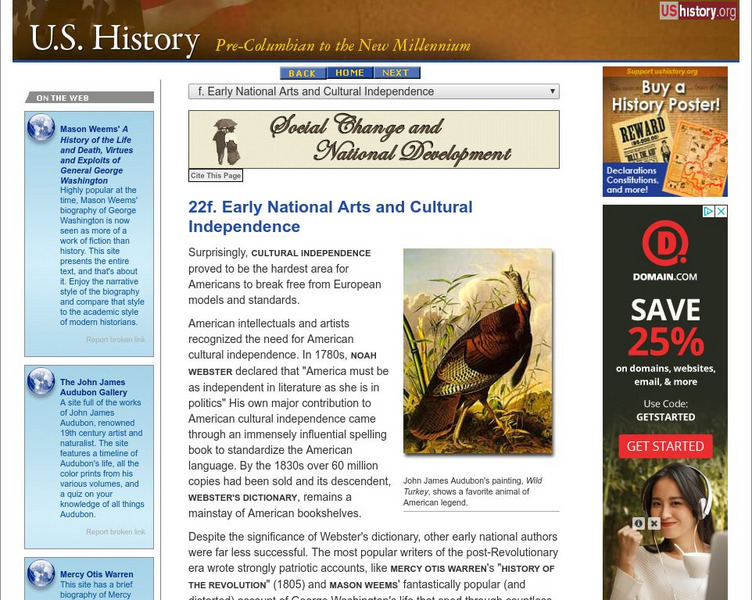
U.s. History: Early National Arts and Cultural Independence
Read about the national identity developed in the early 19th century in art and literature. See how both landscape paintings and literature emphasized wilderness themes.
Independence Hall Association
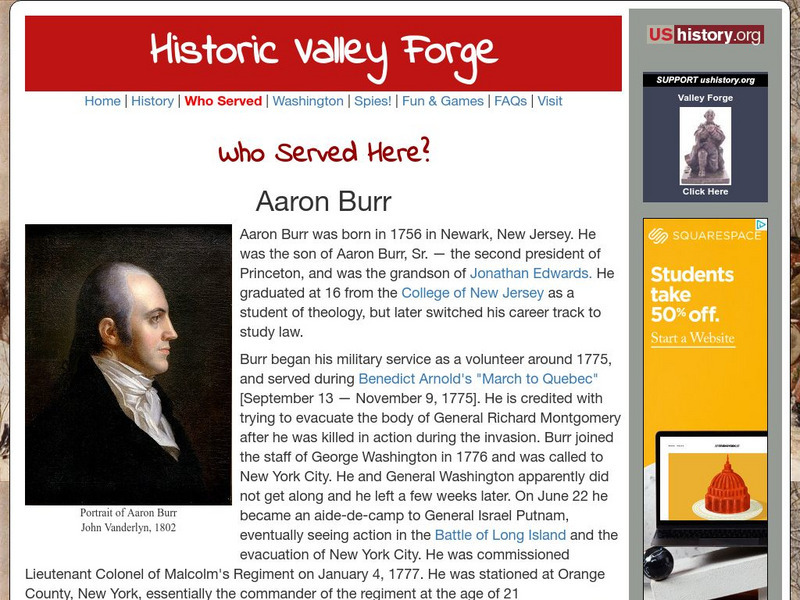
U.s. History: Historic Valley Forge: Who Served Here?: Aaron Burr
This brief biography of Aaron Burr from the Independence Hall Associaton focuses on his military career in the Revolutionary War as well as his political career and his duel with Alexander Hamilton.
Curated OER
Wikipedia: Natl Historic Landmarks in Wv: West Virginia Independence Hall
Site of 1861-1863 pro-Union government of Virginia.

Independence Hall Association
U.s. History: Corruption Runs Wild
Government in the Gilded Age was often corrupt, tainted with money from various groups. Read about the role of political machines in many city governments, in particular Tammany Hall in New York City.
Independence Hall Association
U.s. History: Making Rules
Follow the incremental process that the colonial leaders took over a ten-year period of time making new rules that would finally result in independence from Great Britain. See how many of them really didn't plan on independence, but that...
Independence Hall Association
U.s. History: When Does the Revolution End?
An interesting discussion of the precepts of the Declaration of Independence which claimed that all men were created equal, but still allowed slavery. See what the document had to say about people's rights and "the consent of the governed."
Independence Hall Association
U.s. History: Loyalists, Fence Sitters, and Patriots
Read about the war of propaganda the Patriots needed to wage in order to persuade the vast majority of Americans, who were at first ambivalent to the cause of independence, to support the ideals of the Revolutionary War.
Independence Hall Association
U.s. History: Second Continental Congress
The Second Continental Congress was the die cast into the river of Revolution. Read about the decisions made and the actions taken in preparation for declaring independence.
Independence Hall Association
U.s. History: E Pluribus Unum
The fact that the Second Continental Congress convened was evidence that the colonists had had enough from the British Parliament. Read about the ways the colonies finally began to work together and focus on a common plan, resulting in...
Independence Hall Association
U.s. History: Yorktown and the Treaty of Paris
Read about the siege of Yorktown and the inability of Cornwallis to be resupplied, resulting in his surrender of 8,000 British troops to General George Washington. The end of the Revolutionary War was finalized with the Treaty of Paris...
Independence Hall Association
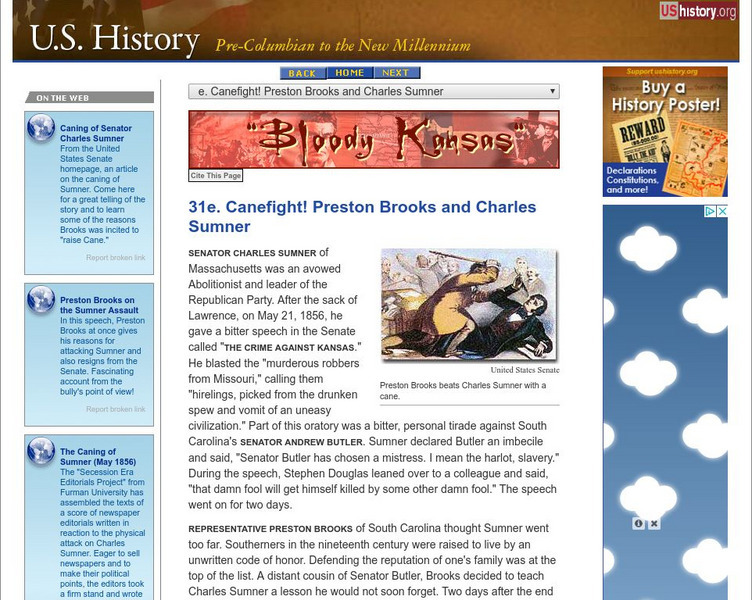
U.s. History: Canefight! Preston Brooks and Charles Sumner
Violence associated with strong feelings about slavery entered the halls of the Senate. Read what happened to Senator Charles Sumner after a two-day tirade he gave in the Senate after the sack of Lawrence, Kansas.
Independence Hall Association
U.s. History: Abolitionist Sentiment Grows
Abolitionists had been active since the end of the Revolutionary War, but in the 1830s they became more radical in their demands to end slavery. See what their solutions were, and read about how abolitionist views were thwarted in the...
Independence Hall Association
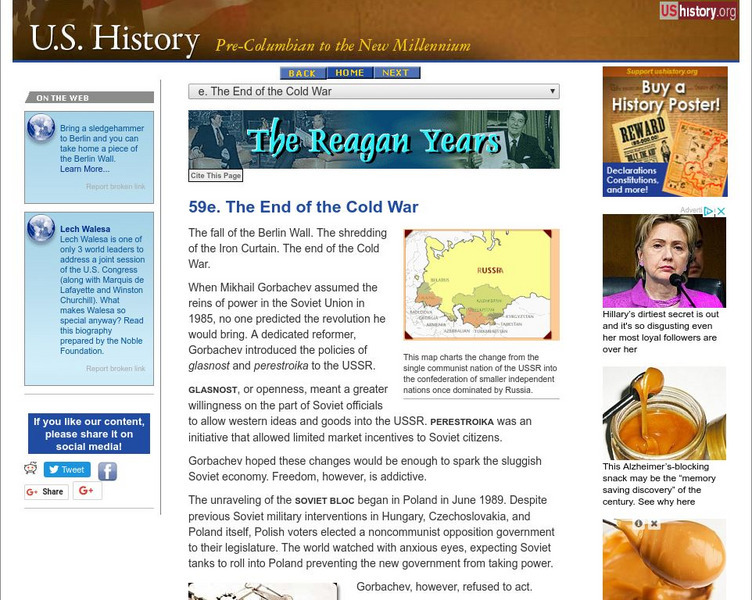
U.s. History: The End of the Cold War
Read about the surprising and swift collapse of the Soviet Union and its satellite countries beginning with Poland in 1989. Watch a map which shows the change from a single country, USSR, into many independent countries, and find out...
Independence Hall Association
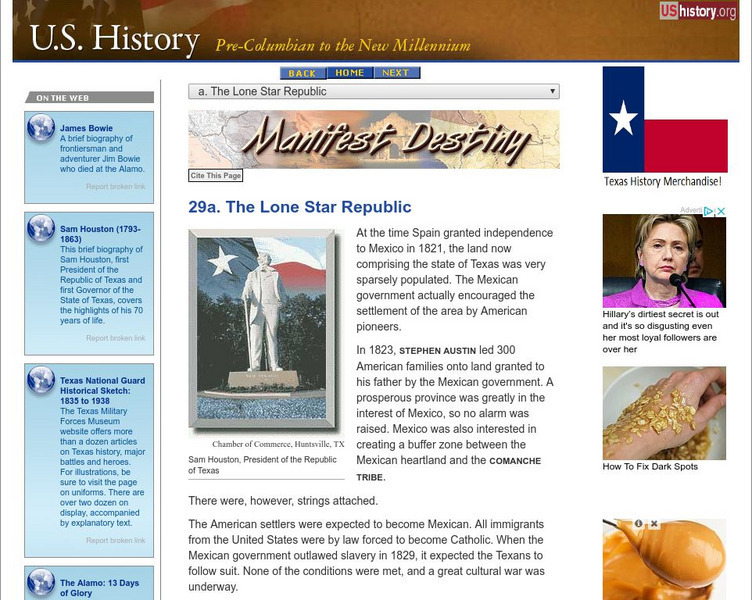
U.s. History: The Lone Star Republic
Why did Mexico encourage settlement of Americans in Texas? Why did the Americans chafe under Mexican rule? Find out how this led to the Texas Revolution and the declaration of Texas as an independent country.
Independence Hall Association
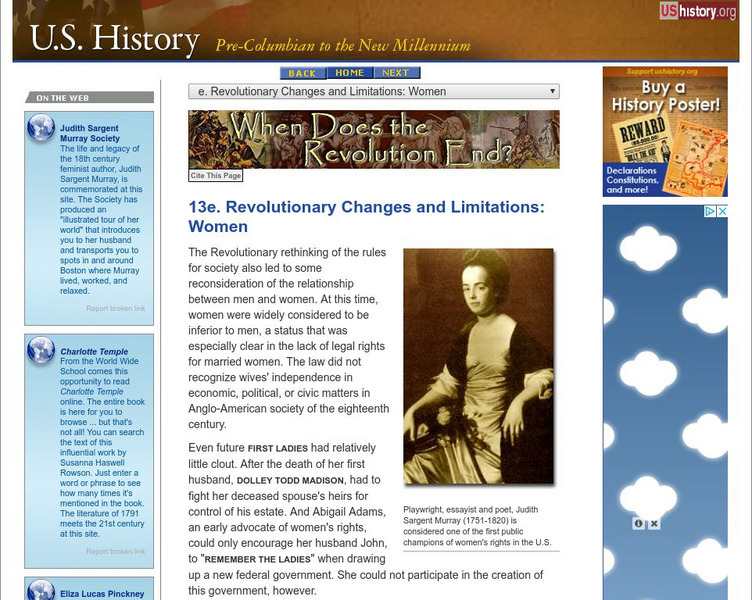
U.s. History: Revolutionary Changes and Limitations: Women
Often the ideal and reality do not conincide for quite some time. That's true of the ideal of true equality between the sexes after the War for Independence. See why the end of the war did not bring indepence for married women, and why...

Independence Hall Association
U.s. History: Revolutionary Changes and Limitations: Slavery
See how the conflicting ideas of land ownership and person ownership flew in the face of the principles of the Declaration of Independence and the ideals of the Revolutionary War.
Other
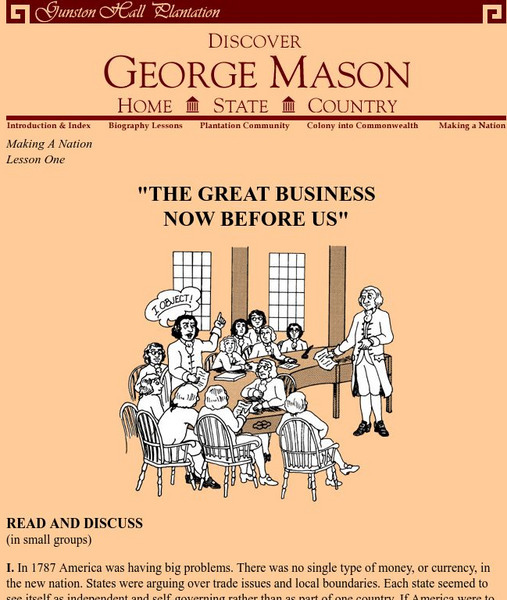
Gunston Hall Plantation: "The Great Business Now Before Us"
In 1787, America was having big problems. There was no single type of money, or currency, in the new nation. States were arguing over trade issues and local boundaries. Each state seemed to see itself as independent and self-governing...
Independence Hall Association
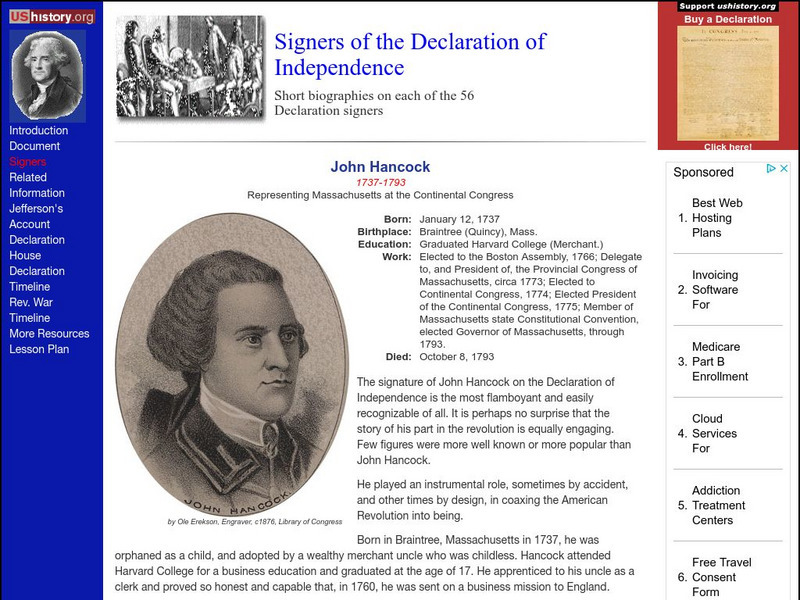
U.s. History: Signers of the Declaration of Independence: John Hancock 1737 1793
A biographical entry for John Hancock. Although he seems to be known only for his "flamboyant signature," his dedication to the American Revolution was extremely important.

Independence Hall Association
U.s. History: Societal Impacts of the American Revolution
A look at how the ideals of the American Revolution shaped the new American Republic. Many ideals were not implemented immediately but the seed had been planted.