
Curated OER
Farming the Southern Colonies
Seventh graders investigate the basis for farming choices in the early colonies by using group research and discussion. Each group researches a topic that they write about and present to the rest of the class.

Curated OER
Slavery in the United States
Students investigate the personal accounts of slaves in the United States. They participate in various activities according to grade level to examine the role of slavery in the South.

Curated OER
Slavery in the Antebellum South
Students discuss Stephen Foster's depiction of slavery. Using the internet, they discover what the life of a slave was really like in the antebellum South. As a class, they discuss contemporary arguments for and against slavery.

Curated OER
Kensington Mansion: Plantation, Sharecroppers, Tenants
Eleventh graders investigate the significance of the Kensington Mansion. In this South Carolina history lesson, 11th graders take field trips to the mansion and research primary and secondary sources about plantations, sharecropping, and...

K12 Reader
Indentured Servants
As a reading comprehension exercise, kids read an article about indentured servants and then respond to a series of questions citing evidence from the article to support their responses.
University of Groningen
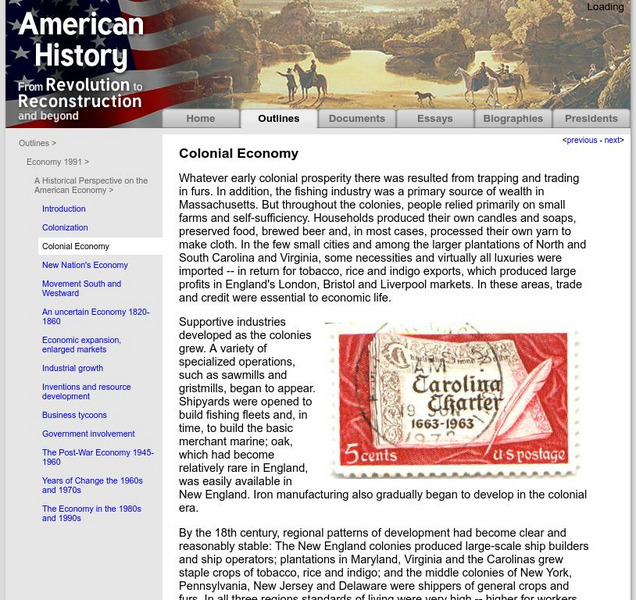
American History: Outlines: Colonial Economy
Whatever early colonial prosperity there was resulted from trapping and trading in furs. In addition, the fishing industry was a primary source of wealth in Massachusetts. But throughout the colonies, people relied primarily on small...

Georgia Humanities Council and the University of Georgia Press.
New Georgia Encyclopedia: History and Archaeology: Indigo
Discussion of how production of the blue dye, indigo, helped boost the economy of Georgia and South Carolina in the seventeenth and eighteenth century until the Revolutionary War when England stopped buying it and production collapsed.