Hi, what do you want to do?






Better Lesson
Better Lesson: Visual Representations in Informational Text
Students will look at examples of illustrations and diagrams in informational texts and discuss how each one helps enhance the text. Students gain the knowledge that sometimes a picture is worth a thousand words because a complex idea...
EL Education
El Education: Learning to Read Informational Texts: Building Background
In this comprehensive unit, students launch their learning about birds by using informational texts. As students read these texts, they build background knowledge and develop their skills as readers of informational texts. Included are...
Better Lesson
Better Lesson: Points of Informational Text Main Idea and Details
This lesson uses the book Explorers of North America - A True Book by Brendan January to teach students how to identify the main topic of a multi-paragraph informational text and specific paragraphs within the text. Students are guided...
Read Works
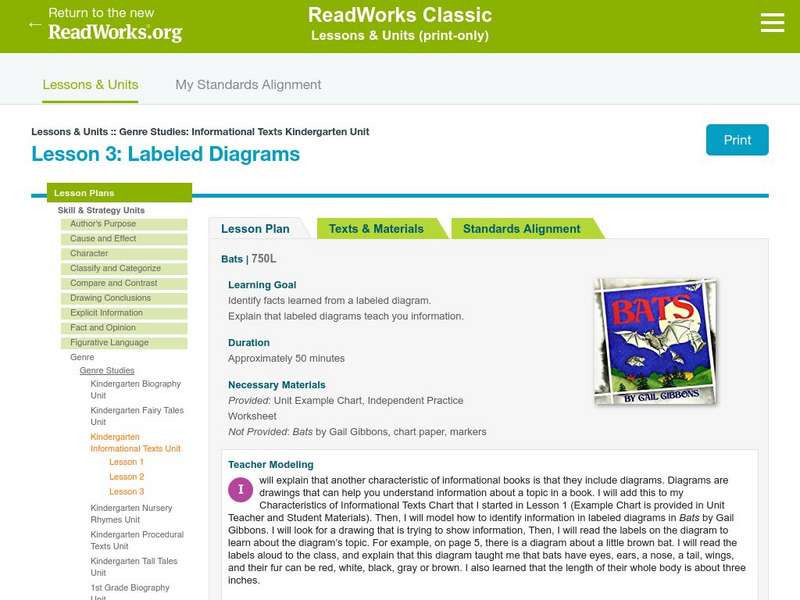
Read Works: Genre Studies: Informational Text Kindergarten Unit: Labeled Diagrams
[Free Registration/Login Required] Lesson uses Bats by Gail Gibbons to teach students how to identify facts learned from labeled diagrams within an informational text. Ideas for direct teaching, guided practice, and independent practice...

Other
Study.com: Using Precise Language & Vocabulary in Informative Texts
This lesson focuses on using precise language in informative texts. It defines precise text and discusses how to use precise language. W.9-10.2d lang/voc, W.11-12.2d Lang/Fig/Voc
Better Lesson
Better Lesson: Text Feature Diagrams
At the end of this lesson, learners will be able to identify and create diagrams associated with informational text. Included is a link to an eSpark video on diagrams, rules for group work, multiple examples of diagrams, and a...

ReadWriteThink
Read Write Think: Searching Informational Texts
Online lesson allows elementary students to use prior knowledge, make predictions, and perform research on the Internet. Labeled "The Frog Beyond the Fairy Tale Character," lesson challenges students to examine print and online texts...
ReadWriteThink
Read Write Think: Researching Information: Comparing Electronic and Print Texts
This lesson allows young scholars to compare and contrast print text structure with that of an online site. Students work together and use worksheets in comprehending the informational text. CCSS.ELA-Literacy.WHST.6-8.7 Conduct short...
Better Lesson
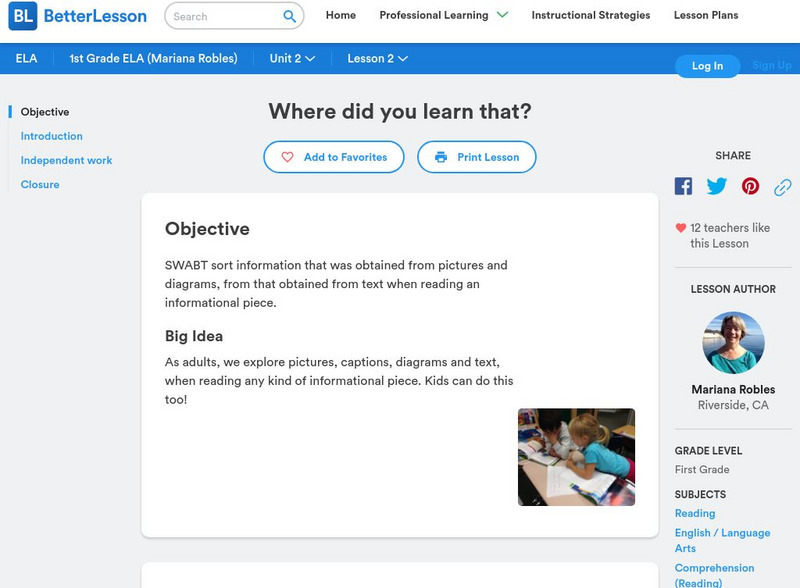
Better Lesson: Where Did You Learn That?
As adults, we explore pictures, captions, diagrams and text, when reading any kind of informational piece. Kids can do this too! In this lesson, students will sort information that was obtained from pictures and diagrams, from that...
Better Lesson
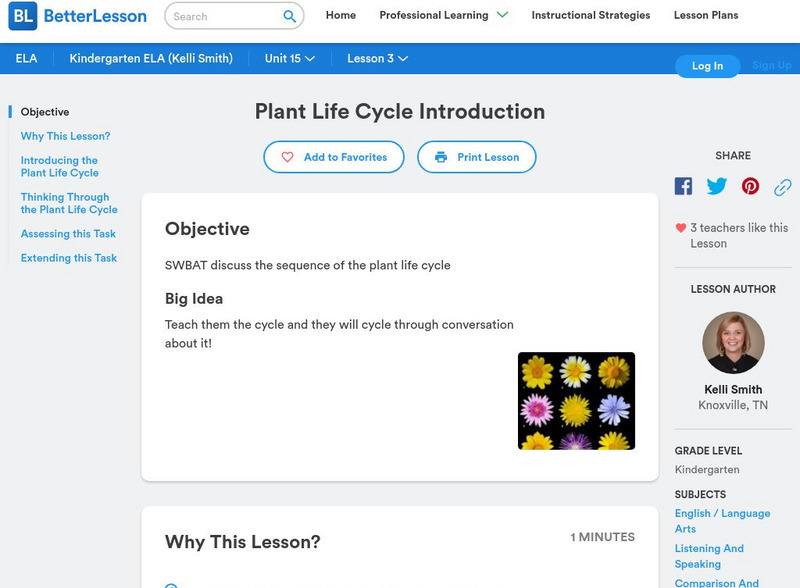
Better Lesson: Plant Life Cycle Introduction
Sequencing is an important skill for kindergarten learners. This instructional activity uses nonfiction texts to allow students to make a real-life connection to the skill of sequencing and learn about the plant cycle at the same time!...
Other
Sadlier School: Comparing and Contrasting Firsthand & Secondhand Texts
This unit uses first- and second-hand accounts to explore the life of Ruby Bridges and revolves around the book "Through My Eyes" by Ruby Bridges. This detailed lesson includes a full literacy unit, tips for small group and independent...
Better Lesson
Better Lesson: Identifying the Difference Between Informational and Literary Text
Learners will learn the difference between books that tell stories and books that give information. Multiple videos of different level reading groups engaged in this lesson, along with a printable activity sheet are included.
Better Lesson
Better Lesson: Writing a Topic & Concluding Paragraph for the Essay
This instructional activity is a final step towards supporting students to practice writing an informative/explanatory paragraph conveying complex ideas and presenting information clearly and accurately. Second-grade students can usually...
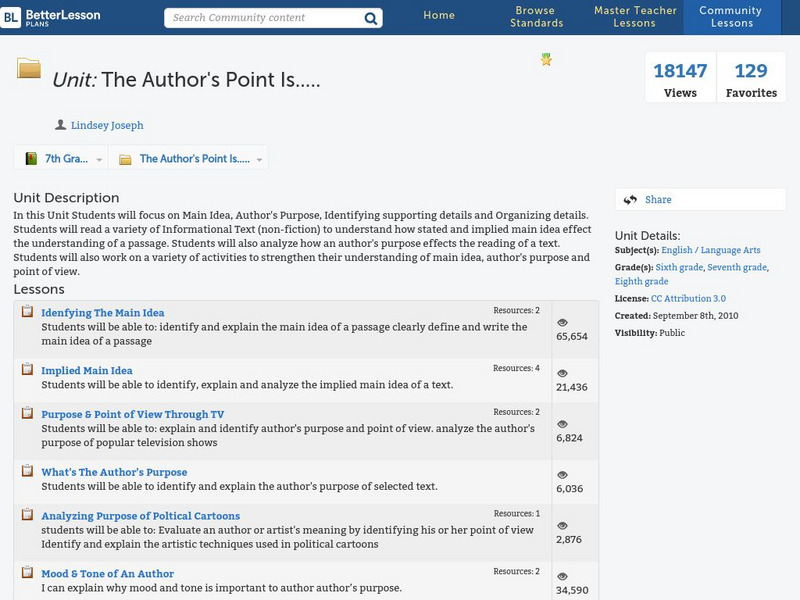
Better Lesson
Better Lesson: Unit: The Author's Point Is
Young scholars will focus on Main Idea, Author's Purpose, Identifying supporting details and Organizing details. Students will read a variety of Informational Text (non-fiction) to understand how stated and implied main idea effect the...
ReadWriteThink
Read Write Think: Creating Magazine Covers to Summarize Texts
In this lesson, students will examine the ways in which a magazine cover's headlines and graphics express the main ideas of its articles. They will then use an interactive tool to create covers that summarize chapters of informational...
CPALMS
Cpalms: Giraffes and Zebras Oh My!
[Free Registration/Login Required] For this lesson plan, students will be able to ask and answer questions about key details in a text. Additionally, students will also be able to identify, compare, and contrast characteristics between...
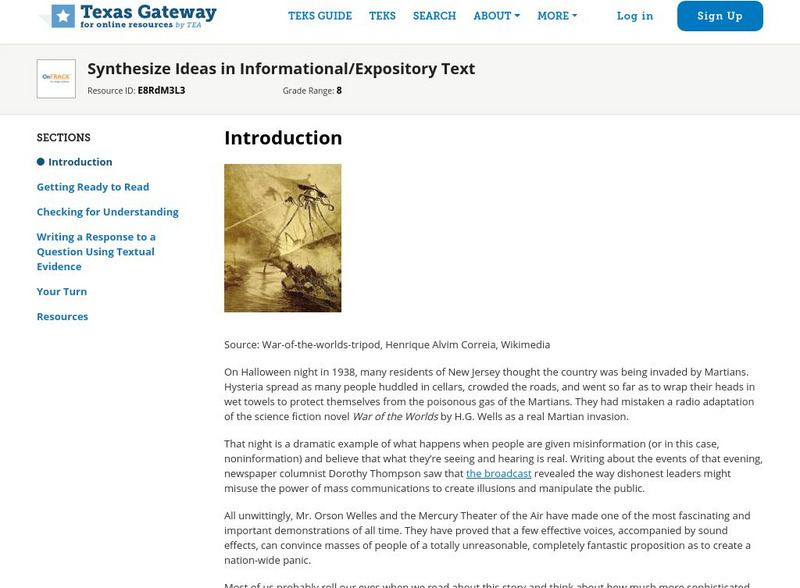
Texas Education Agency
Texas Gateway: Synthesize Ideas in Informational/expository Text
[Accessible by TX Educators. Free Registration/Login Required] In this lesson, you will expand on your ability to read texts, synthesize them, and make choices based on the information you read. Finally, you will learn how to use textual...
Better Lesson
Better Lesson: A "How To" Lesson for the Gingerbread Loose in the School
Learning to follow directions is an essential skill needed for success in school as well as in life. Through participation in this lesson plan, kindergartners will learn the importance of following directions in a specified sequence....

ReadWriteThink
Read Write Think: Building Word Knowledge Through Informational Websites
A lesson plan through which young scholars identify, understand and work with important vocabulary words found in an online article on biodiversity. Based on the "Ten Important Words Plus" strategy that teachers can employ as part of...
Read Works
Readworks: Read Aloud Lesson: Stellaluna
Compare Stellaluna's experience of living like a bird with her experience of living like a bat. Included in this lesson are a detailed lesson plan, a graphic organizer, and a student worksheet.
Better Lesson
Better Lesson: There Is Something in Common: Finding Common Themes
Students will synthesize information from multiple historical fiction books to find common themes and support them with evidence from the text. Working with a partner who has read a different book, they will share their theme from their...
Utah Education Network
Uen: Cloud, Rain, and Fog
During these three days of lessons, 2nd graders will learn about weather from the nonfiction text by asking questions, and focusing on the text features of the book.
Better Lesson
Better Lesson: W.3.2: Write Informative/explanatory Texts to Examine a Topic
Links to 56 lessons and activities that build student skills in standard W.3.2: Write informative/explanatory texts to examine a topic and convey ideas and information clearly.

ReadWriteThink
Read Write Think: Expository Escapade: Detective's Handbook
Working on higher-level thinking skills with your readers is made easier with this lesson. You will have your young scholars connect with and analyze a mystery story at their grade-appropriate level. Lesson plan, printable worksheets,...