Hi, what do you want to do?





TeachEngineering
Teach Engineering: Hidden in Plain Sight
Steganography is the science and art of hiding messages in plain sight so only the sender and intended recipient know the existence of a message. Steganography can be characterized as security through obscurity. Through this lesson,...
TeachEngineering
Teach Engineering: Simple Machines
Through a five-lesson series with five hands-on activities, students are introduced to six simple machines - inclined plane, wedge, screw, lever, pulley, wheel-and-axle - as well as compound machines, which are combinations of two or...
TeachEngineering
Teach Engineering: Power Your House With Wind
Students learn how engineers harness the energy of the wind to produce power by following the engineering design process as they prototype two types of wind turbines and test to see which works best. Students also learn how engineers...
TeachEngineering
Teach Engineering: Seismic Waves: How Earthquakes Move the Earth
Young scholars learn about the types of seismic waves produced by earthquakes and how they move the Earth. The dangers of earthquakes are presented as well as the necessity for engineers to design structures for earthquake-prone areas...
TeachEngineering
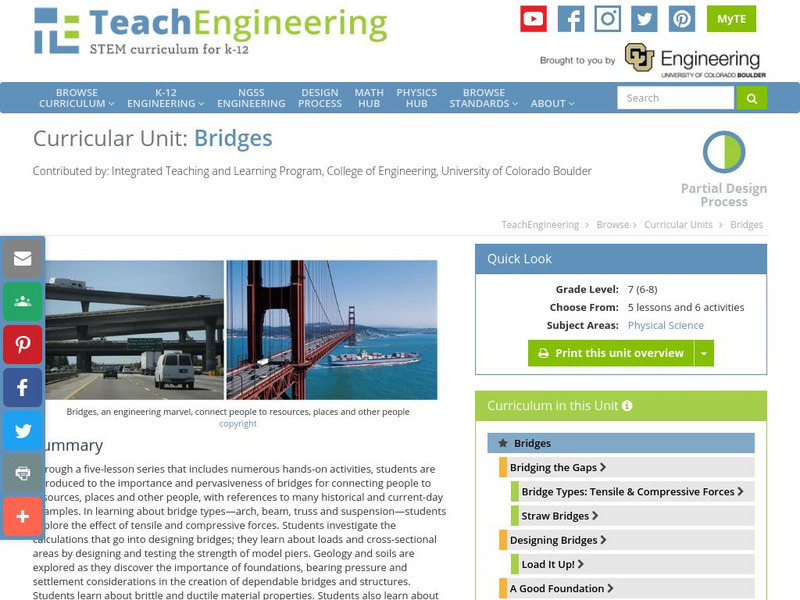
Teach Engineering: Bridges
Through a five-lesson series that includes numerous hands-on activities, students are introduced to the importance and pervasiveness of bridges for connecting people to resources, places and other people, with references to many...
Math2
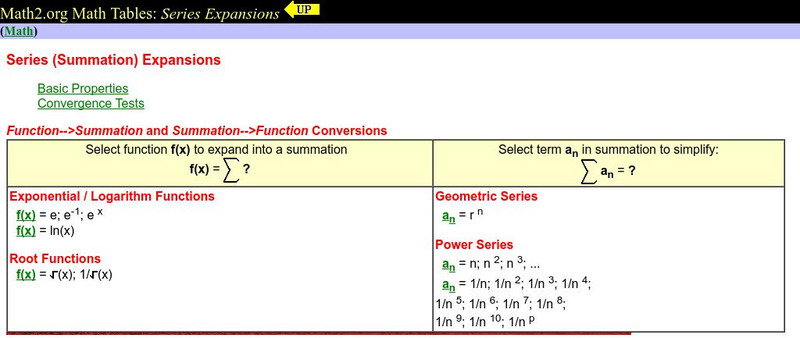
Math2.org: Series Expansions
A thorough review of calculus series. Links direct the student to the basic properties of series, as well as to explanations and examples of convergence tests in series. The expansions for exponential, logarithmic, and root functions and...

Department of Defense
Do Dea: Fundamental Theorem of Calculus Part 1
Familiarize yourself with one of the most important theorems in all of calculus, the Fundamental Theorem of Calculus. Plenty of examples and explanations are provided. This is a great review for AP Calculus test!
Lumen Learning
Lumen: Research Process: Source Analysis
This lesson focuses on how to analyze sources using the C.R.A.A.P. method, how to integrate sources into your paper, and how to synthesize information from multiple sources. It provides three videos: "Researching 101: Evaluating...
TeachEngineering
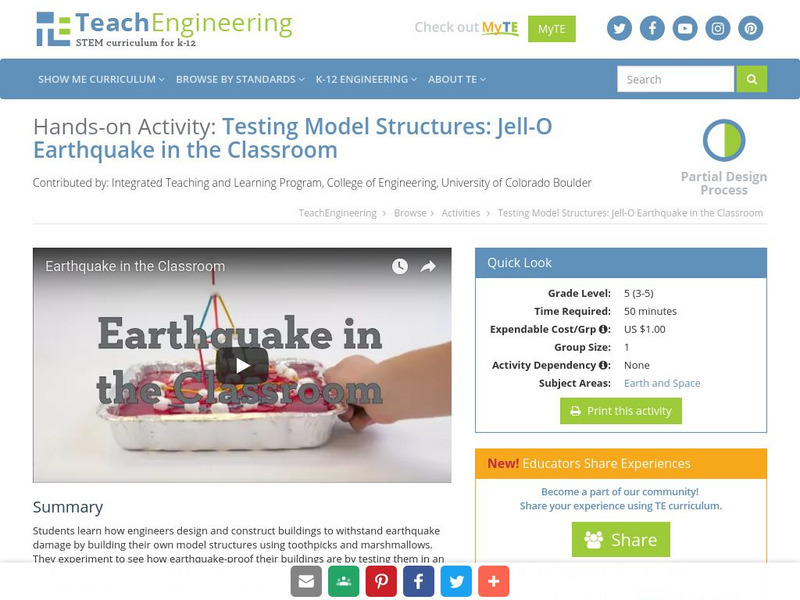
Teach Engineering: Earthquake in the Classroom
Students will learn how engineers construct buildings to withstand damage from earthquakes by building their own structure with toothpicks and marshmallows. Students will test how earthquake-proof their buildings are by testing them on...
TeachEngineering
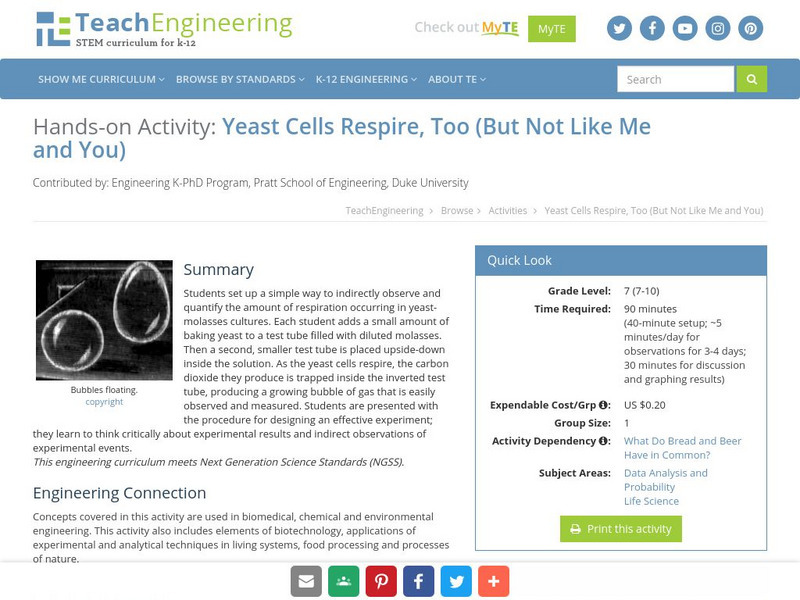
Teach Engineering: Yeast Cells Respire, Too (But Not Like Me and You)
Students set up a simple way to indirectly observe and quantify the amount of respiration occurring in yeast-molasses cultures. Each student adds a small amount of baking yeast to a test tube filled with diluted molasses. A second,...
TeachEngineering
Teach Engineering: Wet Pennies
Students conduct a simple test to determine how many drops of each of three liquids can be placed on a penny before spilling over. The three liquids are water, rubbing alcohol, and vegetable oil; because of their different surface...

Curated OER
National Park Service: The Struggle for Education Equality for African American
"Canterbury, Connecticut, and Little Rock, Arkansas, are links in a chain of events representing the long struggle for equal educational opportunities for African Americans. This lesson plan highlights two important historic places and...
TeachEngineering
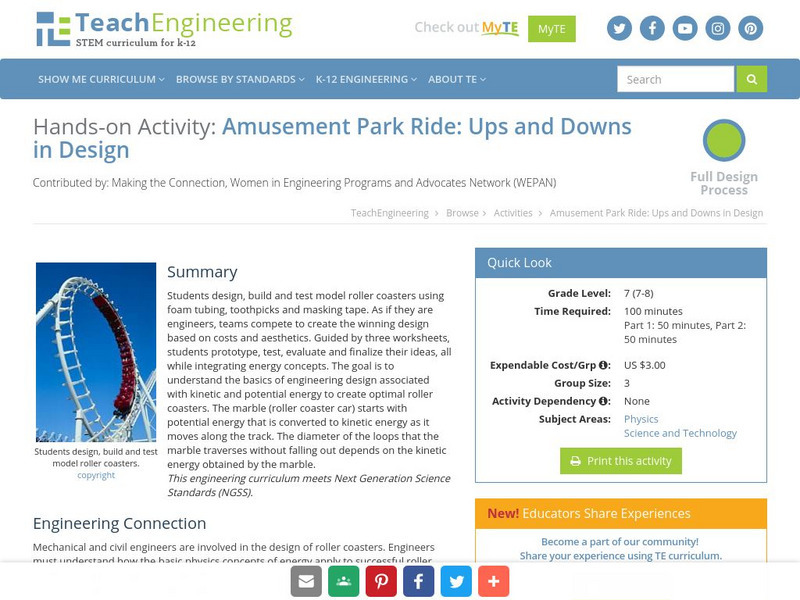
Teach Engineering: Amusement Park Ride: Ups and Downs in Design
This unit has students design and build foam tubing roller coasters. The design process integrates energy concepts as they test and evaluate their designs that address the task as an engineer would. The goal is for students to understand...
TeachEngineering
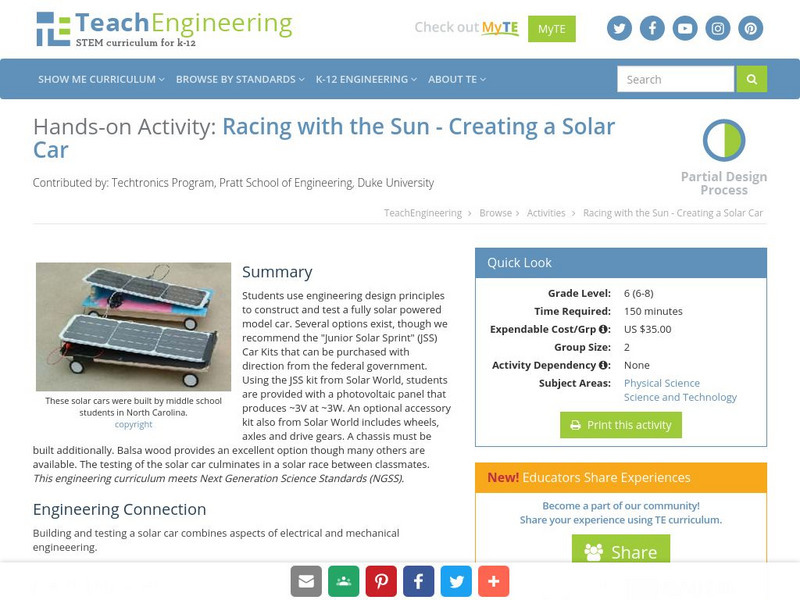
Teach Engineering: Racing With the Sun Creating a Solar Car
Students use engineering design principles to construct and test a fully solar powered car. Several options exist, though we recommend the "Junior Solar Sprint" (JSS) Car Kits that can be purchased with direction from the federal...

TeachEngineering
Teach Engineering: How to Make Yeast Cells Thrive
Students set up and run the experiments they designed in the lesson Population Growth in Yeasts, using simple yeast-molasses cultures in test tubes. Population growth is indicated by the amount of respiration occurring in the cultures,...
University of Vienna (Austria)
University of Vienna: Maths Online
The University of Vienna, Austria, created this site to help bring the worlds of math and technology together. You have access to many applets and downloads that allow you to create lessons, tests, and puzzles. There are also great...
TeachEngineering
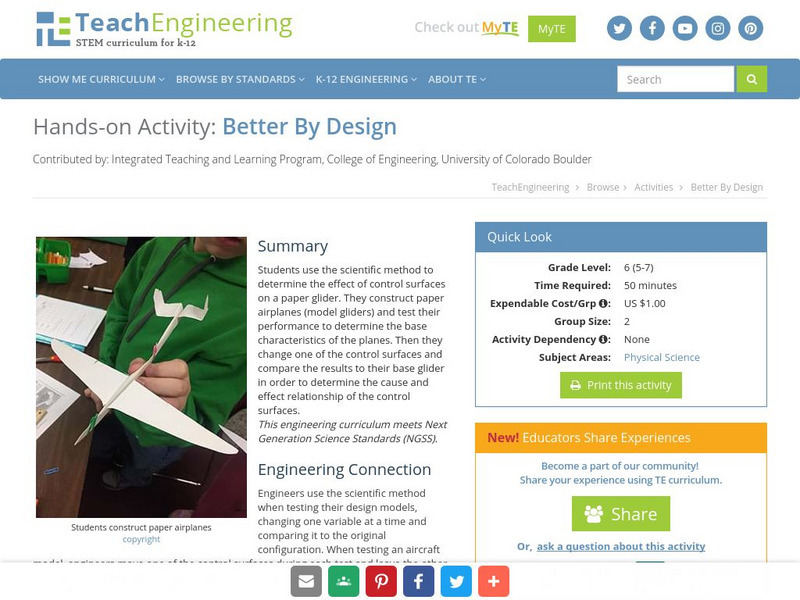
Teach Engineering: Better by Design
The purpose of this activity is to use a scientific method to determine the effect of control surfaces on a paper glider. The students will construct a paper airplane/glider and test its performance to determine the base characteristics...
TeachEngineering
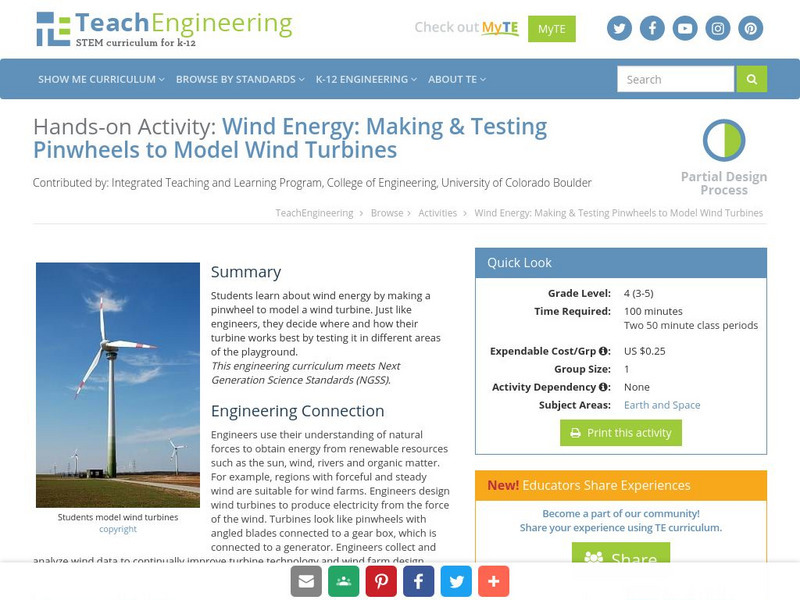
Teach Engineering: Wind Energy
Students learn about wind energy by making a pinwheel to model a wind turbine. Just like engineers, they decide where and how their turbine works best by testing it in different areas of the playground.
TeachEngineering
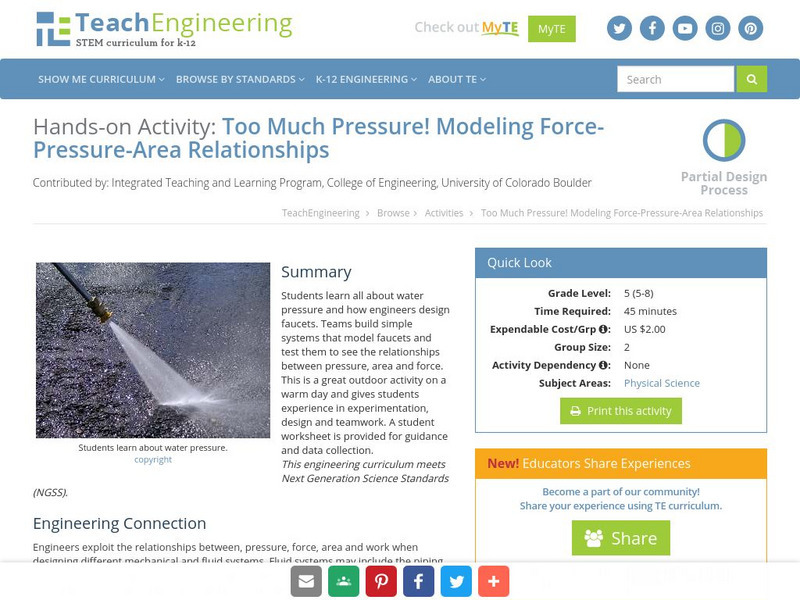
Teach Engineering: Too Much Pressure!
In this activity, students learn how engineers design faucets. Students will learn about water pressure by building a simple system to model faucets and test the relationship between pressure, area and force. This is a great outdoor...
TeachEngineering
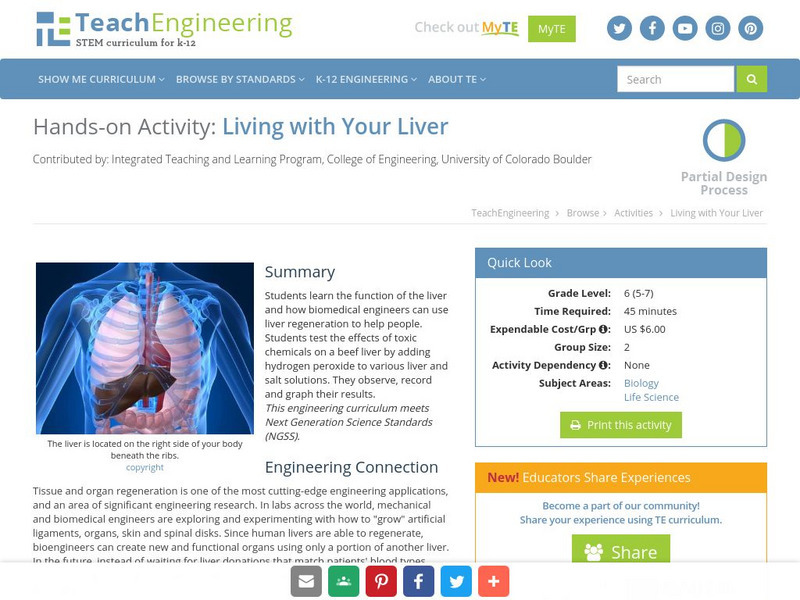
Teach Engineering: Living With Your Liver
Students learn the function of the liver and how biomedical engineers can use liver regeneration to help people. Students test the effects of chemical toxins on a beef liver and how salt changes the liver's ability to break down these...
TeachEngineering
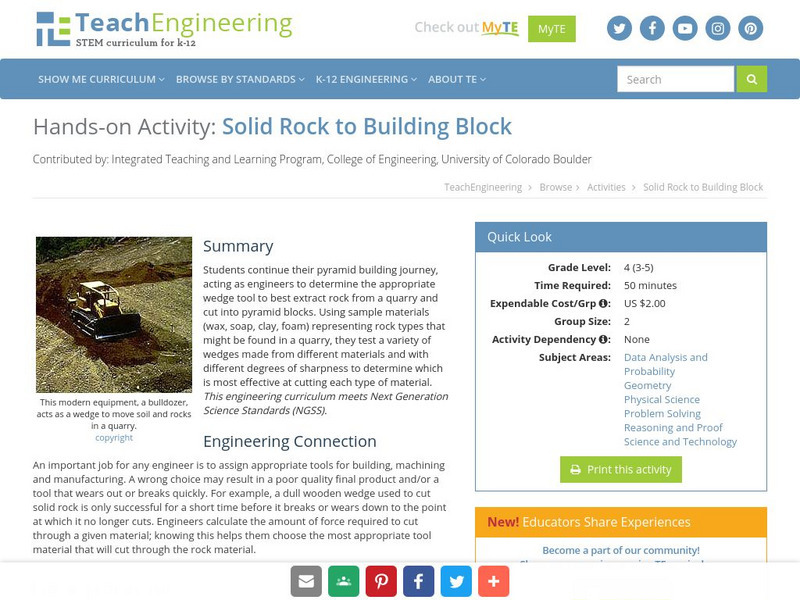
Teach Engineering: Solid Rock to Building Block
Students continue their pyramid building journey, acting as engineers to determine the appropriate wedge tool to best extract rock from a quarry and cut into pyramid blocks. Using sample materials (wax, soap, clay, foam) representing...
TeachEngineering
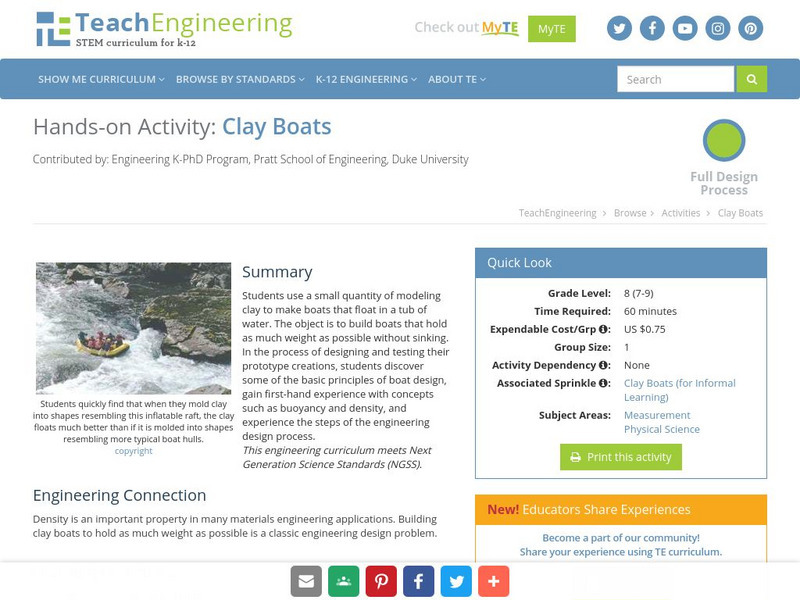
Teach Engineering: Clay Boats
Each student uses a small quantity of modeling clay to make a boat that will float in a tub of water. The object is to build a boat that will hold as much weight as possible without sinking. In the process of designing and testing their...
TeachEngineering
Teach Engineering: Bubbling Plants
Students learn a simple technique for quantifying the amount of photosynthesis that occurs in a given period of time, using a common water plant (Elodea). They can use this technique to compare the amounts of photosynthesis that occur...
TeachEngineering
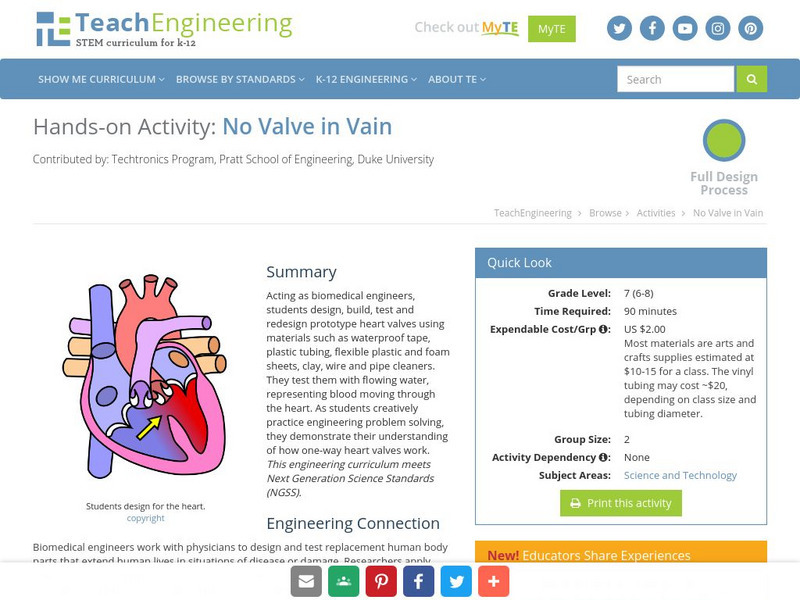
Teach Engineering: No Valve in Vain
In this activity, students will design and create their own heart valves out of a variety of materials given to them, including: waterproof tape, plastic tubing, flexible plastic sheets, foam sheets, scissors, clay, etc. This activity...