Hi, what do you want to do?






TeachEngineering
Teach Engineering: Engineer a Coin Sorter
Students learn about the engineering design process and how it is used to engineer products for everyday use. Students individually brainstorm solutions for sorting coins and draw at least two design ideas. They work in small groups to...
TeachEngineering
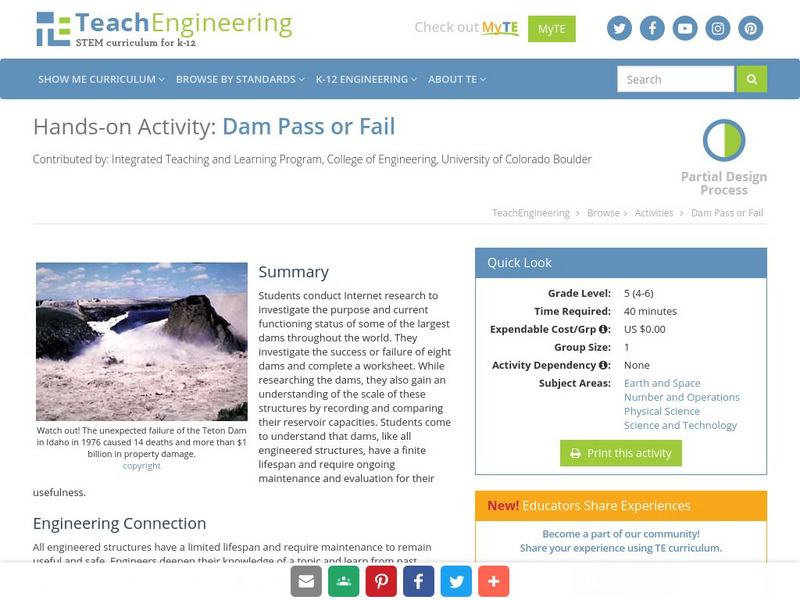
Teach Engineering: Dam Pass or Fail
Students conduct Internet research to investigate the purpose and current functioning status of some of the largest dams throughout the world. They investigate the success or failure of eight dams and complete a worksheet. While...
TeachEngineering
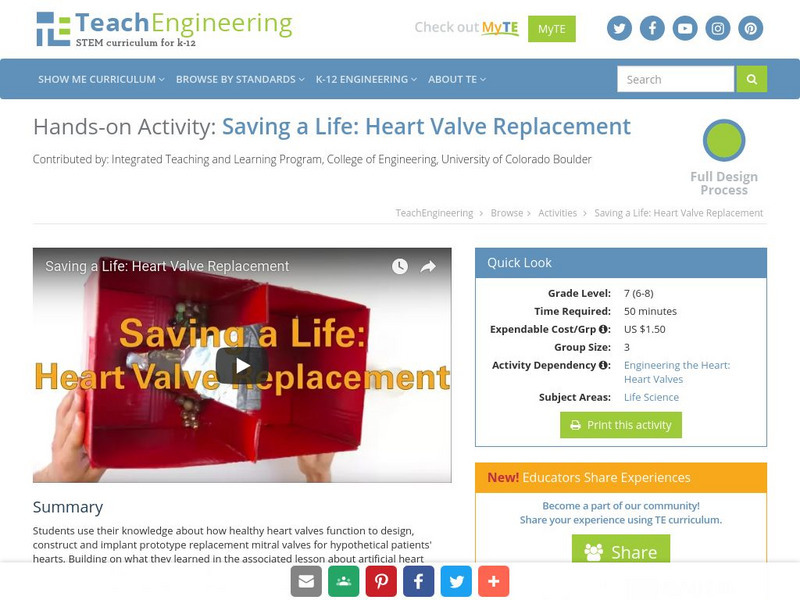
Teach Engineering: Saving a Life: Heart Valve Replacement
Students use their knowledge about how healthy heart valves function to design, construct and implant prototype replacement mitral valves for hypothetical patients' hearts. Building on what they learned in the associated lesson about...
TeachEngineering
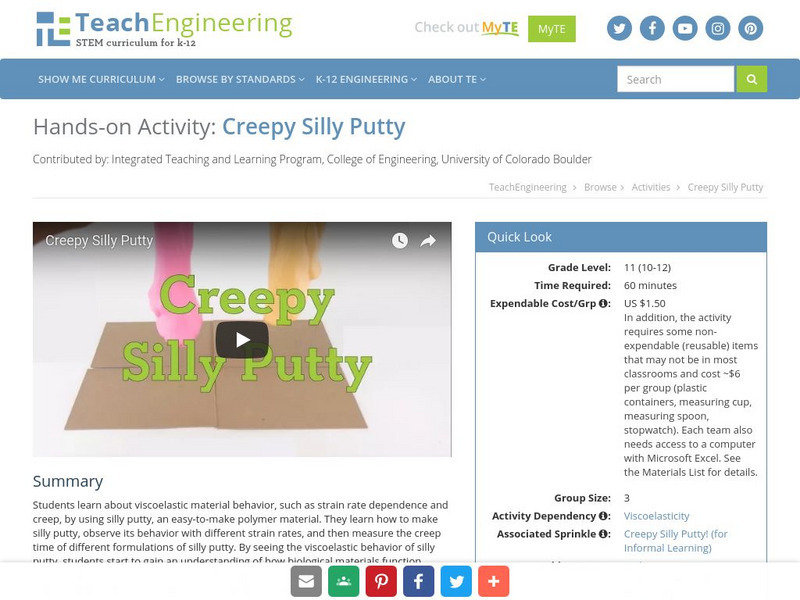
Teach Engineering: Creepy Silly Putty
Students learn about viscoelastic material behavior, such as strain rate dependence and creep, by using silly putty, an easy-to-make polymer material. They learn how to make silly putty, observe its behavior with different strain rates,...
TeachEngineering
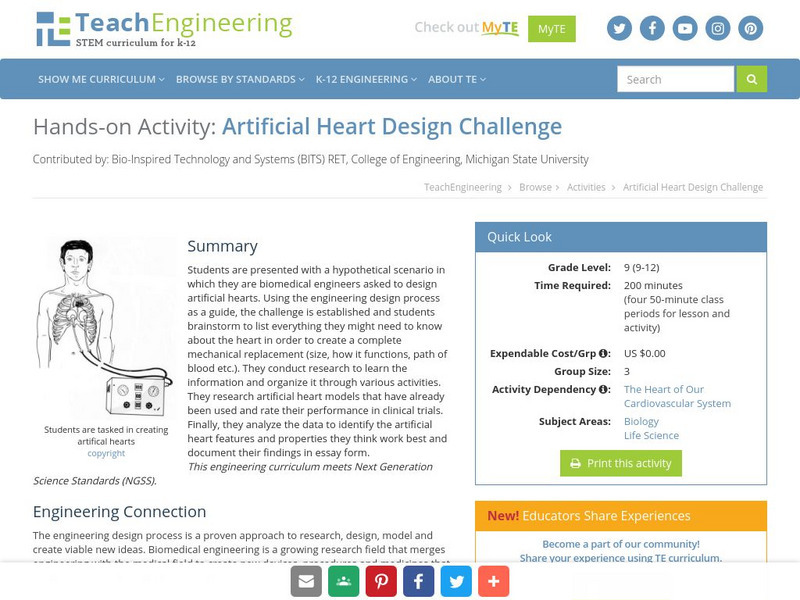
Teach Engineering: Artificial Heart Design Challenge
Students are presented with a hypothetical scenario in which they are biomedical engineers asked to design artificial hearts. Using the engineering design process as a guide, the challenge is established and students brainstorm to list...
TeachEngineering
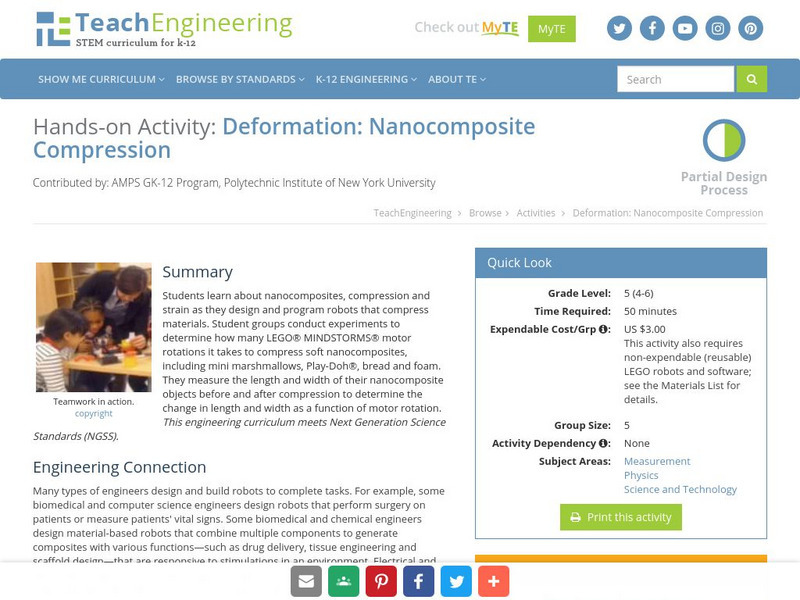
Teach Engineering: Deformation: Nanocomposite Compression
Students learn about nanocomposites, compression and strain as they design and program robots that compress materials. Student groups conduct experiments to determine how many LEGO MINDSTORMS NXT motor rotations it takes to compress soft...
TeachEngineering
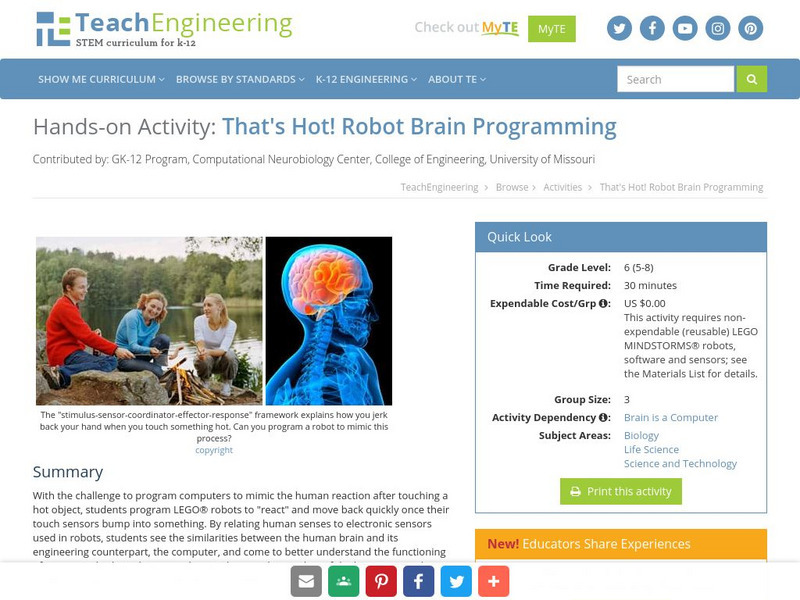
Teach Engineering: That's Hot! Robot Brain Programming
With the challenge to program computers to mimic the human reaction after touching a hot object, students program LEGO robots to "react" and move back quickly once their touch sensors bump into something. By relating human senses to...
TeachEngineering
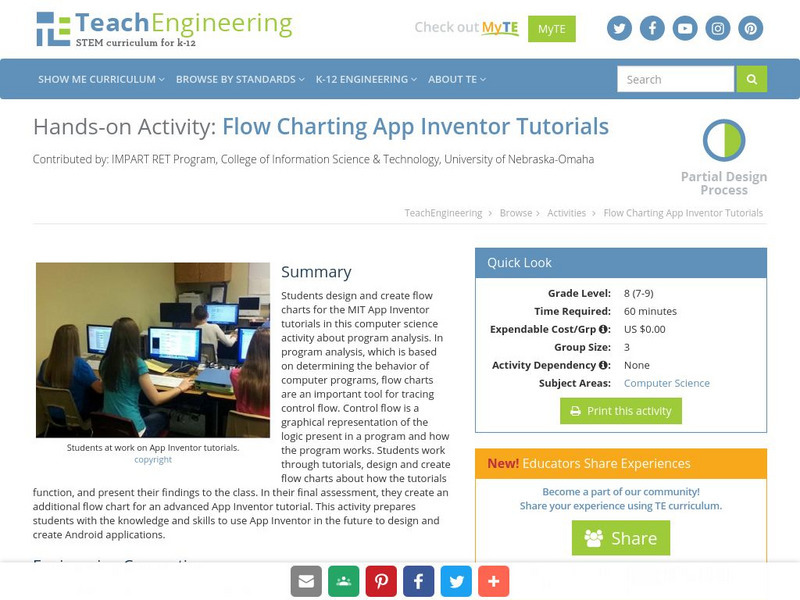
Teach Engineering: Flow Charting App Inventor Tutorials
Students design and create flow charts for the MIT App Inventor tutorials in this computer science activity about program analysis. In program analysis, which is based on determining the behavior of computer programs, flow charts are an...
TeachEngineering
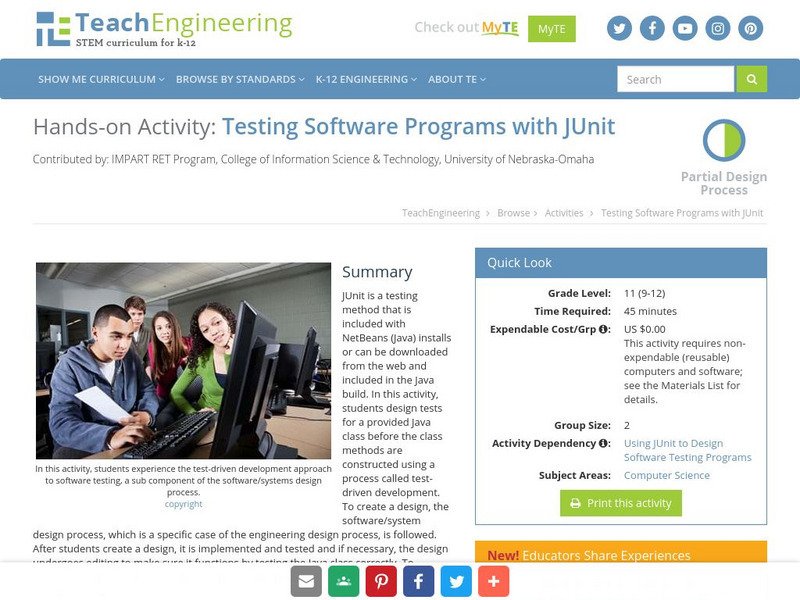
Teach Engineering: Testing With J Unit
JUnit is a testing method that is included with NetBeans (Java) installs or can be downloaded from the web and included in the Java build. In this activity, students design tests for a provided Java class before the class methods are...
TeachEngineering
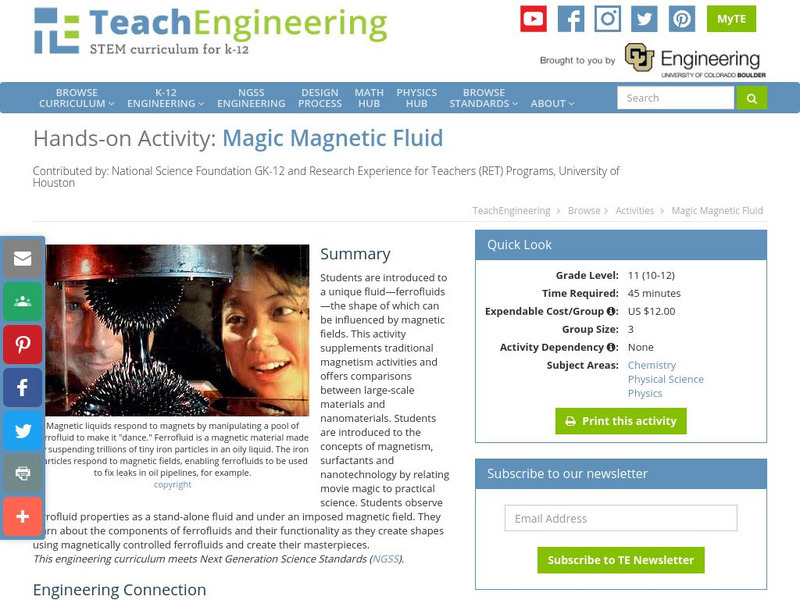
Teach Engineering: Magic Magnetic Fluid
Students are introduced to a unique fluid--ferrofluids--the shape of which can be influenced by magnetic fields. This activity supplements traditional magnetism activities and offers comparisons between large-scale materials and...
TeachEngineering
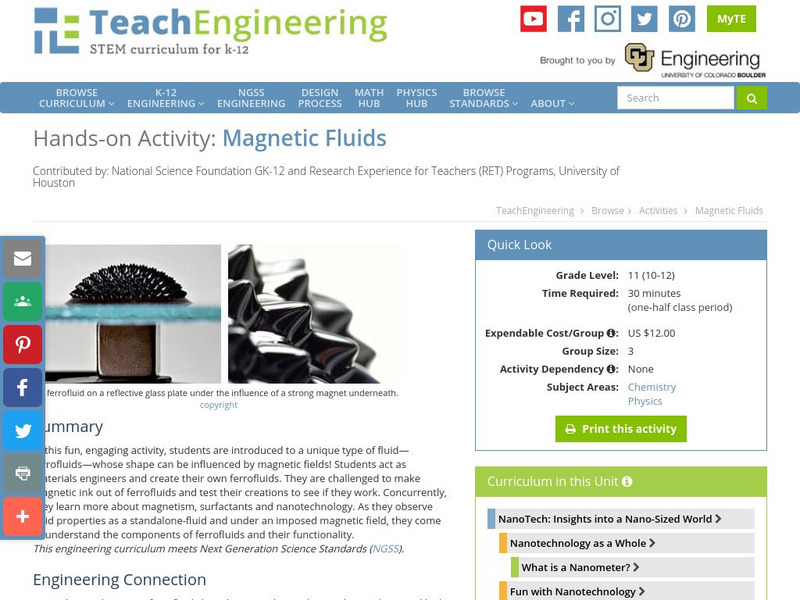
Teach Engineering: Magnetic Fluids
In this fun, engaging activity, students are introduced to a unique type of fluid--ferrofluids--whose shape can be influenced by magnetic fields! Students act as materials engineers and create their own ferrofluids. They are challenged...
TeachEngineering
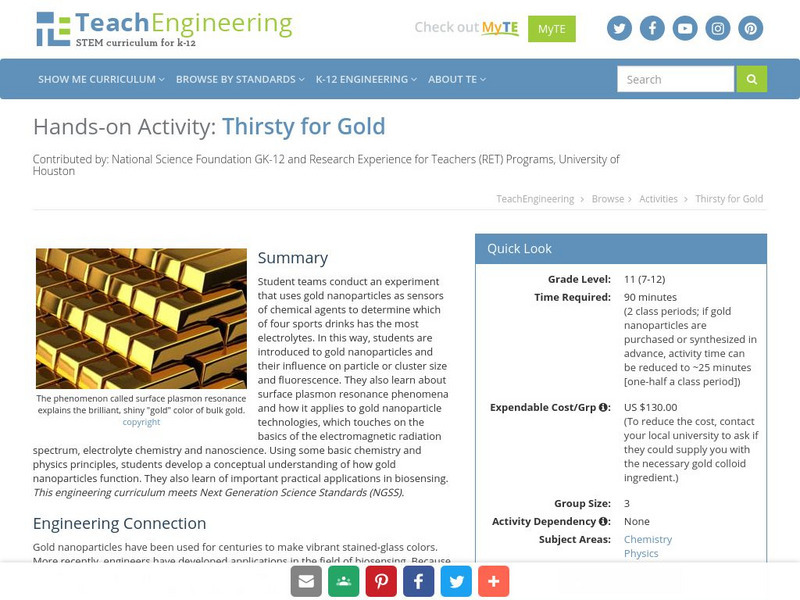
Teach Engineering: Thirsty for Gold
Student teams conduct an experiment that uses gold nanoparticles as sensors of chemical agents to determine which of four sports drinks has the most electrolytes. In this way, students are introduced to gold nanoparticles and their...
TeachEngineering
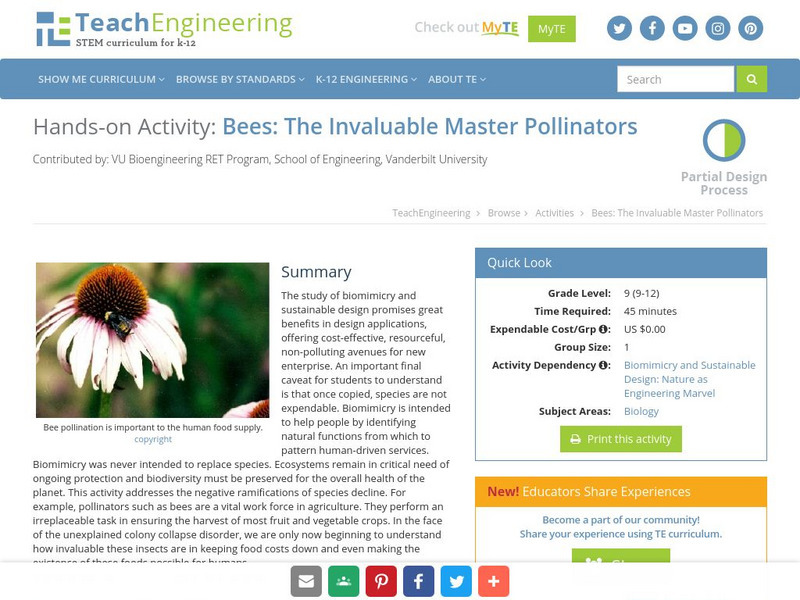
Teach Engineering: Bees Are Master Pollinators
The study of biomimicry and sustainable design promises great benefits in design application. It affords means by which to promote cost-effective, resourceful, non-polluting avenues for new enterprise. These "blueprints" have existed...

TeachEngineering
Teach Engineering: Cells
In this unit, students look at the components of cells and their functions and discover the controversy behind stem cell research. The first lesson focuses on the difference between prokaryotic and eukaryotic cells. In the second lesson,...
TeachEngineering
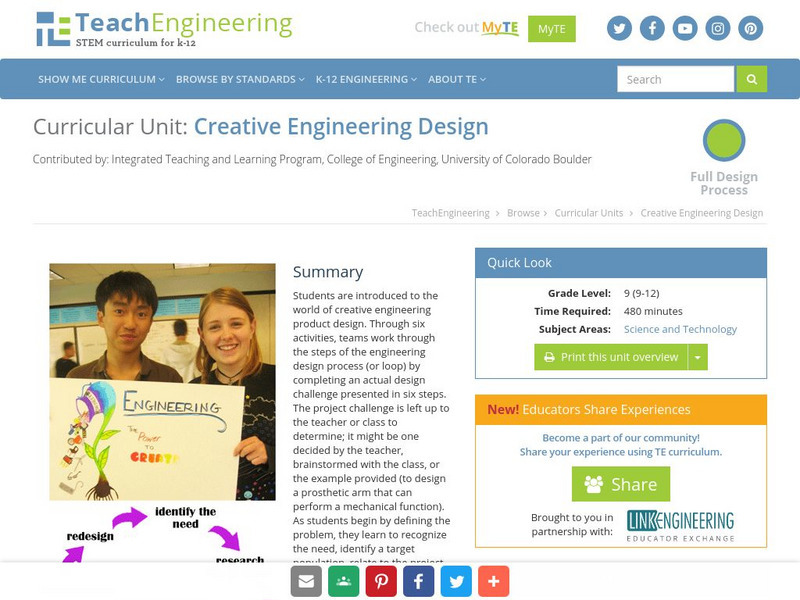
Teach Engineering: Creative Engineering Design
Students are introduced to the world of creative engineering product design. Through six activities, teams work through the steps of the engineering design process (or loop) by completing an actual design challenge presented in six...
TeachEngineering
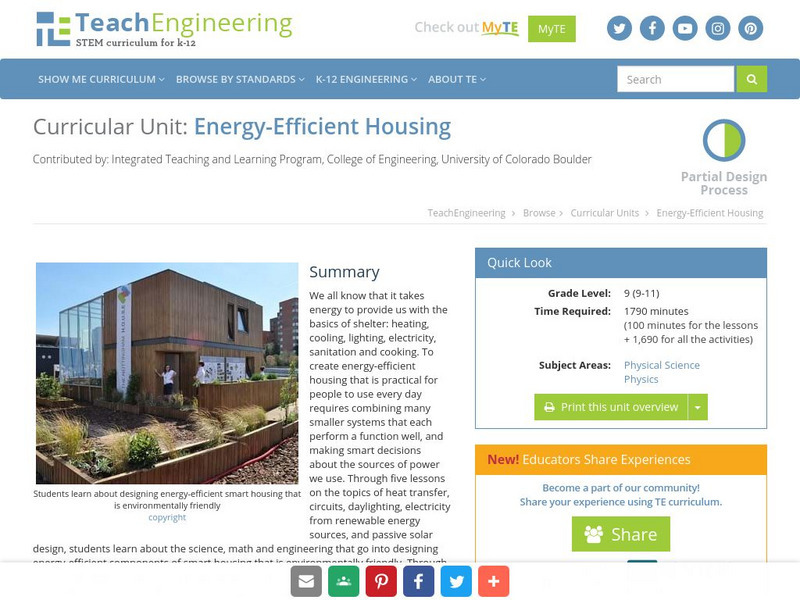
Teach Engineering: Energy Efficient Housing
We all know that it takes energy to provide us with the basics of shelter: heating, cooling, lighting, electricity, sanitation and cooking. To create energy-efficient housing that is practical for people to use every day requires...