Hi, what do you want to do?





TeachEngineering
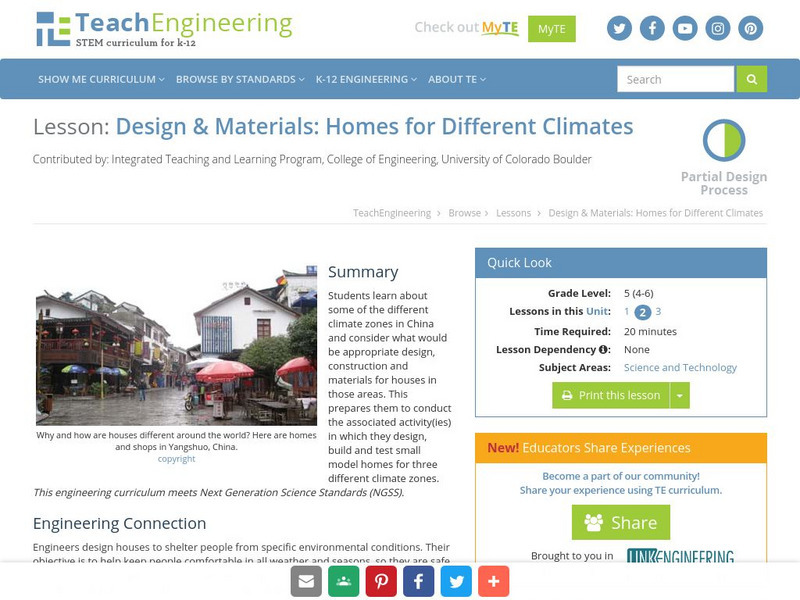
Teach Engineering: Homes for Different Climates
Students learn about some of the different climate zones in China and consider what would be appropriate design, construction and materials for houses in those areas. This prepares them to conduct the associated activity(ies) in which...

TeachEngineering
Teach Engineering: Photosynthesis Life's Primary Energy Source
This lesson covers the process of photosynthesis and the related plant cell functions of transpiration and cellular respiration. Students will learn how engineers can use the natural process of photosynthesis as an exemplary model of a...
TeachEngineering
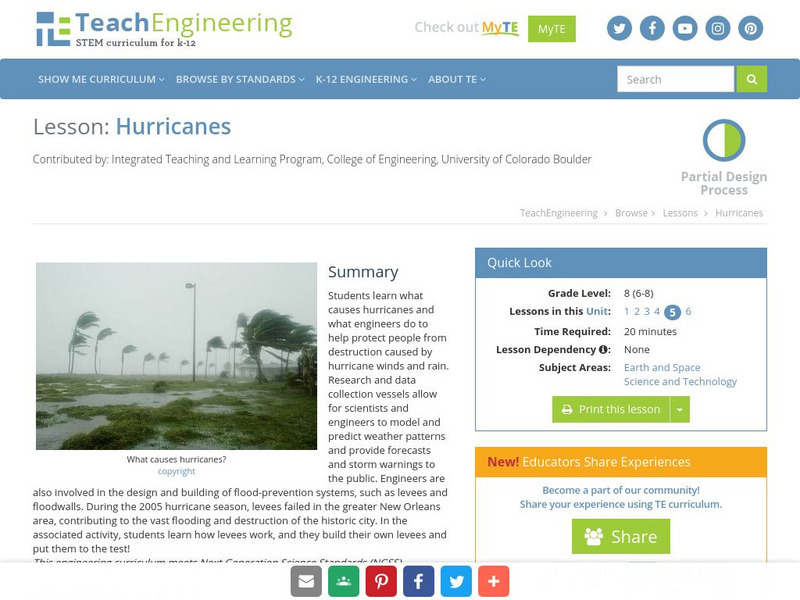
Teach Engineering: Hurricanes
Students learn what causes hurricanes and what engineers do to help protect people from destruction caused by hurricane winds and rain. Research and data collection vessels allow for scientists and engineers to model and predict weather...
TeachEngineering
Teach Engineering: Projections and Coordinates: Turning a 3 D Earth Into Flatlands
Projections and coordinates are key advancements in the geographic sciences that allow us to better understand the nature of the Earth and how to describe location. These innovations in describing the Earth are the basis for everything...
TeachEngineering
Teach Engineering: Applications of Linear Functions
This lesson culminates the unit with the Go Public phase of the legacy cycle. In the associated activities, students use linear models to depict Hooke's law as well as Ohm's law. To conclude the lesson, students apply they've learned...
![Core Knowledge: Poetry in Motion [Pdf] Lesson Plan](https://static.lp.lexp.cloud/images/attachment_defaults/resource/large/FPO-knovation.png "Core Knowledge: Poetry in Motion [Pdf] Lesson Plan")
Other
Core Knowledge: Poetry in Motion [Pdf]
Collection in pdf format of seven lessons integrating poetry across-the-curriculum. Includes dramatization, developing poetry reading skills, and creating poetry appreciation. Printable graphic organizers and a fine bibliography...
TeachEngineering
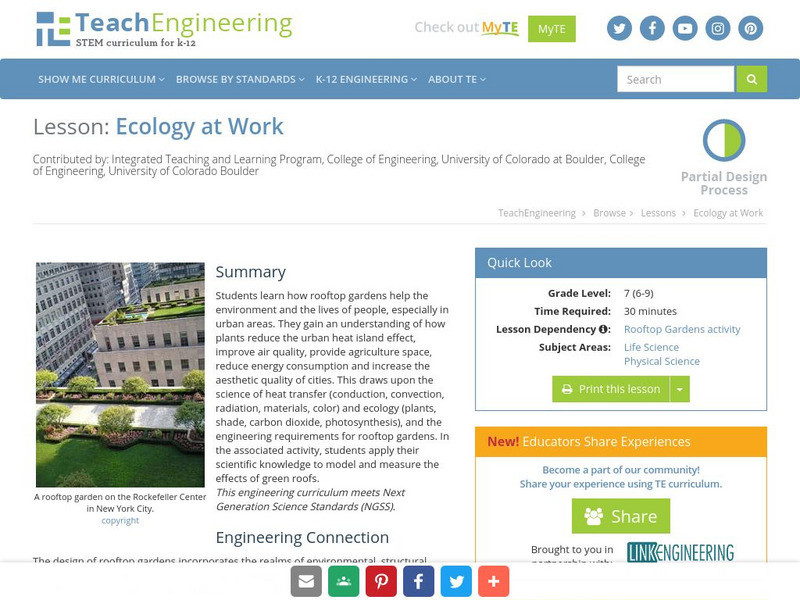
Teach Engineering: Ecology at Work
Students learn how rooftop gardens help the environment and the lives of people, especially in urban areas. They gain an understanding of how plants reduce the urban heat island effect, improve air quality, provide agriculture space,...
TeachEngineering
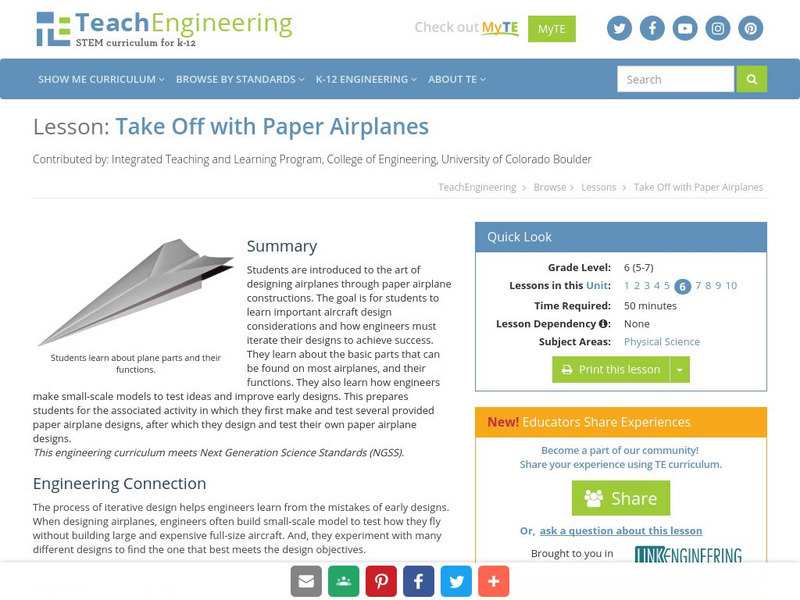
Teach Engineering: Take Off With Paper Airplanes
This lesson introduces students to the art of designing an airplane through paper airplane constructions. The goal is that students will learn important aircraft design considerations and how engineers must iterate their designs to...
TeachEngineering
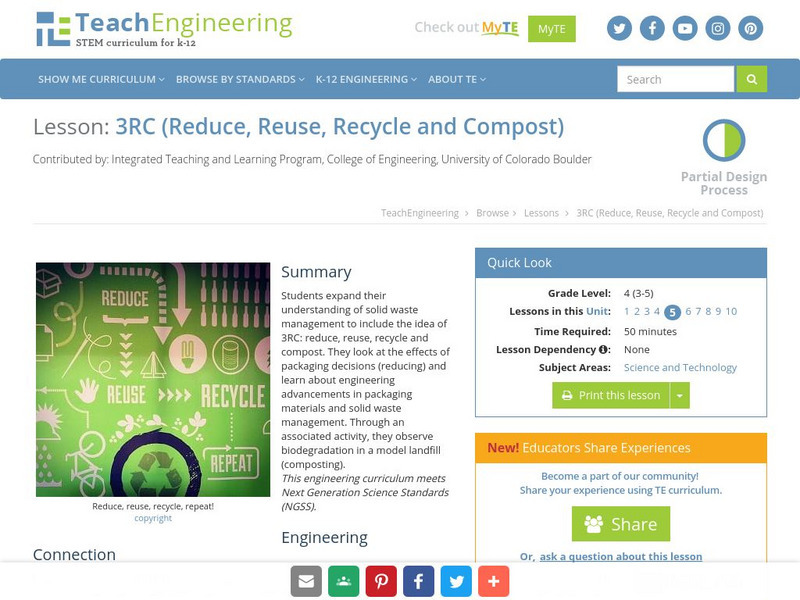
Teach Engineering: 3 Rc (Reduce, Reuse, Recycle and Compost)
In this lesson plan, young scholars expand their understanding of solid waste management to include the idea of 3RC (reduce, reuse, recycle and compost). They will look at the effects of packaging decisions (reducing) and learn about...
ReadWriteThink
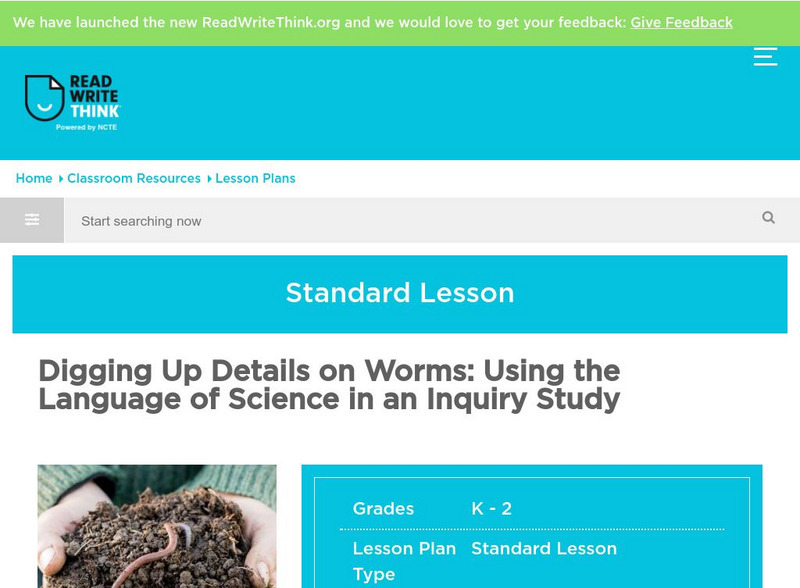
Read Write Think: Digging Up Details on Worms: Using Science in an Inquiry Study
A lesson plan based on a study unit of earthworms, using the inquiry model to integrate scientific processes with literacy practices. Instruction plans, related resources, and standards are included.
TeachEngineering
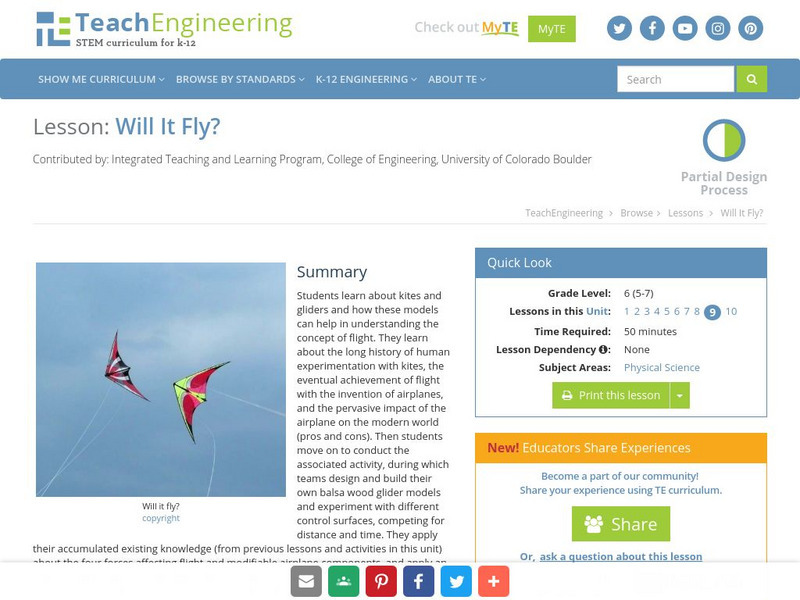
Teach Engineering: Will It Fly?
For this lesson, students will learn about kites and gliders and how these models can help in understanding the concept of flight. Students will design and build their own balsa wood models and experiment with different control surfaces....
TeachEngineering
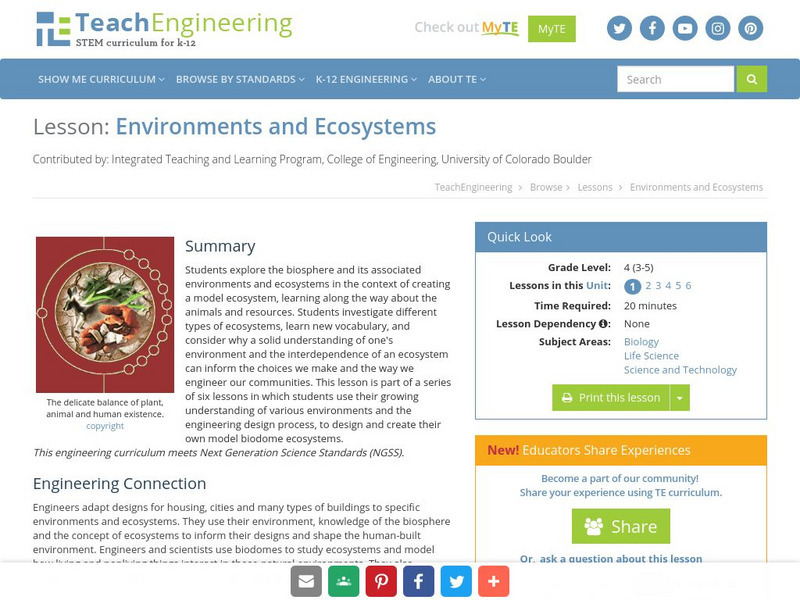
Teach Engineering: Environments and Ecosystems
Students explore the biosphere and its associated environments and ecosystems in the context of creating a model ecosystem, learning along the way about the animals and resources. Students investigate different types of ecosystems, learn...
TeachEngineering
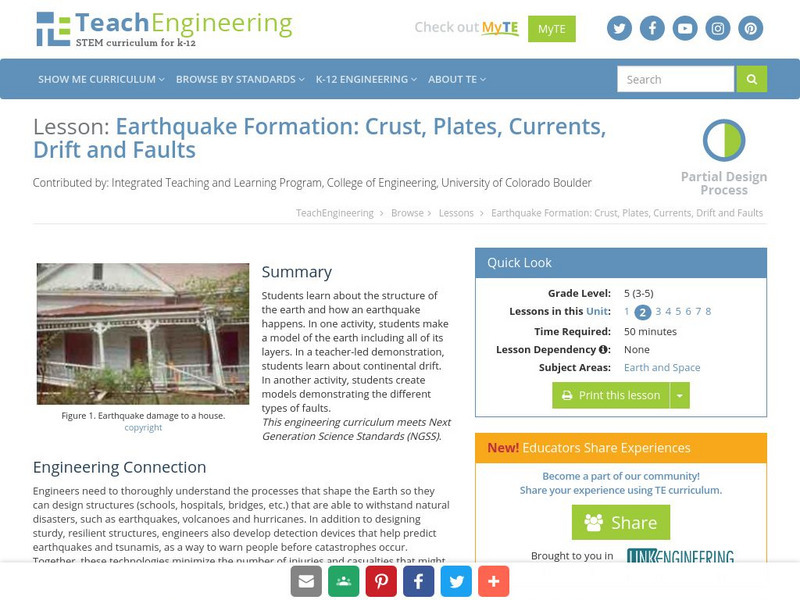
Teach Engineering: Earthquake Formation
Students learn about the structure of the earth and how an earthquake happens. In one activity, students make a model of the earth including all of its layers. In a teacher-led demonstration, students learn about continental drift. In...
TeachEngineering
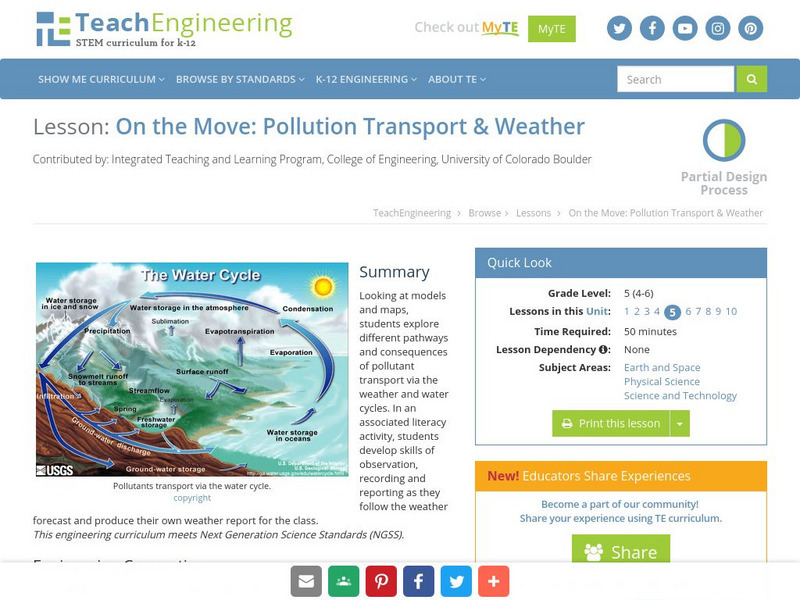
Teach Engineering: On the Move
Looking at models and maps, students explore different pathways and consequences of pollutant transport via the weather and water cycles. In an associated literacy activity, students develop skills of observation, recording and reporting...
TeachEngineering
Teach Engineering: Not So Neutral Views
Students are introduced to acids and bases, and the environmental problem of acid rain. They explore ways to use indicators to distinguish between acids and bases. Students also conduct a simple experiment to model and discuss the...
TeachEngineering
Teach Engineering: Let's Heat Things Up!
Students observe demonstrations, and build and evaluate simple models to understand the greenhouse effect, the role of increased greenhouse gas concentration in global warming, and the implications of global warming theory for engineers,...
TeachEngineering
Teach Engineering: Pollution Solutions
To develop an understanding of modern industrial technologies that clean up and prevent air pollution, students build and observe a variety of simple models of engineering pollutant recovery methods: scrubber, electrostatic precipitator,...

TeachEngineering
Teach Engineering: A Mini World
As students learn about the creation of biodomes, they are introduced to the steps of the engineering design process, including guidelines for brainstorming. Students learn how engineers are involved in the design and construction of...
TeachEngineering
Teach Engineering: Planting Thoughts
Students gain an understanding of the parts of a plant, plant types and how they produce their own food from sunlight through photosynthesis. They also learn about transpiration, the process by which plants release moisture to the...
TeachEngineering
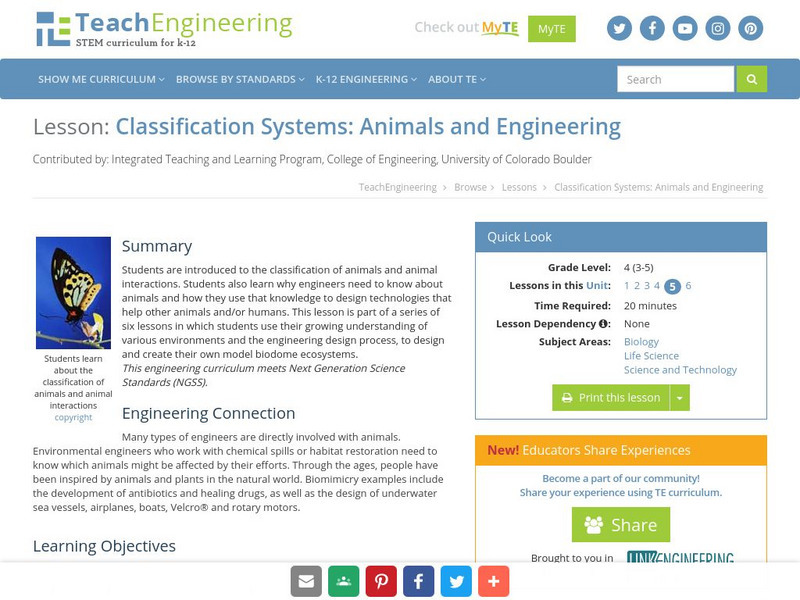
Teach Engineering: Animals and Engineering
Students are introduced to the classification of animals and animal interactions. Students also learn why engineers need to know about animals and how they use that knowledge to design technologies that help other animals and/or humans....
TeachEngineering
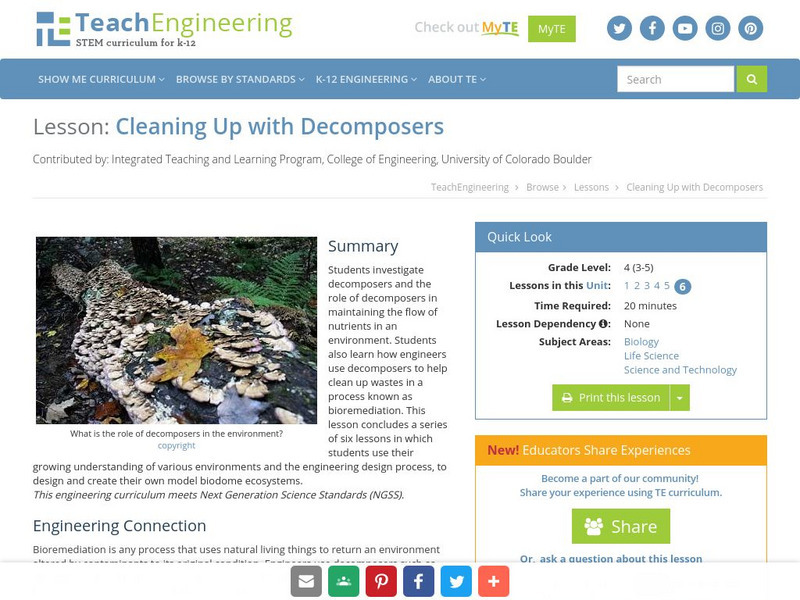
Teach Engineering: Cleaning Up With Decomposers
Students investigate decomposers and the role of decomposers in maintaining the flow of nutrients in an environment. Students also learn how engineers use decomposers to help clean up wastes in a process known as bioremediation. This...
TeachEngineering
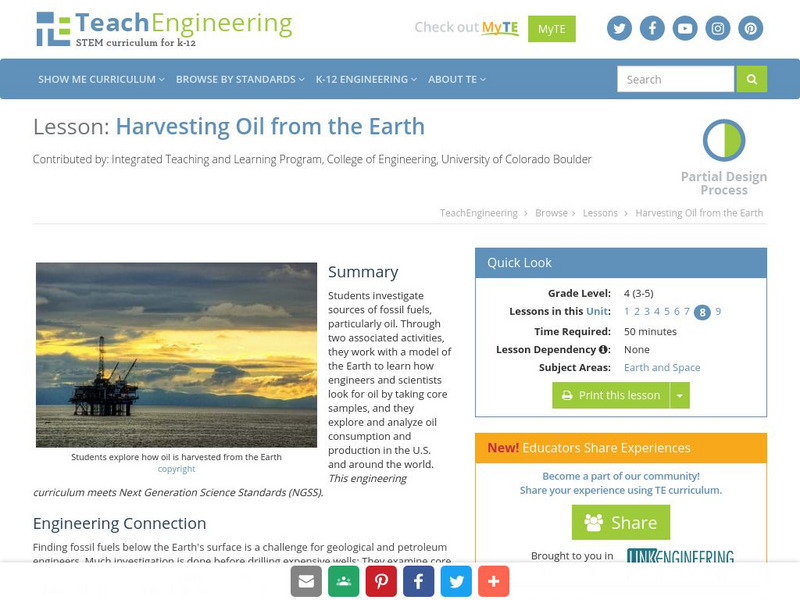
Teach Engineering: Harvesting Oil From the Earth
In this lesson plan, students investigate sources of fossil fuels, particularly oil. Students will learn how engineers and scientists look for oil by taking core samples from a model of the Earth. Also, students will explore and analyze...
TeachEngineering
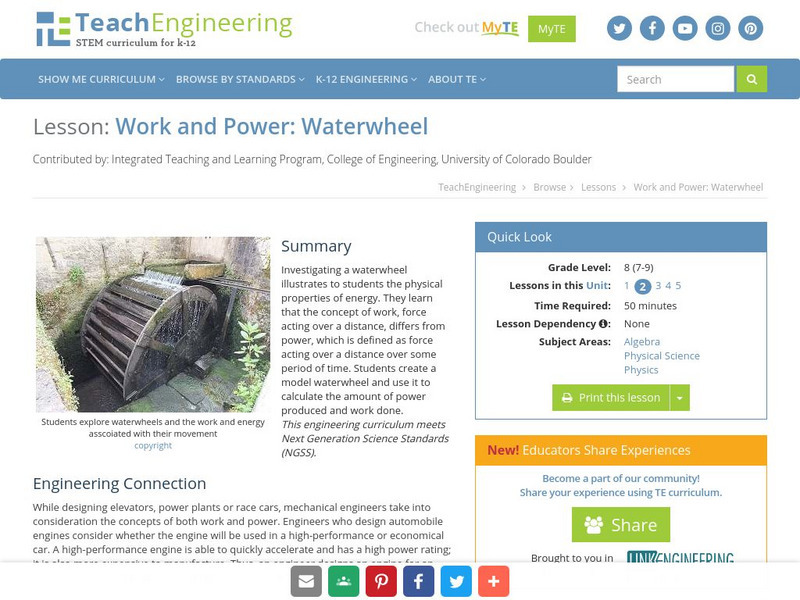
Teach Engineering: Work and Power: Waterwheel
Investigating a waterwheel illustrates to learners the physical properties of energy. They learn that the concept of work, force acting over a distance, differs from power, which is defined as force acting over a distance over some...
TeachEngineering
Teach Engineering: Let the Sun Shine!
Students learn how the sun can be used for energy. They learn about passive solar heating, lighting and cooking, and active solar engineering technologies (such as photovoltaic arrays and concentrating mirrors) that generate electricity....