Hi, what do you want to do?





TeachEngineering
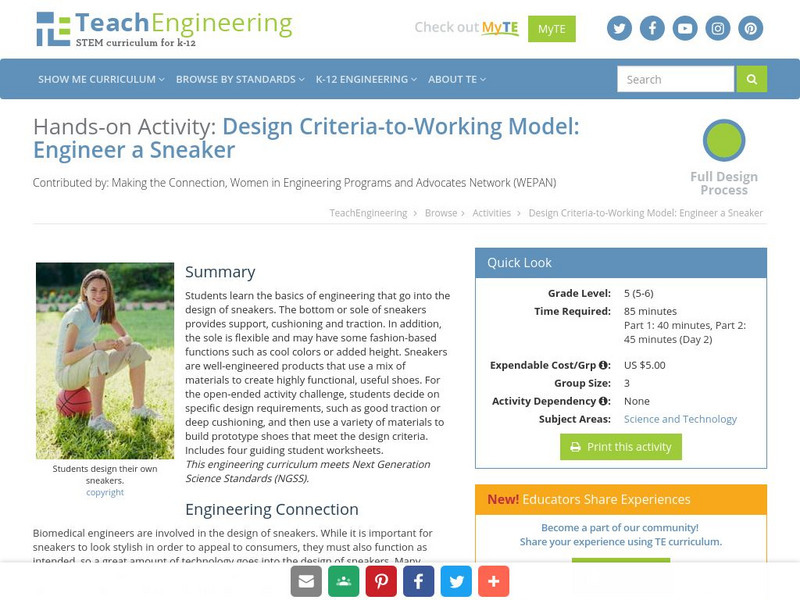
Teach Engineering: Engineer a Sneaker
The goal is for students to understand the basics of engineering that go into the design of a sneaker. The bottom or sole of a sneaker provides support, cushioning, and traction. In addition the sole is flexible and can have some fashion...
TeachEngineering
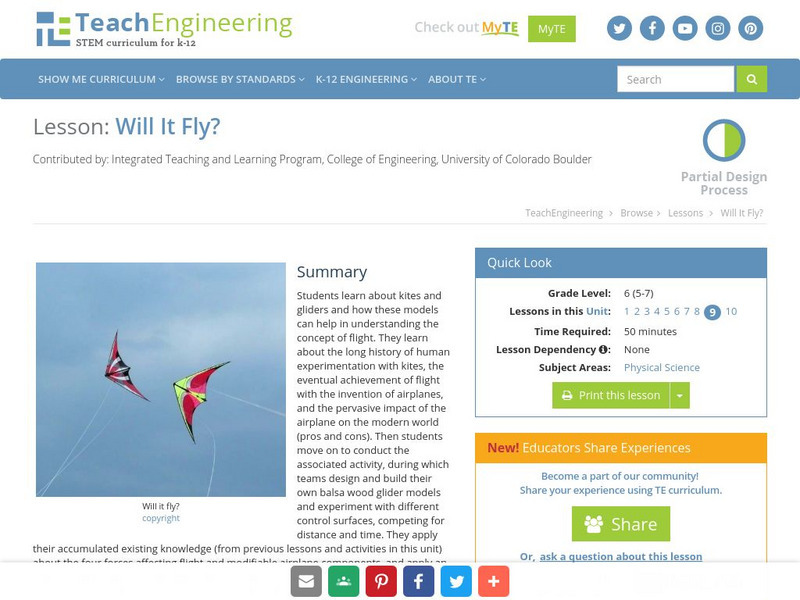
Teach Engineering: Will It Fly?
In this lesson, students will learn about kites and gliders and how these models can help in understanding the concept of flight. Students will design and build their own balsa wood models and experiment with different control surfaces....
TeachEngineering
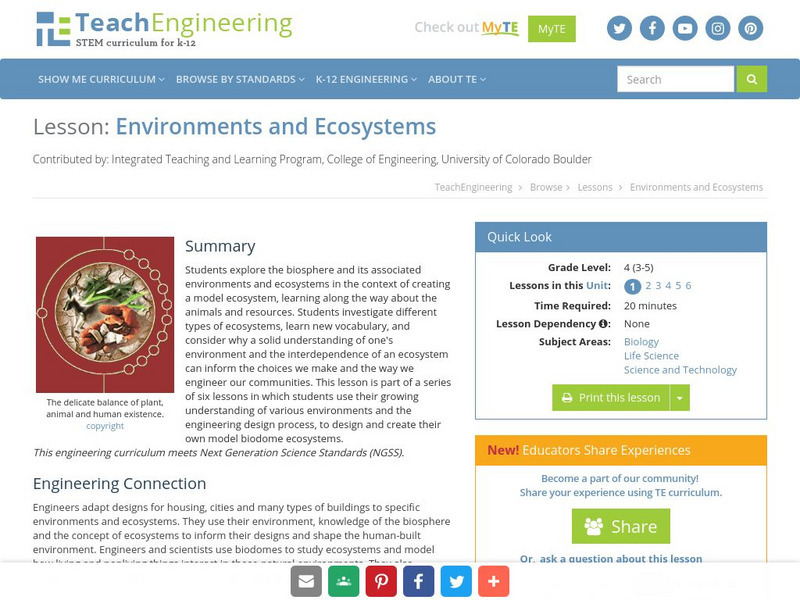
Teach Engineering: Environments and Ecosystems
Students explore the biosphere and its associated environments and ecosystems in the context of creating a model ecosystem, learning along the way about the animals and resources. Students investigate different types of ecosystems, learn...
TeachEngineering
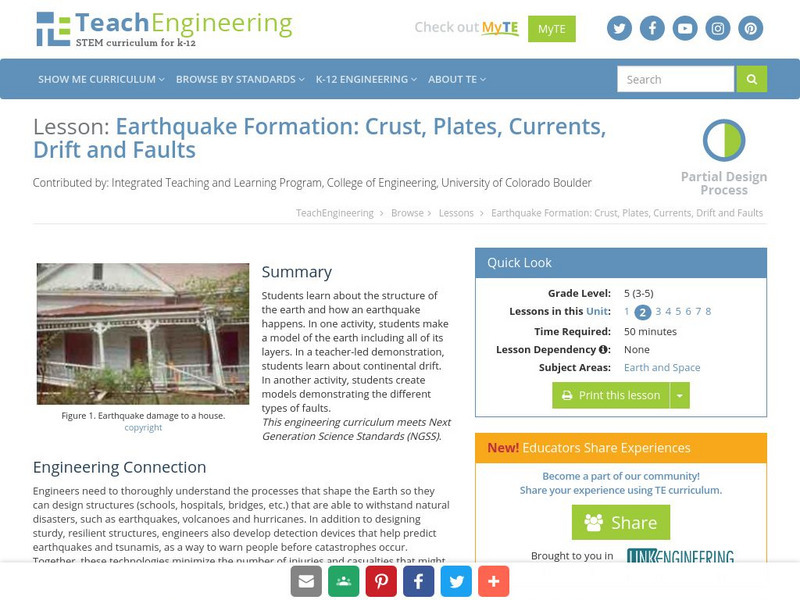
Teach Engineering: Earthquake Formation
Students learn about the structure of the earth and how an earthquake happens. In one activity, students make a model of the earth including all of its layers. In a teacher-led demonstration, students learn about continental drift. In...
TeachEngineering
Teach Engineering: It's Really Heating Up in Here!
Students create and observe a greenhouse effect model and discuss the implications of global warming theory for engineers, themselves and the Earth.
TeachEngineering
Teach Engineering: Cleaning Air With Balloons
Students observe and discuss a simple balloon model of an electrostatic precipitator to better understand how this pollutant recovery method functions in cleaning industrial air pollution.

TeachEngineering
Teach Engineering: A Merry Go Round for Dirty Air
Students observe and discuss a cup and pencil model of a cyclone to better understand how this pollutant recovery method functions in cleaning industrial air pollution.
TeachEngineering
Teach Engineering: Let's Bag It
Students observe and discuss a vacuum cleaner model of a baghouse to better understand how this pollutant recovery method functions in cleaning industrial air pollution.
TeachEngineering
Teach Engineering: Wind Energy
Students learn about wind energy by making a pinwheel to model a wind turbine. Just like engineers, they decide where and how their turbine works best by testing it in different areas of the playground.
TeachEngineering
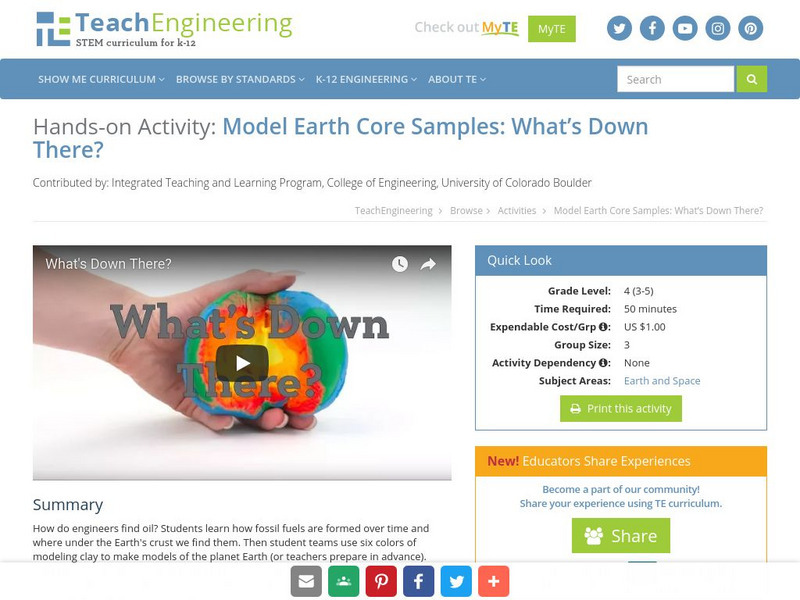
Teach Engineering: What's Down There?
During this activity, students will learn how oil is formed and where in the Earth we find it. Students will take a core sample to look for oil in a model of the Earth. They will analyze their sample and make an informed decision as to...
TeachEngineering
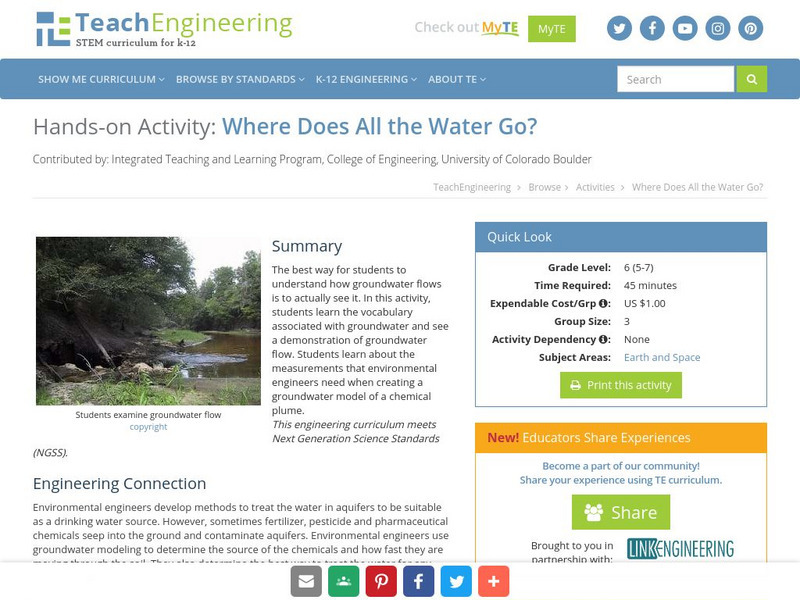
Teach Engineering: Where Does All the Water Go?
The best way for students to understand how groundwater flows is to actually see it. In this activity, students will learn the vocabulary associated with groundwater and see a demonstration of groundwater flow. Students will learn about...
TeachEngineering
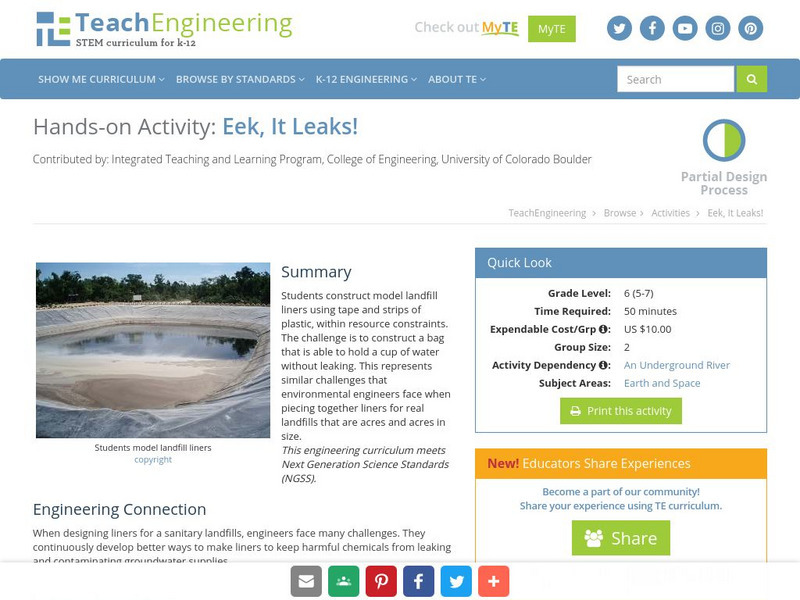
Teach Engineering: Eek, It Leaks!
During this activity, students will try to construct model landfill liners out of two-inch strips of garbage bags within resource constraints. The challenge is to construct a bag that will hold one cup of water without leaking. This...
TeachEngineering
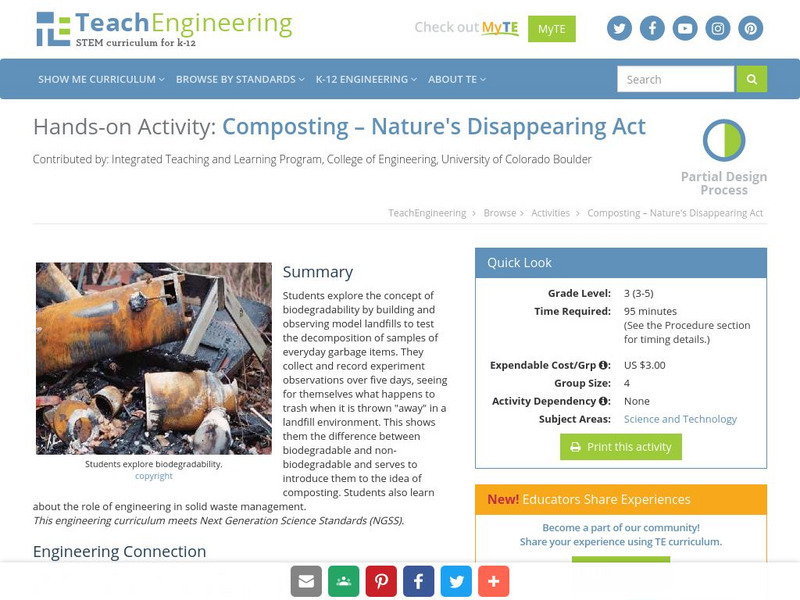
Teach Engineering: Composting Nature's Disappearing Act
In this activity, students explore the idea of biodegradability by building and observing a model landfill. This serves as an introduction to the idea of composting. Students learn about the role of engineering in solid waste management.
TeachEngineering
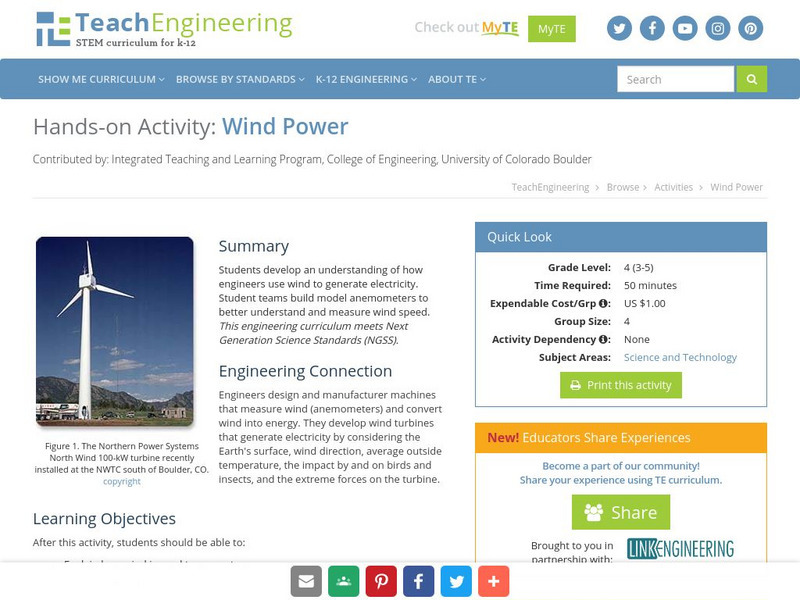
Teach Engineering: Wind Power
In this activity, students develop an understanding of how engineers use wind to generate electricity. They will build a model anemometer to better understand and measure wind speed.
TeachEngineering
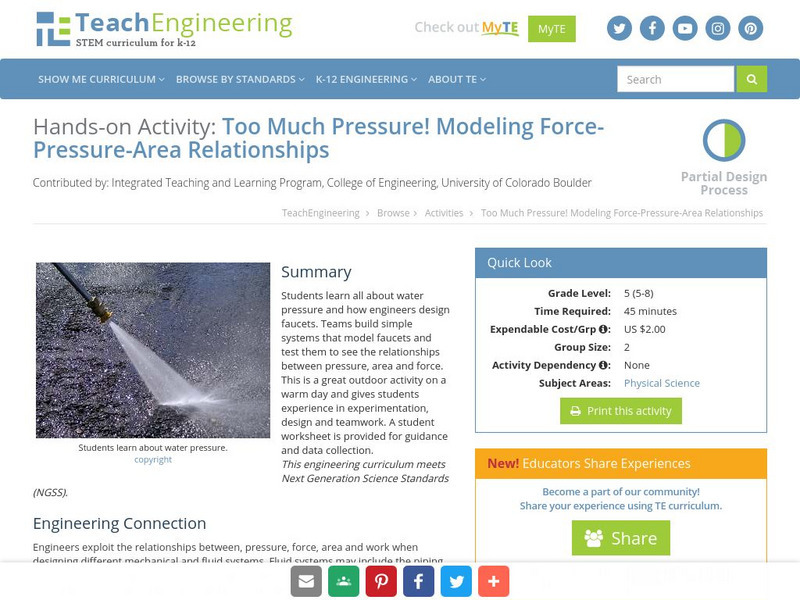
Teach Engineering: Too Much Pressure!
In this activity, students learn how engineers design faucets. Students will learn about water pressure by building a simple system to model faucets and test the relationship between pressure, area and force. This is a great outdoor...
TeachEngineering
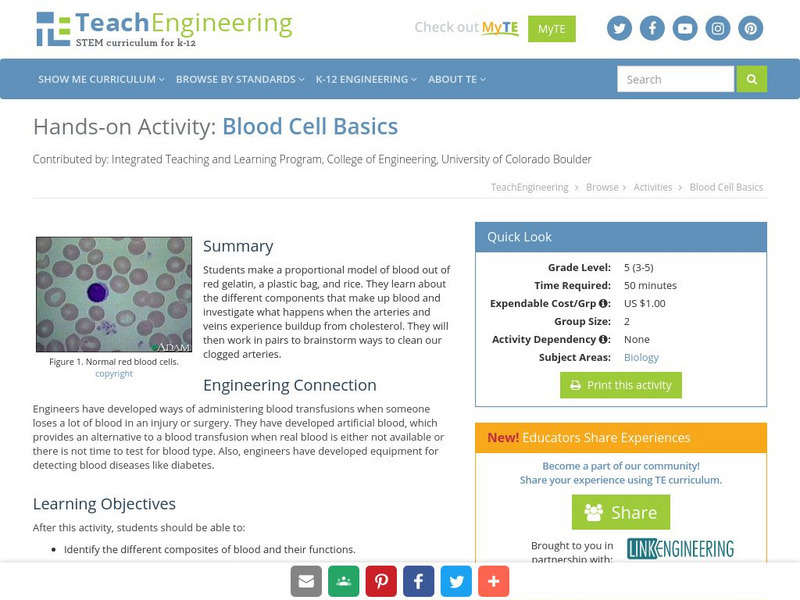
Teach Engineering: Blood Cell Basics
In this lesson students learn about the circulatory system and how it relates to engineering. Then in a hands-on activity they create a model of blood. Students also act out cholesterol in a blocked artery and look at blood cell in a...
TeachEngineering
Teach Engineering: Just Breathe
Students explore the inhalation/exhalation process that occurs in the lungs during respiration. Using everyday materials, they create a model pair of lungs.
TeachEngineering
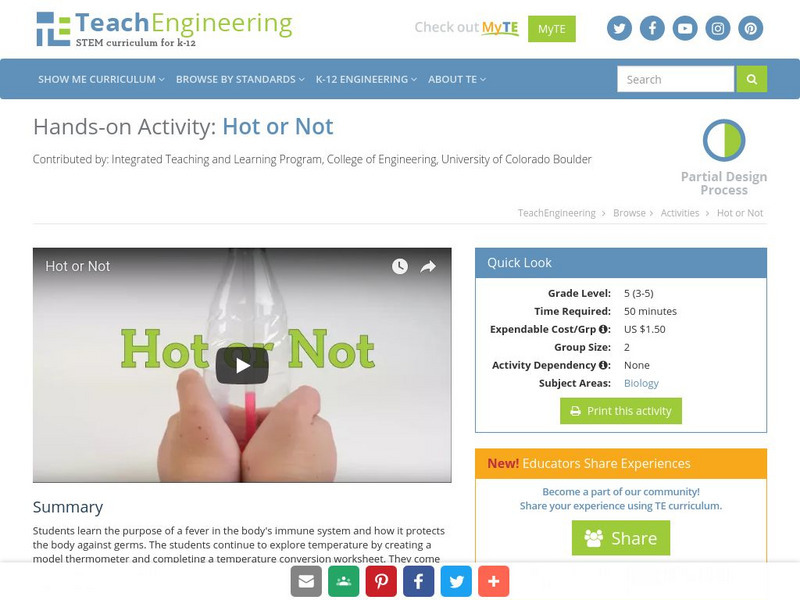
Teach Engineering: Hot or Not
This activity explains what a fever is and how the immune system uses it to try and protect the body against germs. The students then explore temperature further by creating a model of a thermometer and completing a temperature...
TeachEngineering
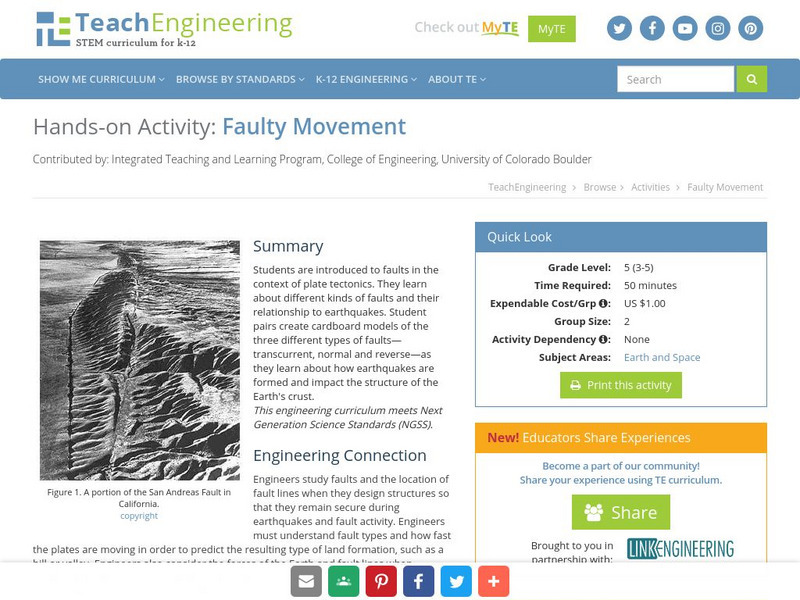
Teach Engineering: Faulty Movement
In this activity, students are introduced to faults. They will learn about different kinds of faults and understand their relationship to earthquakes. The students will build cardboard models of the three different types of faults as...
TeachEngineering
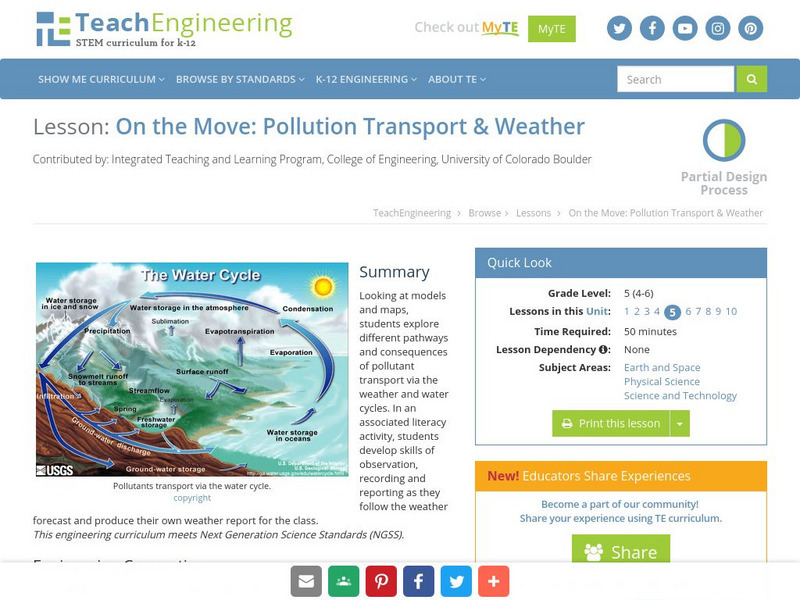
Teach Engineering: On the Move
Looking at models and maps, students explore different pathways and consequences of pollutant transport via the weather and water cycles. In an associated literacy activity, students develop skills of observation, recording and reporting...
TeachEngineering
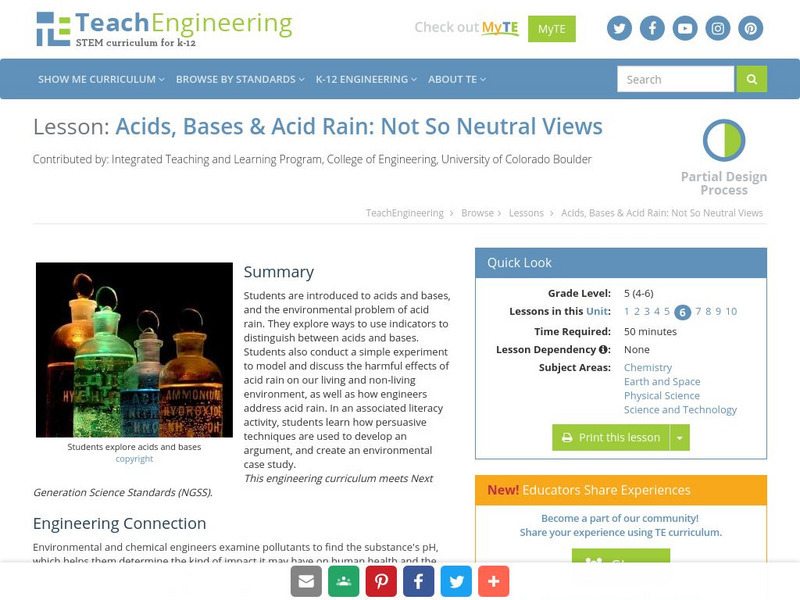
Teach Engineering: Not So Neutral Views
Young scholars are introduced to acids and bases, and the environmental problem of acid rain. They explore ways to use indicators to distinguish between acids and bases. Students also conduct a simple experiment to model and discuss the...
TeachEngineering
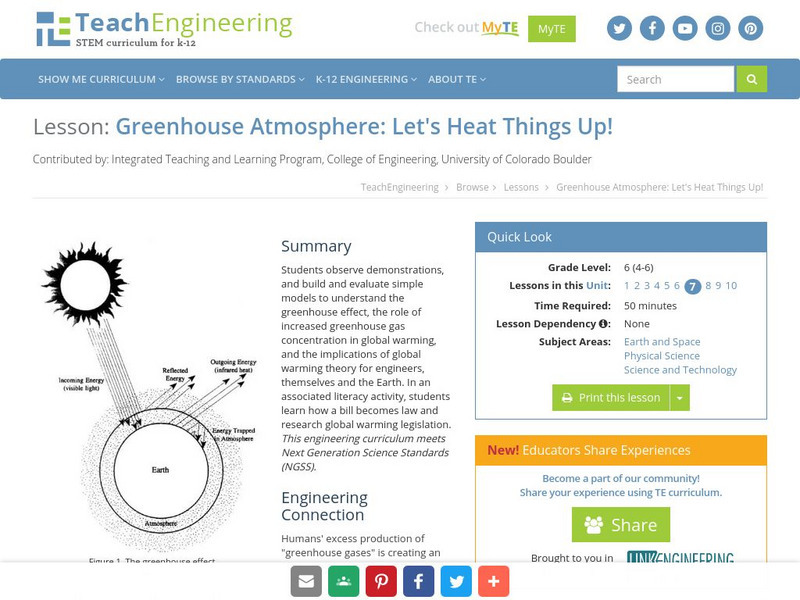
Teach Engineering: Let's Heat Things Up!
Students observe demonstrations, and build and evaluate simple models to understand the greenhouse effect, the role of increased greenhouse gas concentration in global warming, and the implications of global warming theory for engineers,...
TeachEngineering
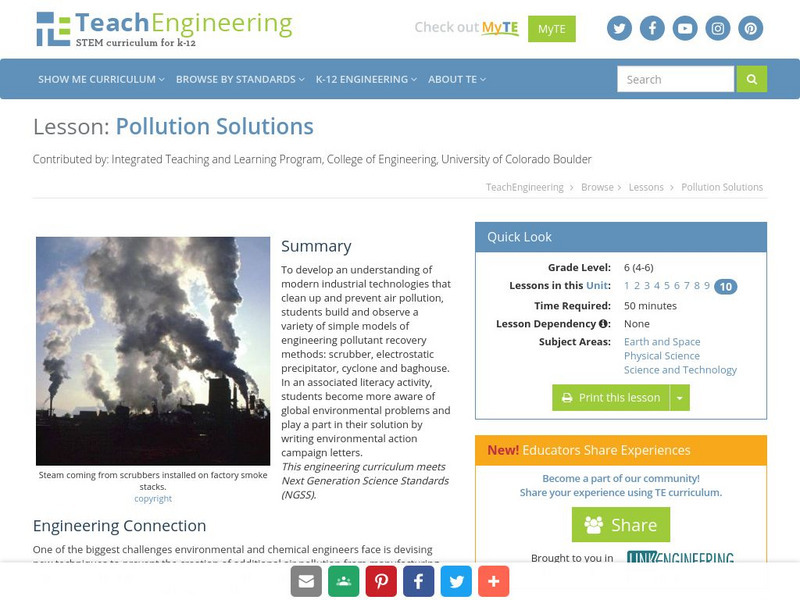
Teach Engineering: Pollution Solutions
To develop an understanding of modern industrial technologies that clean up and prevent air pollution, students build and observe a variety of simple models of engineering pollutant recovery methods: scrubber, electrostatic precipitator,...

TeachEngineering
Teach Engineering: A Mini World
As students learn about the creation of biodomes, they are introduced to the steps of the engineering design process, including guidelines for brainstorming. Students learn how engineers are involved in the design and construction of...