Hi, what do you want to do?





CK-12 Foundation
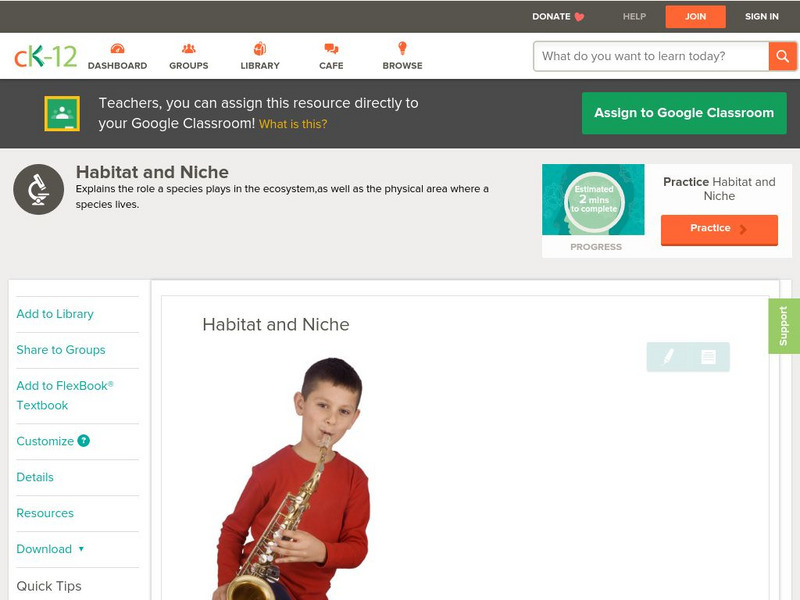
Ck 12: Life Science: Habitat and Niche
[Free Registration/Login may be required to access all resource tools.] Are you on the basketball team? Are you a cheerleader? Do you play an instrument in the band? Your niche would be your role or place in the school. Organisms also...

Science Struck
Science Struck: Interspecific Competition: Definition, Examples
Interspecific competition in an ecosystem is explained, along with the different ways it can manifest itself. Includes examples in different types of biomes.
PBS
Pbs Learning Media: A Subsistence Culture Impacted by Climate Change
This short video explains how warmer temperatures in the Arctic are transforming the ecosystem and affecting the Athabaskan people, threatening their way of life. [2:59]
Other
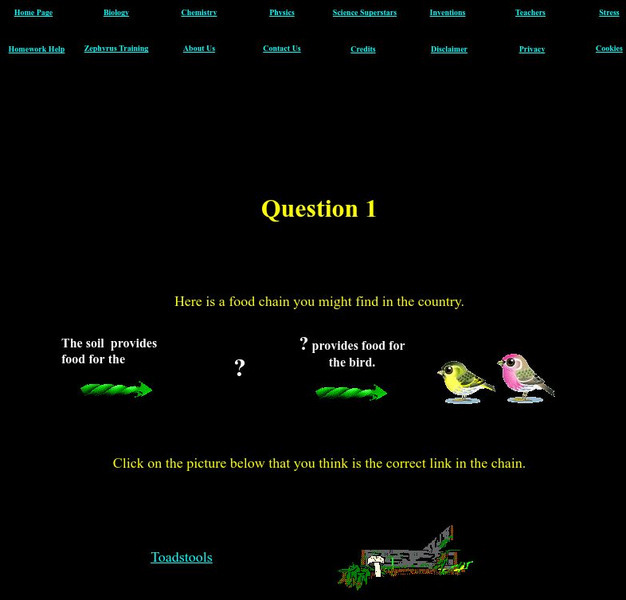
Zephyrus: Food Puzzle Chain
Answer these ten interactive questions about ecological feeding relationships by choosing the correct image that completes each food chain.
Other
Pde Sas: Relationships Among Organisms
In this lesson, learners compare various types of relationships among organisms (i.e., biotic interactions). Students will: explain the roles of producers and consumers, and predators and prey in an ecosystem. Explain the levels of order...
TeachEngineering
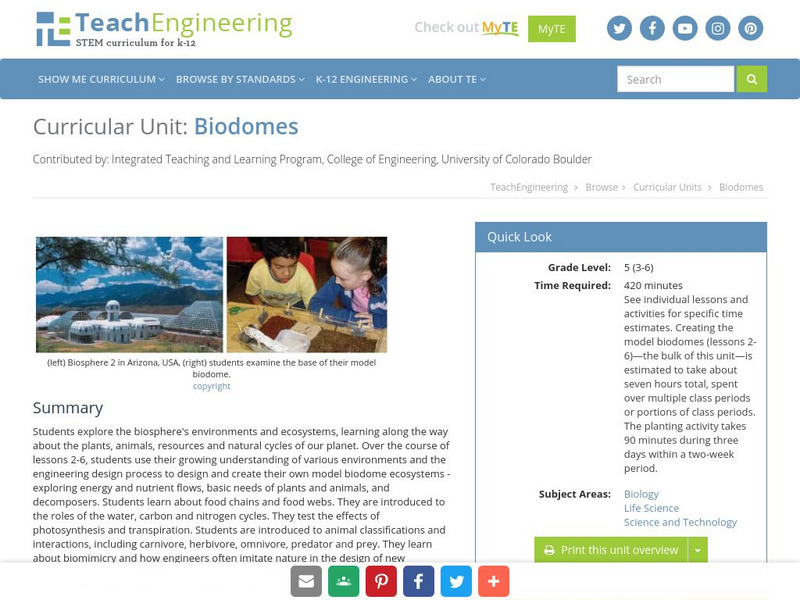
Teach Engineering: Biodomes
Students explore the biosphere's environments and ecosystems, learning along the way about the plants, animals, resources and natural cycles of our planet. Over the course of lessons 2-6, students use their growing understanding of...
PBS
Pbs Learning Media: Reclaiming Habitat for Honeybees
Explore the role of pollinators in their ecosystems, develop a written response to one of three questions about the importance of honeybees, gather evidence about Coal Country BeeWorks' efforts to reclaim surface mining sites,.
NOAA
Noaa: Estuaries 101 Curriculum: Seasonal Swings
Students use an interactive map to compare environmental conditions in different estuaries around the National Estuarine Research Reserve System. A second activity allows students to use the Graphing Tool to find, select, and graph data...

ClassFlow
Class Flow: Understanding Ecosystems
[Free Registration/Login Required] This flipchart will help students to learn about ecosystems and the living and nonliving things that interact in them.
Science Education Resource Center at Carleton College
Serc: Environmental Interactions: Connectedness of a Natural System
A field experience where students undergo an exploration in a natural environment. They are introduced to the concepts of species, population, community, ecosystem, niche, and biosphere.
American Museum of Natural History
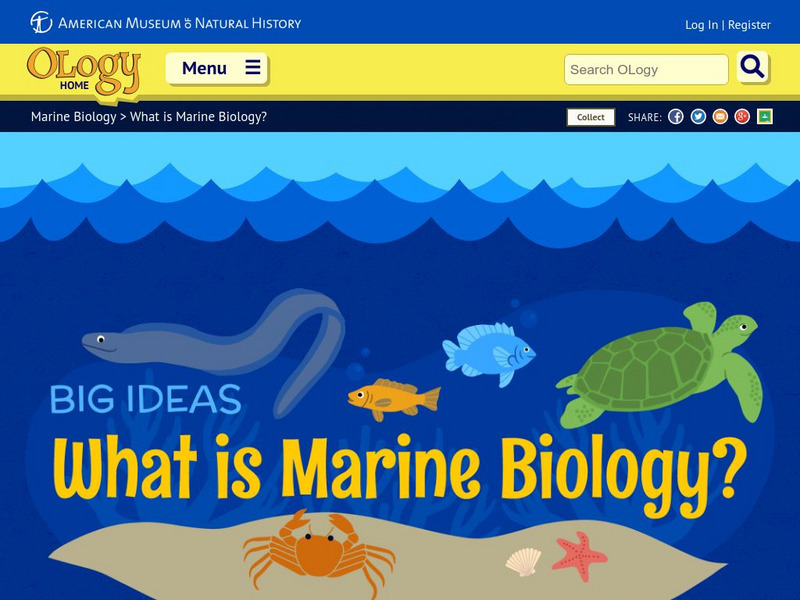
American Museum of Natural History: O Logy: What's the Big Idea? Marine Biology
An introduction to key concepts about the ocean, its ecosystems, and zones. With interactive flash cards that open in new windows to help you learn more.
Other
Lucidchart: The Importance of Sociotechnical Systems
The increase of organizations that rely on both technology and human interaction has given way to more holistic approaches grounded in sociotechnical systems theory. Appreciating how these systems function together helps you visualize...
Nature Conservancy
Nature Conservancy: California, Protecting the Golden State
Explore the rich habitats and natural beauty of the California landscape in this interactive video.
Georgia Department of Education
Ga Virtual Learning: Ap Biology: Ecology
Students review the study of living things and make connections back to Earth's systems. This unit focuses on how various species, grouped in populations and communities, work with the nonliving things around them to ensure survival.
BiologyWise
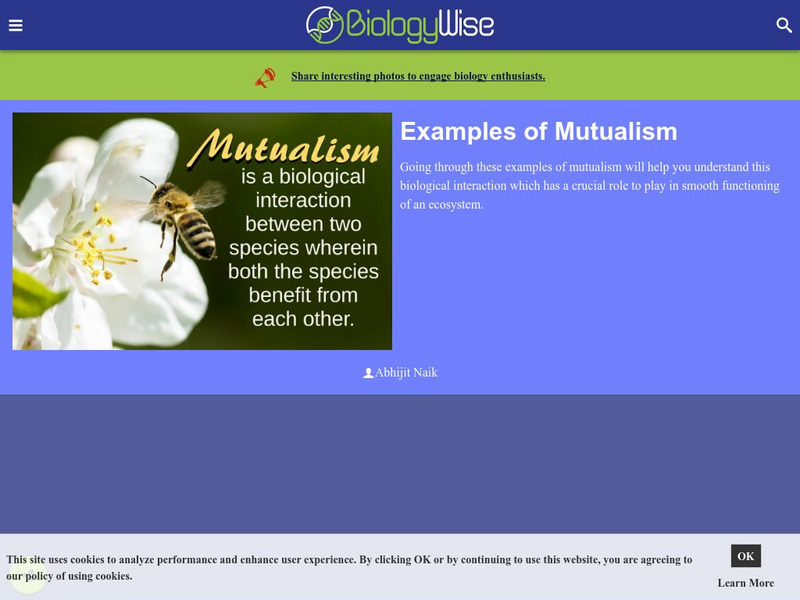
Biology Wise: Examples of Mutualism
Describes the role of mutualism in an ecosystem and the different types, and provides examples.
University of Nebraska
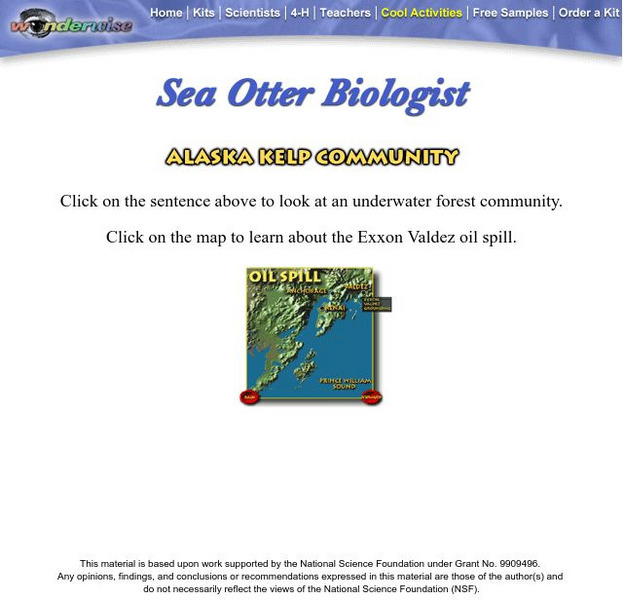
University of Nebraska State Museum: Alaska Kelp Community
Discover the ecological relationships of six different organisms living in the Alaskan kelp community. The site also contains an interactive map showing the time line for the spread of the Exxon Valdez oil spill.
Quizlet
Quizlet: 7th Grade Science: Vocabulary: Learn
In this interactive practice exercise, students fill in the blank with the vocabulary words when given their definitions. There are 99 science vocabulary words in the list.
Science Struck
Science Struck: Mutualism Relationships
Learn how mutualism benefits the organisms in a symbiotic relationship and what the different types of mutualism are. Provides lots of examples.
Other
Passport to Knowledge: Passport to the Rain Forest
Follow in Darwin's footsteps to the heart of our planet's largest rainforest, guided by some of the world's leading biologists. Content uses pictures, video, real-time interactions, and activities, to fully explore the rain forest from...
Georgia Department of Education
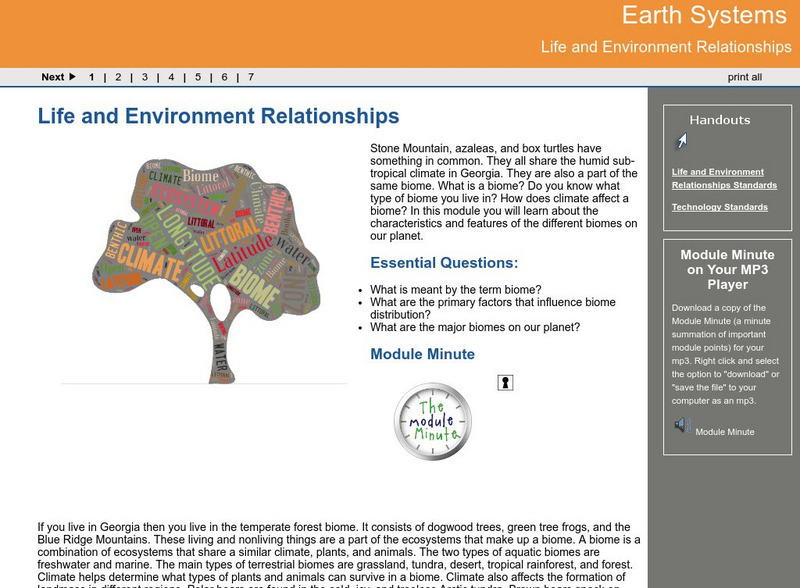
Ga Virtual Learning: Life and Environment Relationships
In this amazingly comprehensive interactive tutorial you will learn about the characteristics and features of the different biomes on our planet.

NOAA
Noaa: Estuaries 101 Curriculum: Estuary Food Pyramid
Students learn about the feeding relationships in an estuary ecosystem with this interactive energy pyramid activity. A second activity involves research and a video clip to elaborate the learning.
PBS
Pbs Learning Media: Biomes
This interactive resource adapted from NASA describes the different temperature, precipitation, and vegetation patterns in seven biomes: coniferous forest, temperate deciduous forest, desert, grassland, rainforest, shrubland, and tundra.
Sophia Learning
Sophia: Living Organisms and Their Environment: Lesson 2
This lesson will discuss the interactions of and interdependence among living things. It is 2 of 4 in the series titled "Living Organisms and Their Environment."
Sophia Learning
Sophia: Living Organisms and Their Environment: Lesson 3
This lesson will discuss the interactions of and interdependence among living things. It is 3 of 4 in the series titled "Living Organisms and Their Environment."