Hi, what do you want to do?






Childnet
Childnet: Facebook: Privacy Checks and Third Party Apps
Practical steps to take to ensure your Facebook account is safe.
Get Safe Online
Get Safe Online: Videos
There are many security threats today associated with internet use. This site presents some online videos that discuss security issues such as online rip-off schemes, protecting privacy, and protecting your computer from online attacks.
PBS
Pbs Learning Media: Frontline: Generation Like: What Are Teens Doing Online?
Examine facts and figures on how teens use the Internet in this infographic from FRONTLINE: Generation Like. Ninety-five percent of teens use the Internet. The infographic details which forms of technology they use to access the...
Get Safe Online
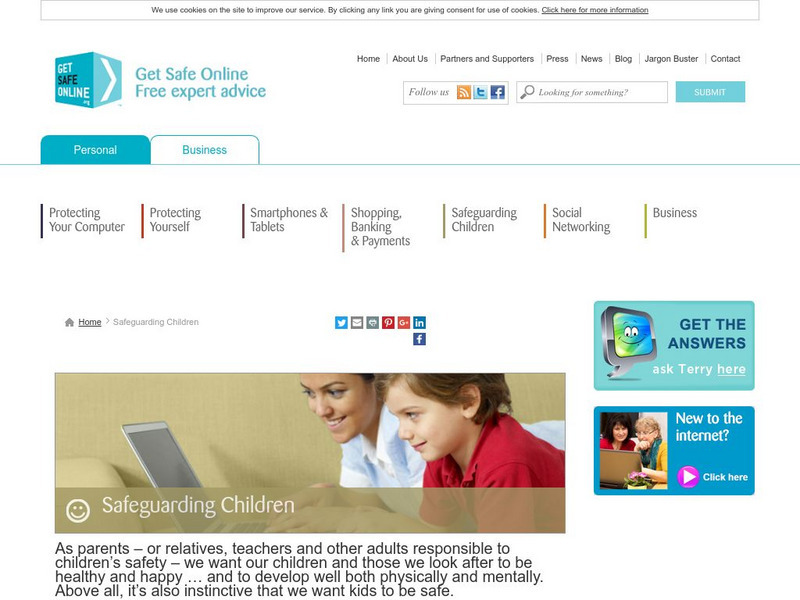
Get Safe Online: Safeguarding Children
The internet is a great resource, but it can also be dangerous. This resource contains many links to online safety resources for parents, teachers and students.
Get Safe Online
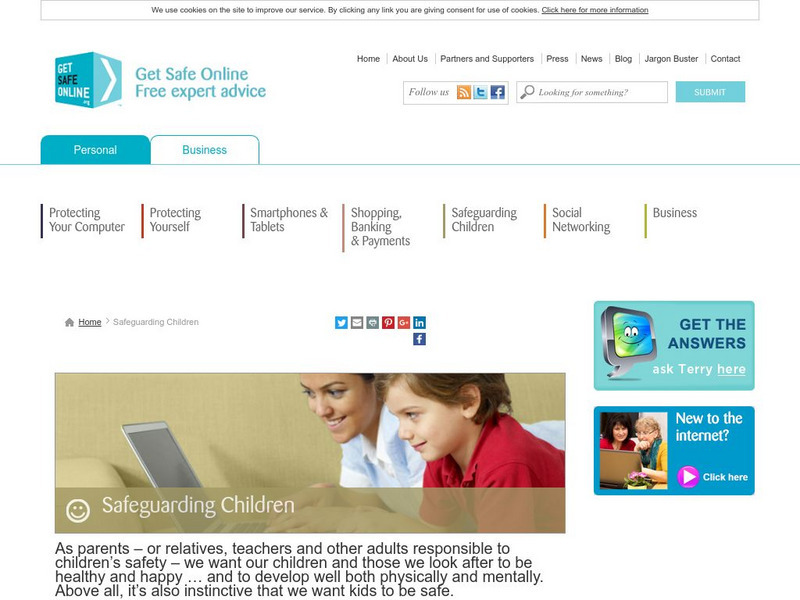
Get Safe Online: Safeguarding Children
The internet is a great resource, but it can also be dangerous. This resource contains many links to online safety resources for parents, teachers and students.
Other
Kings Canyon Unified School District: Digital Citizenship Lesson [Pdf]
A lesson script to use with students before viewing a 5-minute video called Faux Paw's Adventures on the Internet, and for reviewing the rules of Internet safety after watching the video. The video can be found on Youtube by searching...
Common Sense Media
Common Sense Media: Education: Strong Passwords (3 5)
Young scholars learn how to create secure passwords in order to protect their private information and accounts online. They learn tips for creating safe passwords. They explore scenarios in which two characters choose passwords, and they...
Common Sense Media
Common Sense Media: Education: Keep It Private (K 2nd Grade)
This lesson plan for young students will teach them the basics of staying safe online. Students review what information is private and should not be shared without a trusted adult's permission. Students then view sites that ask them to...
Common Sense Media
Common Sense Media: Education: Lesson: Talking Safely Online (Grades 3 5)
During the course of this lesson students learn that while people can develop rewarding friendships online, they should be cautious with online-only friends and never reveal private information without asking a parent or trusted adult...
Common Sense Media
Common Sense Media: Education: Private and Personal Information (3 5)
As students visit sites that request information about their identity, they learn to adopt a critical inquiry process that empowers them to protect themselves and their families from identity theft. They learn the difference between...
Common Sense Media
Common Sense Media: Education: Advertising Detectives
Students learn to recognize five different kinds of online ads prevalent on children's sites. They learn how to distinguish advertising content from other content on a website. Free membership required.
Common Sense Media
Common Sense Media: Education: Trillion Dollar Footprint: Grades 6 8
Young scholars learn that they have a digital footprint, which can be searched, shared, and seen by a large, invisible audience. They then learn that they can take some control over their digital footprint based on what they post online....
Common Sense Media
Common Sense Media: Education: Staying Safe Online (K 2)
Students understand that they should stay safe online by choosing websites that are good for them to visit, and avoiding sites that are not appropriate for them. They learn about the similarities of staying safe in the real world and...
Common Sense Media
Common Sense Media: Education: Lesson: Follow the Digital Trail: K 2
Learners learn that the information they put online leaves a digital footprint or "trail." This trail can be big or small, helpful or hurtful, depending on how they manage it. Free membership required.
Childnet
Childnet: Online Safety: Video Calls
Video calling allows us to speak to our friends and family, and see their faces, which is especially valuable when we are unable to see them in person. It has also allowed lessons, and contact with schools, to continue during the...
Childnet
Childnet: Online Safety: Online Reputation
The things online that you have liked, shared and commented on, as well as what others have shared about you, may shape what other people think about you; this is your online reputation. This site features questions, answers, and tips to...
Childnet
Childnet: Online Safety: Online Grooming
Online grooming is when someone builds a relationship with a young person online because they want to trick or pressure them into doing something that may hurt or harm them. This site provides questions, answers, and tips about online...
Curated OER
Kids Health: Online Identity
What is your online identity? Do you share too much on social networking sites like Facebook or MySpace? Learn safe behavors to follow when you are online to prevent cyberbullying and identity theft.
Other
Google Chrome Team: 20 Things I Learned About Browsers and the Web
How much do you know about browsers and the Web? In this short guide, you can find the answers to things you've always wanted to know such as cloud computing, cookies, phishing, plug-ins, applications, and much more.
Other
Be Web Aware : Social Networking
An informative article looking at teens and social networking. What is it? What should parents know and the need to encourage privacy issues in these open forums of social interaction.
Get Safe Online
Get Safe Online: Safe Social Networking
Social networking sites are very popular. They also expose people to certain risks, such as online bullying, loss of privacy, cyber stalking and other problems. This resource describes some of the risks with social networking sites and...

Texas Instruments
Texas Instruments: Numb3 Rs: Onion Peeler
Based off of the hit television show NUMB3RS, this lesson introduces students to the concept of changing number bases, as well as gives some insight into Internet privacy through "onion routing." Students translate hexadecimal numbers...
PBS
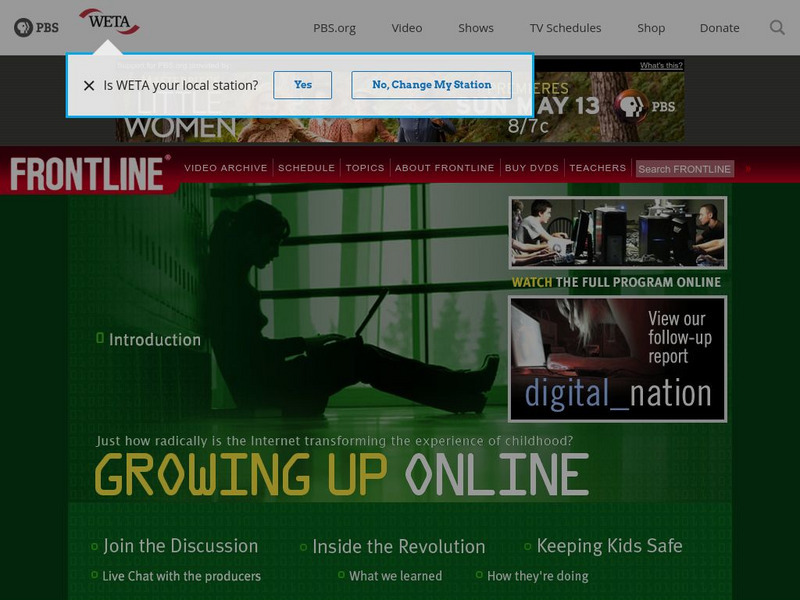
Pbs Frontline: Growing Up Online
Information and analysis on the practices and habits of children and teens who live their lives online. Focus is on teen culture in the digital age and on how online media have intensified fears of the dangerous dimensions of adolescence.
Other
Common Sense Media: Strong Passwords [Pdf]
In this lesson plan, young scholars learn how to create secure passwords in order to protect their private information and accounts online.