Hi, what do you want to do?






Curated OER
Using Saber and Conocer
What is the difference between saber and conocer? Language learners sometimes have difficulty with these words because of their similar meaning. Clear up confusion with the information and presentation included here. The website and...

Curated OER
Tener
What does tener mean? Introduce your Spanish novices to this important verb. First, they fill out the conjugation chart. Next, they read the examples and explanation as a whole class. There's a short practice activity at the end to...

Curated OER
El Imperfecto
You class can learn all about how to form the imperfect with -ar and -er/-ir verbs. The slides do cover the only verbs that are irregular in the tense and the situations for which you use the imperfect (plus examples). Go over the...

Curated OER
Present Progressive Tense
Teaching the present progressive? Your class needs this informative handout! Consider reading it through with them and stopping occasionally to provide practice opportunities or board examples.

Curated OER
El verbo tener-Explanation
Introduce your beginning Spanish speakers to the verb tener. The chart at the top of the page details the basic present tense conjugation, and the examples that follow show the different ways that tener is used. While no practice...

Curated OER
El Preterito
The preterite form of verbs is explained in the second slide of this PowerPoint. It is followed by different examples of preterite endings for Spanish verbs and important tips. Tips: Introduce your lesson with this colorful PowerPoint!

Curated OER
El Modo Subjunctivo
Introduce your students to the Spanish subjunctive verb forms with this informative PowerPoint. It includes definitions, examples, and a practice section to assess students.

Curated OER
Creative Dialogues en Espanol
Young scholars create a character that could be included in a dialog from stories about Isabel. They use a Venn Diagram to compare and contrast the characters. Students work in groups to create a new character and draw an illustration....

Curated OER
Using Ser and Estar
While ser and estar both mean to be, they are each used in different situations. This is often confusing for Spanish language learners. Clarify these verbs for your class with direct instruction. The information included on...

Curated OER
Spanish II
Students listen actively to the teacher go over the note sheet and copy down other important information not on the sheet and ask questions about what they do not understand. They then use this information to help them complete...
Study Languages
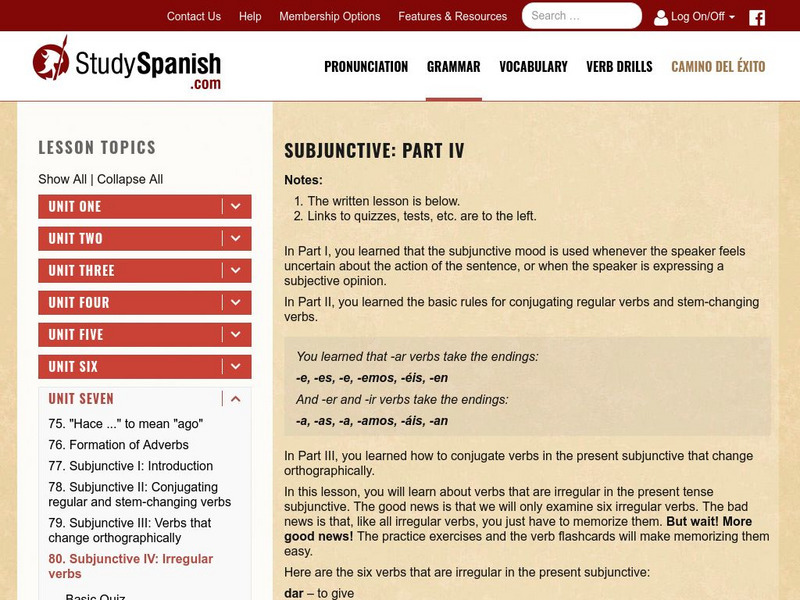
Study Spanish: Subjunctive: Irregular Verbs
Great explanation of how to conjugate the six irregular verbs in the present subjunctive: dar, estar, haber, ir, saber, and ser. A quiz at the end of the lesson tests the student's mastery of irregular conjugations in the present...
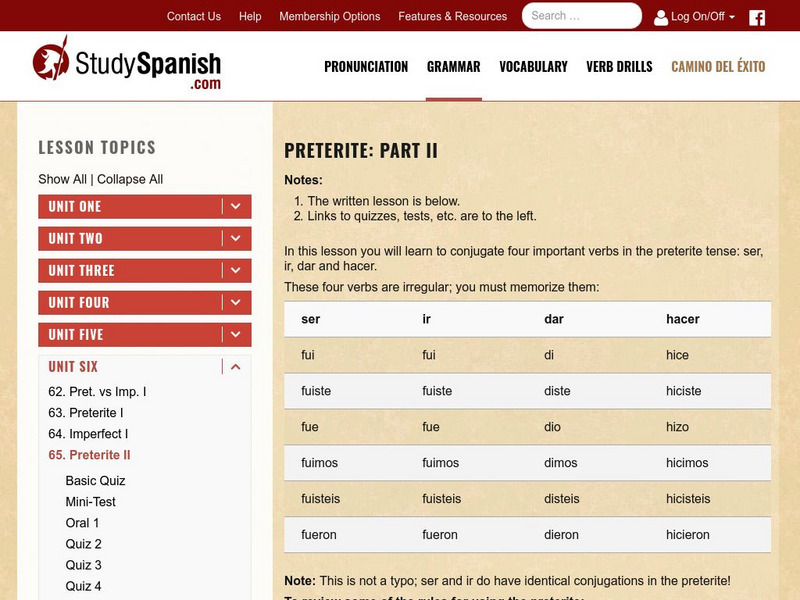
Study Languages
Study Spanish: Preterite Part 2
This site is an introduction to four common irregular verbs in the preterite tense: ser, ir, dar, and hacer. A quiz at the end of the lesson tests the student's mastery of these irregular conjugations.

Languages Online
Languages Online: The Subjunctive in Spanish
Wonderful practice conjugating verbs in the present subjunctive. Sentences illustrate conjugations that have spelling changes or are regular, irregular, or stem-changing verbs. The "vosotros" form is used in some exercises. All six...
Languages Online
Languages Online: The Future Tense
A great explanation of how to conjugate the future tense introduces six exercises that practice regular and irregular verbs. The "vosotros" form is also used. One exercise involves converting the verbs from present tense to future, and...
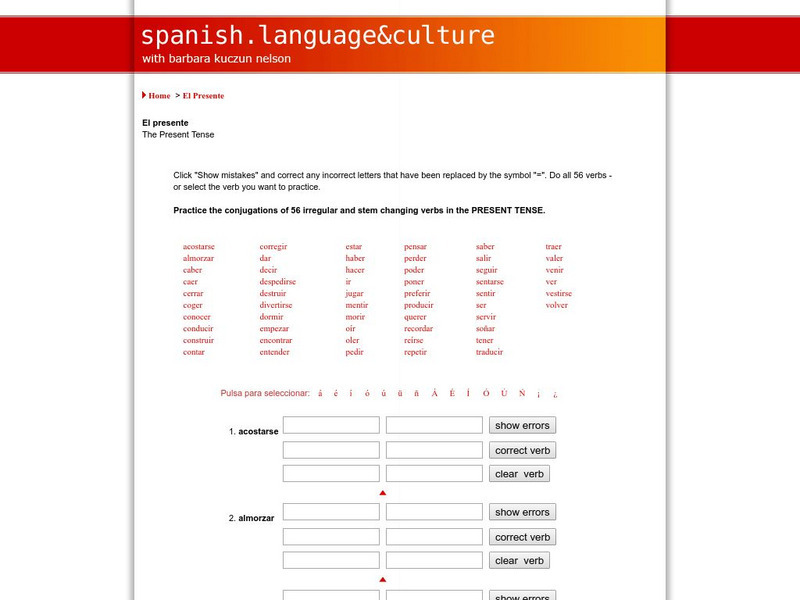
Colby College
Spanish Language & Culture: El Presente
This Spanish grammar exercise provides excellent practice conjugating verbs in the present indicative tense. Fifty-six different infinitives give the student plenty of practice with regular, irregular, and stem-changing conjugations. A...
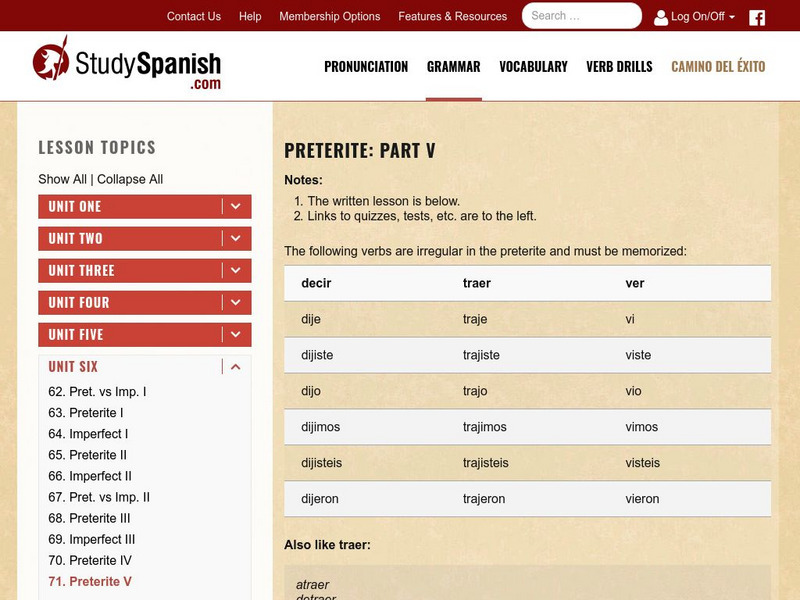
Study Languages
Study Spanish: Preterite Part 5
Great lesson on some of the most common irregular verbs in the preterite tense: decir, traer, ver, and producir. A quiz at the end of the lesson tests the student's mastery of these conjugations.
Study Languages
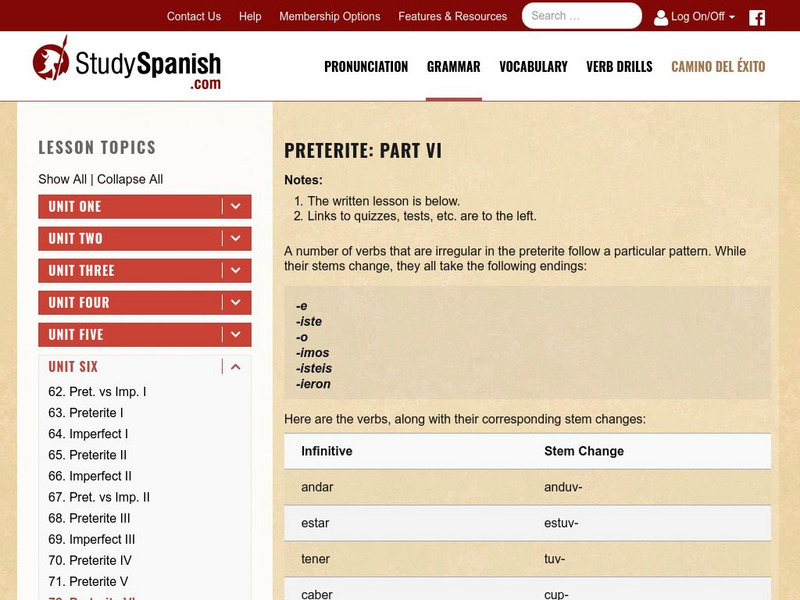
Study Spanish: Preterite Part 6
Great lesson on some of the most common irregular verbs in the preterite tense that follow the same pattern for their endings: andar, estar, tener, caber, haber, poder, poner, saber, hacer, querer, and venir. A quiz at the end of the...

Other
Spanish Learn It Online: Spanish Verb Conjugation
A terrific tool from Spanish-Learn It Online for training students in understanding how to correctly conjugate regular verbs in the present tense. Complete conjugations for the selected verb tense are also available.
Language Guide
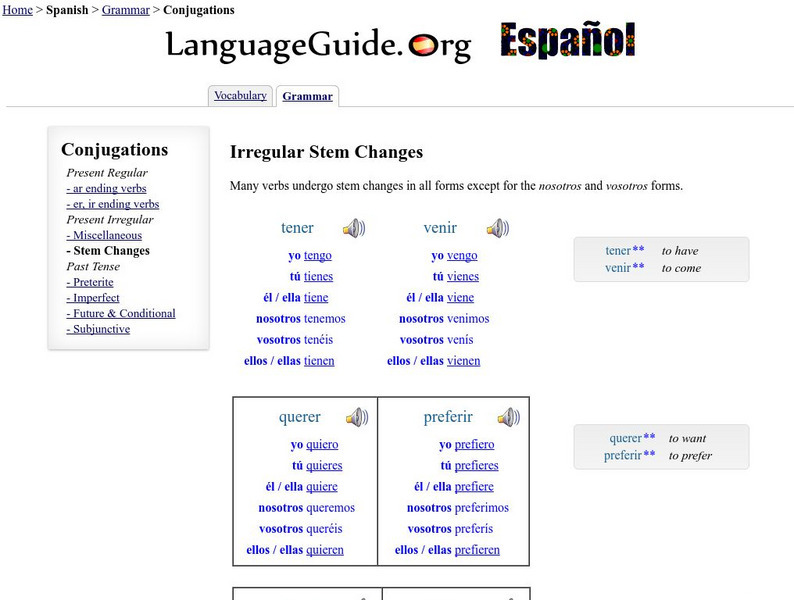
Language Guide: Irregular Stem Changes
Learn and practice the correct formation of stem changing verbs in Spanish. A link to interactive verb conjugation practice is provided under the grammar explanation.
Trent University
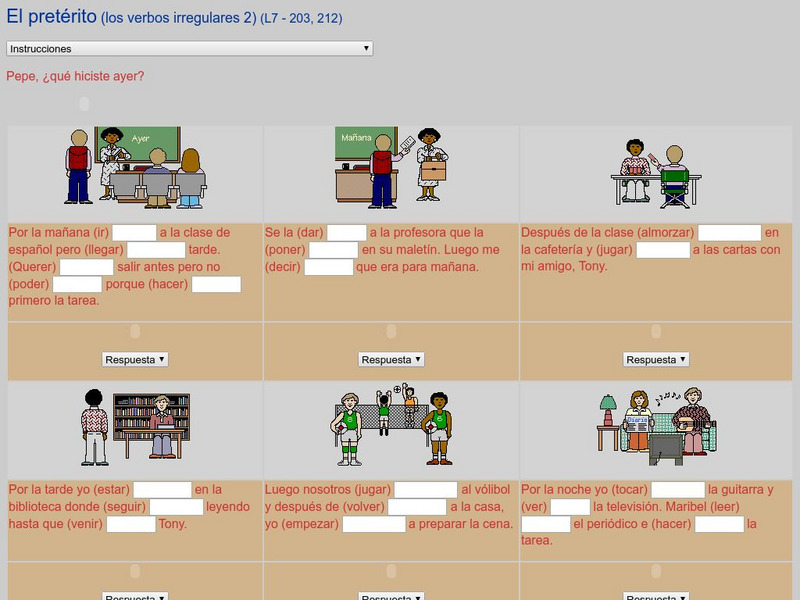
Mas Arriba: El Preterito (Los Verbos Irregulares 2)
Through this exercise, students practice conjugating a variety of irregular verbs in the preterite tense. Read the sentences, view the picture and type in your response. To check your answer just click on the drop down arrow next to...
Languages Online
Languages Online: Regular Present Tense
A brief explanation of regular present tense conjugations introduces a variety of nine exercises that practice each type of conjugation -ar, -er, and -ir. Endings are first matched to pronouns, and then gap-fill exercises provide verb...
Colby College
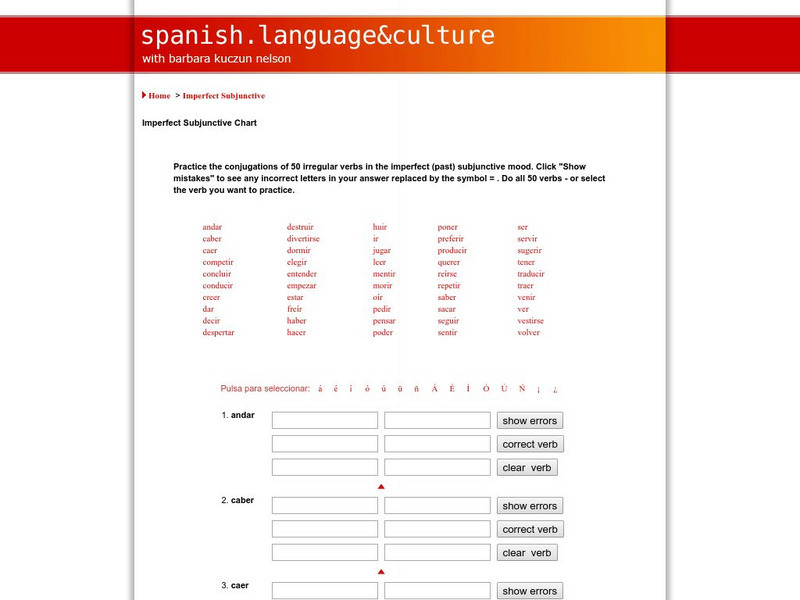
Spanish Language & Culture: Imperfect Subjunctive
This Spanish grammar exercise provides excellent practice conjugating verbs in the past subjunctive tense in verb charts. Fifty different infinitives give the student plenty of practice with conjugations of the imperfect subjunctive....
Colby College
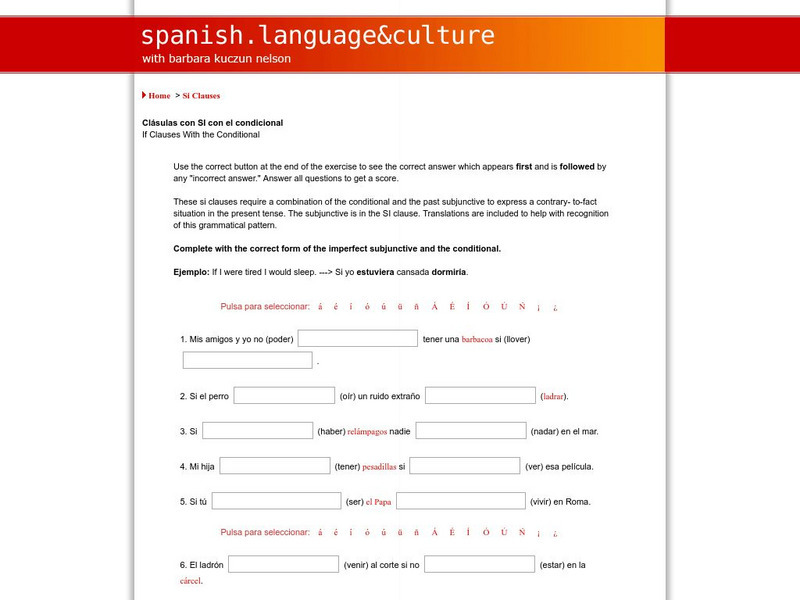
Spanish Language & Culture: Past Subjunctive Si Clauses
This Spanish grammar exercise provides adequate practice conjugating verbs in the conditional tense and in the past subjunctive in sentences that contain "if" clauses. Answers may be checked and corrected.
Colby College
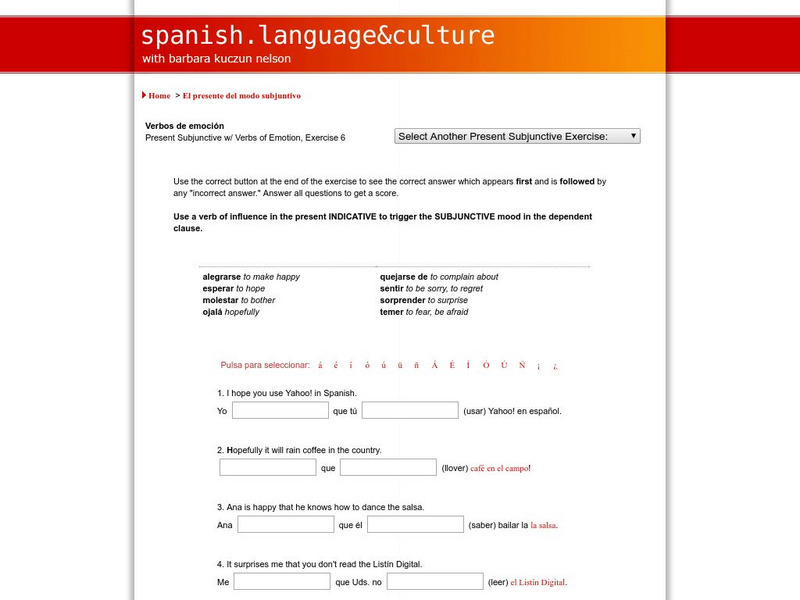
Spanish Language & Culture: Subjunctive Verbs of Emotion
With the English translation as a guide, the student completes the Spanish equivalent by conjugating the verb of emotion into the present indicative and the verb in the noun clause into the present subjunctive. Good practice for spelling...