Hi, what do you want to do?






Curated OER
Galaxies and the Universe
If Earth was formed 4600 million years ago, and the sun revolves about the center of the Milky Way once every 250 million years, how many revolutions have occurred? Students answer this question and ten more, all providing students with...

Curated OER
Great Blobs of Jelly!
Students explain how zoo-plankton have an impact on the global process. In this ocean zoo-plankton lesson students calculate carbon flux and plankton densities.

Curated OER
Ocean Drifters
Students define terms, and identify three ways in which plankton are adapted for life in the open ocean. In this ocean drift lesson students design a planktonic organism.

Curated OER
Do You Have the Key?
Students practice using a dichotomous key. In this classification lesson, students read an article about scientific exploration and identification of new species. They use a dichotomous key to identify objects and create their own key.

Curated OER
Outta Gas
Students explore practical problems that are related to scuba diving. In this oxygen lesson students complete a lab activity.

Curated OER
Let's Get Specific
Students explore how different species thrive. In this speciation lesson students research and complete a lab activity.

Curated OER
Metamorphosis Matching
Students view pictures of animals as they complete the metamorphosis from a larva to an adult. In this metamorphosis lesson plan, students view pictures and in the end are able to match pictures of a larva stage to an adult stage in...

Curated OER
You Are What You Eat: Plastics and Marine Life
Students study the different types of plastics and see which ones sink or remain buoyant. In this ocean environmental lesson plan students complete several handouts, and view a film on PBS.

Curated OER
All/The - class: making generalizations about the group
In this generalizations learning exercise, students change the form of the sentences to take the subject and change it into a group generalization. Students complete 8 sentences.

Curated OER
Nature Art Exploration
Young scholars draw a nature landscape using watercolors. In this life science lesson, students share their personal experience on the beauty of nature. They create clay models of different native animals.

Curated OER
Atlatl (Native Americans)
Students discover what an atlatl is and how to use it. In this Native American instructional activity, students discuss the history of the Native American atlatl and practice throwing with it. Students will analyze the effects of the...

Curated OER
Whale Adaptations
Students explore whales and how they have adapted to survive in the ocean. For this whale adaptations lesson students complete several activities that allow them to investigate animal adaptations.

Pittsburgh Zoo & PPG Aquarium
Pittsburgh Zoo: Cheetah
Sometimes confused with leopards, cheetahs have spots instead of rosettes. Cheetahs also have distinctive markings on their face, known as tear stripes. Use this resource to discover other fascinating facts about this fast land mammal.
Tramline
Tramline: Antarctica Field Trip
"What are the native land mammals of Antarctica? Do you know what Nanatuks are? Did you realize that if you use rainfall as a measure, Antarctica is by definition a desert?" Find the answers to these questions and more in this...
Canadian Museum of Nature
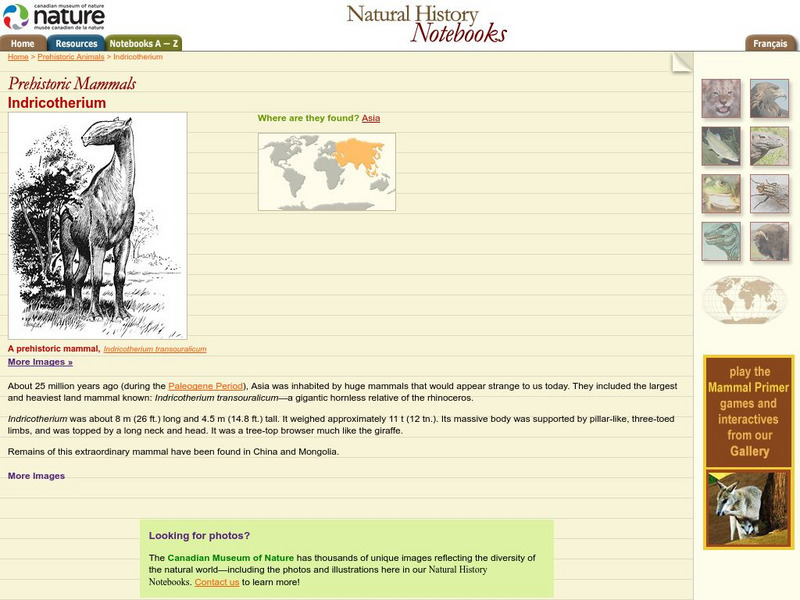
Canadian Museum of Nature: Indricotherium
The Canadian Museum profiles the largest land mammal known to humans-the Indricotherium.

Ducksters
Ducksters: Cheetahs
What are cheetahs? Kids find out about the big cat that is the fastest of the land mammals and lives in Africa.
Chicago Zoological Society
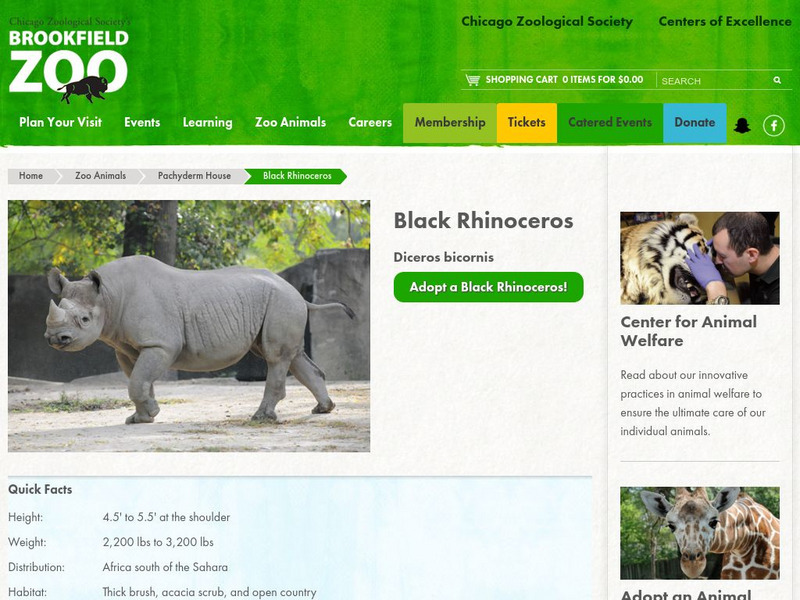
Chicago Zoological Society: Zoo Explorer: Black Rhinoceros
Familiarize yourself with the massive black rhinoceros by browsing this brief overview from the Brookfield Zoo. This animal guide includes quick facts and information on its appearance, habitat, eating habits, and other unique behaviors...
Science4Fun
Science4 Fun: Elephant
Learn about the appearance, diet, habitat, conservation, and other fun facts about this large land mammal.

NSTATE
Alaska State Symbols and Emblems
Find out all about the state symbols and emblems of Alaska. Clicking on the words under the heading "Symbol/Emblem" will usually provide a picture and more information. The date the symbol was adopted is also included.
San Diego Zoo Global
San Diego Zoo: Cheetah
This comprehensive resource from the San Diego Zoo presents extensive information on cheetahs including details about their habitat, physical characteristics, size, diet, family life, conservation status, and fun facts. Audio clip provided.
A-Z Animals
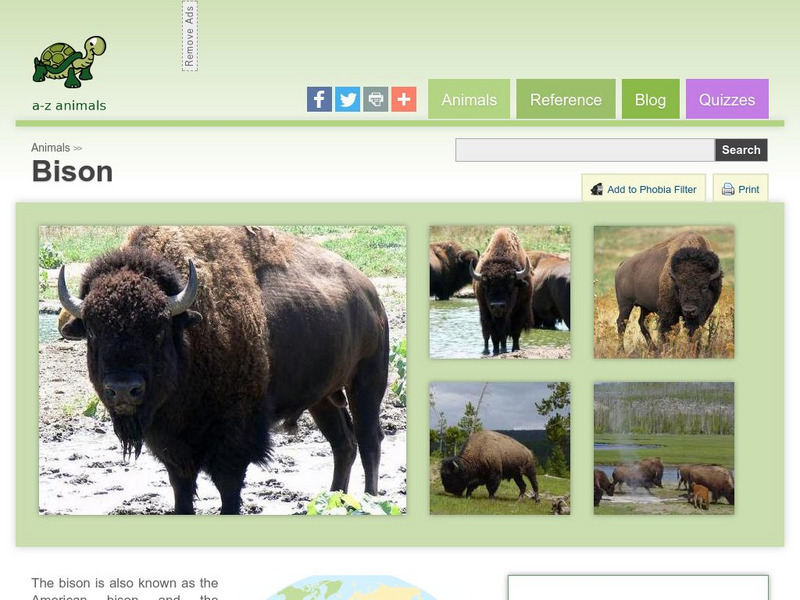
A Z Animals: Animal Facts: Bison (Bison Bison)
Investigate the world of the Bison and discover information on the appearance, habitat, and conservation status of the largest land mammal in North America. Includes images and statistics.
Nature Conservancy
Nature Conservancy: Animals We Protect: American Bison
Illustrated profile of the American bison, the largest land mammal in North America.
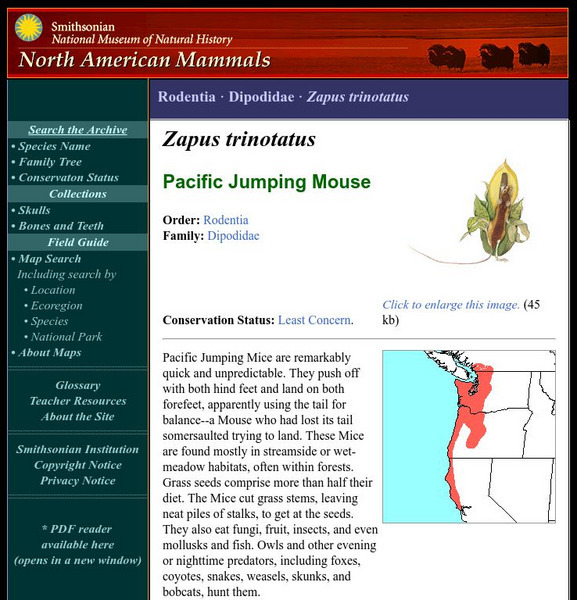
Smithsonian Institution
National Museum of Natural History: American Mammals: Pacific Jumping Mouse
Pacific Jumping Mice are remarkably quick and unpredictable. They push off with both hind feet and land on both forefeet, apparently using the tail for balance--a Mouse who had lost its tail somersaulted trying to land. Learn more about...
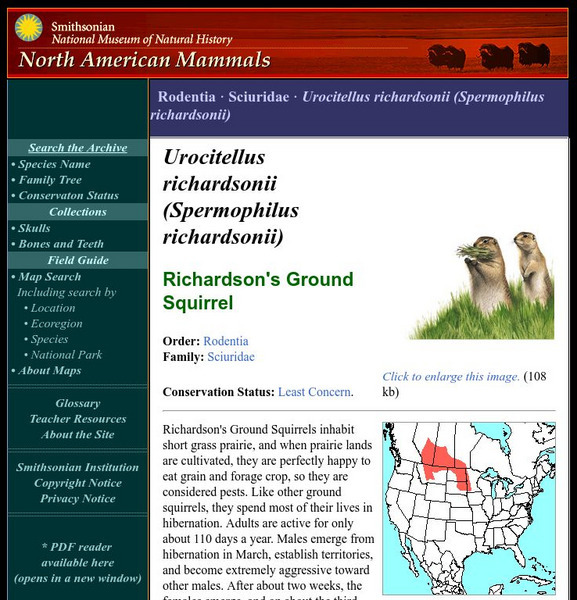
Smithsonian Institution
National Museum of Natural History: American Mammals: Richardson's Ground Squirrel
Richardson's Ground Squirrels inhabit short grass prairie, and when prairie lands are cultivated, they are perfectly happy to eat grain and forage crop, so they are considered pests. Like other ground squirrels, they spend most of their...