Hi, what do you want to do?






Smithsonian Institution
National Museum of Natural History: American Mammals: Lesser Long Nosed Bat
The lesser long-nosed bat is associated with arid grassland, scrub land, and tropical dry forest. Its daytime roosts include caves and abandoned mines, where upwards of 10,000 bats sometimes congregate. Learn more about the Leptonycteris...
Smithsonian Institution
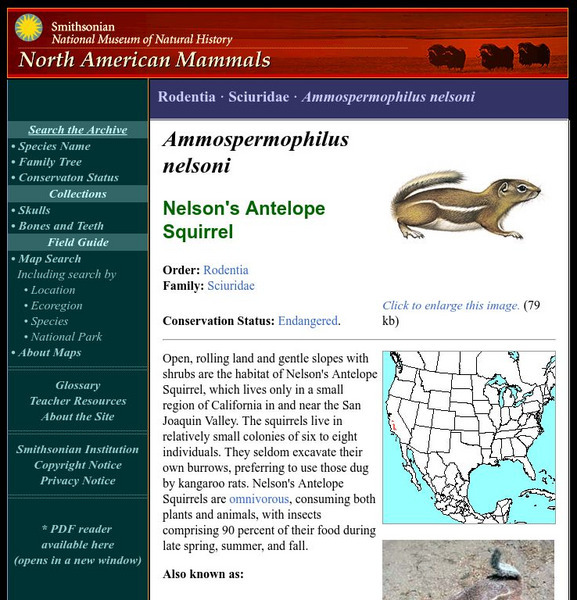
National Museum of Natural History: American Mammals: Nelson's Antelope Squirrel
Open, rolling land and gentle slopes with shrubs are the habitat of Nelson's Antelope Squirrel, which lives only in a small region of California in and near the San Joaquin Valley. The squirrels live in relatively small colonies of six...
Smithsonian Institution
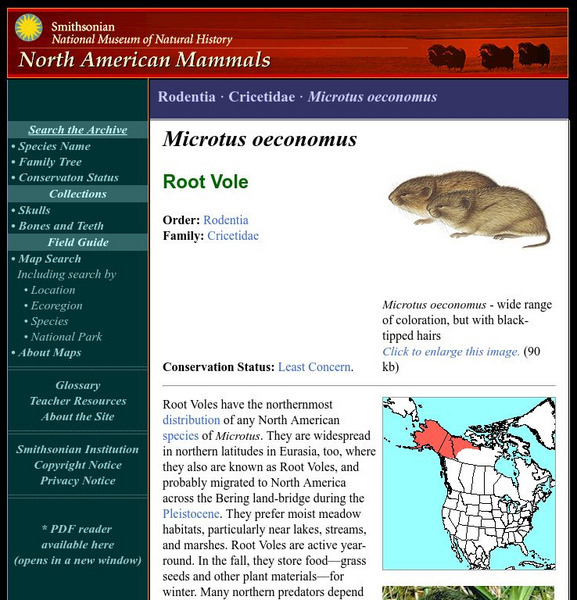
National Museum of Natural History: American Mammals: Tundra Vole
Tundra Voles have the northernmost distribution of any North American species of Microtus. They are widespread in northern latitudes in Eurasia, too, where they are known as Root Voles, and probably migrated to North America across the...
Smithsonian Institution
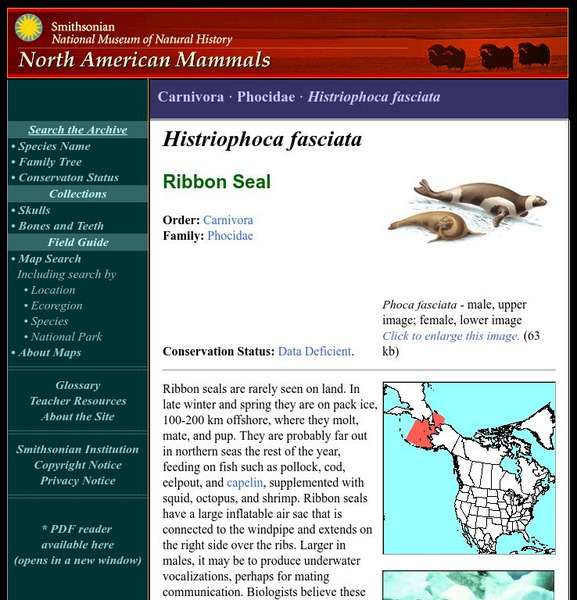
National Museum of Natural History: American Mammals: Ribbon Seal
Ribbon Seals are rarely seen on land. In late winter and spring they are on pack ice, 100-200 km offshore, where they molt, mate, and pup. Learn more about the Phoca fasciata, more commonly known as a Ribbon Seal, in this easy-to-read...
Smithsonian Institution
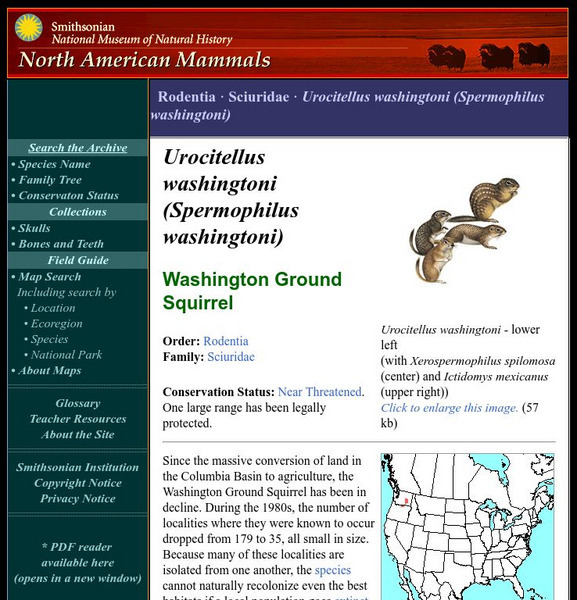
National Museum of Natural History: American Mammals: Washington Ground Squirrel
Since the massive conversion of land in the Columbia Basin to agriculture, the Washington Ground Squirrel has been in decline. During the 1980s, the number of localities where they were known to occur dropped from 179 to 35, all small in...

Smithsonian Institution
National Museum of Natural History: American Mammals: Merriam's Ground Squirrel
Merriam's Ground Squirrels live in high desert habitat dominated by big sagebrush, western juniper, and greasewood, and are also found in grasslands and agricultural lands. They eat grasses and forbs. Learn more about the Spermophilus...
Smithsonian Institution
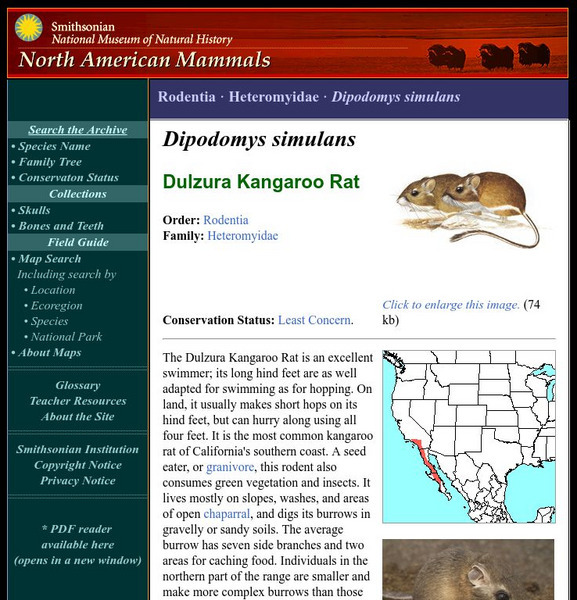
National Museum of Natural History: American Mammals: Dulzura Kangaroo Rat
The Dulzura Kangaroo Rat is an excellent swimmer; its long hind feet are as well adapted for swimming as for hopping. On land, it usually makes short hops on its hind feet, but can hurry along using all four feet. Learn more about the...

University of Southern California
Structure of Matter: Animals
A slide show that demonstrates the development of physical structure in the animal world, moving from sponges through mammals.

BBC
Bbc Nature: Walruses, Seals and Sea Lions
Dive in amongst the pinnipeds - the seals, walrus and sea lions - for a taste of what life is like for fin-footed, semi-aquatic mammals. Flat flippers help give these typically rotund, barrel-shaped animals an unlikely grace and beauty...
PBS
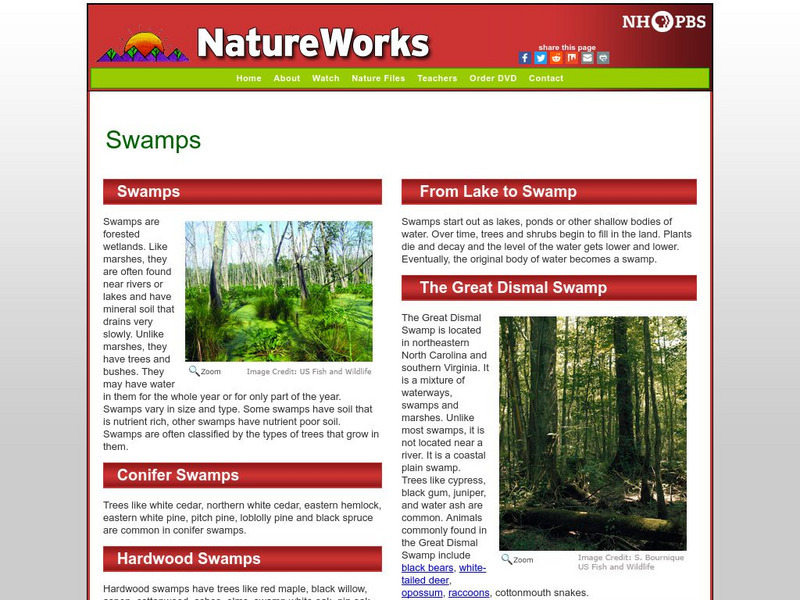
Nh Pbs: Nature Works: Swamps
What characteristics make a swamp a swamp? This site features information on the Great Dismal Swamp, Conifer Swamps, Okefenokee Swamps, Shrub Swamps, Hardwood Swamps, and Cypress Swamps. This site also offers some great photographs of...

Other
Encounters: Wild Explorer: Caribou
Scroll to Caribou to learn comprehensive facts about the lives of the fascinating caribou with pictures and sounds, by anthropologist, Richard Nelson.
Other
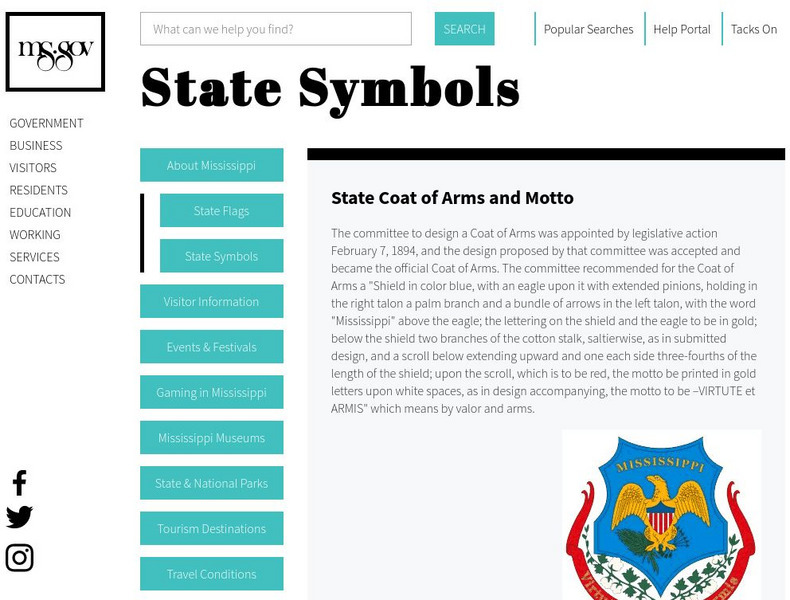
State of Mississippi: State Symbols
Here you'll find great information on the symbols for the state of Mississippi. Gives date of adoption, colorful pictures, and other important information about each symbol.
University of California
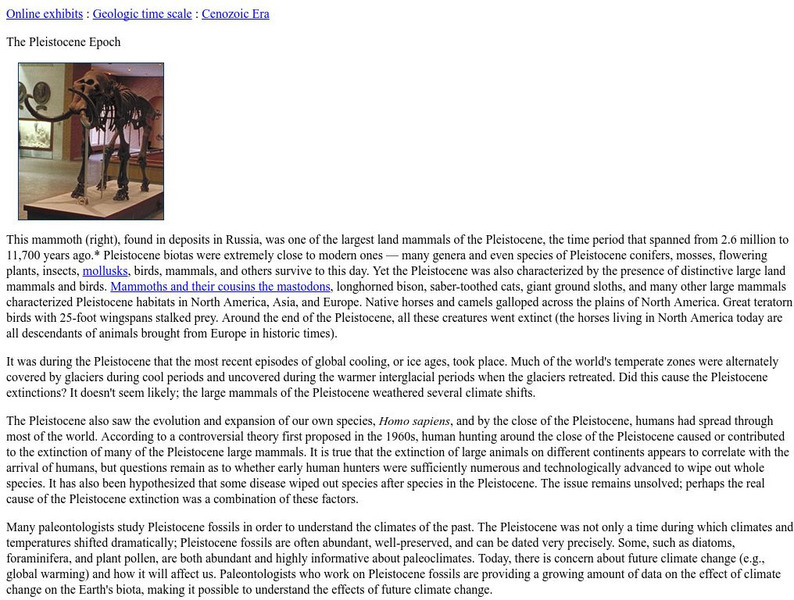
Ucmp: The Pleistocene
The UCMP Berkeley provides a brief overview of the Pleistocene Era, including links to more information.
Other
Encounters: Wild Explorers: Polar Bear
Learn fascinating facts about the incredible polar bear and listening to them growl.
BBC
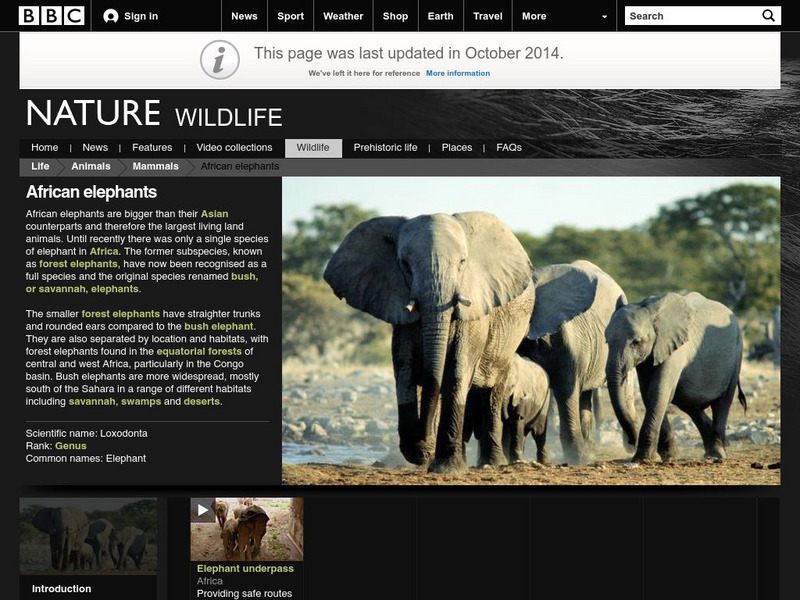
Bbc: Nature Wildfacts: Savannah Elephant
This resource provides information about Savannah elephants.
Other
Ocean Oasis: Field Guide
Ocean Oasis is a giant-screen film that depicts Mexico's Sea of Cortes and the Baja California desert. This companion site features much of the information the film has, such as beautiful images of animals, water, and land that have...
San Diego Zoo Global
San Diego Zoo: Kids: White Rhino
Colorful resource for learning fun facts about white rhinos with photographs as well as information regarding their physical characteristics and unique features.
Canadian Wildlife Federation
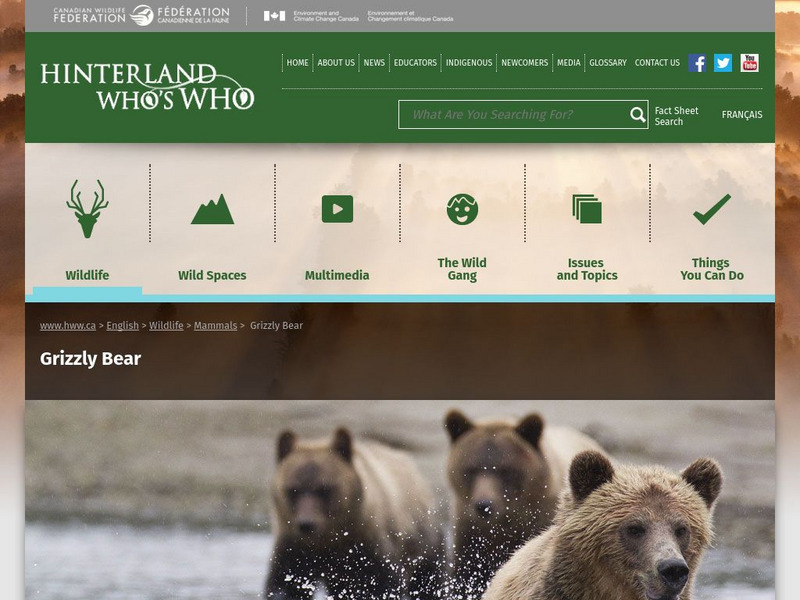
Hinterland Who's Who: Grizzly
Get the facts about the grizzly bear. Besides finding a detailed description of North America's second largest land carnivore, you'll also learn about some of its unique facts and characteristics. Also included in this Mammal Fact Sheet...
National Geographic Kids
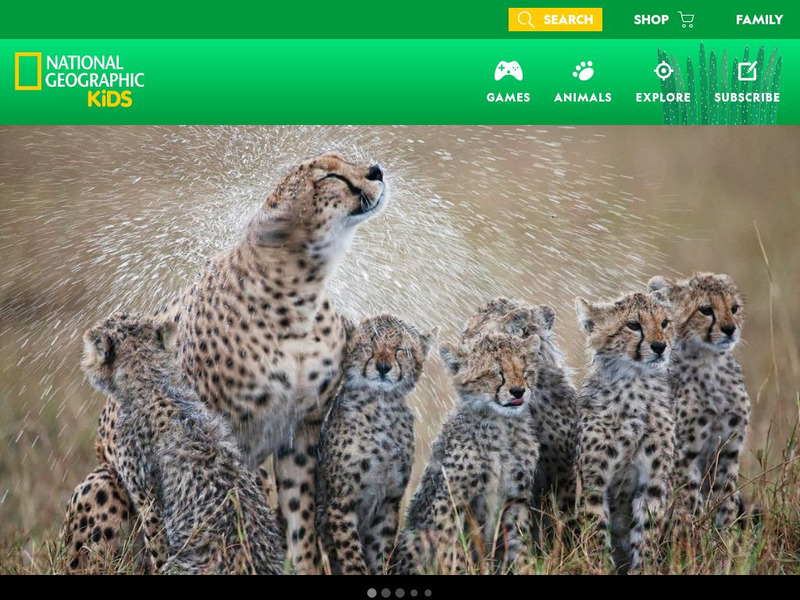
National Geographic Kids: Animals: Cheetahs
National Geographic provides great fun facts about this African cat. Find out where they live. Watch a cheetah in action. Listen to a cheetah purr.
Science4Fun
Science4 Fun: Giraffe
Fun and interesting illustrated information about the Giraffe, the tallest living land animal. [2:48]
Science4Fun
Science4 Fun: Cheetah
Interesting illustrated information on the fastest land animal on Earth, the Cheetah.
Pittsburgh Zoo & PPG Aquarium
Pittsburgh Zoo: Polar Bear
The polar bear is native to the Arctic Ocean and its surrounding seas. Use this resource to discover other unique facts about the largest carnivore found on land.
Pittsburgh Zoo & PPG Aquarium
Pittsburgh Zoo: African Elephant
The African elephant is the largest living land-dwelling animal. Use this resource to discover unique facts about this herbivorous animal.
Globio
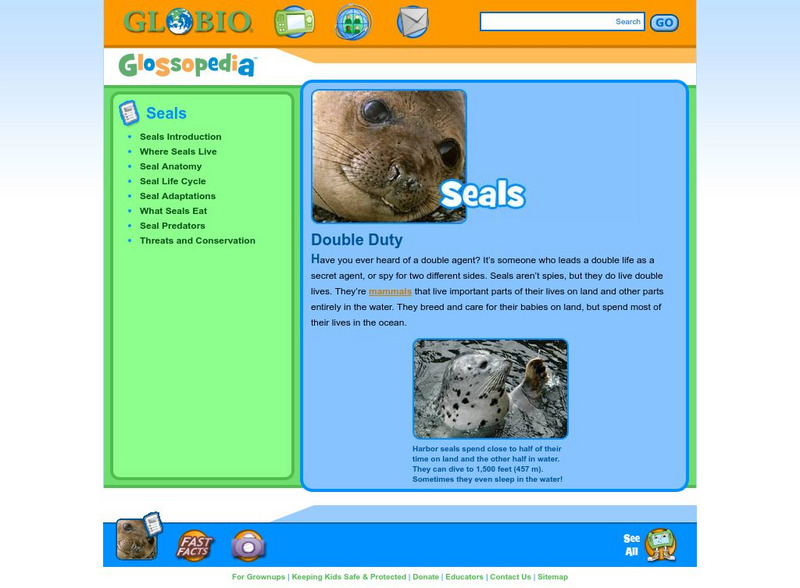
Glossopedia: Seals
Seals are mammals that live parts of their lives on land and other parts entirely in the water. They breed and care for their babies on land, but spend most of their lives in the ocean. This article provides an in-depth look at these...