Hi, what do you want to do?





OpenStax
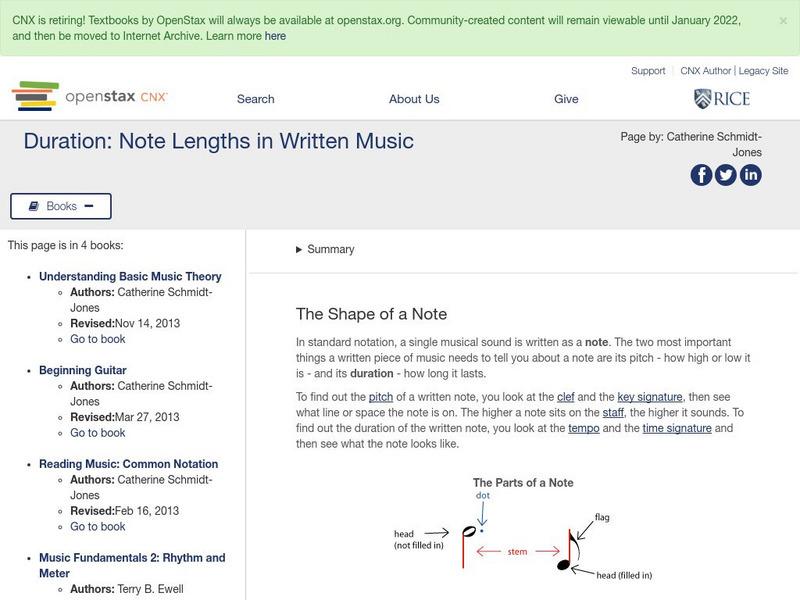
Open Stax: Catherine Schmidt Jones: Duration: Notes Lengths in Written Music
Read everything there is to know about the basics of notes. From their durations, their shapes and their stems, you will learn how notes are used in music.

Ducksters
Ducksters: Music for Kids: What Is a Musical Note?
What makes up a musical note? Kids can learn about pitch and music notation on this site.
Music Education
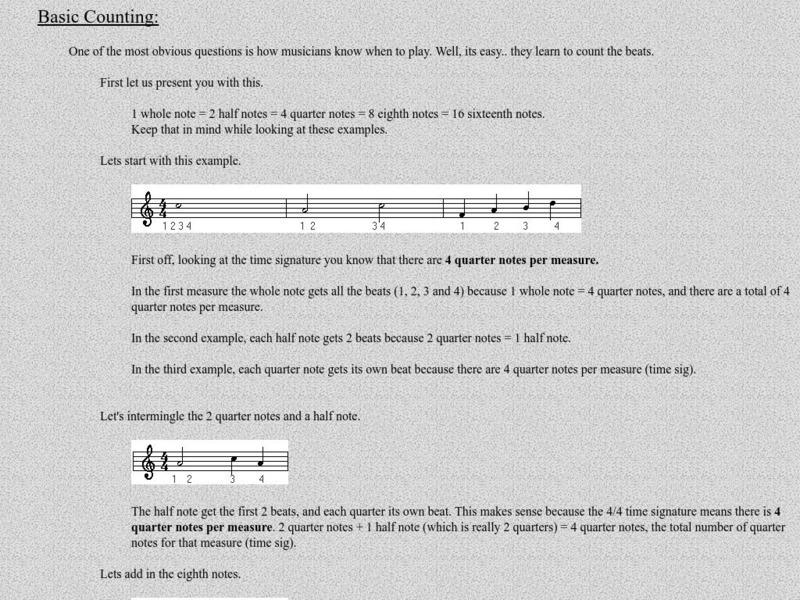
Learning to Read Music: Basic Counting
Apply basic knowledge of reading music by counting beats and reading notes. Here are some simple lines of music which incorporate different types of notes and patterns in common time.

Ducksters
Ducksters: Music for Kids: Listen, Play, Learn
On this site, students learn about brass, string, and woodwind musical instruments. Listen to tunes, discover artists, and find out how music and notes work.

Ducksters
Ducksters: Music for Kids: How Brass Instruments Work
Kids learn about how brass instruments work. Musical notes made with slides, valves, and bells.

OpenStax
Open Stax: Catherine Schmidt Jones: Pitch Sharp, Flat and Natural Notes
Learn about the meanings and uses of pitch and accidentals. Including sharp, flat, natural and double sharps and flats, this lesson explains why they are necessary.

Music Education
Learning to Read Music: Time Signatures
Beginning music students learn the definition of time signature and examples of time signatures in music.

Alabama Learning Exchange
Alex: Divorce: The Good, the Bad and the Ugly!
Lesson plan utilizing movies and music to explore divorce and its effects. Students use what they learn to create a parenting guide and podcast. (Note: Music and movies are not available through the lesson plan.)