Hi, what do you want to do?






Franco Cavazzi
The Roman Empire: Gaius Gracchus
A in-depth look at Gaius Gracchus' life as a leader in Rome. The article covers his election to office, his proposal to extend citizenship to Latium, the angry demonstration on Aventine Hill, and his death.
Other
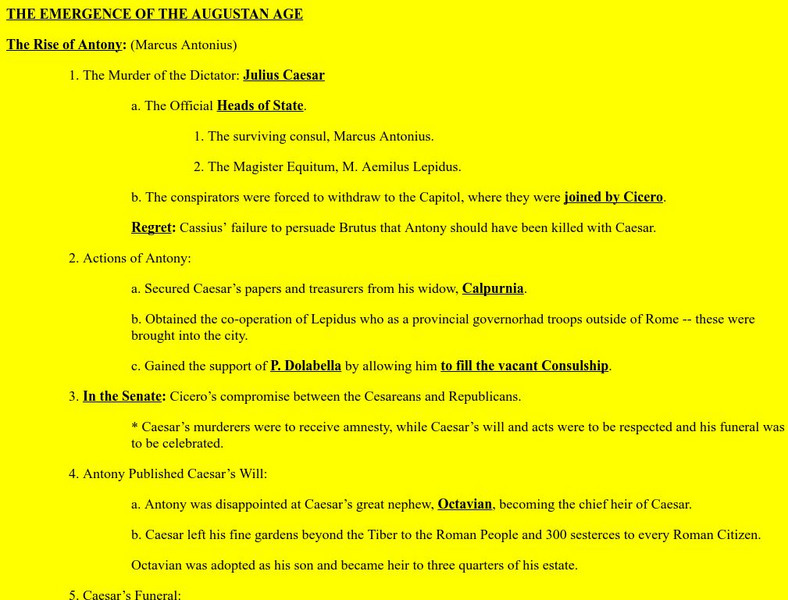
The Emergence of the Augustan Age
This site provides basic information in outline form about the time from the death of Caesar to Octavian's triumphs after the defeat of Antony and Cleopatra. Site assumes that you know most of the major names in Roman history. Written by...
Read Works
Read Works: Ancient Rome and Byzantium Living in Constantinople
[Free Registration/Login Required] An informational text about what life was like in the Byzantine capital of Constantinople. A question sheet is available to help students build skills in reading comprehension.
Other
The Roman Baths Bath: Where's My Cloak Game
Help Peregrinus solve the mystery behind his missing cloak. Explore the Roman Baths, travel through time and write your curse to punish the thief in this point and click adventure game.

Ducksters
Ducksters: History of Ancient Rome for Kids: Roman Engineering and Construction
Kids learn about the engineering and construction from the days of Ancient Rome. Learn how the Romans built roads, aqueducts, bridges, the colosseum, and other great structures.

Discovery Education
Discovery Education: Dictator for a Day
This is a lesson plan for better student understanding of life in ancient Rome. Students experience and analyze the pros and cons of a dictatorship.
Emory University
Emory University: Odyssey Online: Ancient Civilizations
Brief studies of the peoples, mythology, daily life, death and burial, writings and archaeology of civilizations in the Near East, Egypt, Greece, Rome, Africa, and the Ancient Americas.
Other
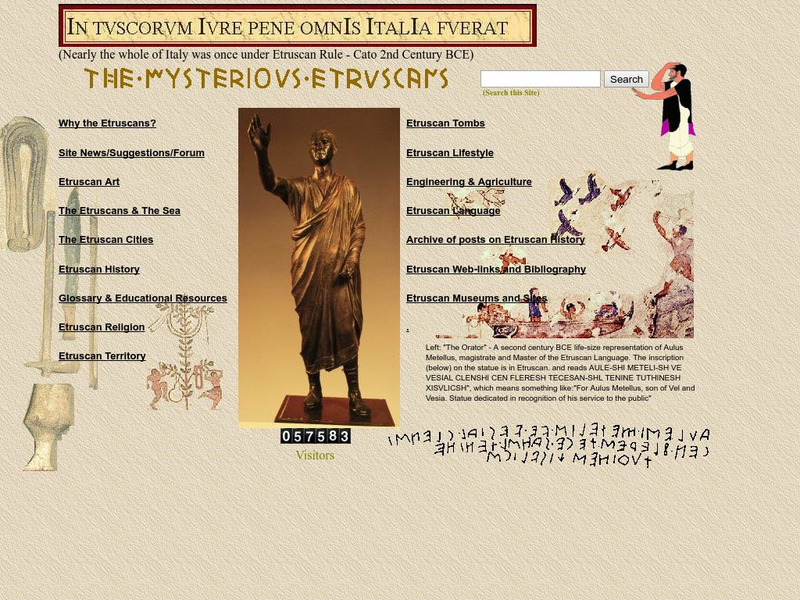
The Mysterious Etruscans Pre Roman Civilisation in Italy
A description of many aspects of Etruscan life: religion, engineering, clothing, territory.
Able Media
Able Media: Ideal Marriage
This site is provided for by AbleMedia. A description of the Roman concept of the ideal marriage. Includes links to related topics.
Other
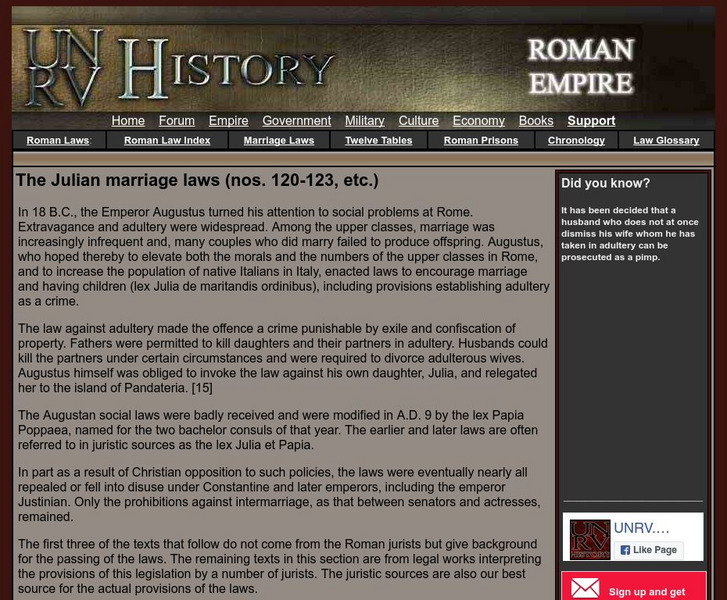
United Nations of Roma Victrix: The Julian Marriage Laws (Nos. 120 123, Etc.)
In 18 BC, the Emperor Augustus turned his attention to social problems at Rome, one of which was adultery among the upper classes and that many couples who did marry failed to produce offspring because their romantic lives took...
Vroma Project
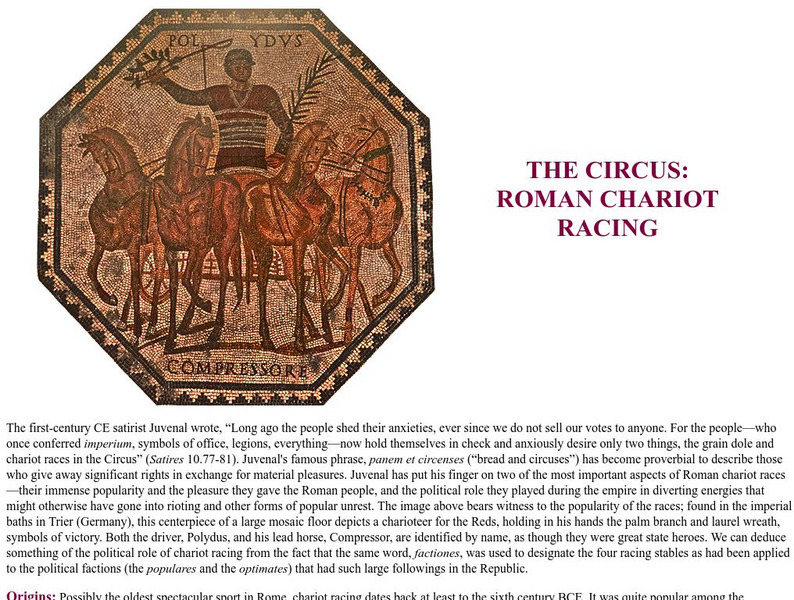
V Roma Project: The Circus: Roman Chariot Racing
Provides an excellent look at the chariot racing at the Circus Maximus, the history of chariot racing, and gives an example of a day at the races. this page was created by Barbara F. McManus of The College of New Rochelle.
The History Cat
The History Cat: Religion in Medieval Europe
Detailed description of the role of the Roman Catholic Church in the Middle Ages and the power that it wielded. Summarizes some of the customs and beliefs, and takes a look at the life of a medieval monk.
University of Virginia
Viewing Pompeii Today: Visual Resources
This virtual tour of the ruins of Pompeii features a clickable map, panoramic images, and detailed photographs of unearthed interiors that reveal 1st century C.E. Roman life. An essay discusses life in Pompeii and Roman urbanism in general.
Emory University
Emory University: Odyssey Online
Odyssey Online is a resource for both students and teachers as they explore world mythology in reading, writing, history, and art classes. Providing sections on Near Eastern, Egyptian, Greek, Roman, and African mythology, Odyssey uses...
National Endowment for the Humanities
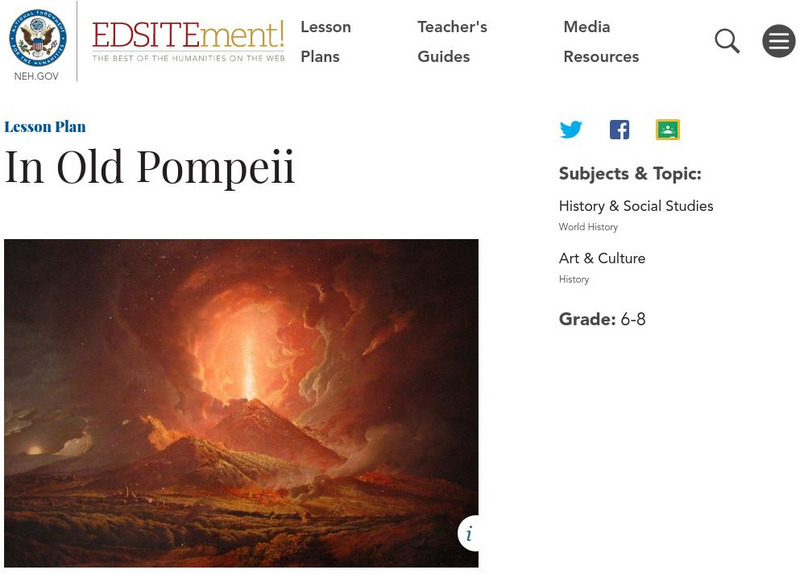
Neh: Edsit Ement: In Old Pompeii
Use this lesson to take students on a virtual field trip to the ruins of Pompeii to explore everyday life, art and culture in ancient Roman times. Students will then use what they learned about the history and destruction of Pompeii to...
Britain Express
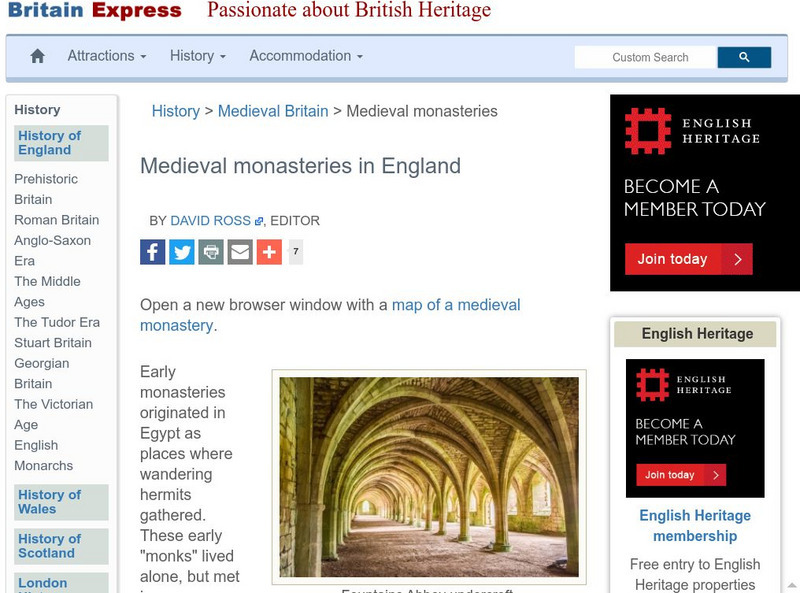
Britain Express: History: Medieval Britain: Medieval Monasteries in England
This site provides details on monastery life in Medieval England.

BBC
Bbc: Ks2: Who Were the Ancient Greeks?
About 2,500 years ago, Greece was one of the most important places in the ancient world. The Greeks were great thinkers, warriors, writers, actors, athletes, artists, architects and politicians. The name 'Greeks' was given to the people...
Middlebury College
Middlebury College: Essays on the Latin Authors
Middlebury College provides unique and useful essays on a variety of Latin authors in ancient Roman literature.
Google
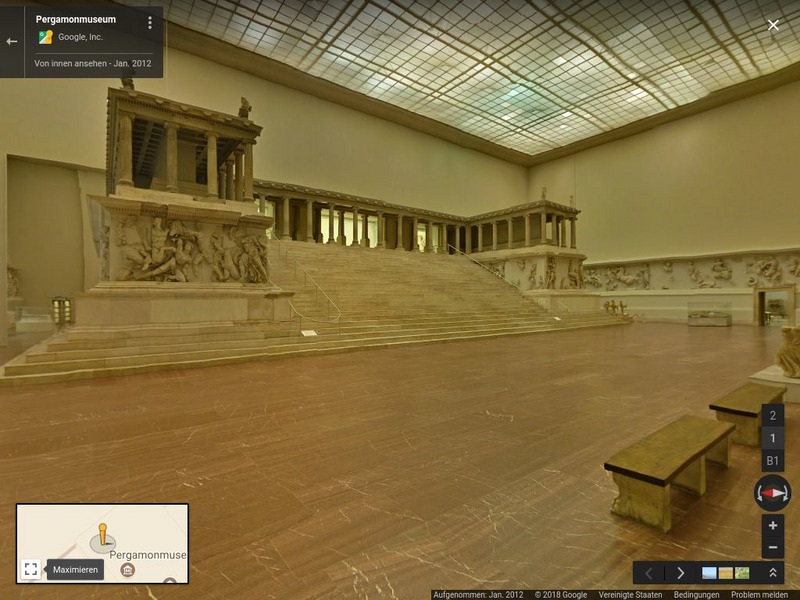
Google Maps: Virtual Tour of Pergamon Museum, Berlin
Take a virtual tour through the Pergamon Museum located on Museum Island in Berlin. This world famous museum has life-size, reconstructed monuments from ancient civilizations, including the Pergamon Altar of Zeus, the Roman Market Gate...
University of Calgary
University of Calgary: The End of Europe's Middle Ages
This useful tutorial includes information about the economy, feudalism, the Holy Roman Empire and other important topics pertaining to Europe in the fourteenth and fifteenth centuries, a time of transition in European history. Easy to...

Other
United Nations of Roma Victrix: Roman Gladiator
An account that describes who the gladiators were, how they fought and why, how were they trained, and more. It also provides some interesting facts about them such as that there were women gladiators.

Khan Academy
Khan Academy: Pompeii: House of the Vettii
Pompeii was thriving up until the moment of its destruction and in studying its life interrupted, we arrive at important insights about what it was like to live in the Roman Mediterranean. For example, the House of the Vettii is a large...
Other
The Vatican: Baptism and Christian Life
This site from The Vatican contains the Roman Catholic Church's view and attitude towards the sacrament of Baptism and does so through a Papal letter in preparation for the Jubilee.
Massachusetts Institute of Technology
Mit: Internet Classics Archive: Plutarch's Life of Gaius Gracchus
Dryden's translation of Plutarch's "Life of Gaius (here referred to as Caius, another form of the name) Gracchus". This is a good example of a primary source in translation.