Hi, what do you want to do?





TeachEngineering
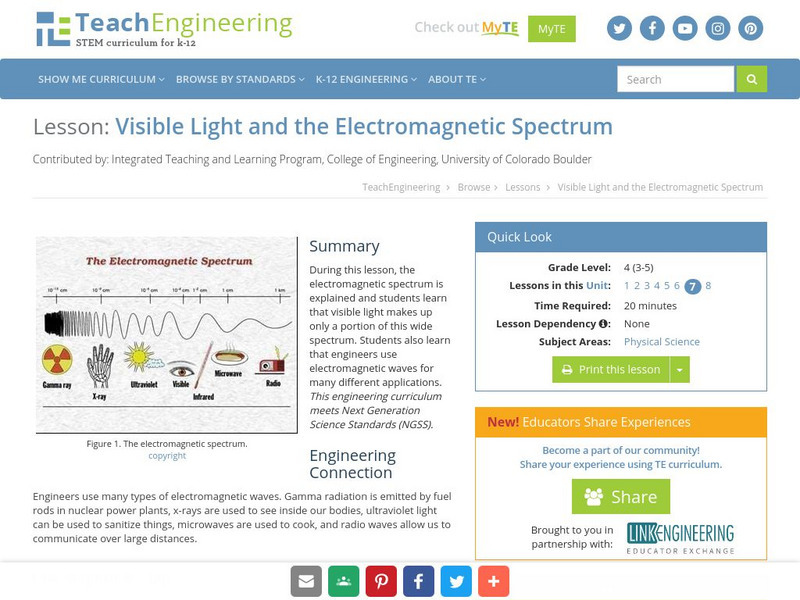
Teach Engineering: Visible Light and the Electromagnetic Spectrum
In this lesson plan, the electromagnetic spectrum is explained and students learn that visible light makes up only a portion of this wide spectrum. Students also learn that engineers use electromagnetic waves for many different...
Exploratorium
Exploratorium: Science Snacks: Physics/light
Here is a large collection of simple science class activities for understanding the physics of light.
CK-12 Foundation
Ck 12: Fundamentals of Light
[Free Registration/Login may be required to access all resource tools.] Students investigate the fundamentals of light including its source, how it is defined for measurements, how we perceive color, and the situations that make an...
My Science Site
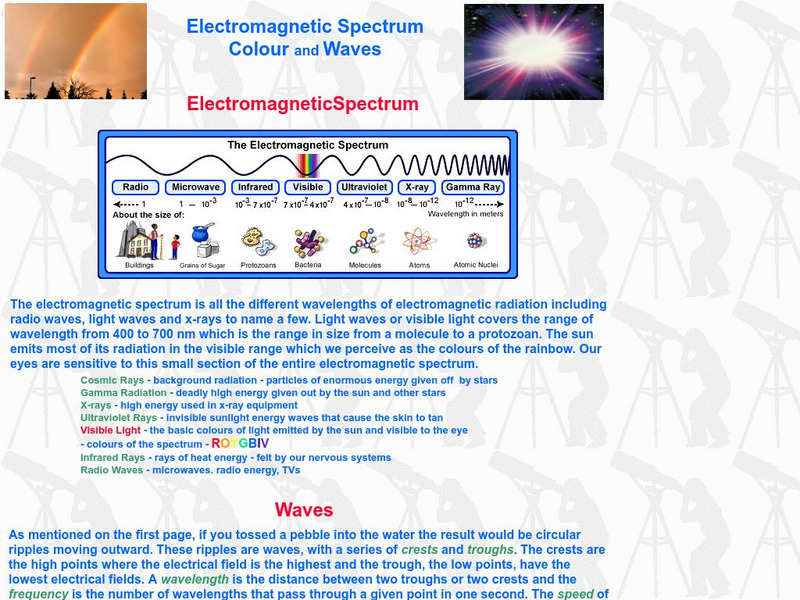
Electromagnetic Spectrum: Colour and Waves
This resource provides information on the different wavelengths that make up the electromagnetic spectrum. Also contains information on waves and color.

Ducksters
Ducksters: Physics for Kids: Light Spectrum
Kids learn about the science of the light spectrum. Wavelengths and frequencies of the electromagnetic waves including visible light, primary colors, and subtractive colors.
TeachEngineering
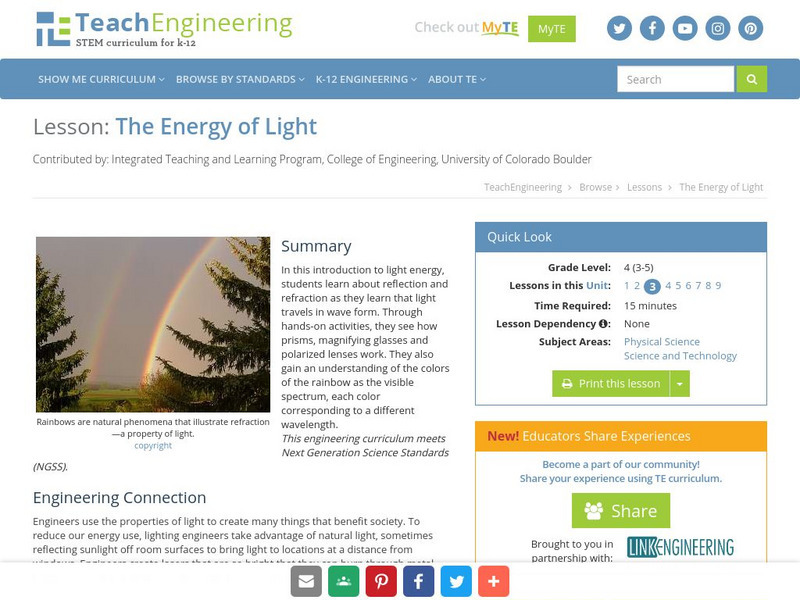
Teach Engineering: The Energy of Light
In this introduction to light energy, students learn about reflection and refraction as they learn that light travels in wave form. Through hands-on activities, they see how prisms, magnifying glasses and polarized lenses work. They also...

Science Struck
Science Struck: Wavelength of Light
Describes the characteristics of light, presents two formulas for calculating its wavelength, and provides a table of the different wavelength ranges across the electromagnetic spectrum.
NASA
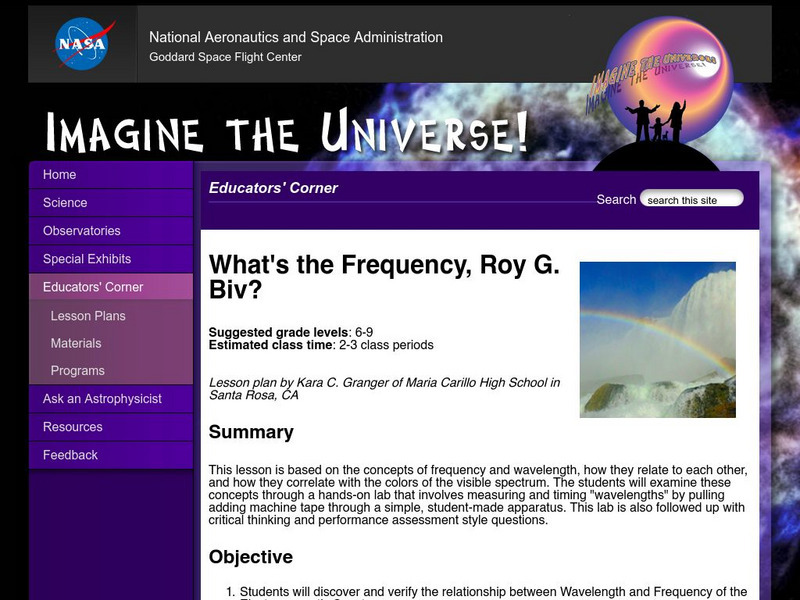
Nasa: Imagine the Universe: What's the Frequency, Roy G. Biv
In this very detailed lesson plan from NASA, students investigate wavelength and frequency within the electromagnetic spectrum.

TeachEngineering
Teach Engineering: The Visual Spectrum
In this activity, students make simple spectroscopes (prisms) to look at different light sources. The spectroscopes allow students to see differing spectral distributions of different light sources.