Hi, what do you want to do?






Physics Classroom
The Physics Classroom: Refraction and Ray Model of Light: Refraction and Sight
Through illustrated diagrams and animations, students explore the broken pencil phenomenon and light refraction.
University of Minnesota
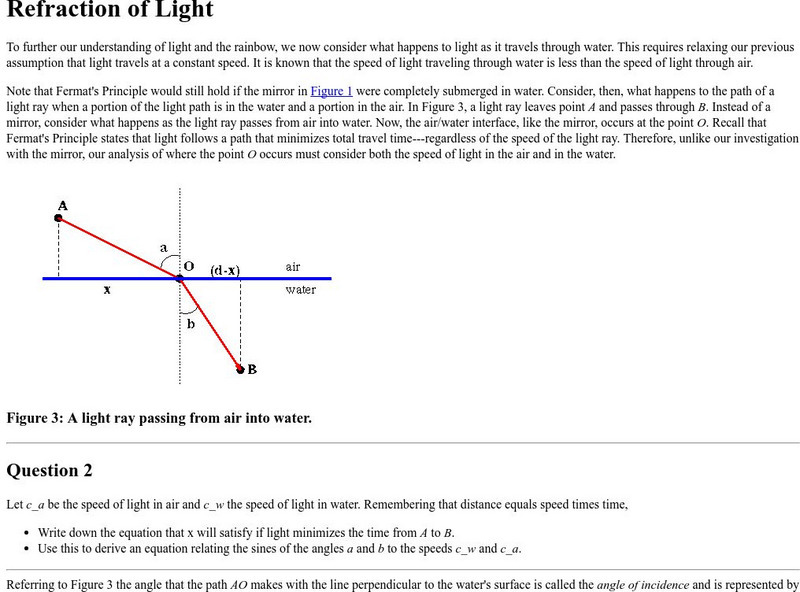
University of Minnesota: Refraction of Light
This page is a continuation of a tutorial about light reflection and refraction. It contains a diagram and suggestions on how to derive Snell's Law, which governs the refraction of light in a medium. For background to this derivation,...
Physics Classroom
The Physics Classroom: Refraction and the Ray Model of Light: Anatomy of a Lens
Illustrated diagrams in this tutorial help students understand the properties and functions of lenses.
BBC
Bbc: Gcse Bitesize: General Properties of Waves
Light travels as waves. Waves can be described by their amplitude, wavelength and frequency. The speed of a wave can be calculated from its frequency and wavelength.
Georgia Department of Education
Ga Virtual Learning: Optics
Students discover how mirrors affect optics in this module through reading informational text, watching animations, and answering self-checking practice questions.
TeachEngineering
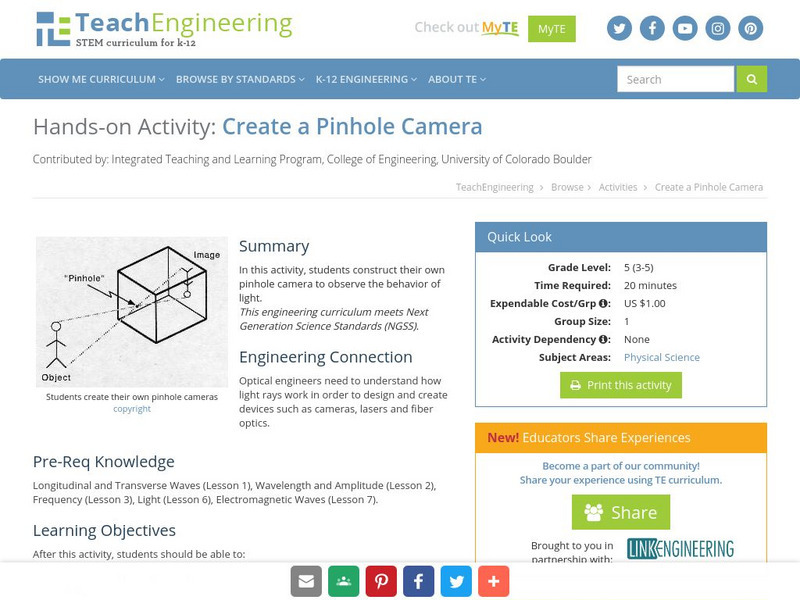
Teach Engineering: Create a Pinhole Camera
In this activity, students construct their own pinhole camera to observe the behavior of light.
Georgia State University
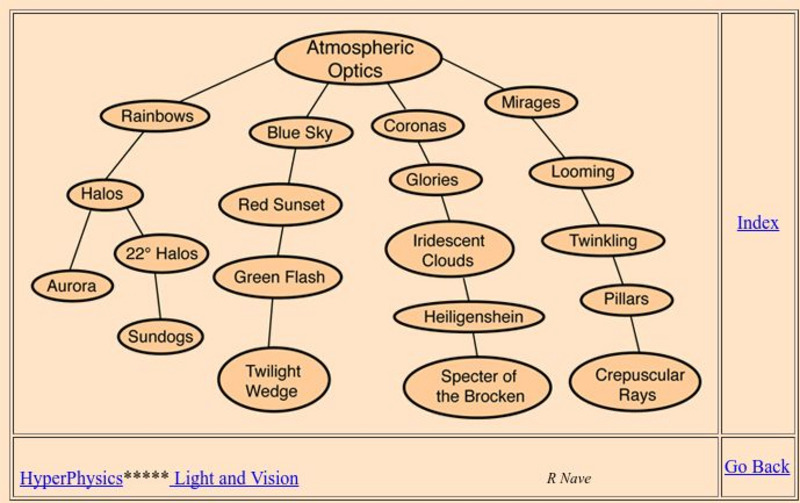
Georgia State University: Hyper Physics: Atmospheric Optics Concepts
This physics department site features an indexing page for a variety of pages pertaining to atmospheric optics. Topics include rainbows, halos, auroras, mirages, star twinkling, sunsets, green flashes, coronas, and more. Excellent...
Exploratorium
Exploratorium: Water Sphere Lens
A discussion of how to make a magnifying lens exhibit using a water-filled flask and a light bulb. Consists of assembly instructions and a "To do and notice" section. Great for a teacher demonstration or a student project.
Exploratorium
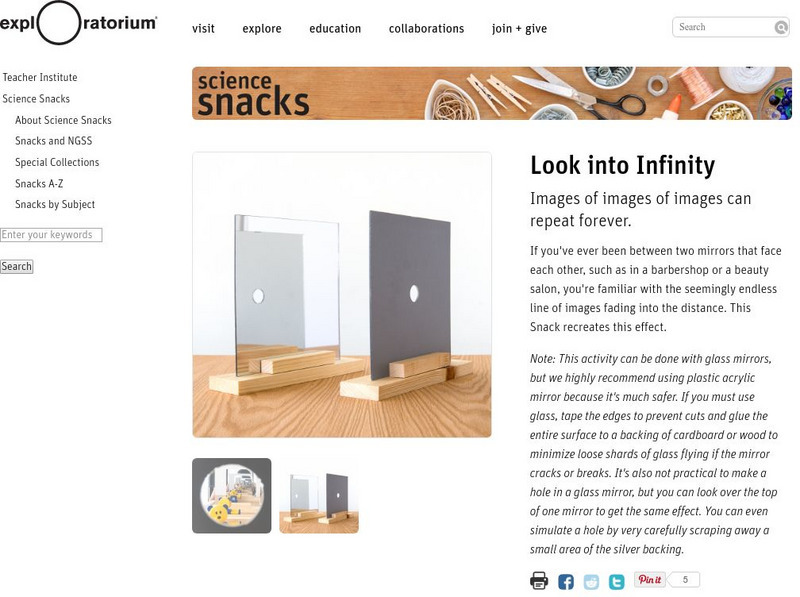
Exploratorium: Science Snacks: Look Into Infinity
In this activity students will create images of images of images that can repeat forever. Students will recreate this effect by setting up two acrylic plastic mirrors.