Hi, what do you want to do?





Annenberg Foundation
Annenberg Learner: Literary Visions
Twenty-six half hour videos on literary analysis for high school students that feature authors, scholars, actors and noted critics. Topics include The Art of the Essay, Setting and Character in Short Fiction, Responding to Literature and...
Alabama Learning Exchange
Alex: Examining Character Motivation
During this unit, students will ask "Why do we do what we do?" They will read different novels to analyze character motivation. Throughout the unit they will debate whether they think characters made smart choices and why. They will also...

Alabama Learning Exchange
Alex: Using a Fairy Tale to Teach the Elements of a Story
Students will hear and read different versions of a familiar fairy tale and identify what elements a story must have (character, plot, setting) for the story to be interesting and make sense. Using a Venn diagram, students will then...
ReadWriteThink
Read Write Think: Id, Ego, and Superego in Dr. Seuss's "The Cat in the Hat"
Contains plans for seven lessons that use Dr. Seuss's "The Cat in the Hat" to teach the literary elements of plot, theme, and character to high school students. It also teaches about psychoanalytic criticism concepts such as the Id, Ego,...
TES Global
Blendspace: The Giver
This blendspace includes thirty-two spaces with content connected to Lois Lowry's dystopia novel, The Giver. Links include novel discussion questions, author interviews, and video tutorials to review literary topics.

Alabama Learning Exchange
Alex: Using Fairy Tales to Teach the Short Stories
Familiar fairy tales are used as guides to help students analyze the elements of the short story: plot, theme, setting, point of view, and character.
Universal Teacher
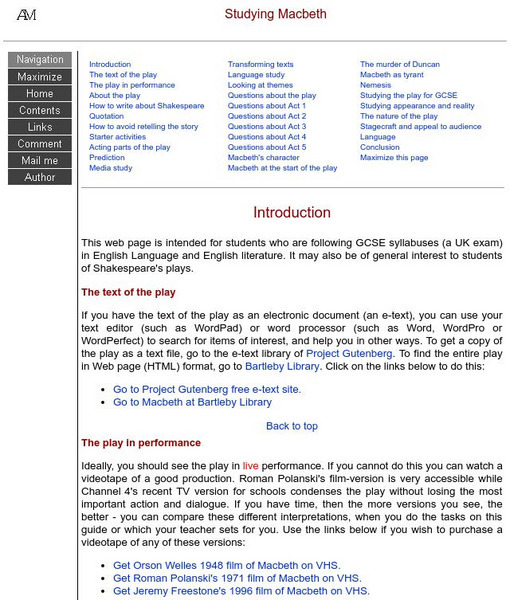
Moore's Teacher Resources: Studying Macbeth
A site from the UK on William Shakespeare's Macbeth. Complete with information on the historical context, character analysis, thematic elements, and review questions.
Other
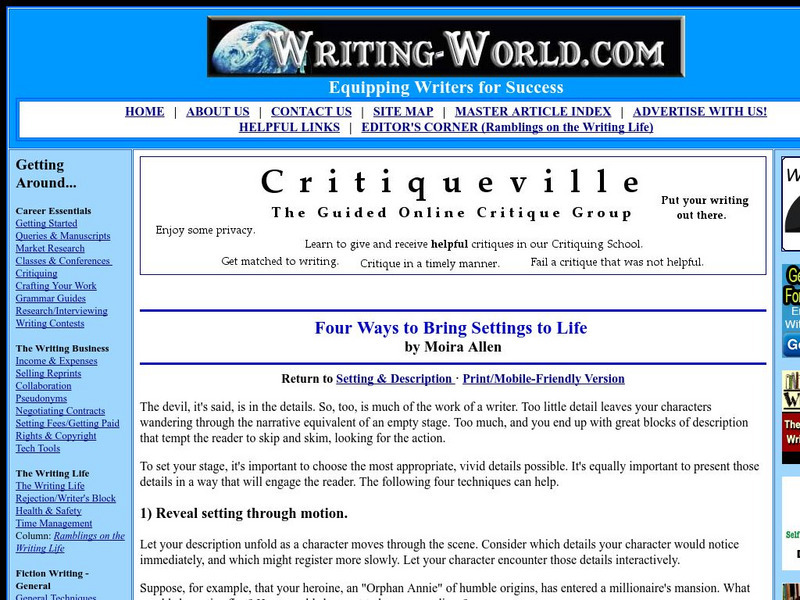
Writing World: Four Ways to Bring Settings to Life
A great resource outlining four major ways to make settings appear more real and genuine in fiction. Deals with themes such as motion, experience, mood, and the senses. W.11-12.3d Sensory/precise lang narratives