Hi, what do you want to do?






Khan Academy
Khan Academy: Maya, an Introduction
The Maya civilization (300-900 C.E.) was one of the most sophisticated in the pre-Columbian Americas. It extended from southeastern Mexico across modern-day Guatemala, Belize and the western parts of Honduras and El Salvador. The Maya...

Khan Academy
Khan Academy: An Introduction to Kabuki Theater
Kabuki was one of the three most popular dramatic forms of Japan, the other two being Noh drama and puppet theater (bunraku). Singers and an orchestra of drums, flutes, wooden clappers, and samisen (a stringed instrument similar to the...

Khan Academy
Khan Academy: Storytelling in Ritual and Performance in Bali
Balinese stories are continually told and retold. The Kayonan is the first and last puppet seen in the Balinese wayang shadow theater. As it dances, it symbolizes the living tradition of storytelling that deeply explains and entertains,...

Khan Academy
Khan Academy: Introduction to Buddhism
Buddhism is one of the world's great religions, and has deeply influenced the character and evolution of Asian civilization over the past 2,500 years. It is based on the teachings of a historical figure, Siddhartha Gautama, who lived...

Khan Academy
Khan Academy: Kingdom of Ife: Sculptures From West Africa
Ife ( pronounced ee-feh) is today regarded as the spiritual heartland of the Yoruba people living in Nigeria, the Republic of Benin and their many descendants around the world. It is rightly regarded as the birthplace of some of the...
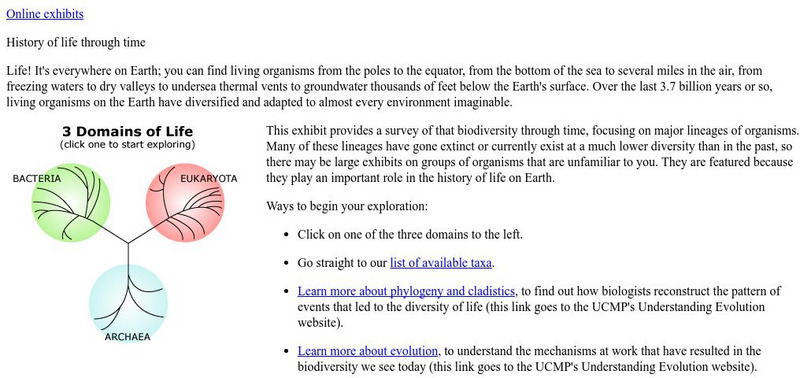
University of California
Ucmp: The Biosphere: Life on Earth
Learn about different forms of life that coexist with us on Earth. This Berkeley article provides links to brief write-ups on the three domains of living organisms: Eukaryota, Bacteria, and Archaea.

Success Link
Success Link: Lewis and Clark Come Alive
After students research individual members of the Corps of Discovery, they create a living museum of "characters" as they take on the persona of one of the members and present the information they've discovered. Included is a pre/post...

American Museum of Natural History
American Museum of Natural History: Annelida
Basic facts about segmented worms: their size, number of species, where they typically live, ecological roles, and human uses.
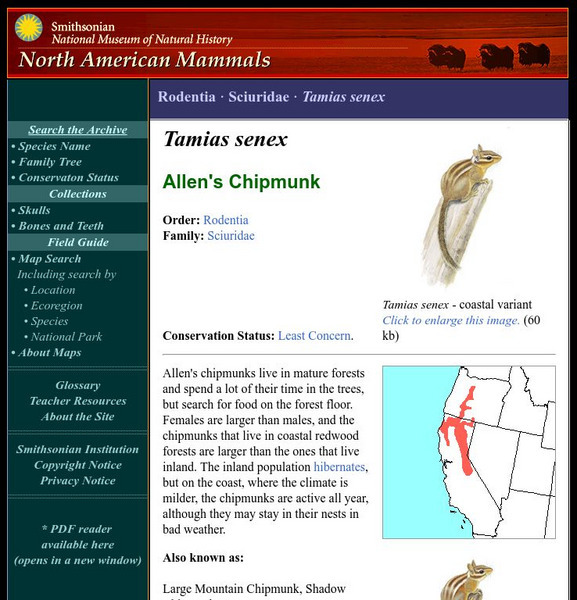
Smithsonian Institution
National Museum of Natural History: American Mammals: Allen's Chipmunk
Allen's chipmunks live in mature forests and spend a lot of their time in the trees, but search for food on the forest floor. Females are larger than males, and the chipmunks that live in coastal redwood forests are larger than the ones...
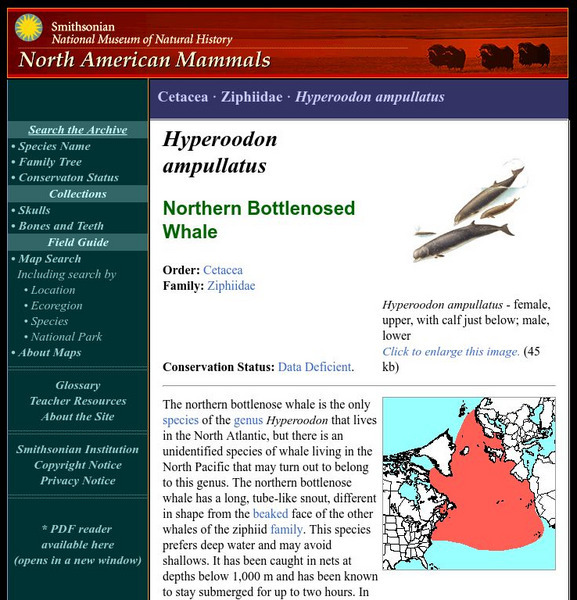
Smithsonian Institution
National Museum of Natural History: American Mammals: Northern Bottlenosed Whale
The northern bottlenose whale is the only species of the genus Hyperoodon that lives in the North Atlantic, but there is an unidentified species of whale living in the North Pacific that may turn out to belong to this genus. The northern...
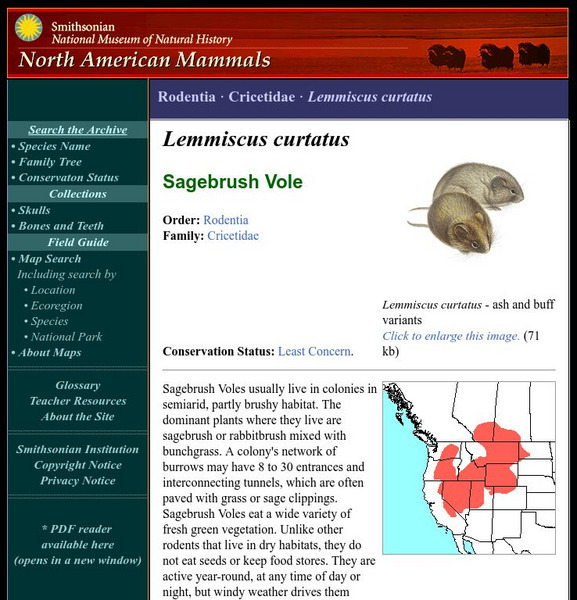
Smithsonian Institution
National Museum of Natural History: American Mammals: Sagebrush Vole
Sagebrush Voles usually live in colonies in semiarid, partly brushy habitat. The dominant plants where they live are sagebrush or rabbitbrush mixed with bunchgrass. Learn more about the Lemmiscus curtatus, more commonly known as a...
Smithsonian Institution
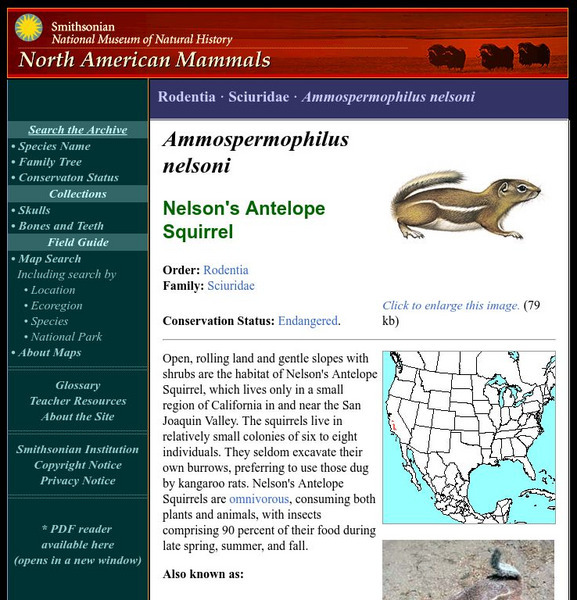
National Museum of Natural History: American Mammals: Nelson's Antelope Squirrel
Open, rolling land and gentle slopes with shrubs are the habitat of Nelson's Antelope Squirrel, which lives only in a small region of California in and near the San Joaquin Valley. The squirrels live in relatively small colonies of six...
Smithsonian Institution
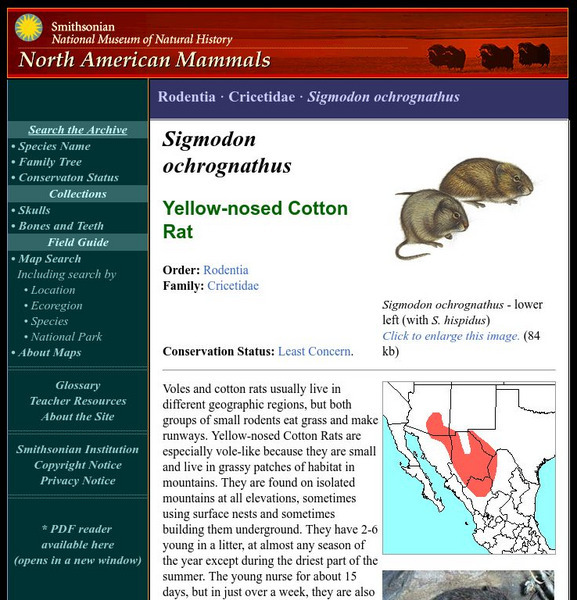
National Museum of Natural History: American Mammals: Yellow Nosed Cotton Rat
Voles and cotton rats usually live in different geographic regions, but both groups of small rodents eat grass and make runways. Yellow-nosed Cotton Rats are especially vole-like because they are small and live in grassy patches of...
Smithsonian Institution
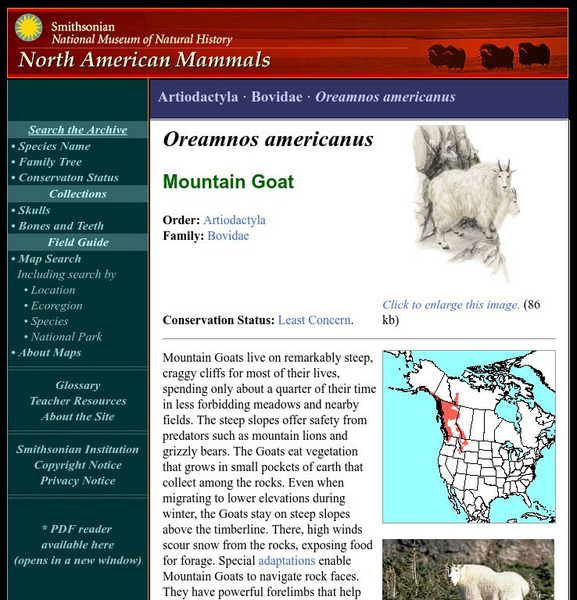
National Museum of Natural History: American Mammals: Mountain Goat
Mountain Goats live on remarkably steep, craggy cliffs for most of their lives, spending only about a quarter of their time in less forbidding meadows and nearby fields. The steep slopes offer safety from predators such as mountain lions...
Smithsonian Institution
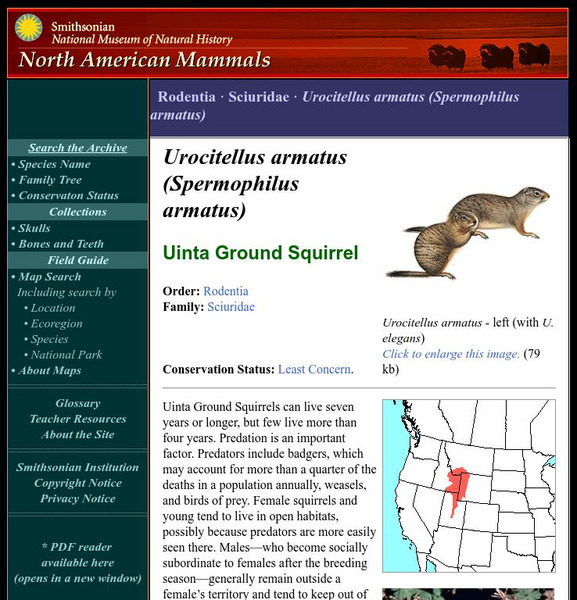
National Museum of Natural History: American Mammals: Uinta Ground Squirrel
Uinta Ground Squirrels can live seven years or longer, but few live more than four years. Predation is an important factor. Learn more about the Spermophilus armatus, more commonly known as a Uinta Ground Squirrel, in this easy-to-read...

Smithsonian Institution
National Museum of Natural History: American Mammals: Texas Kangaroo Rat
Texas Kangaroo Rats live in only a few counties of north-central Texas, although the species was once also present in Oklahoma. They prefer to live where soils have a high percentage of clay. Learn more about the Dipodomys elator, more...
Smithsonian Institution
National Museum of Natural History: American Mammals: Mountain Beaver
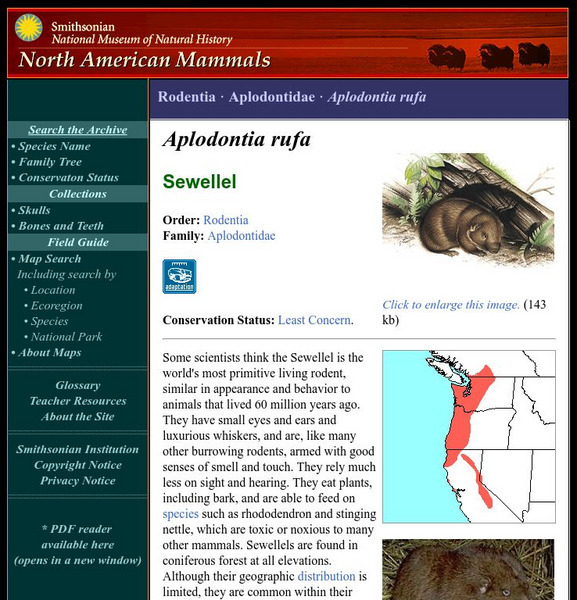
Some scientists think the Mountain Beaver is the world's most primitive living rodent, similar in appearance and behavior to animals that lived 60 million years ago. They have small eyes and ears and luxurious whiskers, and are, like...

Smithsonian Institution
National Museum of Natural History: American Mammals: Insular Vole
There have been only scattered observations of the Insular Vole since 1885 because the two islands in the Bering Sea off the coast of Alaska where it lives are rather inaccessible. The Voles live in burrows dug in moist lowland areas, at...

Other
Robben Island Museum: Homepage
This site from the Robben Island Museum has information on the island and the prisoners who were held there. Nelson Mandela was held there for many years (1962 to 1982). Provides a general context for understanding the lives of political...
Smithsonian Institution
National Museum of Natural History: American Mammals: Black Tailed Jackrabbit
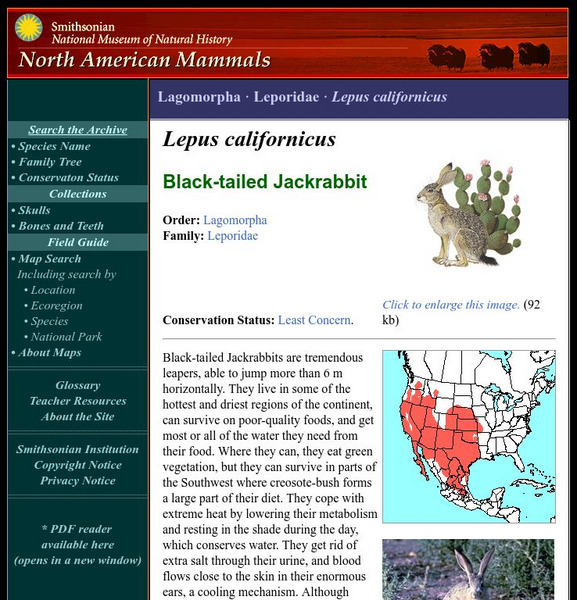
Black-tailed Jackrabbits are tremendous leapers, able to jump more than 6 m horizontally. They live in some of the hottest and driest regions of the continent, can survive on poor-quality foods, and get most or all of the water they need...
Smithsonian Institution
National Museum of Natural History: American Mammals: Cactus Deermouse
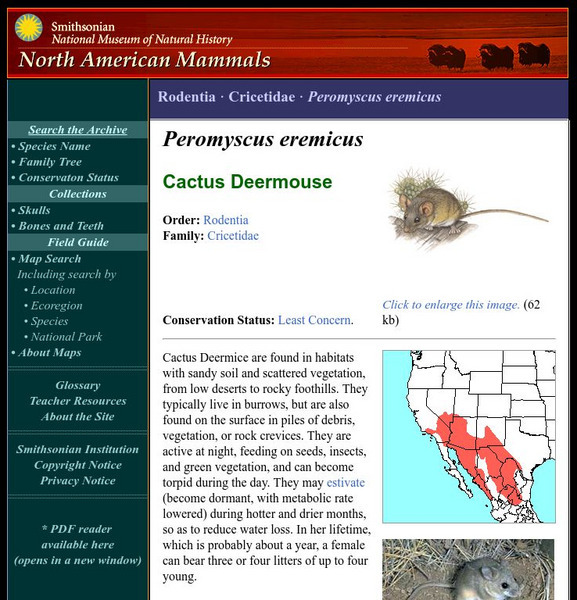
Cactus Deermice are found in habitats with sandy soil and scattered vegetation, from low deserts to rocky foothills. They typically live in burrows but are also found on the surface in piles of debris, vegetation, or rock crevices. Learn...
Smithsonian Institution
National Museum of Natural History: American Mammals: Bailey's Pocket Mouse
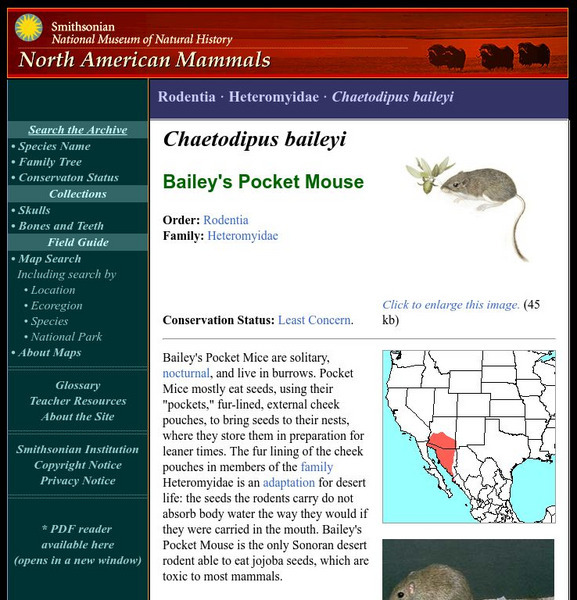
Bailey's Pocket Mice are solitary, nocturnal, and live in burrows. Pocket Mice mostly eat seeds, using their "pockets," fur-lined, external cheek pouches, to bring seeds to their nests, where they store them in preparation for leaner...
Smithsonian Institution
National Museum of Natural History: American Mammals: Bighorn Sheep
Bighorn Sheep live only in remote, treeless mountain terrain. They use steep slopes and cliffs to escape from wolves, coyotes, and cougars. Learn more about the Ovis canadensis, more commonly known as a Bighorn Sheep, in this...
Smithsonian Institution
National Museum of Natural History: American Mammals: Barren Ground Shrew
An inhabitant of the far north, the Barren Ground Shrew lives on the tundra from Point Barrow, Alaska, to the western shore of Hudson Bay, Canada. The fur on its back forms a well-defined brown stripe, and its sides and undersides are...
Other popular searches
- Create a Living Museum
- Creating a Living Museum
- Historical Living Museum
- Social Studies Living Museum
- Historic Living Museum
- World History Living Museum
- Living Museum Us History